


Close Menu
    Facebook X (Twitter) Instagram
    TRENDING :
    • 5 hidden drivers behind career happiness. Or how to make 90,000 hours of your life worth it
    • Anthropic’s IPO march began with a Claude Code breakthrough
    • AI has an unexpected side effect: It could make high-paying jobs less hostile to women
    • As the U.S. faces a worsening shortage of care for the elderly, can robots fill the gap?
    • Panera Bread store closures: See a list of shuttered locations as the fast-casual chain charts 2026 growth
    • The Fed’s Real Stress Test
    • Why smart leaders lose it during meetings
    • America’s Fruit Has Become A Social Experiment
    Populist Bulletin
    • Home
    • US Politics
    • World Politics
    • Economy
    • Business
    • Headline News
    Populist Bulletin
    Home»Economy»Switzerland To Vote On Population Control Measures
    Economy 3 Mins Read

    Switzerland To Vote On Population Control Measures

    Economy 3 Mins Read
    Share Facebook Twitter Pinterest LinkedIn Tumblr Telegram Email Copy Link
    Follow Us
    Google News Flipboard
    Share
    Facebook Twitter LinkedIn Pinterest Email


    Switzerland is now preparing to vote on a proposal to cap its population at 10 million by 2050, and the entire debate is being framed in the press as merely an immigration issue. That is far too simplistic. What this really reflects is a rising global tension between economic reality, demographic trends, and political narratives about sustainability and population management.

    Under the initiative, once the population approaches 9.5 million, the government would be required to tighten immigration, residency, and asylum policies, and potentially even renegotiate agreements with the EU on free movement if the cap is exceeded. Switzerland already has about 9.1 million residents, with a large share foreign-born, largely from EU countries.

    Supporters argue the cap would protect resources, housing, and social systems, while critics warn it could trigger labor shortages and harm economic growth in a country heavily dependent on foreign workers.

    I have written many times that the concept of “population control” is not always presented directly. It is often framed as sustainability, climate targets, migration limits, or resource protection. The terminology changes, but the underlying policy direction becomes increasingly centralized and authoritative. Politicians believe they must begin managing how many people can live, move, and work within a system. That is a very dangerous trend because it expands government authority over the most fundamental aspect of society: demographics.

    Switzerland has seen a surge of migrants from Islamic nations, which has led to cultural clashes. The “No to 10 Million Switzerland” initiative acknowledges the downfalls of mass migration as the Swiss People’s Party (SVP) openly wants to close the border and is considered “far-right” for its beliefs. Reframing population control as an issue for the environment and resources would allow the left to jump on board without being demonized for recognizing that certain cultures cannot assimilate to European life.
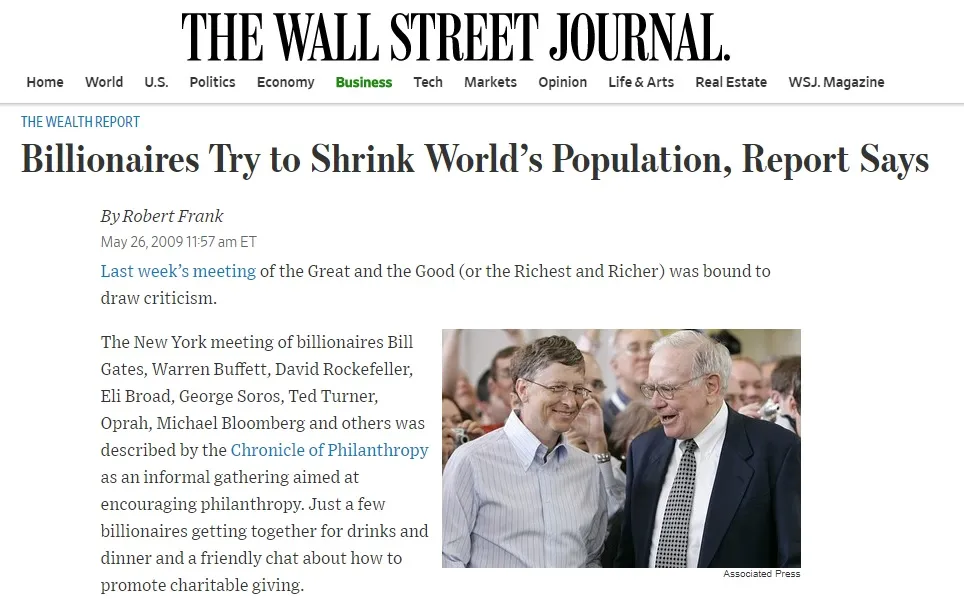

    WSJ 2009 Shrink Population

    Gates Population

    Globalist figures like Bill Gates have openly spoken about population growth in the context of sustainability and resource allocation. I have repeatedly warned that population control is rarely presented bluntly; it is framed as climate policy, public health, sustainability, or infrastructure capacity. The danger is not in any single proposal, but in the normalization of the idea that governments and unelected institutions should “manage” population levels as an economic variable.


    Switzerland is particularly important because it is not an EU member yet is deeply integrated into the European economic system. If a population cap forces restrictions on immigration or free-movement agreements, it will not just be a domestic policy shift. It would signal fragmentation in the European labor and capital framework.

    The Swiss are in favor of the proposal. The LeeWas research institute conducted a poll in November 2025: 48% are in favor, 41% are against, and 11% are undecided. Yet we know the wishes of the people are never truly acknowledged. The bureaucrats must believe that the measures would benefit them directly.

    Nations begin to look inward during times of instability. Tighter immigration control, capital control discussions, increased surveillance of movement and finances—these are all par for the course. Once governments normalize the idea that population levels must be administratively managed for sustainability, it opens the door to broader regulatory control over society.


    Source link

    Share. Facebook Twitter Pinterest LinkedIn Tumblr Email

    Related Posts

    The Fed’s Real Stress Test

    June 2, 2026

    America’s Fruit Has Become A Social Experiment

    June 2, 2026

    Google’s Debug Project — When Silicon Valley Starts Releasing Insects

    June 2, 2026
    Top News
    Business 8 Mins Read

    I correctly predicted ChatGPT. Here are my 6 AI predictions for 2026

    Business 8 Mins Read

    Just when you think you’ve wrapped your mind around computers that can put your dog…

    Microsoft RTO Mandate to Begin in February 2026

    September 10, 2025

    Y Combinator’s CEO says he ships 37,000 lines of AI code per day. A developer looked under the hood

    April 2, 2026

    United’s new lay-flat seats are a brilliant way to upsell the economy class

    March 25, 2026
    Top Trending
    Business 6 Mins Read

    5 hidden drivers behind career happiness. Or how to make 90,000 hours of your life worth it

    Business 6 Mins Read

    It’s estimated that the average person will spend 90,000 hours of their…

    Business 5 Mins Read

    Anthropic’s IPO march began with a Claude Code breakthrough

    Business 5 Mins Read

    Last fall, Anthropic was playing second fiddle to OpenAI. It had a…

    Business 7 Mins Read

    AI has an unexpected side effect: It could make high-paying jobs less hostile to women

    Business 7 Mins Read

    The conversation about AI and work revolves mostly around jobs being destroyed…

    Categories
    • Business
    • Economy
    • Headline News
    • Top News
    • US Politics
    • World Politics
    About us

    The Populist Bulletin was founded with a fervent commitment to inform, inspire, empower and spark meaningful conversations about the economy, business, politics, government accountability, globalization, and the preservation of American cultural heritage.

    We are devoted to delivering straightforward, unfiltered, compelling, relatable stories that resonate with the majority of the American public, while boldly challenging false mainstream narratives that seem to only serve entrenched elitists, and foreign interests.

    Top Picks

    5 hidden drivers behind career happiness. Or how to make 90,000 hours of your life worth it

    June 2, 2026

    Anthropic’s IPO march began with a Claude Code breakthrough

    June 2, 2026

    AI has an unexpected side effect: It could make high-paying jobs less hostile to women

    June 2, 2026
    Categories
    • Business
    • Economy
    • Headline News
    • Top News
    • US Politics
    • World Politics
    Copyright © 2025 Populist Bulletin. All Rights Reserved.

    Type above and press Enter to search. Press Esc to cancel.