
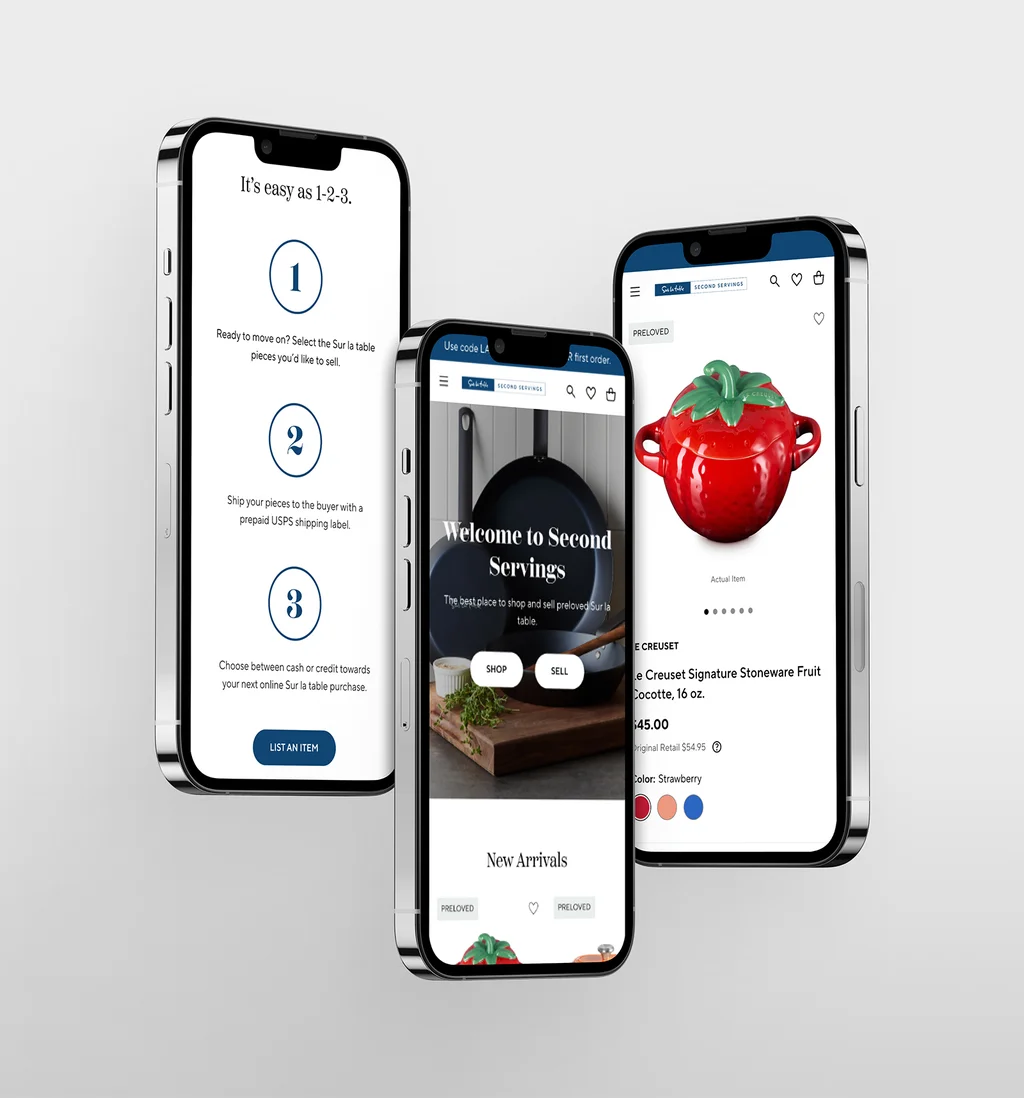
If you can’t afford to spend hundreds of dollars on a copper pot from Sur La Table, the cookware retailer now offers another option: It’s launching a resale site where the same item could cost as much as 70% less.
After fashion retailers embraced brand-owned resale, it’s starting to show up in more categories, from toys to bikes. Sur La Table is the first in cookware with its new platform, called Second Servings, which lets people buy and sell secondhand versions of everything that it carries, from sauté pans to espresso machines.
Affordability is one of the motivations, says CEO Dan Goldman. “Resale is all about helping bridge the existing gap between consumers who love to cook and haven’t necessarily had access to the premium cooking products,” he says.
Goldman says he doesn’t expect the resale site to cannibalize the retailer’s new sales; instead, he believes it will bring in younger, budget-conscious customers the company wants to introduce to its products for the first time.
“We want to build lifelong relationships with those consumers,” he says. Goldman, who joined Sur La Table last year, previously helped launch resale programs at the North Face and Gap, where he says he saw the model successfully recruit new customers.
Of course, secondhand cookware is already ubiquitous on sites like eBay and Facebook Marketplace. But brands are realizing they can be part of the growing market.
“If there is already a larger resale market happening on other platforms, then the brands and retailers are going to want to own that. And it makes the customer experience so much better to have all of the assets and information that a brand has,” says Emily Gittins, CEO of Archive, the technology platform that customized Sur La Table’s new resale site. (Archive previously worked with Goldman on Renewed for the North Face.)
Sur La Table’s platform is launching today to let sellers list products before it opens up for buying. Someone listing an item can look up the SKU, answer a few questions, add a photo, and then automatically pull up original photos and descriptions, including materials, care instructions, and the original price.
Second Servings includes both Sur La Table’s own branded products and any of the brands it carries, from All-Clad to Le Creuset. (The platform suggests the prices, ranging from 20% to 70% off the original price based on condition, with most selling at a 50% to 70% discount.)
After an item sells, the seller will use a prepaid shipping label to ship it to the buyer directly, and then get either cash or store credit. Sellers get a 70% payout in cash, or 100% of the value if they take a store credit; buyers pay for shipping.
Of course, there’s a sustainability advantage to buying secondhand. Buying used clothing, for example, can cut the carbon emissions of an item by 80%. Gittins says brand-owned resale sites can also bring in customers who weren’t previously considering buying secondhand.
“We actually see a high proportion of buyers would have otherwise bought a new product but at a lower price point,” she says.
Cookware is unique in that some of it is designed to last decades, and in some cases to improve over time. “A seasoned cast iron is actually in many ways a desired asset,” Goldman says.
As Sur La Table gets data over time about which secondhand products are most popular and most retain their value, those insights could be valuable.
“What Second Serving gives us is really great insight in terms of what consumers care about—what actually holds up, what has desirability,” Goldman says. “When a Dutch oven changes hands three times over 10 years, it still holds value. That’s a win, right? It’s telling us that the product is durable.”
By the same token, he says, if a product doesn’t last as long, the company could discuss the lifecycle with the supplier to determine “How do you design something that does stand the test of time?”