
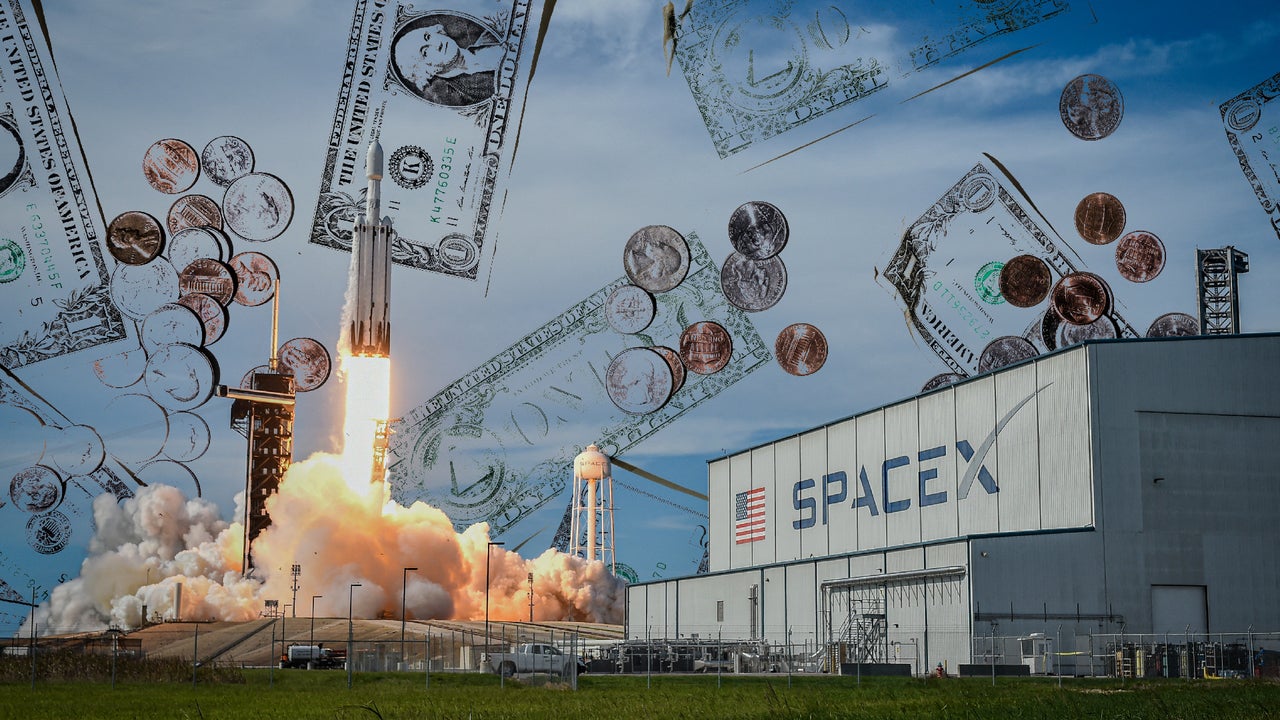
SpaceX is going public, and its shares could go to the moon. That doesn’t mean that all investors are starstruck, however. That’s because for many investors, SpaceX’s IPO, and its effects on the broader market, may be nearly unavoidable.
First, some background: SpaceX’s IPO is expected to be huge, potentially valuing the company at around $1.75 trillion. That would immediately make it one of the most valuable companies in the world, and could help make its founder, Elon Musk, a trillionaire (by some reports, that’s already happened). But despite the hype, the company has a questionable financial track record.
Specifically, it’s not profitable, and last quarter, it reported a loss of $4.9 billion. And the company even says in its SEC filing that profitability “may never occur.”
Further, Musk folded his AI startup xAI into SpaceX, and SpaceX has also been found to be one of Tesla’s biggest enterprise customers—yet another Musk company. All of that has given some investors pause.
And now, those concerns have spilled over into retirement accounts.
Why investors are concerned about SpaceX and their 401(k)s
Because SpaceX’s IPO has immediately made it one of the largest companies in the world, it’s been fast-tracked into some major market indexes—specifically, the Nasdaq-100 and the Russell 1000. Those indexes also changed or loosened their own rules to grant the stock fast access to their respective indexes.
Those changes effectively created billions of dollars in mandatory purchases from index funds, or funds that track those respective indexes. Since SpaceX is included in those index funds, many investors who hold shares of those funds—which include a lot of 401(k) accounts and others—have become de facto SpaceX investors.
That’s happening even as some investors are wary of the stock, and there are a lot of concerns about the company’s profitability, as outlined.
Some brokerages, too, have lowered thresholds for investors to invest in the IPO. Typically, retail investors would need a six-figure minimum balance to invest in an IPO, but that has been dropped to $2,000 for SpaceX.
In all, there’s a lot of rule-changing and pumped-up demand (fueled by lowering thresholds for retail investors) that, again, has people wary.
The main concern is that SpaceX’s IPO will amount to something of a large pump-and-dump, with a surge in demand sending share prices skyrocketing after the IPO, only to see a large fall in the coming weeks or months. Of course, the opposite could happen: SpaceX could shoot for the moon, and continue to remain one of the biggest companies in the world.
Nobody knows, but SpaceX hits the market on Friday (trading under SPCX), and by the weekend, there could be new millionaires, billionaires, and a trillionaire minted as a result.