
What’s the biggest company in the world? Apple? Amazon? Microsoft?
No. It’s Nvidia, which in early August became the world’s first $4 trillion company, overtaking both Apple and Microsoft. Last week’s results were eagerly awaited by the world’s markets and actually helped push the S&P 500 and Dow Jones to all-time highs. By the end of August, Nvidia accounted for more than 8% of the S&P 500, the largest weighting for a single stock in the index’s history.
Yet, Nvidia isn’t a household name. It doesn’t make the devices in your pocket or the apps you use every day. Nvidia makes chips. Excellent chips, yes, but not unique in the way we tend to assume a $4 trillion product must be. Its success is not just a product story; it’s also a brand story.
B2B is often treated as B2C’s poor relation. When budgets are tight, brand is first to be stripped back, reduced to a logo refresh or a new color palette. Nvidia’s rise proves that’s a mistake. Its transformation from graphics chipmaker to the engine of the AI revolution shows how brand strategy can create enormous value.
Here are six lessons B2B brands can take from Nvidia’s playbook.
1. More than a logo
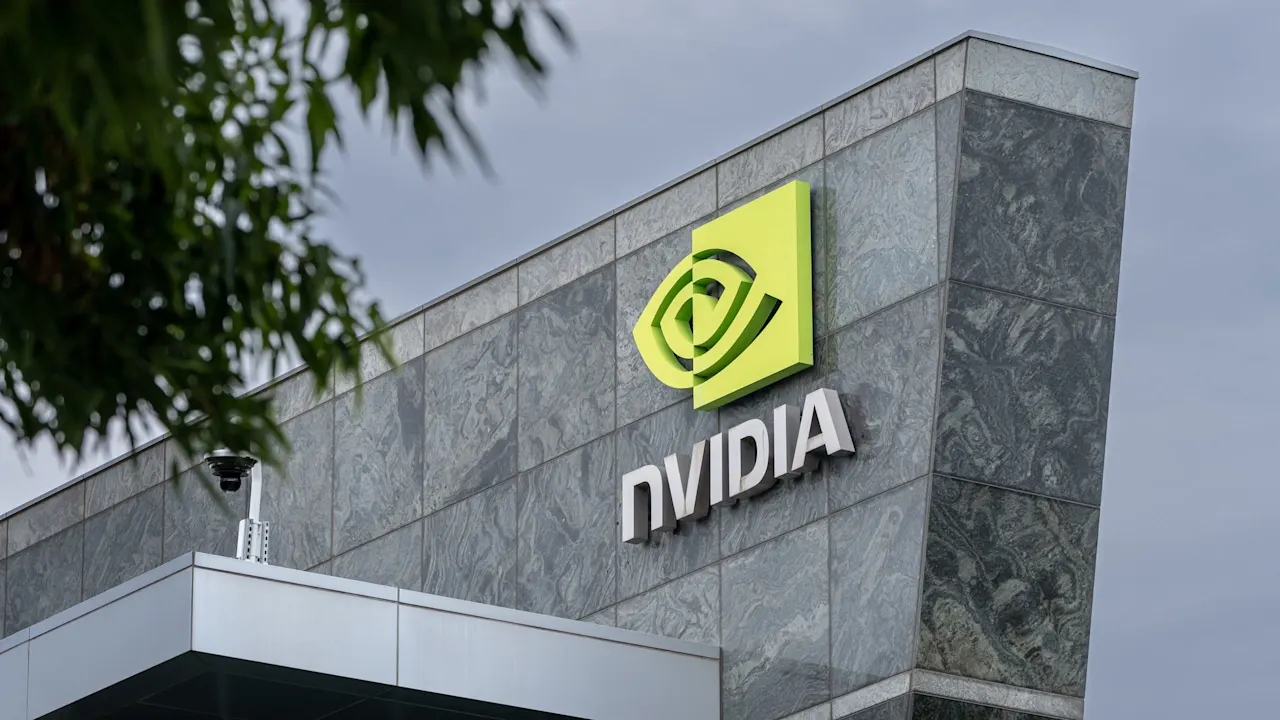
Nvidia’s brand identity hasn’t changed much since the 1990s. The typography has been updated, but the odd, retro eye-and-square graphic remains. Many organizations would have dropped it long ago, worried it looked dated or alienating. Nvidia’s decision to keep it reflects confidence in what the brand stands for and in the loyalty of its audience, especially the developers and gamers who value its heritage.
Many B2B brands struggle here. A new CMO arrives and the instinct is to “refresh the logo.” These changes are often driven more by internal pressure than by real market insight. In doing so, companies risk eroding recognition and alienating the very customers that anchor their brand.
Companies need to ask: What do our core users value from us? What signals show continuity and confidence? Consistency builds familiarity, and that in turn builds trust.
2. Own a story, not just a product
Nvidia’s two main rivals, AMD and Intel, have longer histories and strong product reputations. Yet Intel is seen as legacy computing and AMD as fast and affordable, while Nvidia is synonymous with the future.
This isn’t because Nvidia “started” AI, but because it positioned itself as the essential platform for enabling it, shifting from being a graphics processing unit manufacturer to the company powering the AI revolution, and framing its value in terms of possibility rather than price or speed. That positioning has contributed to a market cap 15 times AMD’s and 47 times Intel’s, despite smaller revenues.
Many B2B firms struggle to look this far ahead. Brand vision often gets tied to short sales cycles and annual budgets. The challenge is to set an ambition that stretches beyond the next quarter. Microsoft did this successfully with its “cloud-first” pivot. Intel seemingly failed to capitalize on the AI growth wave, falling behind AMD and Nvidia. Although it is reportedly working hard on a comeback, will it be enough to make up for lost time?
The lesson: don’t just describe what you make, own the bigger shift your products make possible.
3. Be more peacock
Brands are regularly the victims of trends. The more established and reputationally safe they are the harder it is for them to stay connected to new audiences while remaining true to themselves.
However, Nvidia has remained remarkably true to its central vision. It uses its core brand assets—the logo, the green—everywhere. This consistency reinforces recognition, particularly among its most loyal audience: a technically minded, brand-aware community that values the company’s history. Where some brands tone down their heritage as they grow, Nvidia has leaned into it.
Salesforce and Slack have both succeeded by sticking with distinctive, even playful, visual identities in a category prone to beige “professionalism.” In contrast, many brands caught up in the 2018 “blanding” epidemic traded characterful logos and flourishes for neutral sans-serifs, diluting their identities in the process. Often B2B brands should have the courage to lean into the brand assets that make them distinctive and unique, rather than feeling they need to follow the latest trend.
4. Make the brand an experience
Nvidia’s GTC (GPU Technology Conference) has been described as the “Super Bowl of AI”, stadium-scale events wrapped in the brand, bringing together developers, researchers, and business leaders. These conferences position Nvidia not just as a supplier of hardware but as the platform powering what’s next.
Most B2B brands don’t think about experience in this way. “Customer experience” is often a trade show booth or a sales meeting. Yet experience is where brand comes to life: through service design, digital platforms, physical spaces, and above all, people.
Not every business needs stadium events, but every B2B brand can look at the moments where clients interact with them and ask: does this experience reflect who we are? Does it build confidence? Deloitte is a good example here. Its investment in connected digital and service experiences has made it the highest-valued commercial services brand by Brand Finance.
5. Partner for relevance
Nvidia’s partnerships—from Tesla to Disney Research to Google DeepMind—have put it at the center of conversations about robotics, art, graphics, and AI. Each collaboration reinforces the company’s relevance far beyond chips.
B2B companies often fall into one of two traps: chasing partnerships haphazardly without alignment, or avoiding them altogether for fear of losing control. But the right partnerships extend credibility, and relevance.
The lesson is to find partnerships that complement your brand’s value and purpose. Co-branded thought leadership, for example, can build credibility for both parties. Deloitte and Apple’s collaboration to accelerate enterprise mobility is a good example. The misstep comes when brands partner without clear alignment.
6. Build a human figurehead
Nvidia’s CEO, Jensen Huang, has become a brand asset in his own right. Known for his leather jackets and unscripted keynote style, he’s built a following—even a nickname for his fans—which is unusual in the world of B2B hardware. His visibility has amplified Nvidia’s vision while keeping the brand rooted in the community that uses its products.
Most B2B leaders aren’t visible in this way. Either they avoid the spotlight, or they show up only in highly scripted investor calls. Yet charismatic leaders can create strong brand momentum. Marc Benioff, CEO of Salesforce uses his personal platform to advance the company’s narrative. Deloitte CEO Joseph Ucuzoglu has also become a recognizable voice on leadership and the future of work.
For B2B brands, the takeaway isn’t to manufacture celebrity. It’s to encourage leaders to show up authentically, in ways that reflect the brand’s values and ambitions.
Brand is the differentiator
From the outside, many B2B products can look more alike than they really are: another chip, another service, another platform. That’s when brand becomes the differentiator.
Nvidia’s rise to the top wasn’t just about cutting-edge engineering. It was about confidence: sticking with distinctive assets, claiming ownership of the future, showing up consistently, building meaningful experiences, partnering with intent, and amplifying it all through visible leadership.
The lesson for B2B brands is simple. Don’t treat brand as decoration. Allow your brand to be vision-led. Nvidia shows that even in categories that seem invisible or interchangeable, brand confidence can drive both growth and value.