
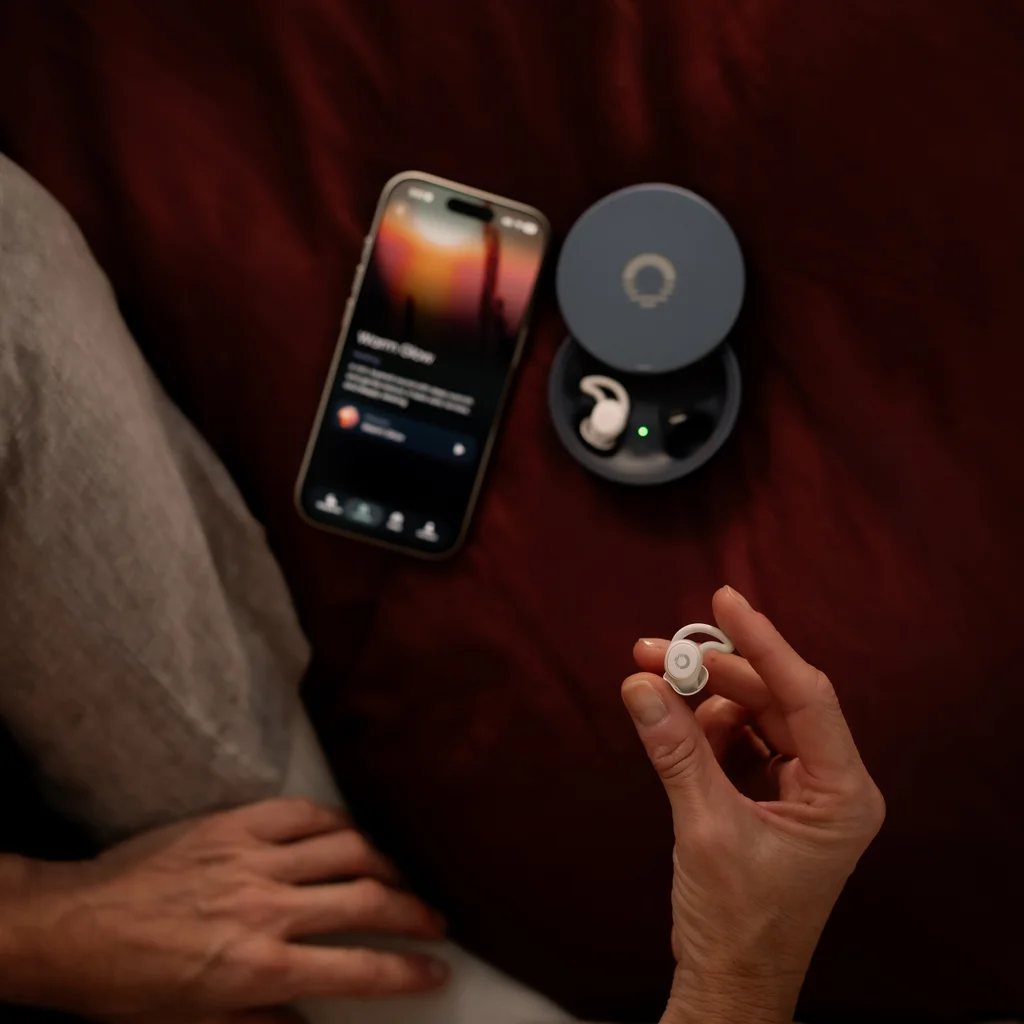
A couple of years ago, I started falling asleep with Apple’s AirPods Pro in my ears.
I’m a side sleeper, so this involves trying to carefully tuck my head into my pillow in a way that minimizes ear pain. It also means being jolted awake by low battery warnings during the night, then waiting for enough charge to pop them back in again. The ordeal is worthwhile, though, just to block out snores and calm my racing brain with a podcast or some ambient noise.
This makes me an ideal candidate for Ozlo’s new Sleepbuds 2. The company, formed by former Bose engineers, released its first-generation earbuds for sleep in 2024, with noise masking, ambient sounds, and phone audio in a narrow profile conducive to side sleeping. This week, Ozlo is launching the Sleepbuds 2, which address some problems with the original while adding a few new features. The new buds cost $279, which is $30 more than the original.
Ozlo’s cofounder, Charlie Taylor, sees Sleepbuds 2 as the flagship product in a future ecosystem that will include bedside speakers, AI agents, and forays into clinical sleep interventions. The company has a couple hundred thousand users of its original buds, and hopes the revised version will help bring a lot more people on board.
But after a long weekend sleeping with the new buds, I’m still not entirely sold on swapping out my AirPods.
What’s new with Ozlo’s Sleepbuds 2?
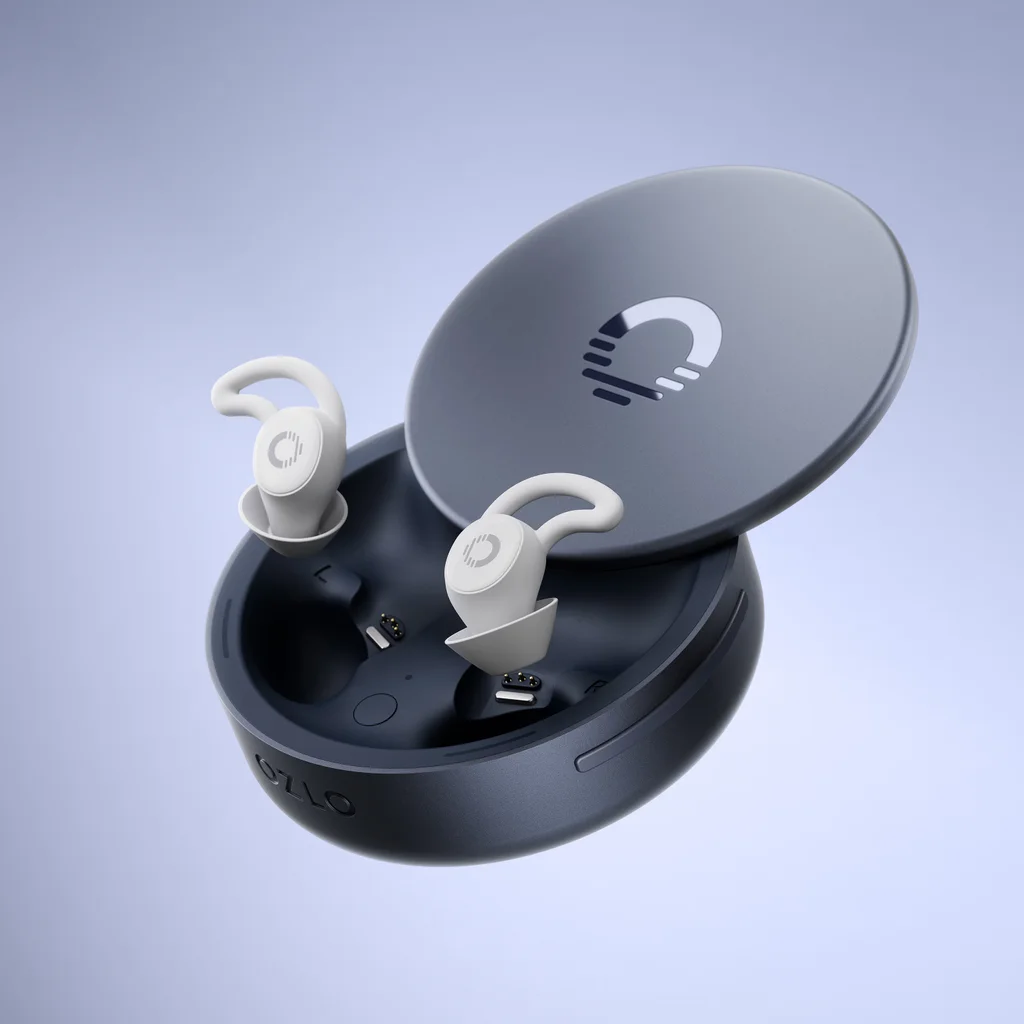
Ozlo’s new Sleepbuds are virtually indistinguishable from the original, except for a new button inside the case. This can start and stop Ozlo’s built-in collection of ambient sounds or act as a snooze button for the earbuds’ alarm feature.
The bigger improvements are on the inside:
- The battery lasts up to 14 hours, versus 10 hours on the original. It should easily last the night even with Bluetooth audio from a phone, which uses more battery than Ozlo’s built-in sounds.
- Ozlo put a new data pin on the earbuds to improve connectivity with the case and allow for faster pairing with users’ phones. This addresses a common frustration with the original, where the buds would fail to pair before users removed them from the case, and they had to start the pairing process over again.
- A new audio package supports finer-grained equalization adjustments, so Ozlo can offer special audio modes for airplane use and podcast listening.
- The new buds have more accurate activity sensors for sleep tracking.
None of these improvements drastically change what Ozlo is offering, but help the Sleepbuds 2 deliver more on the promises of the original.
“It’s really a flagship product that addresses the vast majority of feedback we’ve gotten over the last couple years,” Taylor says.
Sleeping with Ozlo’s Sleepbuds 2
The Sleepbuds 2 do a few things particularly well.
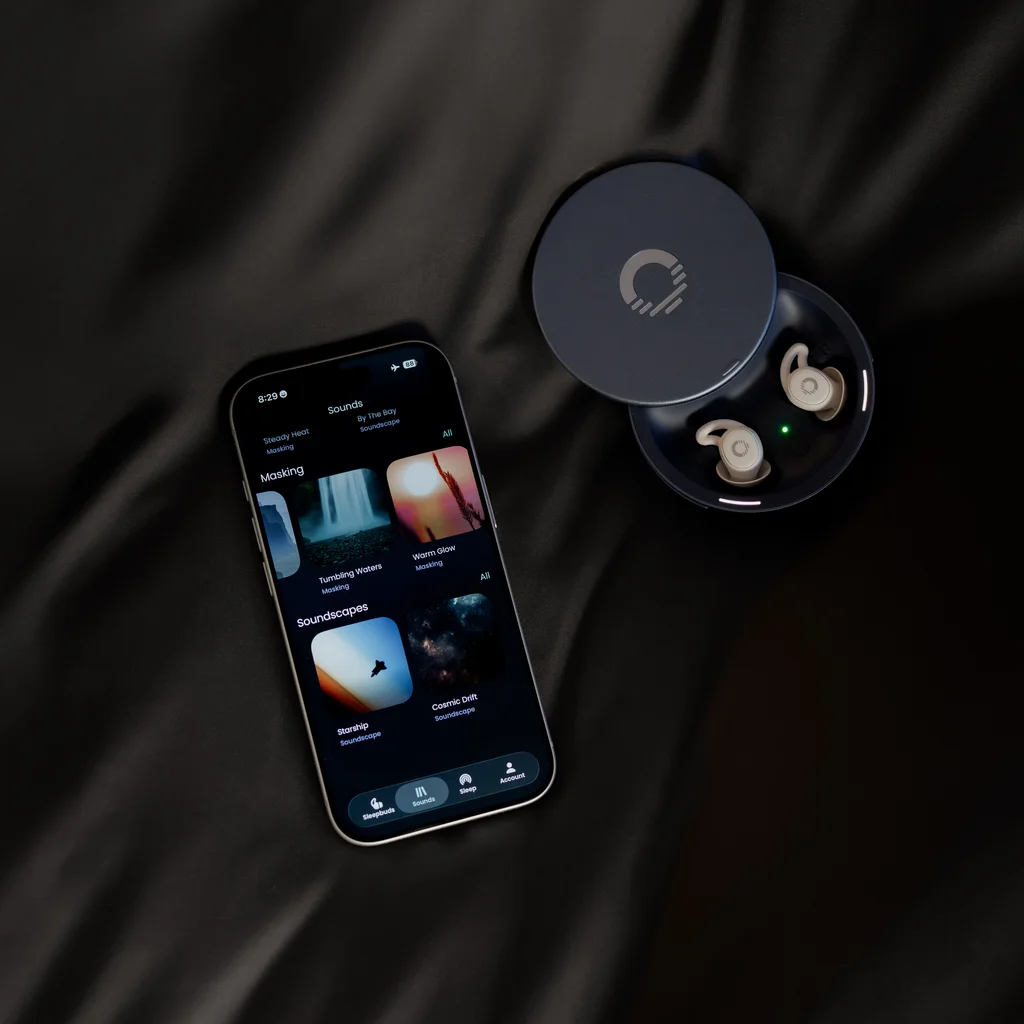
The built-in selection of ambient noises sound great, and being able to activate your preferred sound with just a button push is a nice improvement, especially in the middle of the night when you’re trying not to look at your phone.
The Sleepbuds 2 also have a neat way of segueing from Bluetooth audio to those ambient sounds after detecting that you’ve fallen asleep. If my mind’s feeling especially racy, I’ll put on an episode of Sleep With Me to help calm down. Having the earbuds automatically switch to ambient audio prevents Scooter, the podcast host, from talking into my ear all night, which can have a weird effect on my dreams. (Apple added sleep detection to its AirPods in iOS 26, but the abrupt audio cutoff sometimes wakes me up, and occasionally the audio pauses before I’ve even fallen asleep.)
I appreciate Ozlo’s philosophy of sleep tracking as well. Instead of assigning a sleep score—which doesn’t inherently mean anything and might just make you feel bad—Sleepbuds 2 collects basic details about the amount and quality of your sleep, and asks you to rate how you feel in the morning. Over time it can spot patterns in what might be disrupting you, as the case also measures light levels, noise disturbances, and room temperature, but it’s also something you can ignore.
“What’s most important is that when you use Ozlo, and you wake up, you feel better,” Taylor says.
Why I’m unsure about ditching my AirPods
With the caveat that everyone’s ears are different, the main issue I ran into with the SleepBuds 2 is that they’re less comfortable than I expected.
While sleeping on my side with them definitely feels more natural than with my AirPods Pro 2, they also leave my ears feeling more irritated by the morning, even while sleeping on my back or stomach. Moving to a smaller eartip size didn’t help.
I think the issue lies with the hard stem at the end of the earbud that forms a sharp cylinder around the speaker. Ozlo’s silicone earbud covers don’t seem to sufficiently cushion this section, at least not for me, so I wind up feeling discomfort on the inside of my ears before the night is through.
The other downside is that the Sleepbuds 2 don’t offer active noise cancellation. This isn’t an issue if you’re trying to mask some light noises, but if someone’s snoring loudly next to you, some of that sound is going to get through unless you crank the earbuds’ ambient sounds to a high level.
Taylor argues that active noise cancellation works best for predictable sounds, like a noisy air conditioner or a jet engine, and that it isn’t effective enough against snoring to justify making the earbuds bigger. I disagree, as my AirPods Pro 2 are simply better at making those snores less audible.
The upshot is that I’m left deciding between more comfortably falling asleep on my side with Ozlo’s Sleepbuds 2 and having fewer technology-related hassles during the night, or waking up more comfortably with AirPods, even if it means trying to sleep in a more awkward position. I’m not sure which experience is preferable.
What’s next for Ozlo
Even if it’s not perfect, Ozlo has big plans for the Sleepbuds 2 as the centerpiece of a broader sleep ecosystem.
As reported by TechCrunch earlier this year, the company is working on a bedside speaker with the same environmental sensors and ambient sounds as the earbuds. It’s also developing an AI agent that provides insights on your sleep patterns, and it plans to roll out tinnitus therapies after partnering with Walter Reed Hospital to study the problem.
Taylor, the cofounder, didn’t say much about those plans, which were originally planned for the second quarter of this year, though he clarifies that Ozlo will not gate any of its current features behind a subscription. He also says that even as Ozlo pursues clinical and business partnerships, it will remain primarily a consumer-facing brand.
“We want to be the solution for all people to get better sleep. That means providing the right form factor for the right outcome, and producing the right software and software therapies across the board,” he says.
While I wish the Sleepbuds 2 were a better fit for me personally, the reality is that few other options exist. Amazon is awash in no-name companies making slightly flatter versions of conventional earbuds, but the only other reputable company doing sleep-specific earbuds is Anker. Its Soundcore Sleep A30 buds have noise cancellation, but have received middling customer reviews with complaints about connectivity and comfort.
All of which means that for the foreseeable future, Ozlo will be the main company trying to solve folks’ sleep issues in way that doesn’t involve exorbitantly expensive smart mattresses or sleep trackers that don’t actually help with the falling asleep part. Even if the results aren’t perfect, Taylor isn’t surprised that few other earbud makers are even trying.
“It’s really, really, really hard to do, and really hard to do well,” he says. “When you make a sleep product, the barrier for what can go wrong is really, really different than a regular headphone.”