
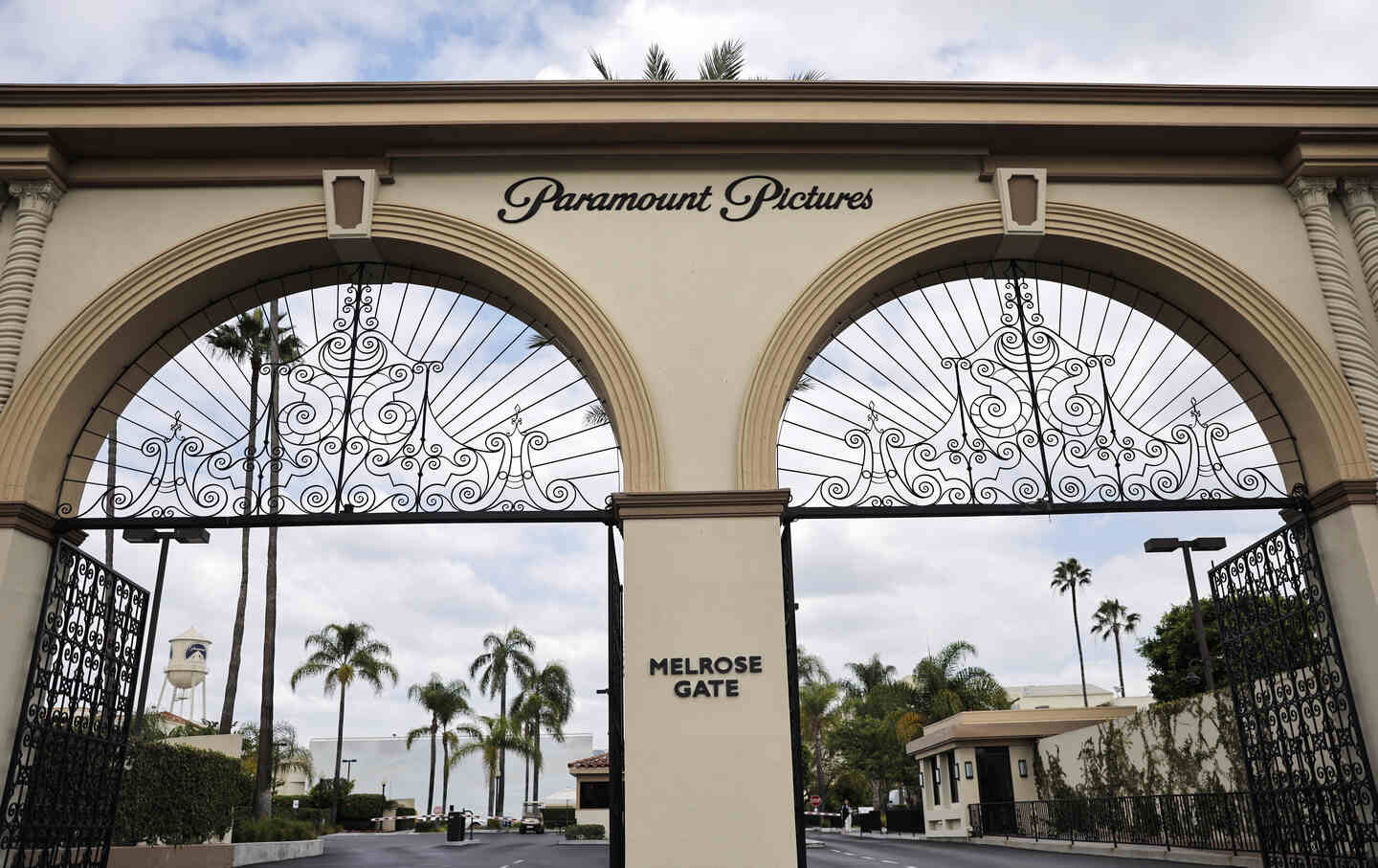
Jon Wiener: From The Nation magazine, this is Start Making Sense. I’m Jon Wiener. Later in the show: the TV networks finally united in rebelling against Trump – John Nichols will explain. But first: The big sell-out: California Attorney General Rob Bonta signed a sweetheart deal with a Trump ally to merge media giants Paramount and Warners. Norm Eisen has our analysis – in a minute.
[BREAK]
Election protection and media independence: for the latest on these topics, we turn to Norm Eisen. He’s co-founder and executive chair of the Democracy Defenders Fund and Democracy Defenders Action, which work on stopping Trump’s assault on democracy and protecting elections. Before that, he worked as co-counsel for the House Judiciary Committee during Trump’s first impeachment and trial in 2019 and 2020. And before that, he was Obama’s White House ethics czar and then Obama’s ambassador to the Czech Republic. He’s written many books. He’s a frequent guest on CNN and MSNOW, and his writing appears in The New York Times, The Washington Post, The Atlantic,and online at his Substack, “The Contrarian.” Norm Eisen, welcome back.
Norm Eisen: Jon – you know, I love being with you, my friend, and all my friends on The Nation podcast.
JW: Last time you were here was the first day you went to court to defend Davey Hearn, the Olympic athlete who had just been arrested in Washington, at the reflecting pool on the mall. What exactly was his crime? What had he done?
NE: Davey Hearn touched water. He felt, he palpitated, the already-detaching liner of the reflecting pool. And Jon, since I was last with you to say that Davey, who brought honor to his nation by touching water as an Olympian and as a world champion many times over, was then being prosecuted –but there’s no crime. And starting at the arraignment and then in seven subsequent motions, we absolutely battered the government’s case and showed again and again that Davey was innocent. And finally, we forced them to concede, yes, David Hearn is innocent. Well, they would not admit his innocence, but they did say, which is the same thing, a botched, rushed installation was the cause of the damage, including in the exact sector that he touched. So, there’s no case left against Davey, and the case has been dismissed.
JW: Thank you for that one.
NE: One of 300 matters. But that’s one of the more important ones because it exposes the essence of corruption. Trump did it. He’s blaming Davey Hearn. It’s scapegoating. It’s corruption.
JW: This week’s big news is that on Monday, California Attorney General Rob Bonta agreed to settle the lawsuit that had blocked Paramount’s massive takeover of Warners, a deal that would give the Ellison family — supporters of Donald Trump — control over not just CBS news, which they already have, but also CNN. The New York Times reports that you have been “the leader of a coalition of entertainment and news industry professionals who opposed the deal.” A lot of us are feeling betrayed this week by Rob Bonta, who had a strong record of standing up to Trump. Tell us about the deal that he agreed to.
NE: Well, no massive multi-state case like this one is about any one person. Remember, Gavin Newsom is the one who first called for this while AGs were continuing to push strong. Obviously, it’s not the outcome we hoped for. I understand why people are angry and upset. We, as I told The Times, we made a formal announcement last night on Oliver Darcy’s “Status,” a wonderful publication. I’ve talked to other reporters about it, Jon. And I’m glad to tell The Nation. This “independent editorial board,” which even AG Tong of Connecticut, who was pushing for the board, even the AGs expressed their disappointment in the deal.
JW: Let me just fill in here: One of the biggest concerns has been protecting CNN from the pro-Trump owners, and the deal included what they said would be a board of journalists that would “ensure the editorial independence of CNN and CBS news.” And of course, we all want to know: how is that supposed to work? How is it going to be enforced?
NE: The journalists are being appointed by the Ellisons’ board of directors! But we’re going to apply and we’re going to put the independence in this supposed journalistic independence board as a coalition, including us at Democracy Defenders. Our new program is called C-Watch. We’re going to watch CBN. We’re going to watch CBS. We’re going to watch CNN. I think I just merged them as “CBN,” which is a good coinage. And we’re going to watch the cronies to make sure that when the Ellisons appoint this board that the board is credible. So those three C’s we will call out. If the board is not credible, we will represent, as we did in the Karen Attiah case, where we helped that crusading journalist win against another Trump crony and collaborator, Jeff Bezos and his Washington Post. They falsely accused her. We were proud to represent her along with the Washington News Guild.
We’re going to have this C-Watch program with the coalition, including whistleblowers and journalists, who feel that the combined entity is not being honest, we’re ready to make sure they have lawyers to go to court, ourselves, and to call out, starting in the election, Jon, with our partners like the wonderful MediaMatters.org, to call out if they’re doing election subversion propaganda on either of these networks. We’ll see. So, we’re not leaving it to others.
We in civil society, let’s remember that the AG’s — people are are tough on them. And people should articulate what they feel. That’s the meaning of the First Amendment. But these are the same AGs who’ve given us over 100 cases defending our democracy. We, with me and our partners in civil society, the democracy movement, we just won the Postal Service case. We’re going to do more cases together. So, the movement is larger than any one case, no matter how disappointed we may be in the outcome. And as I say, some of the AGs themselves are speaking out about their disappointment.
JW: The larger reason we were excited about this case, the Paramount-Warners merger, was that it seemed to show that even when the federal government under Trump had abandoned antitrust enforcement, the states, the blue states, working together, could do that work. The settlement seems to show that’s really not going to be possible. Or am I going too far here?
NE: You’re going a little too far, because the blue states have had triumphs: in the Nexstar-Tegna merger case, and in another very important media consolidation case – Live Nation-Ticketmaster.
If I have to articulate a disappointment, it is with Governor Newsom, who led the political establishment in California, including both in and outside of government, those who we normally admire and work with to pull the rug out from under our state. Geez. And labor, who were a part of this case. That’s a pretty tough situation.
I’m not making excuses. I’m a fighter and it’s been reported in the press that I worked furiously all weekend to try to stop this. But let’s make sure we’re taking a holistic view. And in California, the moment I had my personal ‘oh shit’ moment was when the Wall Street Journal reported that Governor Newsom was pushing for a settlement. And he did not repudiate The Wall Street Journal. So, there’s plenty of responsibility to be taken. But with all of that, there’s also – we need to understand this in context of larger fights, including fights – Governor Newsom just signed a bill that will toughen California elections against intrusion.
So as bitterly disappointed as I am on this fight, I think there’s hope even for future antitrust fights. And Jon, just like C-Watch, our new coalition, the block the merger coalition is not stopping. Maybe we’ll rename ourselves “Block the Mergers.” We’ve never had this kind of mass nationwide anti-corrupt combination coalition. You know, I love alliteration. So, our coalition is keeping going. And it’s a big tent coalition. And different people have different feelings about the people involved here and even about the settlement itself. Some people, it ranges from horror, but there are some people in the coalition who don’t – nobody’s excited, but it’s a diversity of views. That’s what big tents are. We have conservatives, conservatives also have historically questioned too much power. Some on the more libertarian side. Too much combination power like Paramount Warners will have – look at Teddy Roosevelt. He was a Republican. He in many ways the godfather of modern antitrust. So, there’s many, many more chapters to be written in this fight. Even if, I’m not going to lie, I share the anger and the disappointment.
JW: We need to talk also about another big case you’ve been at the center of. A lot of our friends have been worried about election protection, especially about ICE at the poles, and whether the courts will be able to stop Trump from sending ICE or other federal officers to polling places on Election Day to intimidate Democratic voters. You have just filed a lawsuit along with other election protection groups. You’re representing the NAACP, Asian and Latino groups, several big unions. Tell us about that one.
NE: Yeah, it made me so happy. I entered my appearance, and I got back on the docket. It said Norman Eisen representing the painters’ union, the AFT, and other unions. I’m like, wow, I’m proud. And of course, that is something. That’s why I like to come on The Nation podcast, because these principles of, in this case, the NAA and the other racial justice groups, equity and justice for all Americans are so present. We are a labor-centered movement in the democracy movement, Black and brown leaders, but also big tent, Jon. We also have room for more conservative voices in our movement. By the way, besides the NAA, there’s in our case, there’s a companion case that is led by LULAC (Leage of United Latin American Citizens). The city of Denver is involved in that – two parallel cases.
So, what is that case about? ICE has made clear that they and the FBI and other Trump’s little green people will be intimidating voters, including at the polls. That’s a voter intimidation scheme. You don’t have to wait for November. It’s begun already, Jon. And so, we filed right now under section 11 B of the Voting Rights Act. Other parts of the Voting Rights Act have been gutted. 11 B is so strong, you can’t intimidate voters in this fashion. They’re doing it right now. This is not something that we need to wait for. And we’re going to protect the poles. Just like we worked on the National Guard case that went to the Supreme Court. We helped get a court ruling. The National Guard can’t be deployed willy nilly. So, we’re pushing back on these issues to make sure, like we did on the Postal Service, with those same AGs that everybody’s so mad at. But we wanted the Supreme Court. We protected the vote. And, this is a case where we’re fighting. And I think we’re in, I think voters can be confident that their vote will be safe, free and fair because of this big coalition of election protection, government officials and groups like Democracy Defenders. We got your back.
JW: Now it’s time for your Minnesota moment. That’s news from my hometown of Saint Paul that you won’t get from Sean Hannity. Norm, you represent the Minnesota eight, one of the plaintiffs in the – what we call the NAACP lawsuit. And Saint Paul is sort of the ground zero for this lawsuit, and Saint Paul is sort of ground zero for this. It was the aggressive door-to-door enforcement operations in the Southeast Asian neighborhoods of Saint Paul. That is one of the pieces of evidence you cite in this case.
NE: Yes. Our client in the case is organized labor. But you are right that the case encompasses this shocking ICE behavior. Jon, in the midst of the ICE crackdown, I traveled to Minnesota personally on a delegation with NAACP head Derrick Johnson and LULAC head Juan Proaño to see the horror for myself. I believe history will record the events in Minnesota. The way we talk about Birmingham or Montgomery or Selma, when we talk about the civil rights movement, it woke the country up. It’s not important just for our litigation. It’s historic because it’s a pivot point in the democracy movement. Part of the point of this case is we cannot have that in, around or in the run up to Election Day. So, we’re very proud to be litigating a prevention of any repetition of that. And I think we’ve got a big coalition. Trump sometimes says, “big and beautiful.” Our coalition really is big and beautiful. It looks like America, and we are going to stop this from happening again.
JW: One more thing. You mentioned that California has just passed several election protection laws. I want to just look at those briefly. One bill prohibits the seizure of ballots, election records, or voting in technology before an election is certified. That’s the official declaration of the winner. Another makes it a felony for people in positions of authority to direct workers to interfere with the delivery of a mail ballot or its return. Another of the new California laws prohibits arrests within 200ft of a polling place on Election Day, with exceptions for acts related to disrupting the election or crimes against people or property. But should every state have laws like this?
NE: Yes. And I’ll tell you why. Every state should have its own protection, civil and criminal against this kind of misconduct. Under one of the founding principles of our country, it’s called in legal circles — scholars of the founding and framing of the Constitution – “Our Federalism.” States are given primary power over elections. That’s in article one, section four of the Constitution. There is a role for Congress as well. It’s totally silent: Article one, section four. There’s no role for the president in that text. So, states have a broader purview of powers. Donald Trump can’t pardon state crimes. We’re seeing ICE people going back to Minnesota and the other ICE atrocities being prosecuted in the states for violating state criminal laws. Same here. Let everybody know if you break the law, Donald Trump’s behest. Now, fortunately, we won at the Supreme Court. So, the illegal Postal Service rules have been frozen. Supreme Court left the injunction in place. But there’s many other ways Donald Trump could instruct lawbreaking. Sure, he can pardon himself and others – not for state crimes, state damages actions. Also on the civil side, state prohibitions can be enforced under article one, section four in our federalism by the federal courts. Civil prohibitions. We need these laws and many more, not just in the election area. Let’s assert our state authority to protect our democracy. We have blue state power. Let’s use it. And that’s a place where these laws were incubated. I know everybody’s mad at Bonta, Newsom, but they were incubated by Bonta, Newsom and signed in. And I’m not excusing the Paramount Warner settlement, but there is a larger landscape here. And I think you brought us to a suitable place. So, feel your rage. But then I let mine out, and we protesting today in front of Paramount. They’re the real ones we should be mad at. We should start with the Ellisons. Let’s ventilate and then let’s keep the block the merger fight going. There’s much more we can do, including with C-Watch. There’s litigation and other things we can look at. And let’s also move on. And at the same time, we can walk and chew gum, deal with some of these other battles, Jon.
JW: In conclusion here, what’s the most important thing we can do to preserve free and fair elections?
NE: Be an elections champion. I don’t care who you vote for. Vote. Vote early. Vote by mail if that’s your preferred form of voting. If you have another preferred form – to go in in person for early voting, to do a drop box, to vote on Election Day. Every day is Election Day, now, Jon, because of early voting and mail in voting, and we protected that. So be an election champion by voting – voting in the way that is best for you, voting early, and getting everybody else you know to turn out and vote.
Voter intensity is sky high. This is our chance to make a U-turn in our country. Whoever you vote for, to bring democracy back by having an overwhelming turnout. So, putting on my democracy defenders action hat: that’s the number one action we’re looking for.
JW: Let’s have “an overwhelming turnout”: Norm Eisen – he’s a hero of election protection, co-founder and executive chair of Democracy Defenders Fund and Democracy Defenders Action. Read him online at The Contrarian. Norm, thank you for all your work – and thanks for talking with us today.
NE: Thank you Jon. Look forward to being back with you again soon.
[BREAK]
Jon Wiener: For this week’s political update, we turn, of course, to John Nichols. He’s executive editor of The Nation. John welcome back.
John Nichols: It’s an honor to be with you, my friend.
JW: This week the big news is about the news: Trump banned CNN, MSNOW and Politico from the White House. And the TV news networks responded by refusing TV coverage of Trump’s events. This is really an unprecedented show of resistance by the mainstream media. ABC, CBS, NBC and Fox are all not providing any TV news coverage of Trump’s events. Fox, I emphasize, Fox is participating in the mainstream media’s refusal to provide TV coverage of Trump. What’s your assessment of this move?
JN: Well, I think it’s significant. What’s going on? I would clarify only in not providing TV coverage of Trump. Because my sense is that they will still cover him quite a bit. He will not be unheard. By the same token, they are not participating in some of the structural things associated with TV coverage. And that includes providing the close in camera crew that tends to travel with the president on a particular day or to do something.
At the end of the day, what we’re seeing is something that is fascinating. Trump is trying to bar certain networks. Other networks are trying to say, ‘look, we disapprove of that, and we stand in solidarity with those who have been excluded in this situation.’ It’s going to be a very amorphous and complicated process. I think that’s really vital to understand. And then we can get to some of the deeper questions about how the White House press corps covers things in general, and all of the very legitimate questions about this whole notion of access, media, etc. But what was fascinating here, and I’ll give very high marks to Kaitlan Collins as an example.
We are speaking on the day that the UN General Assembly is kicking into session. And as Trump was coming out of one of his events there Kaitlan Collins from CNN was there front and center and yelled a question at him. And he essentially said, and I’m paraphrasing, ‘well, you’re not supposed to be here.’ And Kaitlan Collins came back without a lot of explanation, without a lot of extrapolations on it. She just said, “the UN says we can be here.” And then she said her question again, very journalistic, just kind of keep pressing on it. And what’s remarkable or at least striking is Trump answered it. So, in that little clash, you saw a reporter step into the void that’s been created, use the avenues that are available, i.e. that other places aren’t barring media. Trump’s trying to do it at the White House and got a question asked and answered. We saw a similar situation the day before at Gracie Mansion in New York, where a lot of the outlets that were barred were apparently present.
JW: This is where Mayor Mamdani invited Trump to the official residence for an hour conversation about – especially about developing housing in New York.
JN: Yeah, good conversation apparently. And more power to Mamdani and for finding avenues that he could try and help his city at this event. The issue of barring media outlets came up and Mamdani stepped to the microphone and said, “hey, in this place, we welcome the broad range of media media that we agree — that we might like better than others” or whatever. I’m not going to – I want to be very careful about how I paraphrase. You know him. But the bottom line was, he said ‘the range of opinions, the spectrum of ideas.’ And it was a very, on Mamdani’s part, a very good restatement of basic premises, of freedom of the press, respect thereof. And then Trump stepped up and made his attempt at a defense of what he has done. We’re in this kind of interesting place.
JW: Trump’s ban was on White House access, especially to the White House press room, to the three news institutions that he says are providing only far left propaganda. Everything that they say about him is negative. There’s nothing about his accomplishments, and he’s sick of it. And so, he is not allowing them in. The White House and other networks have responded that they won’t step in to provide the TV coverage that CNN usually does. Just remind us, what does the Constitution say about the president banning what he considers to be far left propaganda.
JN: Well, I’ve written a lot about this. In fact, I did six books on this. And the basic premise of the First Amendment, which, by the way, was forced on the founders, they were trying to get the Constitution approved in the former British colonies, now states and a whole bunch of places said, ‘hold it, we’re not that excited by you guys. And we want more protection for a diverse range of opinions, opinions that you may disagree with, or many of you may disagree with.’ Bottom line was that to get the Constitution approved, you had to have a Bill of Rights. A Bill of Rights starts out with affording people some basic rights that have to be understood in connection to each other. This isn’t because the founders liked a free press, per se. They liked the idea that an informed populace would get a lot of opinions, and then sort through that – and that’s what you end up with in the First Amendment.
JW: Shat the courts today have said is that this part of the First Amendment prohibits what they call “viewpoint discrimination.” Would you say what Trump is doing now is a kind of a textbook case of viewpoint discrimination, banning people who criticize him from covering the White House?
JN: He explicitly acknowledges it. The decision on the quality of opinions that come through on any platform in a newspaper, on digital and on broadcast, that’s by and large, according to our Constitution, according to the basic premises of this experiment — that’s to the people they get to, to sort it out in some sort of free market of ideas.
And the danger in this is the concentration of ownership of media, i.e. if a small handful of very powerful and very wealthy individuals control huge swaths of media, they create a narrow discussion that is perhaps often more connected to their concerns, right. Can they make a lot of money? Can they have the free trade deals that they see as beneficial to them? Can they have the wars that they think need to be fought, etc., without really having that clash of ideas that invites the populace into the discourse, perhaps to say ‘No’ to power. And so, boy, there’s so much space in which to do media criticism. And we just celebrated the 40th anniversary of Fairness and Accuracy in Reporting, a great progressive group that does media critique and looks at all this in really brilliant ways. There are conservative media critics who often look at this in very smart and serious ways. The person who shouldn’t be media decider is the president of United States. Presidents can always critique the media. They can criticize. That’s totally legitimate. But when you take that and couple it with power and FCC presidential orders, things like that, that’s where it gets very dangerous for democracy.
JW: Network TV news: The audience has been declining for years. Cable TV news, that audience is declining. But Trump grew up with TV. He made his career in TV, and TV is what made him famous. Made it possible for him to run for president. He’s a TV addict. We’ve been told his staff organizes his entire schedule around his favorite programs on Fox News. He loves good TV coverage. He fumes about bad TV coverage. His most crazed social media posts are usually responses to something he saw on TV. So, he cares about this a lot more than millions of Americans do, and the White House is now encouraging people to abandon TV news, which has criticized him, and download the White House app to get the direct feed of Trump’s official events. Monday, they announced the creation of something they’re calling Trump TV, streaming on the White House YouTube channel. This is a way to kind of expand the MAGA media bubble, and it’s ominous for us because it is the creation of state-run media as an official propaganda operation. Have you tried to look at Trump TV on YouTube? I understand there’s nothing there now, but a replay of the 2025 inauguration.
JN: Busy days, Jon, and I haven’t quite had the time. And what I might suggest to you is that I think the overwhelming majority of Americans are probably not going to find their way to that app, and that’s to the good.
The way to address the crisis of major media is a diversity of ownership, a diversity of views, many platforms that people can easily access that ideally at least try to give facts, information and perspective. And I always go back to a reference that we made in one of our books a long time ago that, about a century ago in New York City, there were 24 daily newspapers and when you went to a newsstand, it was just – so many of them.
JW: I want to talk a little bit more about what we are losing with the network news, not providing TV coverage of official White House events. What are official White House events? Well, there’s these White House newsroom jousting events between the press secretary and the appointed representatives of the media. And then there’s the official photo ops. The first one that didn’t get covered, I understand,was yesterday, when there was a ribbon cutting ceremony for Trump’s new helipad on the South Lawn, and we did not get to see video of that.
JN: Tough to miss that.
JW: [LAUGHTER] This is something that you’ve written about a great deal. What goes on in the White House newsroom, and what goes on at official photo ops?
JN: A lot of it is very propagandistic. And that’s under Democrats and Republicans, by the way. You know what I mean? They manage the imagery and the power of the office in ways to influence the discourse. There’s simply no question of that. And frankly, a lot of times the White House press corps is filming it, recording it, kind of putting it out. I frankly do often wonder about the value of having major media outlets basically repeating, doing what was, what is sometimes called stenography to power, right? Yeah, and this great question of access journalism, right? You’re there and you want to be called on. You want to be given the interview. You want to have that access. And I understand the dynamic and I understand people who think it’s important and valuable.
But I would tell you that my concept of journalism – and people practice it in many different ways. And I respect both journalism that is about expressing your opinions, journalism is about gathering information. It’s all part of this great mix. But if I look back at what kind of influenced me as a young person it tended to be not a White House press conference or a White House photo op. It was in some parking garage in Washington, where apparently Woodward and Bernstein were meeting with some guy who called himself Deep Throat and who was an insider, right. Who is, it turned out, history tells us, was an insider, knew his way around what was going on in the circles of power, but didn’t choose to call reporters in to provide that information and said, “maybe we should meet on the third level of the parking garage at some late time at night.” And it strikes me that that information that matters very, very often comes from outside the White House and outside that circle of access. And we should be making that a big part of our discussion at this point. That doesn’t mean even if we have a critique of some of how things have operated in the past, that doesn’t mean you should in any way blink on opposing what Trump is doing, right? That what Trump is doing is in and of itself wrong and bad. By the same token, if we want to start to open up a discussion about how the-White House should be covered, I guess I’m probably in the all-of-this-and-more camp. Yeah. If you can get in there and get a question asked, especially maybe in a hallway, not at the official briefing, but off to the side — but something like, I guess what you would have seen in “West Wing” at its best.
JW: Yes, “The West Wing” comes to mind.
JN: Yeah. If you can get information that way, great. I understand that. But I do think that a lot of our media outlets have underplayed going to the parking garage or trying to cultivate sources outside of that kind of narrow circle of power. And they may be people who have power, but when they step out of the official briefing room, I think that’s often where we get the most important information.
JW: John Nichols – read him at TheNation.com. John, thanks for talking with us today.
JN: Pleasure.