
In Seattle, the average price of a gallon of gas is now $5.96, a 30-cent increase from only a month ago and a $1.50 increase from a year ago.
The United States and Israel’s conflict in Iran, and the constricted flow of oil through the Strait of Hormuz, has caused gas prices across the country to soar. That’s made workplace commutes more costly for Americans already facing an affordability crisis.
For students, staff, and faculty at the University of Washington, though, they have a new way to get to work if they want to ditch their cars.
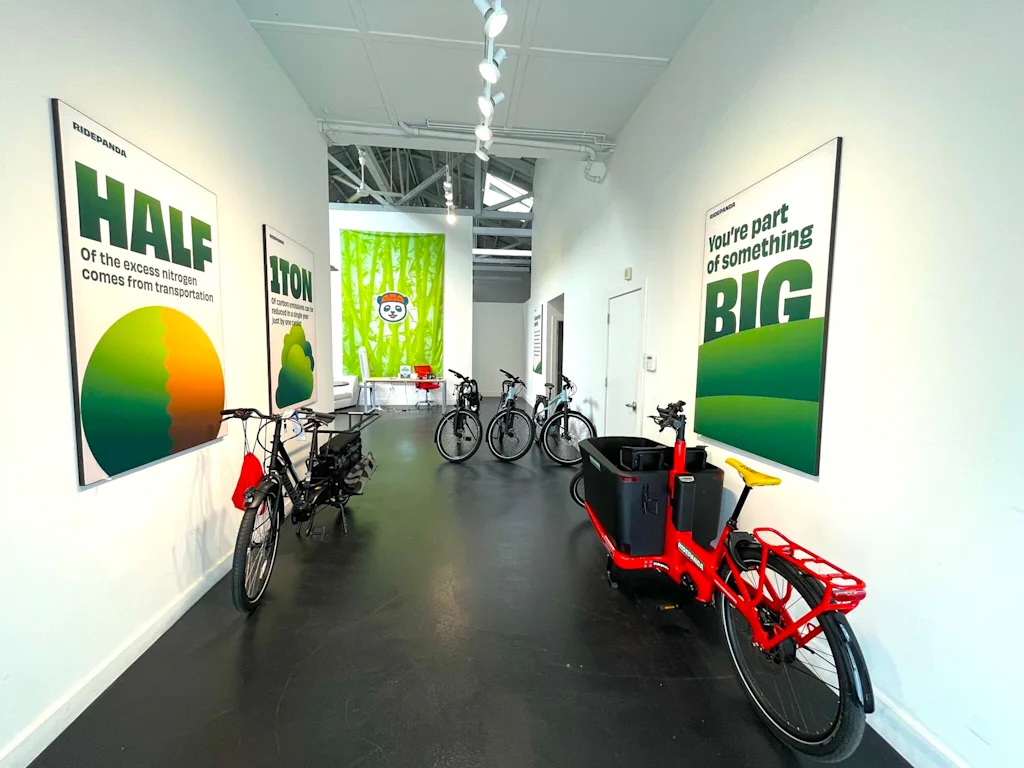
The university recently set up a partnership with Ridepanda, which allows companies to offer e-bike and scooter subscriptions as a workplace perk.
The partnership was in the works for a while as part of the campus’s sustainability goals.
But the timing is fortuitous: Commuters could start using Ridepanda as of early April, right after national gas prices exceeded $4 a gallon for the first time in four years. Prices have only increased since then.
A record month for Ridepanda subscribers
Just as April was a record month for gas prices, it was also a record month for new Ridepanda subscribers, the company says.
Overall, subscribers are up 46% since gas prices first began to spike in March, and up 94% compared with this time last year. Ridepanda saw a record day for orders in April, when they were 311% above the average, and has continued to see that trend play out into May.
The majority of new subscribers are also new to the world of micromobility, says Ridepanda cofounder and CEO Chinmay Malaviya.
It’s not yet clear how many are switching from gas vehicles because of the oil crisis, but the company says on average, its riders—many of whom have never biked to work before—replace about six car trips per week. That saves companies some 1,500 pounds of CO2 emissions per employee per year.
The surge in interest now makes sense to Malaviya: “We run surveys . . . and ask, What triggered you to do this now? What incentivized you?” he says. “Cost is increasingly a factor . . . it is top of mind for many.”
It’s one of the top three reasons customers turn to Ridepanda, those surveys have found, along with the sustainability and the health benefits of biking over driving.
Daily commuting costs are increasing
Costs can include hefty parking fees, particularly in downtown areas, as well the broader expenses of car ownership. Malaviya expects that rising gas prices are increasingly becoming a factor.
“We were planning for growth, but it has come in at an even higher level,” he says. “We couldn’t predict these gas prices in advance. It has had a significant delta growth shift for us.”
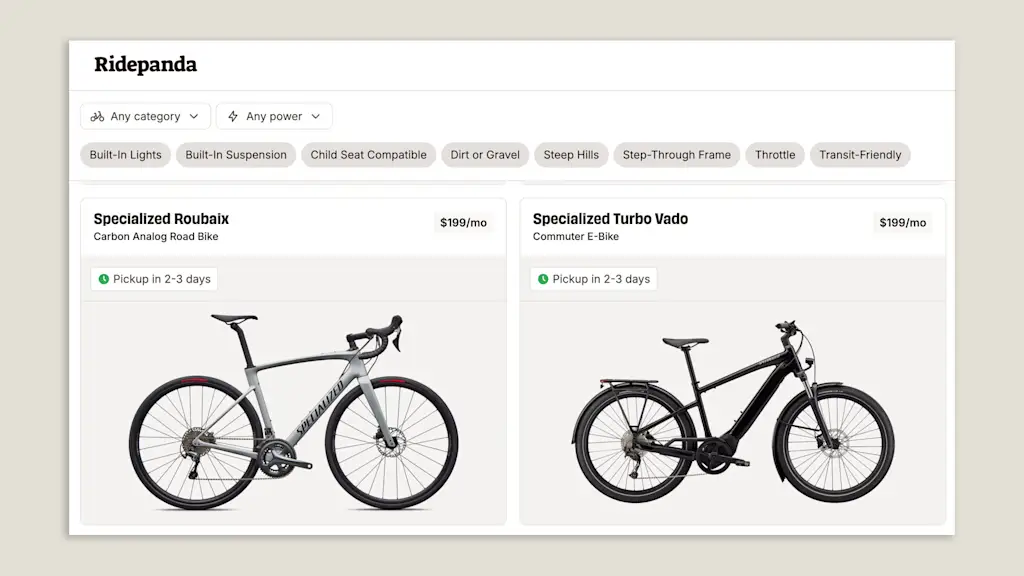
Average daily commuting costs have increased 11%, to $17.17 a day, consulting firm Gartner told USA Today. Ridepanda subscriptions begin at $45 a month—though they vary depending on the type of micromobility option you choose; some cargo bikes, for example, can exceed $200 a month.
The company offers multiple options to appeal to all sorts of riders. If commuters want to get to a train station, they could subscribe to a foldable scooter. If there are hills between their home and work, an e-bike might make sense, but if they want exercise, they can get a regular bike. If they need to drop their kids off at day care along the way, they might try a cargo e-bike.
In many cases, employers subsidize the entire fee. Outside of the university campus, companies across the country partner with Ridepanda, including Amazon and Google in major cities, and companies like Axon in Arizona. The service is month to month, and includes insurance, locks, and even helmets.
“I get to work feeling happier and less stressed out”
As the commute options and transportation manager at the University of Washington, Braden Kelley aims to get people out of their cars and into more sustainable modes of commuting.
Some 80,000 students, staff, and faculty commute onto the university’s urban campus; congestion is an issue, and parking is limited. There are “several levers” the school can use to get people out of their cars, he says—things like transit passes, carpool benefits, or something like Ridepanda.
In the past, Kelley tried to have the university run its own e-bike lending library, but he ran into budgeting issues. “Ridepanda came in as this opportunity to offer folks an e-bike without as much liability or pressure or cost on the university. This model already existed,” he says. (The University of Washington also partnered with Wombi, another e-bike subscription service, at the same time.)
Now, Kelley rides a Ridepanda e-bike for his 10-mile, hilly commute. “I love commuting by bike. I prefer it over driving, and definitely over transit as well,” he says. “I live right near the lake. It’s a beautiful ride. I get to work feeling a lot happier and less stressed out.”
A micromobility accelerant
Ridepanda didn’t replace car commuting for Kelley—he already preferred biking and transit over driving. Anecdotally, though, he has heard about a few people signing up for the service who currently drive to campus.
“We don’t know yet if people are switching because of the fuel crisis or just because it’s a new offer,” he says.
“But I will say, beyond Ridepanda, we are seeing increased transit use, we’re seeing more people parking bikes, and we’re seeing more people sign up for carpool benefits over the last couple of months,” Kelley adds. “There are a lot of signs pointing to people moving away from cars.”
It’s not clear how long the conflict in Iran will continue, or how protracted the oil crisis will be. By some estimates, gas prices are expected to stay elevated into 2027.
The situation could be an accelerant, Malaviya says, to the effort to get people out of gas vehicles, particularly for short trips.
“It’s making folks look long term, and they can justify [a switch to an e-bike] by saying, ‘it’s cheaper, it’s good for the planet, it reduces pollution, it makes me healthier,’” he says. “It’s not like you’re doing this [switch] and you’re losing something.”
As part of the University of Washington partnership, Ridepanda will collect and share data about those subscribers, asking people why they switched their trips and what commute method they switched from.
Kelley will be following the results closely; the university has a goal to get its single occupancy vehicle rate down to 12%.
“I know a lot of people aren’t happy with rising fuel prices, and it can hurt a lot of folks,” Kelley says. “But for our internal goals, it is something that I believe will help.”