

For decades, the millions of American women who dye their hair had two options: They could spend three hours and upwards of $300 in a salon or grab a $10 box off the drugstore shelf, squint at the ingredient list, and hope for the best. There was no middle ground.
Amy Errett thought that was absurd. “There was no prestige product that a woman could buy for at-home use,” the founder and CEO of hair color startup Madison Reed tells me. “Just because you color at home does not mean you can’t afford good color. That was, in my opinion, a very elitist viewpoint.”
Errett established Madison Reed in 2013, right as the direct-to-consumer wave was cresting. But while brands like Warby Parker and Dollar Shave Club were mostly rethinking distribution—taking existing product categories online and cutting out the middleman—Errett wanted to do something more fundamental. She wanted to reformulate hair color from the ground up, rethinking how it reaches consumers.
The result is a company that is profitable and has raised approximately $250 million in venture capital. Across the U.S. Madison Reed operates 98 Hair Color Bars—which exclusively offer hair coloring services—and sells through Ulta, Amazon, and its own website. The brand is now poised to take market share from competitors that have been around decades longer, like L’Oreal, Schwarzkopf, and Wella.
“A lot of the DTC models were picking off a very narrow aspect of something and trying to build a commerce brand,” says Jon Callaghan, cofounder and managing partner of True Ventures, which has backed Madison Reed since 2013, along with Norwest Venture Partners, Comcast Ventures, and Jay-Z’s Marcy Ventures. “Amy’s tackling something substantially larger—a fundamental activity in beauty and wellness that women do every four to six weeks.”
Callaghan describes Madison Reed as a classic disruption story. “The industry was dominated by large incumbents, very low innovation, poor-quality product,” he says. “Amy sort of flipped the script on every aspect of that.”
Anthropological research
Madison Reed’s origin story begins with a woman and a bathroom.
Errett, a serial entrepreneur and former venture capitalist, recorded about 50 women at home doing their hair with drugstore box dye and observed them. The experience left a lot to be desired. The instructions were unreadable. The smell was off-putting. The shade ranges—often only eight or so colors—bore no resemblance to the complexity of actual human hair. “Dark hair has a multitude of colors,” Errett says.
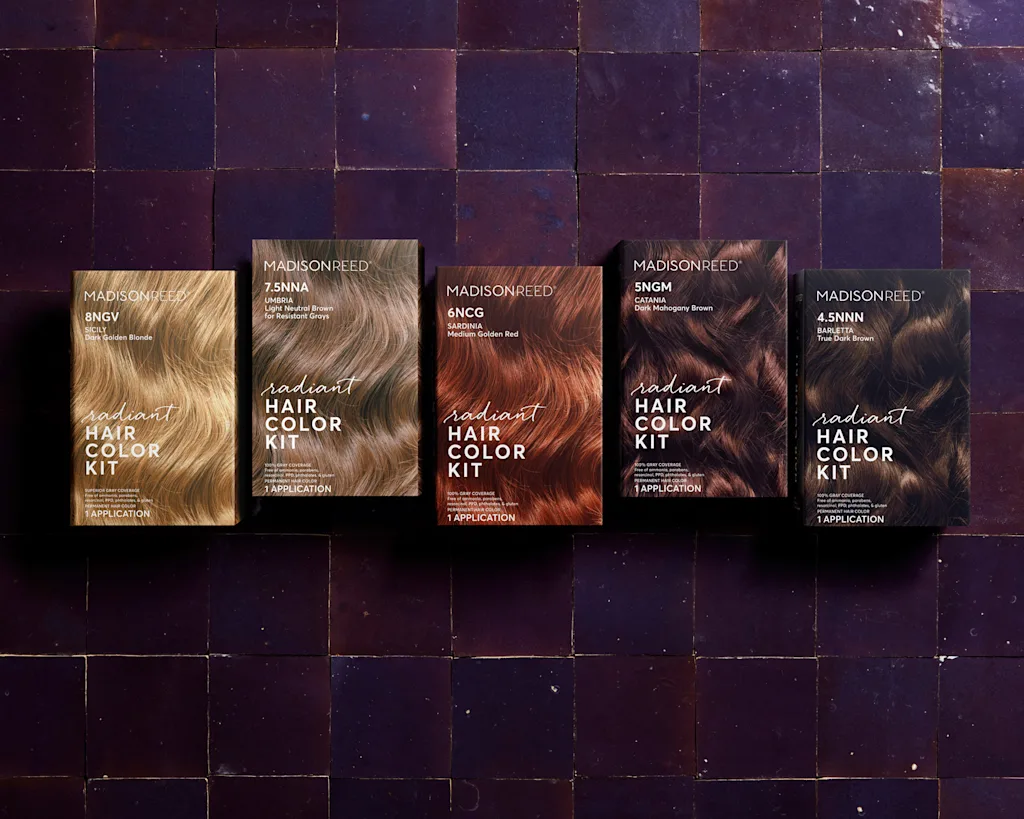
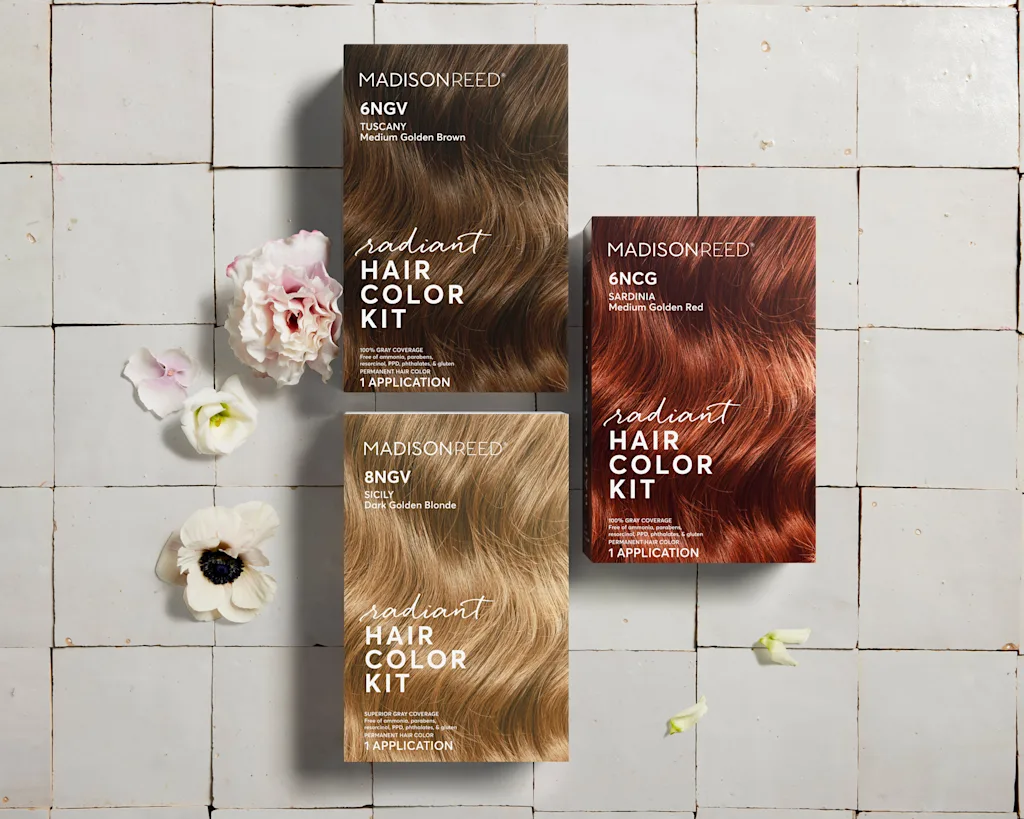
Her first breakthrough was upending the product itself. Errett set out to reformulate home hair color without ammonia and other harsh chemicals that were standard across the category. Madison Reed’s boxes, which retail for $35, contain hair dye made in Italy using a production process the company controls end-to-end. Today, the brand offers roughly 90 shades of color, 55 of which are available to consumers as permanent color.
The second breakthrough was matching the right color to the customer. Half of American women color their hair at home, Errett points out, but the fundamental challenge of the at-home market is that you can’t see the customer. “There’s a lot of science in hair color,” she says. “I have to know what her natural color is, how gray is she, the texture of her hair.”
From the beginning, Madison Reed developed AI to bridge that gap. Customers answer an 18-question quiz, then the system recommends two shades most likely to suit them. The process is working. The company now has roughly 17 million profiles, which gather data points about the color and texture of consumers’ hair. Customer retention rates, Errett says, run at 70% and above, which matters enormously in a business predicated entirely on repeat usage. “If I don’t get you to come back, this doesn’t work,” she says.
Errett had always suspected that many women dyed their hair in salons not out of preference, but because there wasn’t a high-quality at-home hair dye they trusted. But when COVID-19 hit and the world shut down, many women scrambled for an alternative. Madison Reed offered a solution. The brand touted its high-quality, less-toxic ingredients. And the boxes provided everything needed to do the job at home, from plastic gloves to wipes.
Madison Reed received an influx of new customers during the pandemic. For many, it was a revelation that they could have an enjoyable experience doing their hair at home—at a fraction of the cost and time of a salon visit. Many never went back.
A multichannel business
The DIY customer is only part of the market. Many women prefer to have someone else dye their hair, and Errett wanted to make sure Madison Reed was serving them, too.
Shortly after launching the at-home color part of the business, Errett debuted a new concept called a Hair Color Bar. Optimized for speed, these salons specialize in color only (no haircuts), so customers are in and out as quickly as possible. Most women don’t even opt for a blowout; they dry their hair when they get home or use hair dryers provided in the salon.
Before COVID, there were just eight of these locations. But after the pandemic, Errett invested in growing the network of storefronts exponentially. “There was a pent-up demand to get out of your house and go into a store,” she says.
What makes Madison Reed unusual is what Errett calls the “blurring of lines” between channels, which gives women the flexibility to dye their hair in many different ways, depending on their lifestyle and schedule, all while achieving consistent results.
The company assumes that women may choose to pop into a salon sometimes, and use an at-home box at other times. Every color applied in a Hair Color Bar is logged in the company’s backend system and linked to an email address. A customer can walk into any of the brand’s locations and get the exact color that was applied at a different bar previously. She can go online and order that same box delivered to her door.
“She owns that color,” Errett says. “It’s hers. She can do it wherever she wants, whenever she wants.”
The company also sells products through big-box retailers, which is another way to offer convenience for customers—and an opportunity for the brand to continually introduce itself to new consumers. While the conventional wisdom is that a brand’s sales may cannibalize those of third-party retail partners, Errett has found that the opposite is true. In markets where Madison Reed has more than two locations, nearby retail sales at partners like Ulta run 20% to 30% higher out of brand recognition.
“You walk by the [Madison Reed] store at the Oakbrook Mall in Chicago, you see it’s full, then you pop into Ulta eight stores down and you see Madison Reed on the shelf,” Errett says, noting the effect is, “‘Oh, I recognize that. That must be good.’” The Hair Color Bars function, in Errett’s framing, as permanent billboards: 98 stores, 1.3 million services expected this year, all generating awareness that no marketing budget can replicate.
Running three businesses simultaneously—direct-to-consumer subscriptions, nearly 100 physical service locations, and a wholesale presence at major retailers—is, Errett acknowledges, operationally brutal. “You’re running three completely different businesses,” she says. But the hero of all three is the same product, which is what makes the model defensible rather than just complicated.
Thriving in the trade-down economy
The current economic moment has turned out to be well-suited to what Madison Reed sells. Consumer confidence is shaky. People feel the pinch of inflation. Many consumers, even those who are affluent, are eager to stretch their budget. A $300 salon appointment can feel hard to justify when a $35 box—or a $45 Hair Color Bar visit—delivers comparable results.
“People want quality, but they want value,” Errett says. “They’re not trading going out to dinner all the time to McDonald’s. They may not be going to the five-star restaurant, but they still want a great meal.” (She notes that the household income of Madison Reed’s Hair Color Bar customers averages $150,000 and above; in some markets, it’s closer to $175,000.)
It’s a profile that maps closely to what retail analysts have watched unfold across other categories: Walmart’s stunning turnaround among middle- and upper-middle-class shoppers, Ulta’s resilience, the durability of TJ Maxx. The brands winning right now aren’t the ones promising pure luxury or pure value; they’re the ones that have found the gap between the two.
Madison Reed has real estate studies suggesting it could support 700 to 800 Hair Color Bars in the U.S. alone. It’s currently only in 15 markets, so it has a lot of room for growth. But Errett says she’s created a business where 72% of revenue is recurring, through a combination of membership plans to the Color Bars and subscriptions to the at-home product. Errett likes to think of her company as generating “SaaS-like revenue,” even though it’s a consumer business.
When Errett describes the nature of the business to me—heavy physical assets, low obsolescence, a service too intimate to be automated—she also articulates something broader about what it takes to build a durable consumer brand right now: You need a product that solves a problem. You need to meet customers wherever they happen to be. And you need a reason for them to come back. “Hair is confidence,” Errett says. “It is a relatively inexpensive way to feel good about yourself.”
In a moment when people are squirrelly about their dollars, that’s a powerful thing to be selling.