
Close Menu
    Facebook X (Twitter) Instagram
    TRENDING :
    • What Is Computer Asset Management and Its Importance?
    • What Are Personal Micro Loans and How Do They Function?
    • How ‘Nirvanna the Band’ helped revitalize a landmark Toronto venue
    • Watch out, Spotify: This free site is a music lover’s dream
    • Science says you can indeed buy happiness—for as little as $30
    • Zillow downgrades its home price forecast across 400-plus housing markets—see the data
    • The Pentagon says laser weapons are nearly ready for prime time
    • Student loan borrowers scramble after learning some repayment plans are disappearing
    Populist Bulletin
    • Home
    • US Politics
    • World Politics
    • Economy
    • Business
    • Headline News
    Populist Bulletin
    Home»Economy»Iran’s Geography – Mountain Fortress And Deserts
    Economy 3 Mins Read

    Iran’s Geography – Mountain Fortress And Deserts

    Economy 3 Mins Read
    Share Facebook Twitter Pinterest LinkedIn Tumblr Telegram Email Copy Link
    Follow Us
    Google News Flipboard
    Share
    Facebook Twitter LinkedIn Pinterest Email


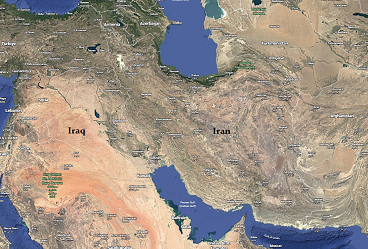
    When analysts talk about Iran, they too often reduce it to politics, nukes, or ideology. But any real understanding of the strategic challenge must begin with geography. Iran is not Iraq; it is not Afghanistan. It is a vast land mass defined by mountain ranges that have shaped its history, defense, and resistance to outside powers for millennia.

    Iran covers roughly 1.65 million square kilometers, making it more than three times the size of Iraq and significantly larger than Afghanistan. Its internal geography isn’t open plains, but a series of rugged, interconnected mountain systems with high interior basins and plateaus wedged between them. The two dominant ranges, the Zagros in the west and the Alborz in the north, surround the country’s heartland, rise above 3,000 meters, and in places top 4,000 meters, creating what military theorists have called a mountain fortress

    Afghanistan is frequently cited as the quintessential “graveyard of empires,” and its Hindu Kush mountains create an extraordinarily hostile combat environment. But even Afghanistan’s mountains are more accessible valleys and corridors. Iran’s mountains differ in scale and in their relationship to population centers. Iran’s population is concentrated in mountainous basins, not distant from the terrain that conceals them. Cities like Tehran, nestled under the Alborz, and countless towns embedded in the Zagros foothills, are naturally insulated. This gives defenders the ability to move, regroup, and conceal logistics under terrain that challenges air and ground surveillance.

    Contrast that with Iraq, where the terrain quickly transitions to flat plains like the Tigris-Euphrates basin, which historically have facilitated rapid warfare. Iraq’s internal highlands exist, but they are limited and do not envelop critical centers. That is why during the Gulf War and the 2003 invasion, coalition forces could maneuver long distances rapidly. In Iran, such maneuver corridors are constrained by elevation, narrow passes, and terrain that favors defensive preparations and ambush.

    Terrain matters because it dictates strategy. In Afghanistan, invaders struggled precisely because the rugged landscape broke lines of communication and allowed insurgents to melt into valleys and mountainsides. Iran’s mountains are broader and more extensive, giving defenders even more strategic options: natural choke points, deep interior lines of retreat, and countless niches for irregular or asymmetric resistance. Iran’s military planners understand this well, which is why defensive tunnel networks and surface-to-air missile sites have been deployed to exploit the topography.

    Historically, the mountains of Iran have served as a barrier to sovereignty. They helped defend against Arab, Mongol, Ottoman, and Russian incursions over centuries. They served as the backbone of resistance during the Iran–Iraq War, where Iranian forces leveraged rugged terrain to negate some of Iraq’s technical advantages.

    So when policymakers today speculate about quick strikes and a six-week regime decapitation, they are ignoring a fundamental constant: mountains favor the defender.


    Source link

    Share. Facebook Twitter Pinterest LinkedIn Tumblr Email

    Related Posts

    Why Iran Can Win | Armstrong Economics

    May 30, 2026

    Market Talk – May 29, 2026

    May 29, 2026

    Inflation Is Not Going Away

    May 29, 2026
    Top News
    US Politics 2 Mins Read

    Why Countries Must Fight for Digital Sovereignty

    US Politics 2 Mins Read

    On this second of disaster, we’d like a unified, progressive opposition to Donald Trump.  We’re…

    “I’m Not Afraid” – A Defiant Jim Comey Speaks Out After Indictment, Lashes Out at Trump – Insists He is Innocent Like Every Other Crook in History | The Gateway Pundit

    September 26, 2025

    Stock market lulls as Tesla slides and Delta soars

    October 9, 2025

    Trump’s Plan for “Energy Dominance” in Alaska Is a Pipe Dream

    March 19, 2026
    Top Trending
    Business 16 Mins Read

    What Is Computer Asset Management and Its Importance?

    Business 16 Mins Read

    Computer Asset Management (CAM) is essential for keeping your IT assets organized…

    Business 11 Mins Read

    What Are Personal Micro Loans and How Do They Function?

    Business 11 Mins Read

    Personal micro loans are designed to provide financial support to individuals who…

    Business 8 Mins Read

    How ‘Nirvanna the Band’ helped revitalize a landmark Toronto venue

    Business 8 Mins Read

    It’s a rather unassuming site for an Abbey Road-style photo activation. To…

    Categories
    • Business
    • Economy
    • Headline News
    • Top News
    • US Politics
    • World Politics
    About us

    The Populist Bulletin was founded with a fervent commitment to inform, inspire, empower and spark meaningful conversations about the economy, business, politics, government accountability, globalization, and the preservation of American cultural heritage.

    We are devoted to delivering straightforward, unfiltered, compelling, relatable stories that resonate with the majority of the American public, while boldly challenging false mainstream narratives that seem to only serve entrenched elitists, and foreign interests.

    Top Picks

    What Is Computer Asset Management and Its Importance?

    May 30, 2026

    What Are Personal Micro Loans and How Do They Function?

    May 30, 2026

    How ‘Nirvanna the Band’ helped revitalize a landmark Toronto venue

    May 30, 2026
    Categories
    • Business
    • Economy
    • Headline News
    • Top News
    • US Politics
    • World Politics
    Copyright © 2025 Populist Bulletin. All Rights Reserved.

    Type above and press Enter to search. Press Esc to cancel.