
Opinions expressed by Entrepreneur contributors are their own.
Key Takeaways
- Coco Robotics is doing 1,000 deliveries a day in Los Angeles and has completed more than 500,000 deliveries across more than 1 million miles.
- The company’s VP of Enterprise Partnerships believes using traditional cars to deliver small food orders creates unnecessary costs.
- Shake Shack regional manager gave Coco a particularly memorable review.
Restaurant delivery has a vehicle problem.
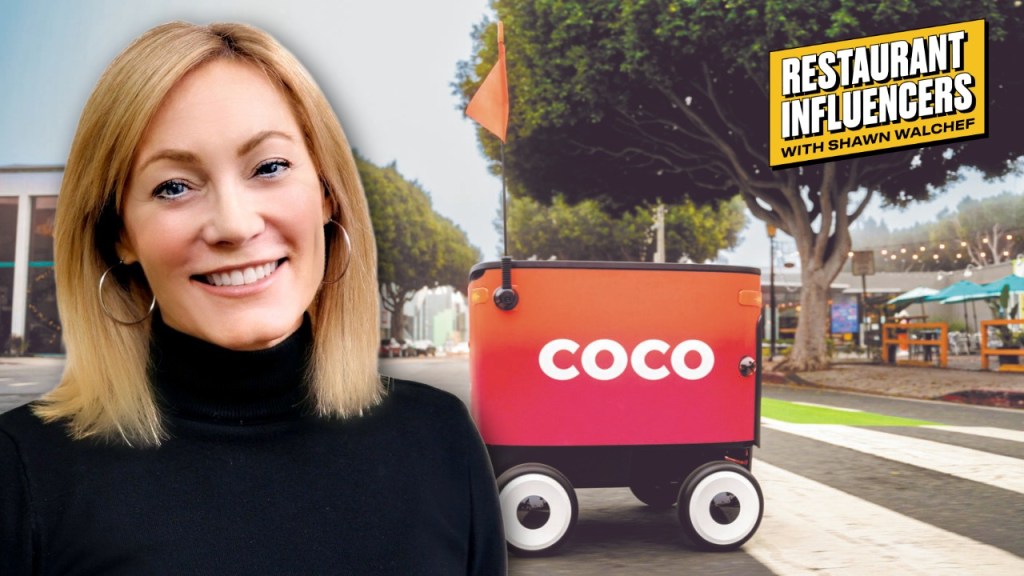
Coco Robotics was founded in 2020 by two UCLA engineers who began questioning whether traditional cars made sense for moving restaurant orders short distances.
“They were just kind of looking around at the environment thinking, ‘Why are we using 5,000-pound cars to deliver a five-pound bag of food?’” Melissa Fahs, Vice President of Enterprise Partnerships at Coco Robotics, says. “There has to be a better way.”
The founders set out to build a vehicle specifically for restaurant delivery. Fahs joined the Coco team after spending years working with restaurant partners and seeing firsthand how difficult the economics of third-party delivery could be.
“The last mile is broken,” Fahs says. “The cost equation has to change.”
For years, autonomous cars seemed like part of the answer. But even as that technology has advanced, Fahs believes a full-size car isn’t the ideal vehicle for moving a small restaurant order across a neighborhood.
When she was introduced to Coco and saw what the founders had built, the opportunity immediately stood out.
“This is going to fix what’s broken in third-party delivery,” Fahs remembers.
For restaurants and their customers, that means more than replacing a car with a robot. Fahs says Coco eliminates the need for a consumer tip while helping restaurants protect food quality. Orders travel directly from the restaurant to the customer and remain locked inside the robot during delivery.
“It allows the restaurant to keep the food presented in the way it was prepared, at the temperature it was intended,” she says.
The bigger challenge is making the technology work without creating another operational burden. Fahs describes restaurants as “mini factories” that produce food quickly for demanding customers while managing thin margins, perishable products and entry-level labor.
“Our robot has to be so seamless,” she says. “Coco has to be so seamless into their operation that they actually love it.”
For at least one restaurant operator, that’s already happening. Fahs says a Shake Shack regional manager gave Coco a particularly memorable review: “Coco’s our favorite courier.”
It’s already here
Coco Robotics is doing 1,000 deliveries a day in Los Angeles. Its robots have traveled more than one million miles and completed more than 500,000 deliveries since the company launched.
“It isn’t the future,” Melissa Fahs says. “It is here today.”
Coco now works with 4,500 merchants, while restaurant brands including Little Caesars, Taco Bell, Shake Shack and White Castle are beginning to explore the technology. The company operates in seven cities, and each market has taught the team something new.
In Finland, cold weather meant faster battery drain and studded tires. Chicago brought more lessons about the cold. In Miami, heavy rains pushed Coco to go beyond waterproofing. The next model is designed to be submersible, allowing it to navigate deep puddles while keeping the food protected.
“With every city we kind of learn something,” Fahs says.
For restaurants, Fahs says adoption is designed to be simple. There’s no robot to purchase, maintain or clean. In markets where Coco operates, restaurants can ask Uber Eats or DoorDash to turn on the service.
“All you do is load your food in the robot, and we take care of everything else,” Fahs says.
That simplicity is important in an industry where operators have little room for another complicated system. Fahs believes autonomous delivery has to fit into the restaurant’s existing operation, not force the restaurant to adapt around it.
And operators don’t have to make a major commitment to find out whether it works for them.
“Get in the game,” Fahs says. “You could do one store. But learn about how it can fit or not fit in your operation, how it fits with your guests.”
For Fahs, the opportunity is no longer about waiting to see whether autonomous delivery becomes viable. Restaurants can start testing it now.
About Restaurant Influencers
Restaurant Influencers is brought to you by Toast, the powerful restaurant point-of-sale and management system that helps restaurants improve operations, increase sales and create a better guest experience. Toast — Powering Successful Restaurants. Learn more about Toast.
Restaurant Influencers is proud to have PepsiCo as a sponsor of this episode. Partnering with PepsiCo Foodservice helps restaurant operators drive sustainable growth through smarter digital experiences, AI-backed menu optimization, and tools designed to create more profitable online orders. Check out PepsiCo Foodservice