
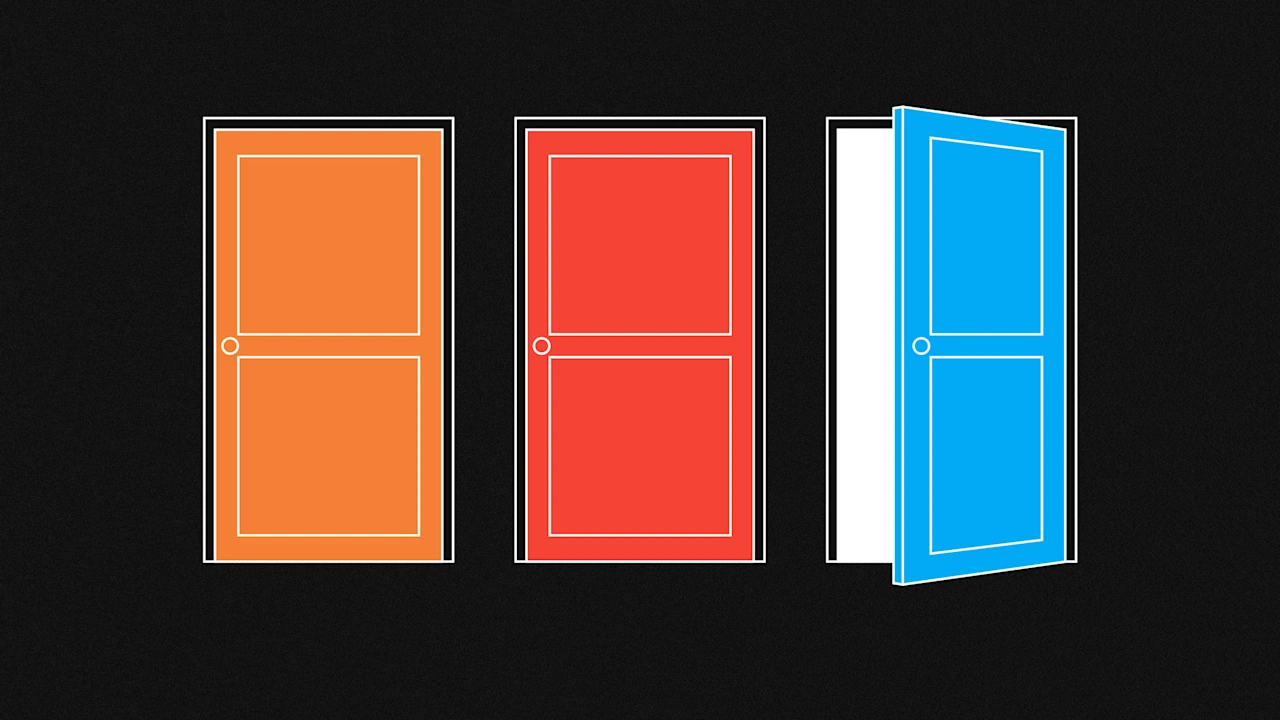
Should I take this project? Say yes to the new job offer? Stick with this plan or walk away? Every choice we make can feel huge. And every path has its own set of risks and rewards. There are always more questions for every life-changing decision. Sometimes the pros-and-cons lists feel more like busywork than progress. You check off the boxes, stare at the lists, and still end up confused, stuck in the same mental loop. That’s why I rely on the rule of 3 framework to make tough decisions. I hope it helps you clarify your life-changing choices.
How it works
Whenever you’re stuck, force yourself to create three paths: B, C, and D.
Why not A? A is usually the default for most people. The thing you’re already doing. The path of least resistance. It doesn’t need your help. What you need are alternatives.
Then comes the second step, and this is where most people stop thinking too soon. Now, for each path, think through:
- First-order effects
- Second-order outcomes
- And third-order consequences
And then, and this matters, choose the path with the most meaningful but least life-changing consequences.
Why the two-option path doesn’t work
When you only have two options, your brain keeps going back and forth. Right vs wrong. Safe vs risky. Smart vs stupid. You stop being logical. There’s a term for it: binary bias or black-and-white thinking. We do it all the time. Two choices feel better. But they are not. They’re restrictive and create a lot of unnecessary pressure.
“Most decisions are not binary, and there are usually better answers waiting to be found if you do the analysis and involve the right people,” Jamie Dimon, the CEO of JPMorgan Chase, says.
Three options open things up. Adding a third option reduces your emotional load and improves perceived control. You feel less trapped. And more capable. For example, if you are thinking about changing jobs. This is how it usually goes.
Option 1: Quit and leap.
Option 2: Stay and suffer.
Now try the Rule of 3.
Path B: Quit and take a new role in a similar field.
Path C: Stay for six months and skill up aggressively.
Path D: Go part-time or freelance while testing something new.
Of course, none of these options is perfect. That’s why the next stage of the process is even more important: the consequences.
1st, 2nd and 3rd order effects
It simply means keep asking, “and then what?” First-order effects are immediate. What happens right away when you make the decision? Second-order effects come next. What does that lead to? Third-order effects are longer-term. Who do you become if this path continues?
I will now apply the effects to the job-changing example.
Path B: Quit and take a similar role.
- First-order: New environment. Relief. You may stop dreading Mondays.
- Second-order: You become more confident. Now, you know you’re employable. You can actually change jobs.
- Third-order: You might stay on the same path longer than you want.
Now Path C: Stay and upgrade your skills
- First-order: You may feel frustrated for a while. You will need a lot of discipline for this path.
- Second-order: You will get leverage to open your options.
- Third-order: You redefine yourself from “stuck” to “building a career.” You may become indispensable to your employer.
The mistake most people make
Most people pursue the best outcome. That’s a trap. The future is uncertain. You’re probably guessing what could work. Everyone is. Once you are done with the effects, choose the path with the least life-altering effects. The one that teaches you something. Keeps doors open. And doesn’t completely make your life worse if you’re wrong.
It’s my risk psychology approach.
People regret irreversible decisions more than bad ones. We hate closing doors we didn’t mean to close. That’s why picking the path that means a lot to you but won’t burn bridges matters.
Make better decisions with the least panic.
This framework works when you are emotionally attached to the decision you are about to make. When you’re stressed, your brain throws logic out of the window. The rule of 3 gets you back on the rational path. It takes you from reacting to responding to life. It helps you answer the most important question. Which future can I live with?”
You can use this rule anywhere. Money decisions. Relationship decisions. Creative decisions. A big purchase. Even small ones. Do I say yes to this commitment? What are the effects, and what are my options? And what path can I live with and still function? Force the three paths.
Pursue the consequences in places most people ignore. Then, opt for the choice that makes life better without disrupting your entire life.
Use it to pick a path with tolerable unknowns
The rule of three doesn’t remove uncertainty. Nothing does. You’re never picking certainty. You’re picking a path with tolerable unknowns. Good decisions come from better processes. The 3 rule takes away the emotional attachment that drains the life out of you.
Most of our hard decisions become unbearable because we want a perfect choice. The one that proves we are smart and avoids regret. So you panic. Or overthink. Some people let time decide for them.
Which is still a decision, by the way.
I use the rule of three to pick a direction.
Adjust where necessary. And keep moving. I want “forward motion without self-destruction.” You don’t need to outsmart the future. Just stop putting so much pressure on yourself. Most choices don’t need courage. They need structure. Three paths. Three consequences. It makes overthinking your options almost impossible.