
I’ve interviewed entrepreneurs who built apps, entrepreneurs who built rockets, and entrepreneurs who built breakfast cereals. I have never interviewed anyone who built an empire out of the phrase “What do you wipe your butt with?” Until now.
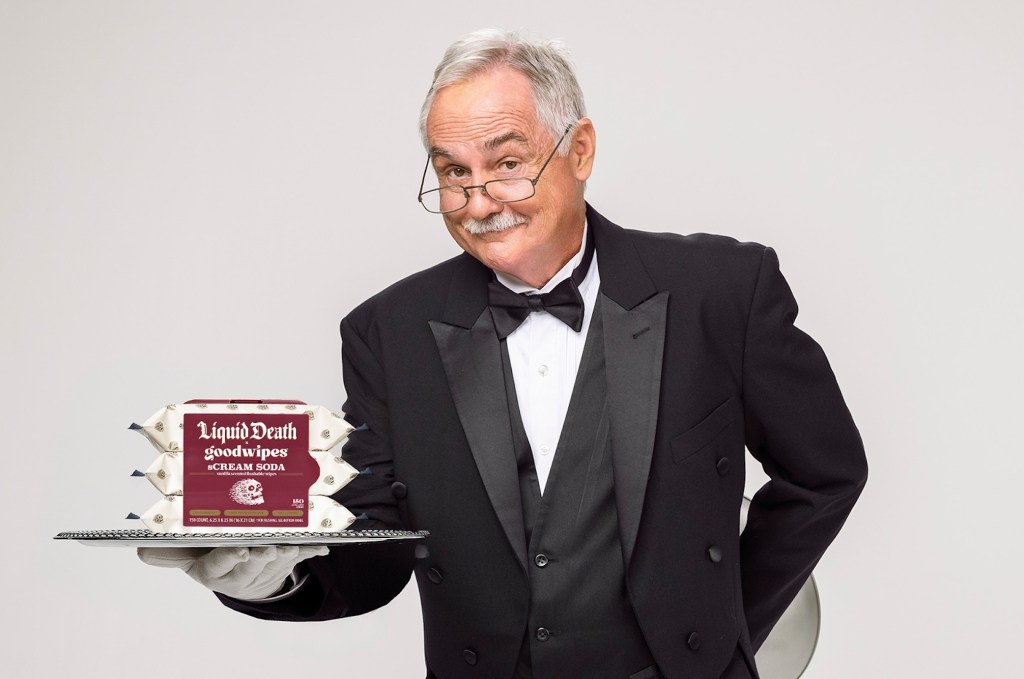
It’s a question Sam Nebel is never shy to ask complete strangers. Nebel is co-CEO of goodwipes, the flushable wipes brand he co-founded with Charlie Siciak 13 years ago after the two bonded over baby wipes in a fraternity bathroom at Florida State University. Since then, goodwipes has become a name-brand player in a wipes category that’s now worth billions, landing shelf space at Walmart, Target, Kroger and beyond. This summer, the brand launched Peaches & Cream Olipop mashup and, even more unexpectedly, announced a limited-edition collab with Liquid Death inspired by its sCREAM Soda flavor. As Sam described it to me: “The Liquid Death collaboration represents the expansiveness and depth of goodwipes — it reveals the range we can take goodwipes creatively with our lean team’s capability and output,” adding, “It’s all about having fun and getting shit done, and making people feel good!”
Photo credit: goodwipes | Liquid Death
If you’ve ever wondered how far persistence, a sense of humor and a genuinely better product can take you, Sam’s story is a masterclass. Here’s our conversation, lightly edited for clarity.
Dan Bova: Maybe we could just start from the beginning. How did you and your co-founder decide to do this?
Sam Nebel: The story is really a lifelong journey for both of us. We converged in college at Florida State University, maybe 19 years ago. We were freshmen, two weeks into freshman year, and we had each grown up as baby wipe users — habitual, exclusive baby wipe users. We could never wipe our butts with toilet paper. We met in the upstairs bathroom of a fraternity house and bonded over the fact that we were the two baby wipe guys and started sharing with all our new friends. They said, “You guys are absolutely ridiculous and crazy.” Within 30 days, we had gotten all of them using wipes. We became the wipe dealers at Florida State — baby wipes in Ziploc bags at tailgates, football games, parties, all of it.
So when did you decide you could actually make money from this?
It was a couple of years after college. We looked at each other and said, let’s address some of the pain points we saw. Charlie has sensitive skin, very ingredient-conscious. I have what I like to call ravenous IBS. We wanted to create a brand that addressed these challenges — a product that was better, actually flushable, more premium than what we saw in the market. We wanted it to be relatable, something our peers, millennials, would feel comfortable buying at a Publix or Target or Walmart, because that didn’t exist yet.
Your brand leans into humor, but there’s clearly a line you don’t cross. How do you find that sweet spot?
We don’t want to be crass — we want to be an elevated version of this that’s still relatable. It’s a fine line you have to balance. We like the acronym PEACH: playful, empathetic, approachable, cheeky and honest. Playful really covers all of those — it’s a way of saying we’re going to tell you this product does the job better than toilet paper, but we’re not going to do it in a gross way that turns you off.
Tell me about the growth. What did the early days look like, and how did you get from there to here?
The growth happened slowly but surely. We’ve been doing this for coming up on 13 years — July 17th was our anniversary. We went to market not having a clue, just passionate about what we were doing, iterating our way. Charlie and I are sales guys, so we went to as many trade shows as humanly possible. We got into Amazon, but it’s really been the past six or seven years that we pushed further into the marketplace and brick-and-mortar. We told the same story to the same retailers year after year: more people are going to start using these, we’re going to be pioneers of this category, and people are going to rebuy this product. It took years of repetition with Target, Walmart and Kroger. Regional retailers started taking us in, we demonstrated success quickly, and that snowballed into where we are today.
You’ve built something people don’t just buy once — they rebuy it constantly. That seems like a huge advantage.
It’s so critical. I think it’s something entrepreneurs don’t think about enough: what are the use occasions? How often are they going to use this product? How many packs do I want in a particular SKU? And how do we educate consumers — not just on the retail shelf, but outside the retailers — on why they need this product and how to use it. That’s been very near and dear to us.
Were there moments where you thought, “This is a lot harder than I expected”?
It’s the emotional, physical, energetic dauntingness of fundraising, or getting rejected by a retailer. We pitched Kroger in 2016. They basically said yes in the room and we were supposed to hear back in 60 days. It took 120, and then they said, “Actually, we’re not going to bring you in.” We couldn’t get in touch with the buyer for three years. It took six total years from that first “yes” until we actually got into Kroger. It was countless episodes like that — with fundraising, with retailers, with product launches — especially in the early years when the business isn’t making a lot of money, so you’re not as attractive to other people, and you’re financially stressed too. But we just believed so much in what we were doing. Small break after small break started to take over with momentum over the hardships. That perseverance is how we categorize ourselves.
If you could go back and give yourself advice as you were just getting started, what would you say?
I could have a laundry list. Number one: really hone in on your consumer and make the brand match what they actually want in their house — something they’re proud to share. Understand intimately the supply chain and all the complicated pieces that go into making a product like this — it’s exponentially more arduous on the back end than it feels for the consumer. And I’d tell myself: this is going to take a lot longer than you think, so get a second job right now and don’t live off credit card debt for three years.
Where’s the best place for people to get a feel for what goodwipes is all about?
Go to Instagram and type in G-O-O-D-W-I-P-E-S. You’ll feel the presence of the brand and want to be part of the movement. Whether you’re on the toilet wiping with a goodwipe or watching our content, we want to make you feel good. We want to hit you from both ends.
I’ve interviewed entrepreneurs who built apps, entrepreneurs who built rockets, and entrepreneurs who built breakfast cereals. I have never interviewed anyone who built an empire out of the phrase “What do you wipe your butt with?” Until now.
It’s a question Sam Nebel is never shy to ask complete strangers. Nebel is co-CEO of goodwipes, the flushable wipes brand he co-founded with Charlie Siciak 13 years ago after the two bonded over baby wipes in a fraternity bathroom at Florida State University. Since then, goodwipes has become a name-brand player in a wipes category that’s now worth billions, landing shelf space at Walmart, Target, Kroger and beyond. This summer, the brand launched Peaches & Cream Olipop mashup and, even more unexpectedly, announced a limited-edition collab with Liquid Death inspired by its sCREAM Soda flavor. As Sam described it to me: “The Liquid Death collaboration represents the expansiveness and depth of goodwipes — it reveals the range we can take goodwipes creatively with our lean team’s capability and output,” adding, “It’s all about having fun and getting shit done, and making people feel good!”
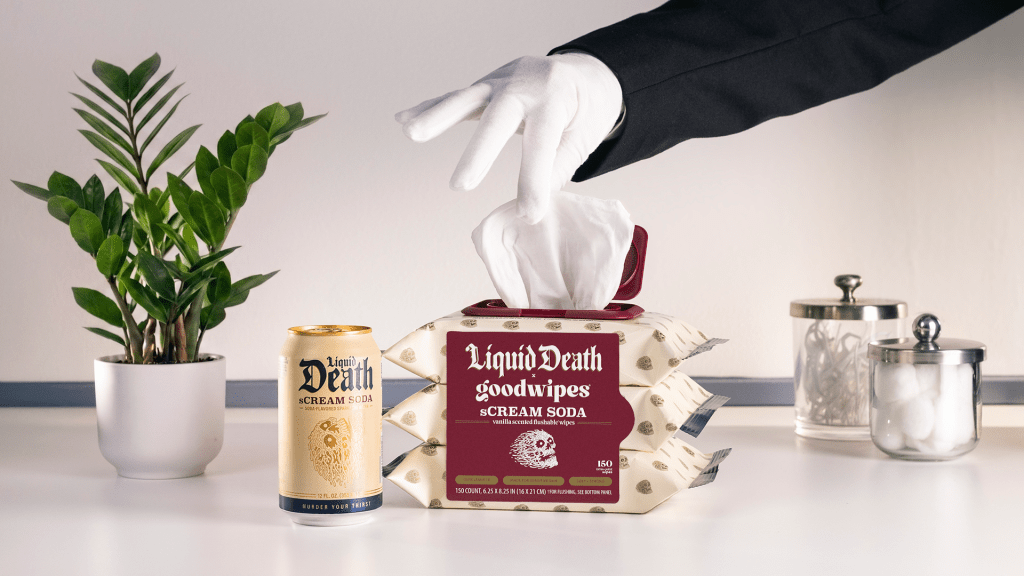
Photo credit: goodwipes | Liquid Death