
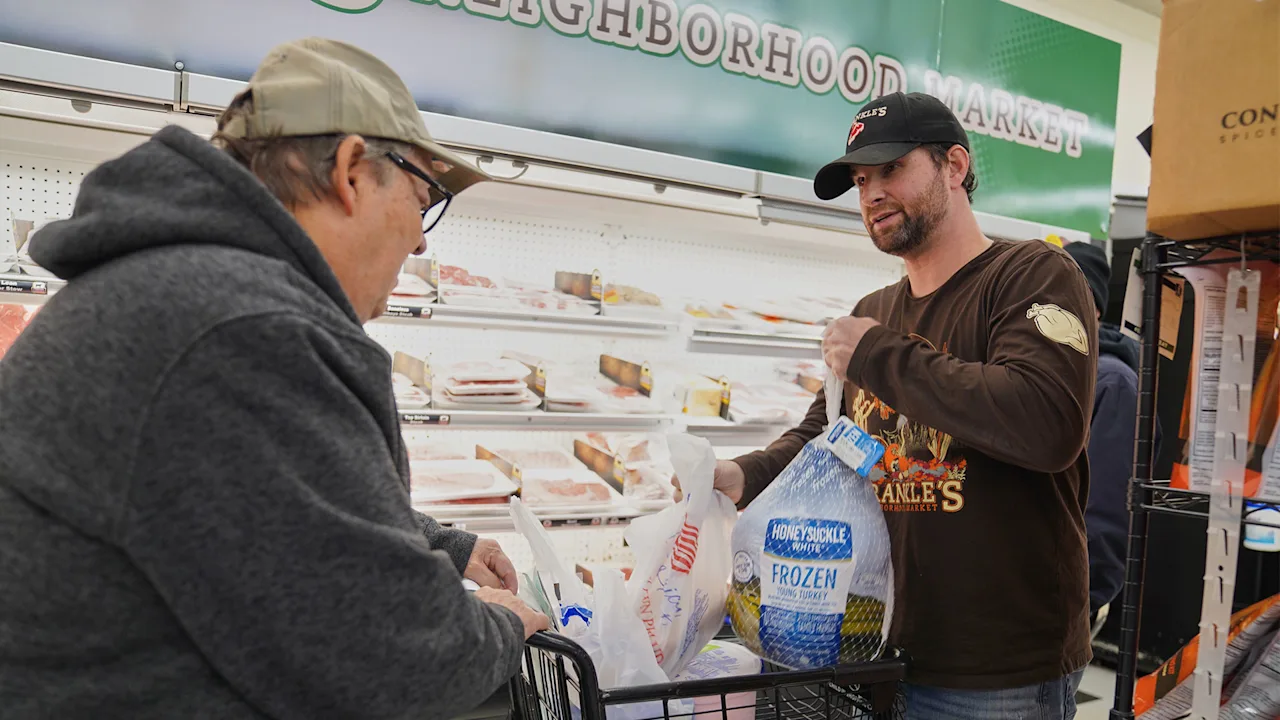
A little more than a year ago, Ryan Sprankle welcomed President Donald Trump to one of the three grocery stores his family owns near Pittsburgh. Trump was on the campaign trail; they talked about high grocery prices, and the Republican nominee picked up a bag of popcorn.
But these days, Sprankle would have a different message if Trump or any lawmakers visited his store. He wants them to know that delayed SNAP benefits during the government shutdown hurt his customers and his small, independent chain.
“You can’t take away from the most needy people in the country. It’s inhumane,” Sprankle said. “It’s a lack of empathy and it’s on all their hands.
The Trump administration froze funding for the Supplemental Nutrition Assistance Program at the end of October, impacting food access for some 42 million Americans. On Monday, the U.S. Senate passed legislation that would reopen the federal government and replenish SNAP funds, but the U.S. House of Representatives still must consider the bill. It’s unclear when SNAP payments might resume if the government reopens.
In 2024, SNAP recipients redeemed a little more than $96 billion in benefits, according to the U.S. Department of Agriculture, which administers the program. The majority — 74% —was spent at superstores and supermarkets, a category that includes big chains like Walmart and Kroger but also some independent stores like Sprankle’s.
Around 14% was spent at smaller grocery and convenience stores, businesses often tucked into neighborhoods and more easily accessible to SNAP beneficiaries.
A stalled economic engine
Etharin Cousin, a former director of the United Nations World Food Program and founder of the nonprofit Food Systems for the Future, said the cutoff of SNAP benefits had immediate impacts on grocers and convenience stores of all sizes, most of which operate on slim profit margins of 1% to 2%.
“SNAP isn’t just a social safety net for families. It’s also a local economic engine,” Cousin said. “SNAP benefits flow directly into neighborhoods, stores, regional distributors and community jobs.”
Walmart declined to comment on the impact of the SNAP funding lapse but noted that it has been lowering prices and donating to local food banks. Kroger also declined to comment.
Shoppers not receiving their food benefits affects all retailers but becomes “a big problem more quickly” at small chains, Sprankle said. His Kittanning, Pennsylvania, store gets 25% of its revenue from SNAP, but customers who don’t get government assistance also are worried about the shutdown, according to Sprankle. They’re spending less, trading down to cheaper goods or heading to food banks, he said.
Sprankle said lower sales cut into the overtime he can offer to the chain’s 140 employees. Many are worried about losing their jobs, he said.
“They have families to feed, they have kids for buy gifts for,” he said. “If I have to sell my truck, we’re going to give Christmas bonuses.”
Liz Abunaw, the owner and operator of Forty Acres Fresh Market in Chicago, recently saw a customer putting back a full cart of groceries because she couldn’t afford them without SNAP.
Abunaw opened the supermarket in September after years spent selling produce at pop-up markets and in delivery boxes. Only about 12% of Abunaw’s revenue comes from SNAP benefits right now, she said. But without it — or if SNAP recipients spend less money in her store — it will slow Forty Acres’ growth and make it harder to pay the workers, suppliers and farmers who depend on her, she said.
“SNAP is currency. I get money I then use in this economy. It’s not a food box,” Abunaw said. “The economic impact of SNAP is larger than the dollars spent.”
From neighborhood shops to food pantries
The suspended food aid also had an immediate impact on Kanbe’s Markets, a nonprofit that stocks produce in coolers at 110 convenience stores around Kansas City, Missouri. Kanbe’s distributes a mixture of donated food and food purchased from wholesalers to keep prices low, founder and CEO Maxfield Kaniger said.
Kanbe’s also distributes free food to 50 food pantries and soup kitchens around the city.
Kaniger said some of the convenience stores he works with saw their sales drop 10% in the days after Nov. 1, when SNAP benefits weren’t paid. At the same time, the food pantries he supplies asked for double or triple their usual orders.
Because it’s giving away more food than usual, Kanbe’s has to spend more buying produce for the coolers it stocks. It’s frustrating for Kaniger, who must make decisions quickly before food spoils.
“It should be enough that people are going without food. Period, end of sentence. People going without food is wrong,” he said.
Babir Sultan sells berries, lemons, potatoes, bananas and other produce from Kanbe’s at his four FavTrip convenience stores in the Kansas City area. His stores are in food deserts, far from other groceries or big retailers, he said, so it’s important to him to stock fresh produce for those neighborhoods.
Sultan said foot traffic at his stores fell 8% to 10% in early November after SNAP funding ceased. He decided to offer $10 of free produce to SNAP beneficiaries but said he’s also happy to help out other customers who might be struggling right now.
“If you’re in need, just ask, we’ll take care of you,” Sultan said. “Everybody is affected whenever the customer is feeling the pinch.”
Durbin reported from Detroit. Associated Press data journalist Kasturi Pananjady in Philadelphia contributed to this report.
—Dee-Ann Durbin, AP Business Writer