
When researchers founded Anthropic in 2021, they said the race to build powerful AI was moving too recklessly. They inserted detailed safety measures into their products and marketed their commitment to safety as the corporate quality that distinguished them from competitors—notably OpenAI, the rival company they had left. In March 2026 that reputation was tested when the Trump administration declared that Anthropic was a supply chain risk.
The company had refused to remove built-in safeguards that prohibited domestic surveillance and autonomous weapons from products it had supplied to the Pentagon. President Donald Trump ordered the federal government to stop using Anthropic and its large language model, Claude, labeling the company a national security risk. Within hours, OpenAI made a deal to be the Pentagon’s supplier instead.
Despite Anthropic’s apparent stand, during its clash with Trump, the company quietly scrapped the binding principles in its main safety policy. Several weeks earlier, Anthropic’s head of safeguards research had resigned, warning that “the world is in peril.” And a week after the Pentagon officially banned Claude, the U.S. military was still using the technology to select and target sites to bomb in Iran.
As a philosopher studying the rule of law and democracy, I’ve found that authoritarian governance of technology often does not involve direct censorship. Instead, it delegitimizes the intended protections, poisoning any external regulation and even voluntary self-regulation that deviates from the regime’s goals or values.
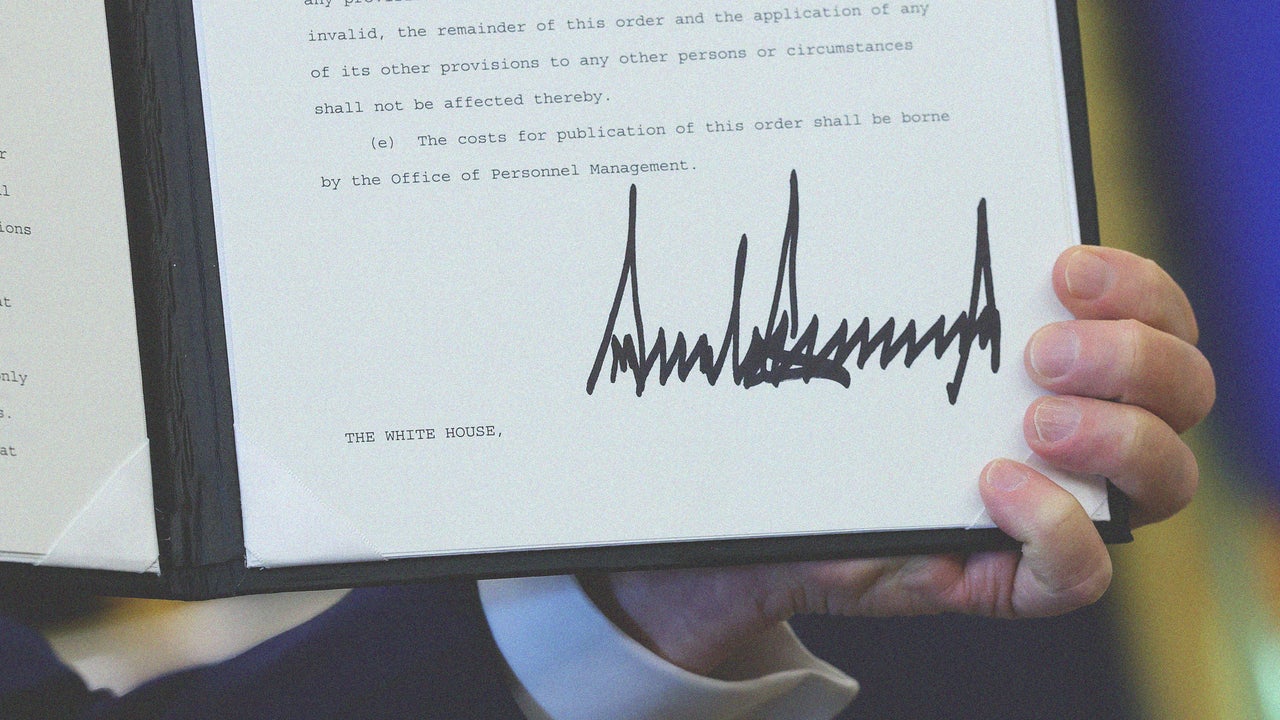
The Trump administration, which follows the authoritarian playbook, has argued that AI safety standards and user restrictions are ideological impositions rather than sound engineering decisions. The ”Preventing Woke AI” executive order of July 23, 2025, didn’t change what companies are allowed to do with their products. By attaching the “woke” label to basic ethics protections, the administration made those protections politically costly to maintain.
The Brennan Center, a legal policy and advocacy organization, has documented how AI ethics is being redefined through contract negotiations. In these cases, the government weaponizes terms such as biased to disqualify companies that maintain civil rights protections from competing for federal contracts.
The prisoner’s dilemma
A single U.S. Defense Department AI contract can be worth billions of dollars. It can also provide access to data no private company could otherwise have and unlock further government work. Companies that maintain the ethics guardrails risk ceding ground to competitors that don’t.
When OpenAI moved in to take the Pentagon work, CEO Sam Altman told his board of directors the move looked “opportunistic and sloppy.” But he said the company took it anyway, because admitting that an action looks bad is different from being willing to fall behind.
This situation reflects the classic prisoner’s dilemma. If Anthropic maintains safety provisions and OpenAI strips them away, OpenAI gets the contracts and the future advantage. If both companies maintain the provisions, digital protections might survive. But because neither company can be certain the other will hold the line—and because being left behind is not a good option—the rational choice is to discard safety measures.
These circumstances differ from a standard market race to the bottom in one key respect: The trap of having to strip away guardrails isn’t an accident of competition; it’s being maintained by the government through incentives.
Palantir didn’t wait to be caught in this trap. The data analytics company was founded by Peter Thiel and run by Alex Karp, who spent years denouncing “woke” Silicon Valley. Palantir built its business model around government surveillance and military data infrastructure.
While Palantir has said it is committed to privacy and civil liberties, critics contend that the company is dismantling those protections. The company’s stock has surged under the Trump administration, its contracts have expanded, and it now has a front-row seat where AI policy is being written. Palantir solved the prisoner’s dilemma by defecting first.
It’s important to note that the dissolution of safety teams across the industry, such as OpenAI’s Superalignment team and Microsoft’s ethics unit, isn’t the result of anyone deciding to abandon safety. What I see in analyzing the different companies’ actions is a pattern: an accumulation of collective, incremental compromises that quietly reorient the definition of safety away from the public and toward the state. The resulting harm and risks fall on everyone whose lives are shaped by AI systems.
Redefining safety to serve the government
Across government contracts and policy documents, I have also observed that the original definition of AI-related safety has shifted from protecting the public toward making systems controllable for the state. The “anti-woke” framing accelerates this shift: Once ethics requirements are characterized as ideological rather than technical, removing them can be framed not as a safety reduction but as a correction.
This shift does not require bad faith from the companies. Safety teams are still doing rigorous work. The companies are not lying when they describe their safety commitments. Those commitments are now simply oriented toward the government rather than the public.
The case for stronger AI regulation assumes that a government constrains commercial entities on behalf of the public. But blacklisting a company for maintaining civil rights protections, and then banning the military deployment of its AI hours later, shows that the federal government in this instance enables the harm that regulation is meant to prevent.
Expanding regulatory authority over AI companies does not necessarily protect citizens. Safety regulations—intended to constrain corporate power—in authoritarian regimes become tools to coerce compliance.
Michael Gregory is an assistant professor of philosophy at Clemson University.
This article is republished from The Conversation under a Creative Commons license. Read the original article.