
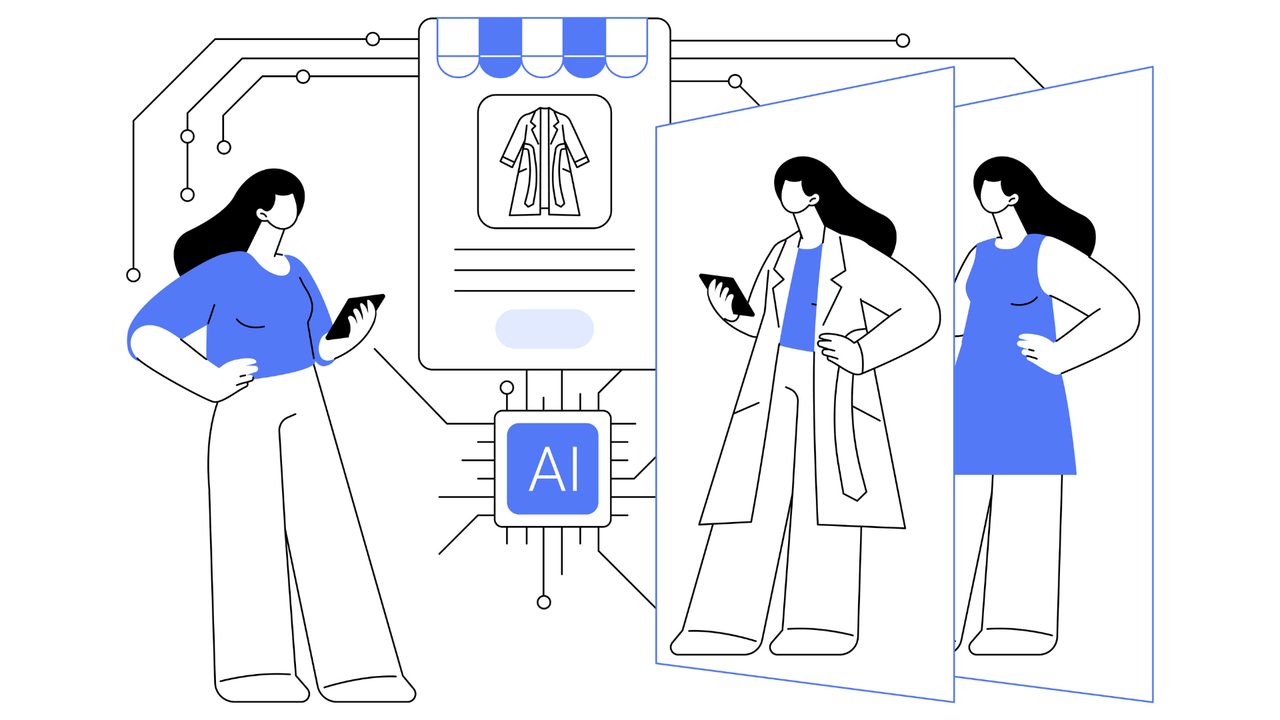
For most of the internet era, online shopping has started with a product in mind. A shopper has an idea of what she wants, types in keywords, opens a dozen tabs, and compares specs and prices while slogging toward a decision. AI is now changing that, not only speeding up the research, but also creating a new consumer behavior.
That’s because we don’t naturally think in terms of products. We think in pain points, goals, and constraints: “I need to look alive for my 9 a.m. meeting after my red-eye flight.” “I need ideas to get my toddler to eat veggies.”
With GenAI tools like ChatGPT, Claude, and Gemini, shoppers no longer have to translate these needs into product searches. The toddler’s mom types in her query, and AI asks follow-up questions about the child’s favorite foods, texture preferences, and dietary restrictions to build a solution that includes relevant product recommendations.
That compression of research into conversation moves commerce from a system that captures demand based on product searches to one that creates demand by recommending products shoppers might not even realize they need. With nearly half (45%) of consumers globally now shopping with AI, the discovery journey is moving upstream. But most brands haven’t followed it there and need to quickly ensure they meet the prerequisites to show up in AI recommendations.
2 STAGES TO RECOMMENDATIONS
Many assume AI models simply take keywords from a user’s prompt and then generate a list of products whose descriptions refer to those keywords. But AI shopping isn’t keyword ranking; it’s a recommendation system built on semantics, constraints, and authority. To be recommended, a product actually requires clearing two hurdles, and stumbling over the first makes the second irrelevant.
- Stage 1 is entering the consideration set. Before any ranking happens, an AI model determines which products belong in the conversation. If a shopper asks for the best shampoo for a sensitive scalp under a certain price, the model doesn’t start with every brand and sort them. It identifies the relevant category neighborhood, applies the shopper’s constraints and filters for attribute-level fit. So if a shampoo brand hasn’t clearly positioned its products in the scalp-care category or hasn’t structured its data to address sensitivity, ingredients, and price range, it will be filtered out before its brand authority is ever evaluated.
- Stage 2 is rising in the ranking. In this stage, the model decides which products in the consideration set deserve to rise to the top. This is important because AI typically recommends only the top three to eight products in its ranking. In stage 2, the model evaluates trustworthiness indicators like third-party testing and certifications, consistent product data across brand sites, retailer feeds, marketplaces, credible reviews, and media mentions. One peer-reviewed study found that structured, AI-ready content can achieve 40% higher visibility in GenAI responses. So, trust signals absolutely matter, but only for products that have already cleared stage 1.
Large brands can actually be at a disadvantage here. Their brand representation is broad and diffuse across many product types and categories, but AI models don’t look for a halo. They look for the right SKU with the right clearly documented attributes.
HOW AI RESEARCHES PRODUCTS
When a shopper enters a prompt, the model breaks the request into many smaller queries in a fan-out process, then launches those across the web and structured data sources. The AI synthesizes what it finds, identifies gaps, and often runs another round of queries to validate claims. The fan-out queries likely won’t resemble the original prompt because the model is translating user intent into the attribute signals and credibility checks it needs to evaluate products.
This is why focusing only on prompt optimization doesn’t work. A shopper can express a need dozens of ways—“warm jacket” or “insulated coat for commuting”—but these all collapse into the same intent. So, trying to anticipate each shopper’s phrasing is ineffective. Instead, brands should consistently structure product data and trust signals across the web in a way that an AI’s fan-out queries can find and verify. Missing, inconsistent, or unverifiable product data translates into a trust deficit for AI models.
HOW BRANDS SHOULD OPTIMIZE FOR AI SHOPPING
The old SEO frame of “Did I appear for this prompt?” isn’t the right question with AI. It’s “Why was I filtered out, and what would move me into eligibility?”
Brands need to provide clear signals about what a product is, who it’s for, and what constraints it satisfies. Also it should provide structured evidence for each, like ingredients, certifications, and use cases that fan-out queries can find and verify. For a brand that wants to be recommended for a camping trip, describing a product as a “20,000 BTU stove” isn’t enough. The data needs to convey that it works for car camping, serves two to four people, and boils water quickly. The same applies to beauty, food, home, wellness, and every other product category.
This is also why a consistent digital footprint matters so much. AI models are looking beyond owned product pages, scanning retail sites, reviews, media, forums, and other third-party sources to validate whether a product belongs in a recommendation and whether its claims hold up elsewhere. Reddit is one of the clearest examples. In Novi’s analysis, it was ChatGPT’s most-cited source for product recommendation research, but not because AI simply rewards upvotes. It looks for clear, useful evidence around use cases, comparisons, and category language.
AI commerce is forcing brands to build better data infrastructure. A model can’t confidently place a product in the right category neighborhood if it can’t map the product to a shopper’s constraints or find structured evidence to support claims. And no matter how authoritative a product is and how big the marketing budget behind it, if AI filters it out of the consideration set, it won’t be recommended. As AI increasingly mediates consumer choices, brands that build clean, verified, well-structured data will have an advantage.
Kimberly Shenk is cofounder and CEO of Novi.