

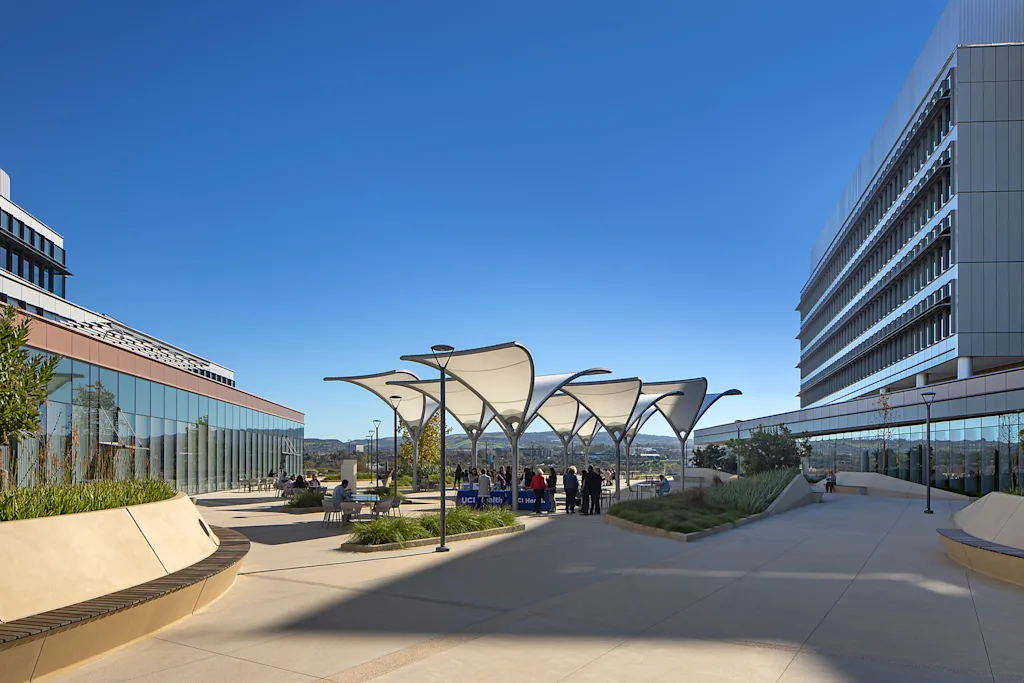
The University of California Irvine’s new healthcare campus has a long list of innovative features, from its combined inpatient-outpatient surgical suite to its outdoor chemotherapy infusion terrace to an entire floor dedicated to staff only. The one thing it doesn’t have is a gas line.
The multi-building healthcare campus with 144 hospital beds officially opened in December as one of a very few major hospitals around the world that runs entirely on electricity. CO Architects, which designed the all-electric hospital alongside design-build partner Hensel Phelps, claims it’s the only hospital larger than 500,000 square feet to pull this off.
“Healthcare is just about as big of an energy hog as you can get,” says Fabian Kremkus, a design principal at CO Architects. Room-sized MRI machines, medicine refrigerators, and commercial kitchens cranking out hospital food represent just a snapshot of the energy needs of a healthcare facility. At UCI Health, as the campus is known, feeding this energy demand with only electricity required nimble design.
The project has been in the works since 2020, when the Covid-19 pandemic was putting unusual scrutiny on the ways hospitals functioned. UCI Health’s design was inevitably influenced by the pandemic, leading to an emphasis on flexibility and the ability to handle an influx of highly contagious patients should another pandemic occur. At the same time, the University of California system was plowing ahead with its own goal of achieving carbon neutrality in its buildings by 2025, which made electrification another priority.

But when the building’s design was being finalized, there wasn’t enough commercially available equipment to do the entire project without fossil fuels. By the time the project went up for its construction permit, the plan still included things like a gas-powered central heating and cooling plant and a gas line feeding the hospital’s kitchens.
As the project got deeper into construction, new equipment started coming onto the market, including all-electric air-source heat pumps and air chillers, as well as all-electric cooking equipment. “Since the start of the project versus couple of years ago, there are a lot more options,” says Jill Cheng, an associate principal at CO Architects.
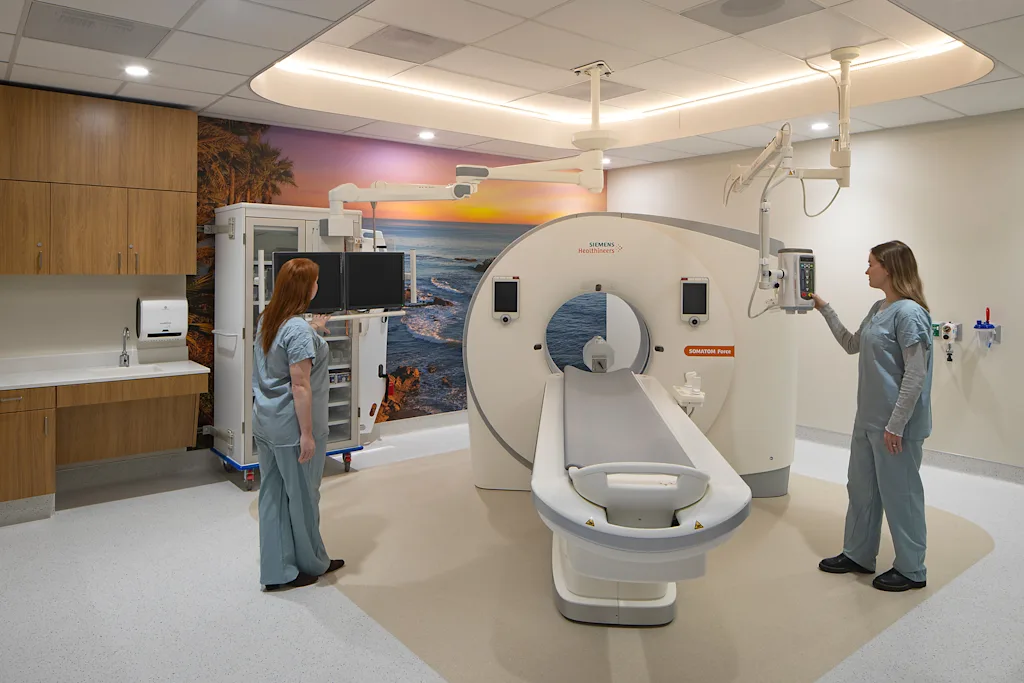
As more and more electric options came to the table, the design-build team and the university decided to go all in on the carbon-neutral goal, aiming to create an all-electric hospital.
“It required a midstream redesign of our central plant when the decision was made,” says Kremkus. “So it was very challenging, with a really aggressive construction schedule.”
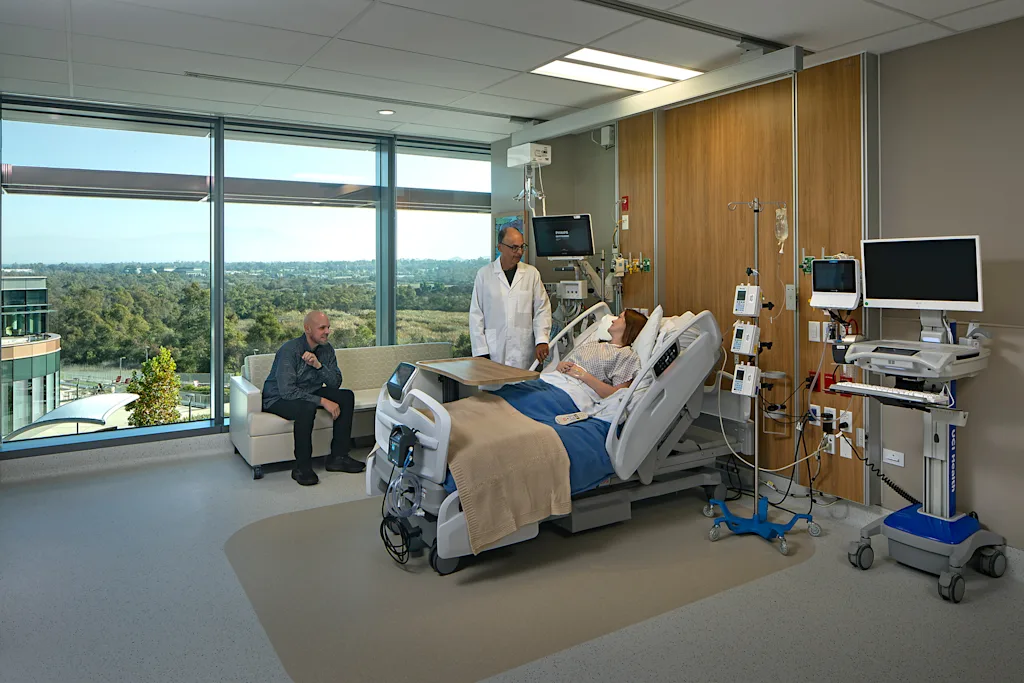
Now, the entire campus uses a unique central heating and cooling plant that eliminates the need for gas-based boilers, as well as the staff resources to monitor such high-pressure infrastructure around the clock. On-site photovoltaic panels help offset the hospital’s high energy needs, and the entire complex is primarily fed by California’s majority renewable electricity grid.
That’s just one of many savings on this project, according to Kremkus. CO Architects analyzed the costs and benefits of taking an all-electric approach and found that even when electric equipment had higher upfront costs, they would be more than offset by energy savings over time. The annual energy cost of using natural gas, for example, would be about $650,000 cheaper than the all-electric alternative, but its annual maintenance costs would be $1.4 million more, making the choice fairly clear. The payback period for investing in the all-electric system is less than three-and-a-half years. “We’re building a 50-year facility, so there’s no question that this is economically the right thing to do,” Kremkus says.
This all-electric hospital design is a replicable approach. “All of our future projects that we have in the pipeline will be all electric, and it’s largely championed by this project,” says Kremkus. “We were able to test it here, and now we can roll it out in an even better way because there’s a lot of lessons learned.”