
At the San Francisco-based startup Anything AI, there’s a robust team that seems like any fast-growing startup’s organizational chart.
There’s Emma, who investigates reported bugs across logs, databases, and code, then drafts the reply; Otis, who runs engineering operations and forecasts launch dates; Clementine, who manages the company’s brand imagery; Tilda, who deals with the CEO’s inbox and calendar and briefs him each morning; and JB, the office manager, who places orders for coconut waters and snacks.
The twist? None of these employees are human. They’re AI agents, and Anything thinks they represent the future of how companies staff up and operate.
‘They feel a little bit like coworkers’
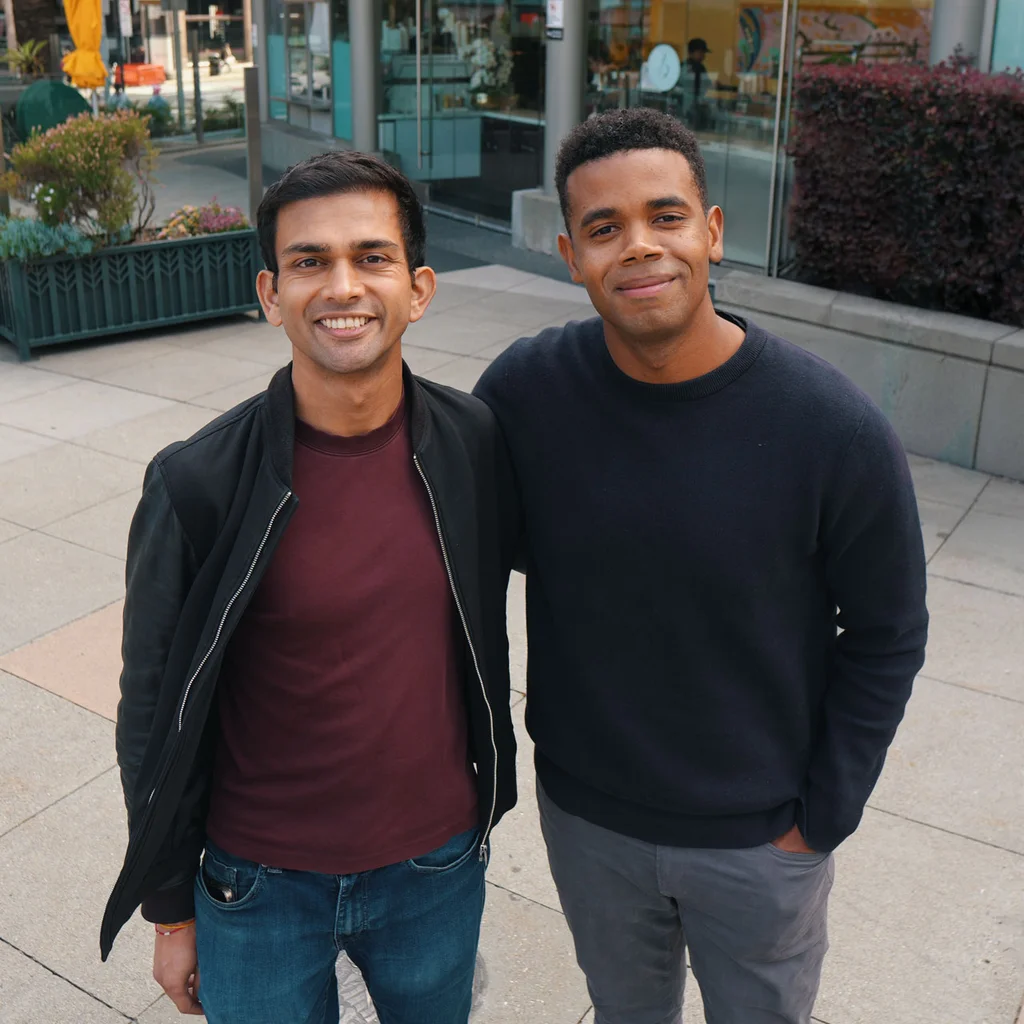
Dhruv Amin and Marcus Lowe, two former Google product leads, created Anything last year to give nontechnical people a platform to build apps using artificial intelligence. The vibe-coding startup raised a $11 million financing round with a $100 million valuation backed by Footwork, Uncork Capital, Bessemer Venture Partners, and M13. According to the company, more than a million people have used Anything to build millions of apps, such as project trackers and customer relationship management platforms.
Now, the team is betting on an idea that works in tandem with their app-building service: Hiring an employee could become as simple as typing out a description of the job you need done.
Their new product, Skydive, lets users build a custom AI “teammate” by describing the role or sifting through a catalog of four agent templates. Then, agents are added to Slack, email, and the web; plus, AI agents have their own phone numbers and can be reached on iMessage.
The agents are always on, working when human employees are sleeping.
“The nature of Skydive is that you’re building these, like—I don’t want to say little humans—but these little AI agents to do work for you,” Amin says.
“It should be possible for any person in the company to build their own staff,” Amin says. He also says it’s possible for “our Anything users to be able to build their own employees.”
In May, after the AI app builder Mocha announced its shutdown, it prompted its users to move their projects to Anything’s platform. As customers migrated over, Anything’s support team was dealing with roughly triple its normal volume. Rather than hire more support staff, Amin says one employee built an agent they named Emma, and added it to their help desk service to respond to requests and report bugs.
Anything now runs more than 150 agents internally, roughly 10 of which are essential to the company’s operations, Amin says. Each human employee operates anywhere from 10 to 15 agents.
“I couldn’t imagine the company without them,” he says. “They feel a little bit like coworkers or colleagues.”
‘Not quite human’
Anything’s San Francisco office is quiet on the day I visit the team. There are waters on the table in a conference room, likely ordered by JB, the AI office manager. Anything’s human employees can request snacks or drinks from JB, who places an order on Instacart and notifies the team when it arrives.
On a whiteboard, there is a doodle of one of the agents. In their profile photos online, the agents wear human clothes (Zaria Zinn, Anything’s marketing lead, created a Pinterest board for outfit inspiration), but have colorful, animated faces that almost resemble The Muppets. They don’t have mouths or noses—just eyes. (Maple, a project management agent, is orange and wears hoop earrings and a white turtleneck.)
“We do give them human names and human-looking avatars, but [they are] not quite human,” Amin says. “We’re not trying to trick someone that this is a human.”

As human employees correct their Skydive agents’ tones and teach them new habits, Amin says the agents have started to adopt their own identities and feel akin to colleagues.
Some of these agents brainstorm campaign ideas with Zinn, the marketing lead, while another acts as Amin’s vice president of finance.
“I think it’s just the natural evolution of software,” Amin says. “We want to make it extremely easy for regular people to build software apps, [which] was the first instantiation of it. But I think agents [are] clearly the next frontier in that.”

One of the team’s engineering agents recently helped Lowe ship 56 pull requests, proposals submitted to merge new code into a main project, in a single Sunday. Lowe was using Slack to direct the agent from his phone while he was out of the office. By those standards, it sounds nice to have an always-on AI agent that works when the team is off. But the process hasn’t been free of mistakes.
Amin recounts an incident where an agent misread a database calculation and told him the company had lost $1 million because of a credit bug that didn’t exist. It’s also been a learning curve for Anything’s human staffers; once, an employee asked an agent to write emails to potential influencer partners without going back and forth on the draft, resulting in the agent’s sending the draft version.
The agents can also be “a little bit overeager to please,” Amin says. When Zinn asked an agent to simply draft an email, it created multiple drafts and set them up in the email provider. Because of this tendency, Zinn says, it’s important for users to spell out clear boundaries with an agent, including the tasks they expect agents to complete and where they want it to stop.
“You deal with the mess ups because like in some cases there’s like, no other choice,” Amin says. “We just don’t necessarily have the funds to have a full influencer management program.”
A ‘hard transition’
The global AI agents market is currently valued at $10.9 billion and is expected to reach $182.9 billion in 2033. A McKinsey report in 2025 found 62% of survey respondents say their organizations are at least experimenting with AI agents.
Big tech companies have also made efforts to encourage the development of AI agents. Earlier this year, Nvidia announced new software tools to help companies make AI agents and new computing racks designed to power agents, shifting its strategy’s primary focus from graphics processing units.
At a time when entry-level hiring is shrinking and nearly 2 million people are dealing with long-term unemployment, it may feel anxiety inducing to see AI agents taking on roles once filled by humans. Amin says the goal is not to eliminate human hiring, though.
“There is some limit,” he says. Down the line, as the company saves costs and grows revenue, Amin predicts they’ll hire more humans, but the bar for talent and skill will be higher.
The junior developer roles at Anything are becoming more senior, Amin says—but the team did recently hire a 21-year-old college dropout. While agents can help with “hard skills and busy work,” Zinn adds that there are certain qualities agents lack, like creativity, design taste, and communication skills. “All of these pieces are more important than ever for humans to have,” Zinn says.
“This is a hard transition,” Amin says. “But I think there is a, like, bright point after it—in the sense that this just gives every employee so much more capacity to go do things that they could otherwise never touch.”