
I spent the last few weeks hoping that my power would go out.
I’ve been testing three new portable home batteries designed to make backup power more accessible—and help save on energy bills. In the past, using battery backup for a home often meant spending $10,000 or more on equipment, and thousands more to hire an electrician and upgrade your electrical panel. The smaller devices I tested don’t need professional installation; they just have to be plugged into a wall. And because they’re portable, renters can use them, not just homeowners.
Grid outages are becoming increasingly common, thanks to climate change and aging infrastructure. If you live in California, where electric utilities have sparked major wildfires, your power might be shut off when the fire risk is high. In other areas, stronger hurricanes and storms have made outages more frequent and longer lasting. Extreme heat can cause blackouts when AC use surges, and can damage grid infrastructure directly. Having battery backup makes sense. For many people, a whole home system or gas generator isn’t necessary. What matters is keeping the most important devices running, so you won’t have to throw out hundreds of dollars of groceries or lose your internet connection.
I tested three new batteries: the Pila Mesh Home Battery, the Biolite Backup Core, and the EcoFlow Delta 3 Max Plus. I hooked up my fridge and simulated outages to see how they’d perform when the grid goes down. Then I tested their potential for energy arbitrage. I wanted to know two things: how well could they keep my most important appliances running in an outage, and could they actually save money.
The possibility for real savings comes from how utilities price electricity. Many now have an option for time-of-use pricing at different times of the day. The price difference varies by location, but some utilities have particularly large gaps. In Nevada, for example, you might pay 50 cents per kilowatt hour at peak times in the summer, and only 9 cents at other times of the day. If you charge the battery when power is cheap and then use it to run your fridge or a window air conditioner when rates are highest, your bills will drop.
In some areas, batteries are also becoming part of virtual power plants (VPPs), networks of home devices that utilities can tap into when the grid is under stress. Residents can earn money from that, too. Over the course of the battery’s 10-year life, depending on your location, incentives have the potential to help cover the batteries’ cost.
As AI keeps pushing up the demand for electricity and hyperscalers and utilities are desperate for new capacity, it also might soon be possible to get batteries like this at a deep discount, or even free. The nonprofit Rewiring America has calculated that adding solar energy, batteries, and heat pumps at homes could potentially cover the projected growth in electricity demand from data centers. Google recently launched a pilot that helps pay for energy equipment at homes—other similar programs may follow.
Which battery you want comes down to a few factors: how it fits in your home, how it manages power in a blackout, and how it interacts with your power company’s pricing plans. Here’s how each one worked for me.
The Pila Mesh Home Battery
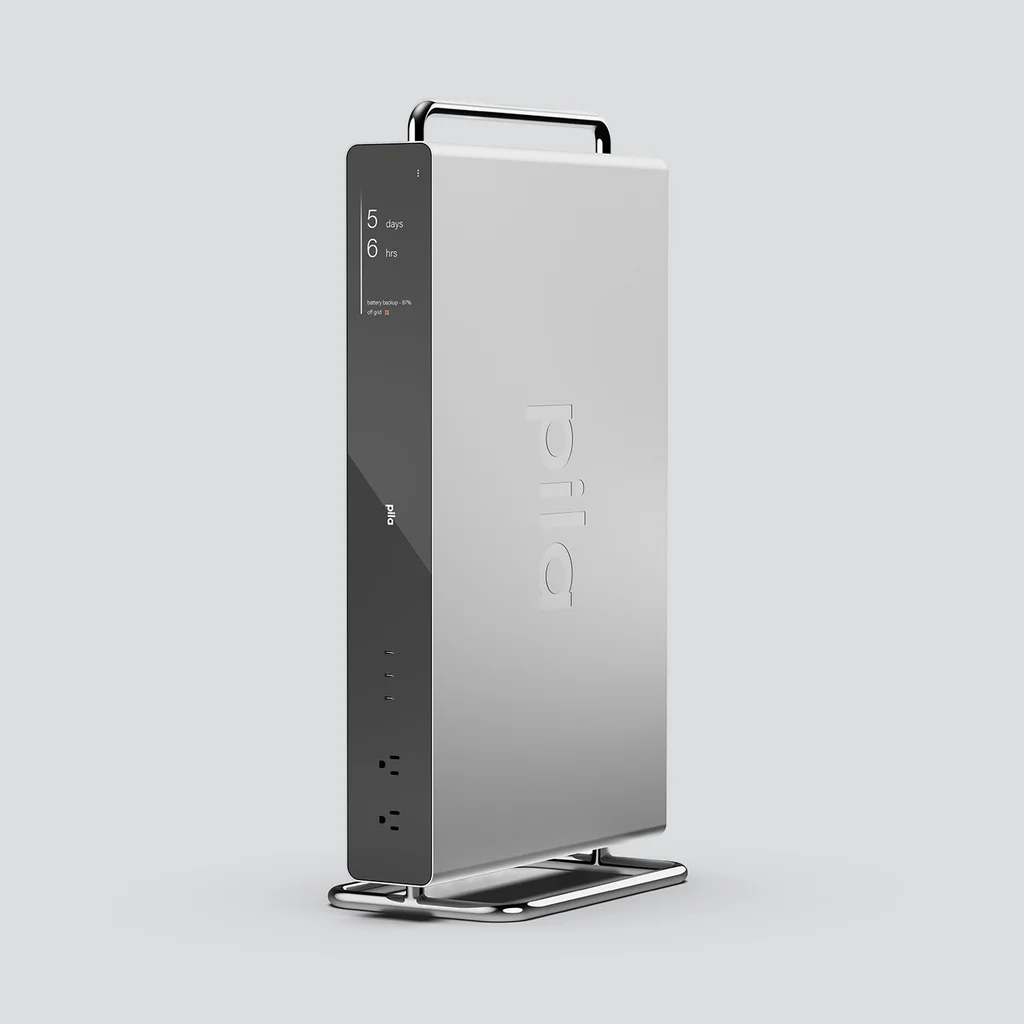
The Pila team, led by a former Tesla engineer, spent time on every detail of the design, which was evident when the shipping box arrived. Like the other batteries I tested, this one is heavy, at 49 pounds. But the box has built-in handles, which made it a little easier for me to drag it inside. When I opened the battery packaging, simple graphic instructions were printed directly inside the box. Setup is easy: You flip a power switch, scan a QR code to connect the battery to the Pila app, and plug the battery into any outlet.
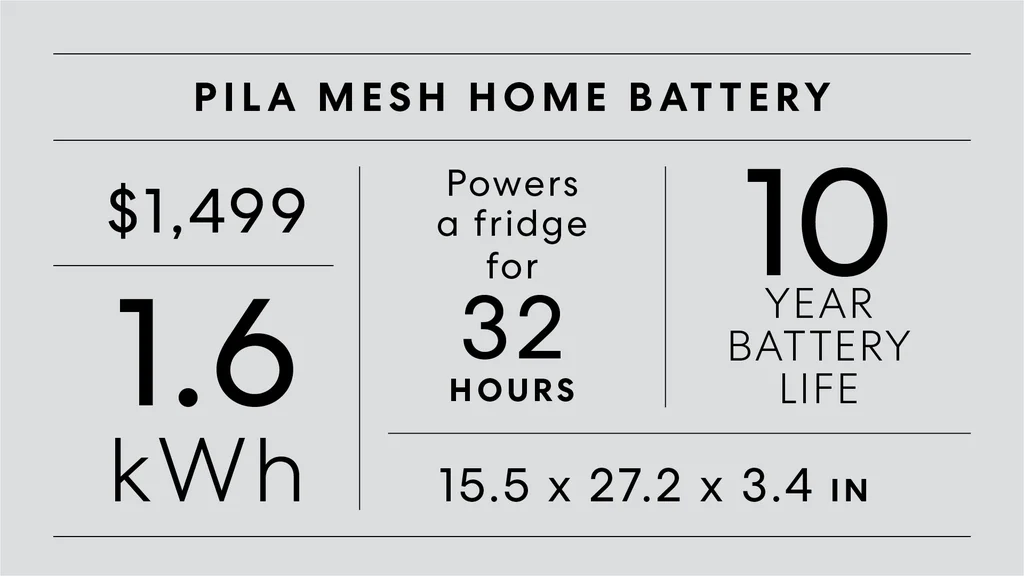
The battery is slim and flat, designed to slide into the space on top of a fridge. Stainless steel handles on each side make it easier to lift, though you’d need two people (or to be stronger than I am) to lift it to the top of a 6-foot refrigerator. When I realized how heavy it was, I also suddenly wondered if there was a weight limit for the roof of my fridge; someone from Frigidaire later told me that the limit was 25 pounds. That may be overly cautious. Pila told me that there have been no issues with appliances, and the battery’s flat shape distributes its weight. But it’s something to consider when you’re deciding where to put the battery.
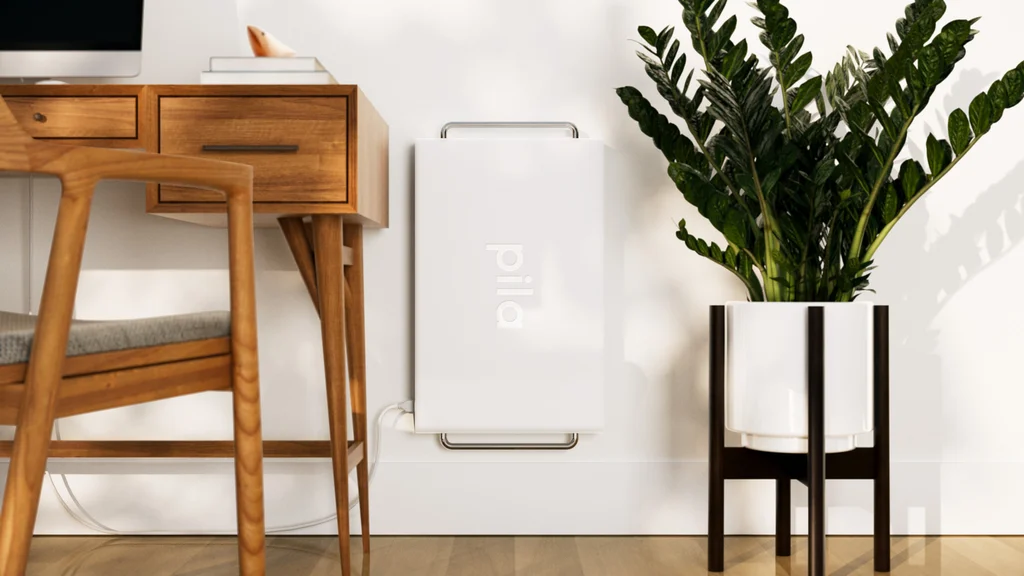
If you don’t have a good place to lay the battery flat, Pila sells a stand that can hold it upright. (A wall mounting accessory is another option.) I ended up using the stand for the test in my kitchen. It was easy to attach and made it possible for me to fit the battery into a nook near my fridge.
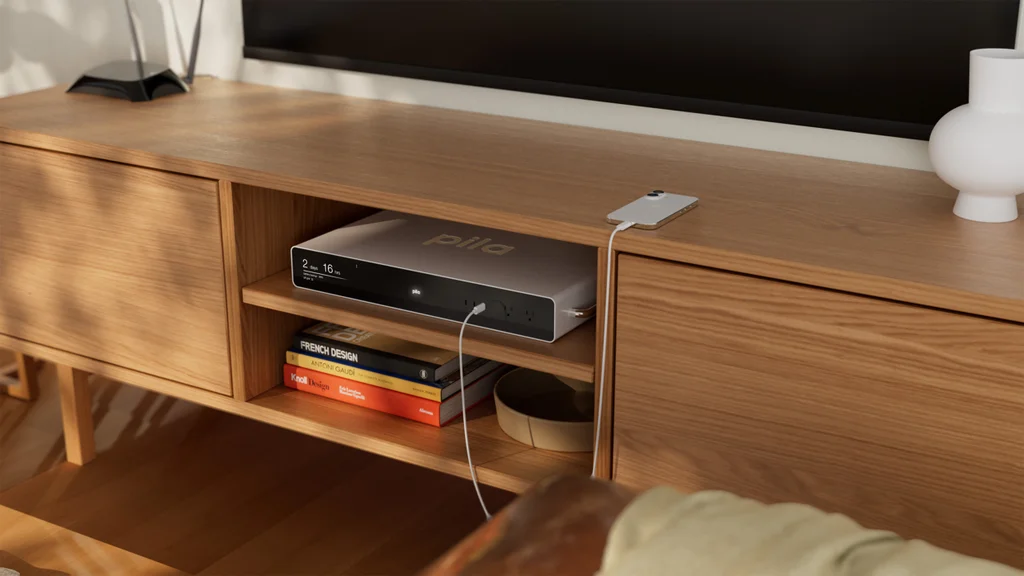
To back up a fridge or anything else, you just plug it into the side of the battery. When the grid is working normally, power can flow from the wall through the battery into the appliance; when there’s an outage, and it automatically switches over. But you can also use the app to adjust when your fridge uses the battery—for example, in the evening, when power companies often charge more for electricity. (Cycling the battery each day doesn’t harm it, and it was designed to last 10 years with that use; all of the products that I tested use lithium iron phosphate or LFP batteries, which are safe and long-lasting, and are used in some EVs.)
The app includes a setting to simulate a power outage, switching anything that’s plugged in to run on the battery. The battery, which had been tracking how much power my refrigerator used, initially said that I had two days and five hours of power remaining. When an outage begins, a screen on the front of the battery displays the power estimate, along with the temperature inside, measured by sensors that come with a kit made by the company.
“In those really stressful moments, like a power outage, we felt it was important to make the information—like how long it’s going to last in an outage—as front and center as possible for folks, so you’re not having to pull out an app and remember your login,” says Cole Ashman, Pila’s founder and CEO, who previously worked on the Powerwall at Tesla.
From the app, I also tried setting a schedule for time-of-use pricing. Whether you want to do this will depend on your location. Some utilities don’t offer large incentives, while others do. In a market with big swings in pricing, running off the battery might save a couple of hundred dollars a year. Pila told me that it will soon offer the option to use the battery in virtual power plants in some areas, which could save hundreds more. Some utilities are also planning to pay a chunk of the battery’s upfront cost.
“It no longer becomes a ‘what is my ROI?’ story, but it becomes, hey, here’s a way to get this battery at little to no cost,” says Ashman. “It’s win-win. You get backup power and bill savings, and then for a few hours per year, should you choose to, your utility can use it to help stabilize the grid.”
Although I tested only one battery, the technology is designed to work in a mesh system. You could have one in the living room, and others in your office and your kitchen; the batteries can communicate and coordinate as one system across the home. The app gives you the option to manage each of its outlets, if you want to remotely turn off certain devices during an outage and keep only essentials on. Another feature built into the tech will allow the batteries to be bidirectional—with the option of sending power back into the grid—at a later point when codes catch up to what’s technologically possible.
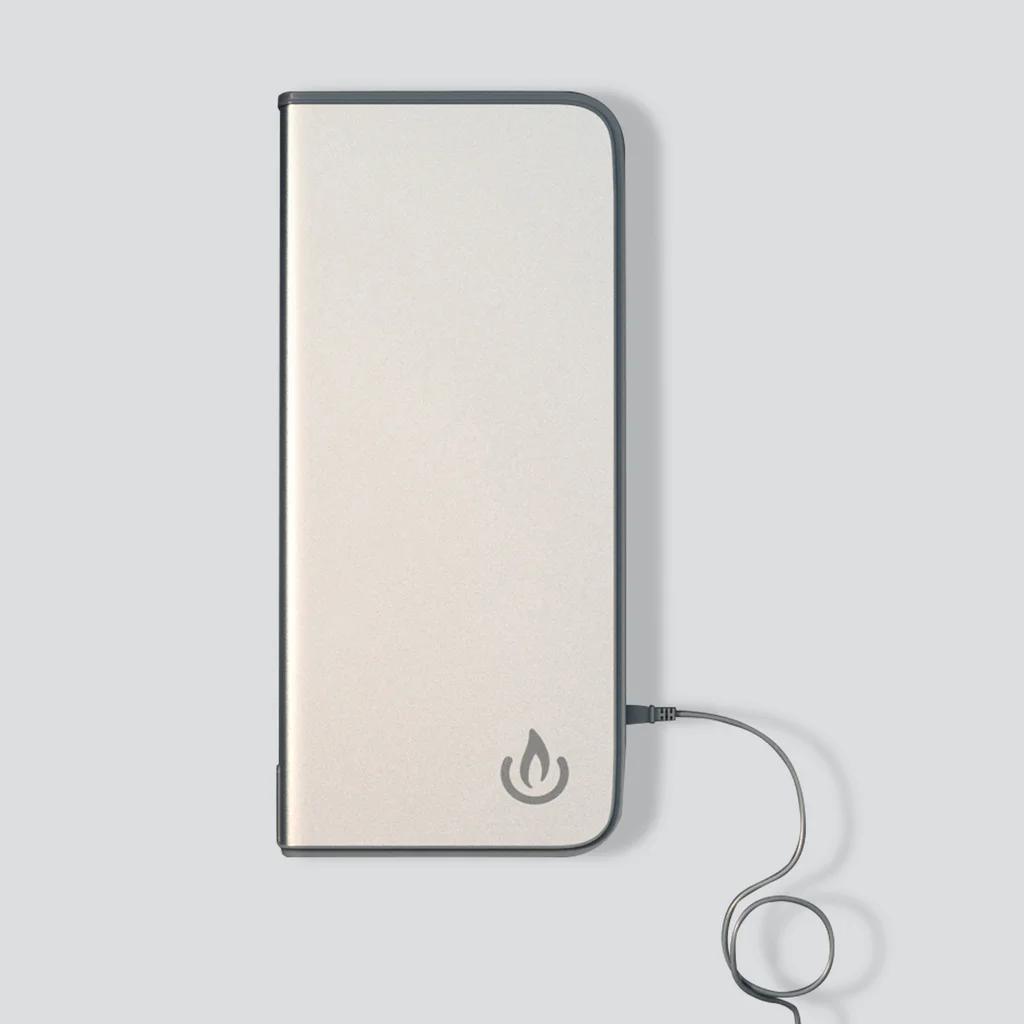
The BioLite Backup
BioLite’s Backup battery is also designed to slide into the space on top of a fridge or be mounted on the wall behind it. Some earlier portable power stations were so bulky that they had to be stored in a closet. “It was really about, okay, well, how do you fit into spaces that are more compatible with the home?” says Jonathan Cedar, the CEO. “We saw the space on top of your fridge, behind your fridge, underneath cabinets, under desks— these sort of forgotten spaces where you could stuff something that is more pizza-box shaped than kitchen-sink shaped.”
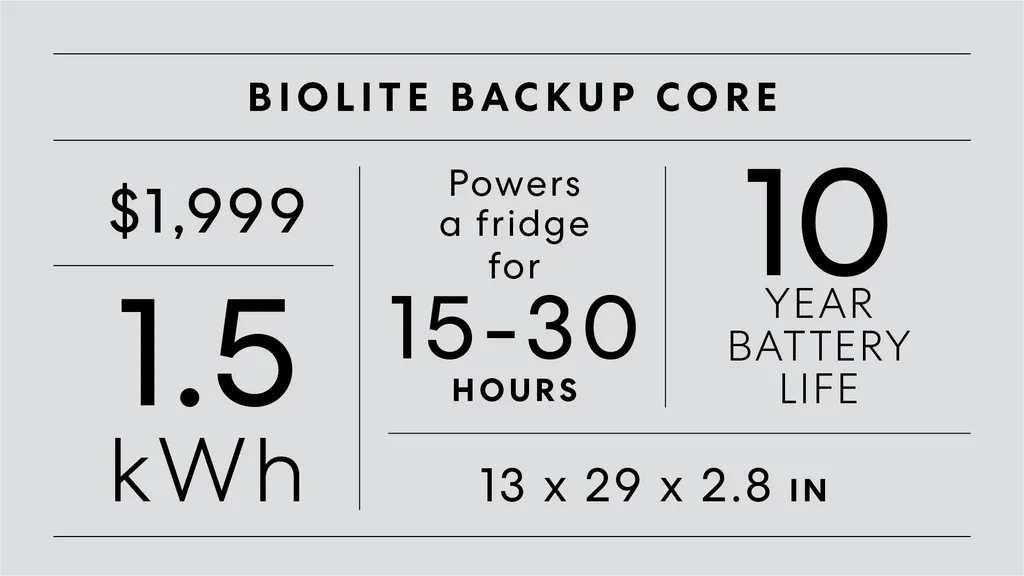
If you decide to tuck it behind the fridge, the extra power strip it comes with makes it easier to plug in your phone, router, or other devices. The power strip has the option of magnetically attaching to the side of the fridge. In my case, because my fridge sits in a narrow nook in a brick wall, setting the battery on top would have likely been the best option; since it was a temporary test, I just pulled up a table to lay it on.
Setup, again, is easy. You plug in the battery, scan a QR code to connect to WiFi and the app, and then can plug in your appliances or devices. Grid power flows through until there’s an outage—when the battery kicks on—or you adjust the schedule.

The design is minimal. Unlike the Pila battery, there’s no screen on the battery itself to show you how much battery life is left or other details. Two LED lights indicate that the battery is connected and running. Otherwise, you just look at the app.
“We felt like the hardware should kind of disappear,” says Cedar. “We wanted it to have an aesthetic that felt more like a home appliance, but in general, we really didn’t want it to be the focus. And so we chose to do a very basic interface on the hardware itself, because that’s the thing that’s out and about in your home all the time.”
The app shows basic details, including the estimated time of charge left and how much power is flowing in and out at any given time. It also lets you schedule the time to charge to optimize utility rates.

I tested how it would perform in an outage by unplugging it from the wall and plugging in my fridge and other devices. I cranked down the temperature to make my fridge compressor kick on, and it immediately started running from the battery. I also tried adding a schedule to see how it could be used to optimize utility rates—in the case of my utility, that meant charging the battery at night and running the fridge from the battery during the day. That ran seamlessly as well.
As with the other batteries, depending on your utility’s rates, there’s the opportunity to immediately begin saving some money on your bills. Virtual power plants will become more common over the next few years, says Cedar, adding that BioLite is already in discussions with utilities and VPP software companies. “The VPP side really requires that whole ecosystem to continue to mature,” he says. “We’ll be fully compatible with it as it matures—it’s more just waiting for the networks to help flow the financial incentives.”
BioLite’s battery is the newest of the three to market, and has just begun shipping to its early Kickstarter customers. New customers can reserve the batteries now, and ordering will open up fully in October with deliveries in November.
EcoFlow Delta 3 Max Plus
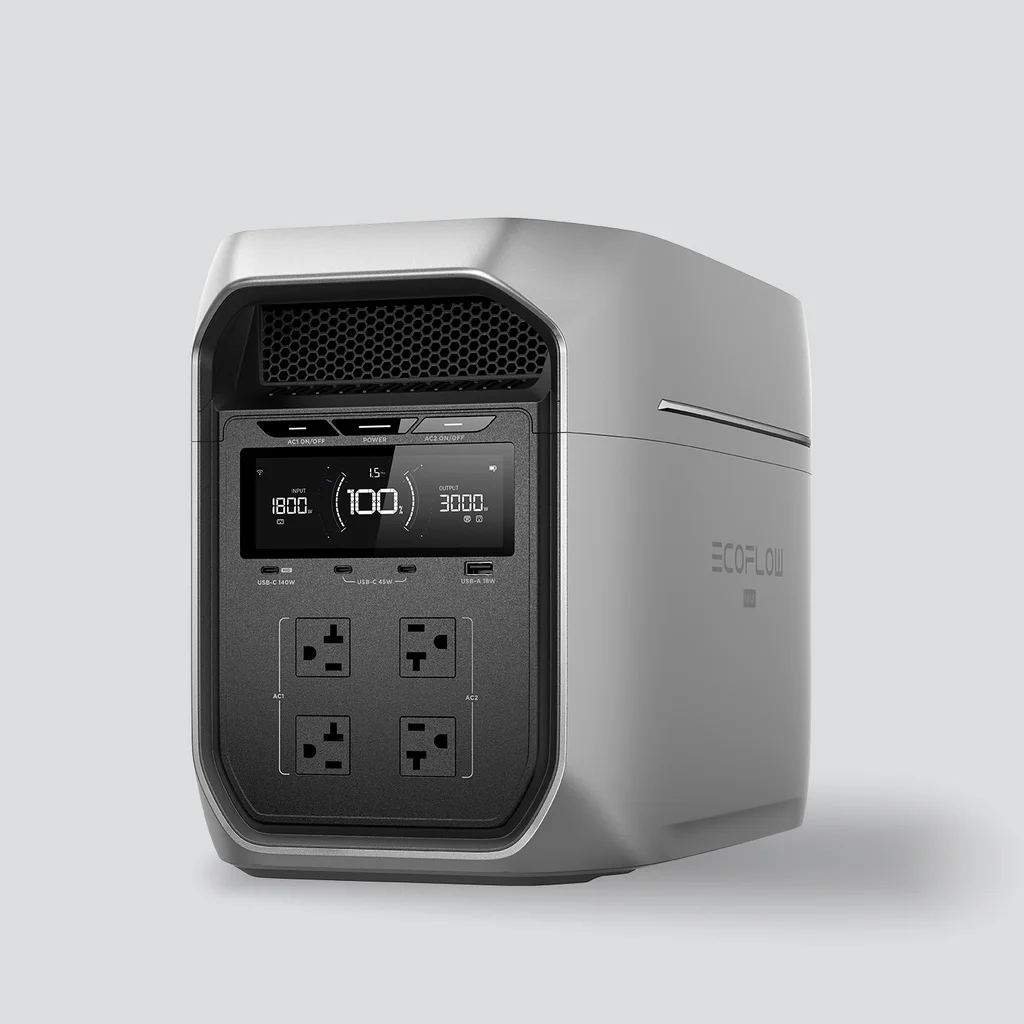
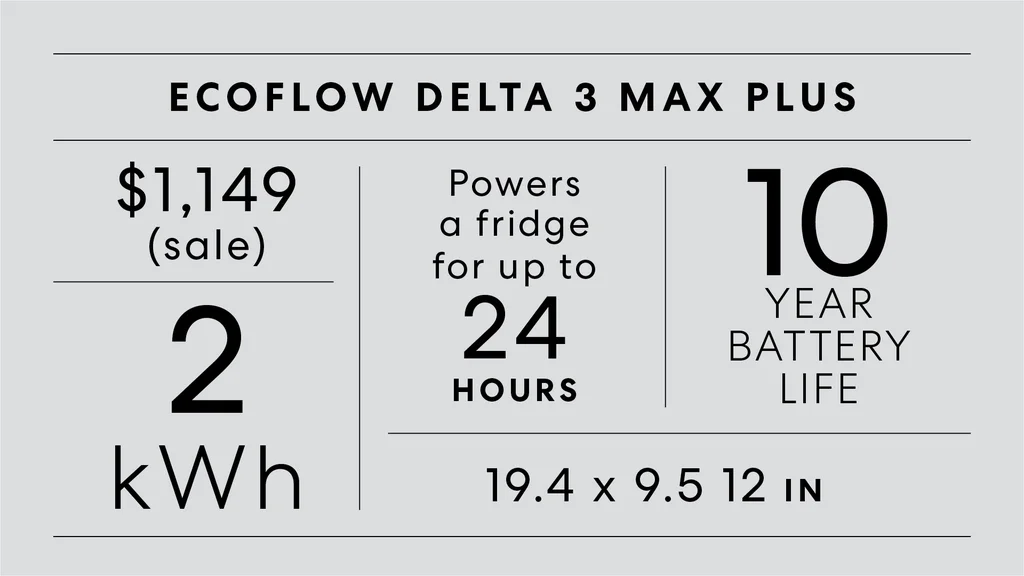
EcoFlow first launched a portable battery on Kickstarter in 2017, and has since sold millions of products. It makes batteries in a variety of sizes, but I tested a new model with a similar capacity to the others I tried. It has a different design approach. The battery is shorter and bulkier, and reminded me a little of a tower on an older desktop PC. It might be a little harder to find a good place to leave it out—and it doesn’t look as sleek. (In my own tiny kitchen, there wasn’t an obvious place where it could have been stored permanently.) But the shape made it pretty easy to move around. The case is sturdy enough to stack multiple batteries on top of each other. The model that I tested also can use an optional wheel accessory; some of the company’s other batteries come with built-in wheels.
It was simple to set up, like the others. I plugged it into the wall, connected the app, then started plugging in devices like my microwave. On the front, below a screen that displays the battery charge and how much power is flowing in and out, there are four AC outlets, along with USB outlets; the app lets you prioritize which devices you want to keep charged in a long outage. “Circuit priority is important,” says Brian Essenmacher, head of business development at EcoFlow. “We learned that through doing whole home systems where when someone’s power’s out, if the battery is below 50%, maybe they want only critical things on.” It’s also something you can control remotely, if you’re away from home and get a notification that the power went out.

The battery can fully charge quickly, taking just an hour, and there’s an option to turn on “storm mode,” which tracks the weather and automatically charges the battery to 100% if a storm is coming. (If you leave it plugged into the wall and an appliance, like the others, power will flow through to your appliance while the battery stays charged and just occasionally tops itself up.)
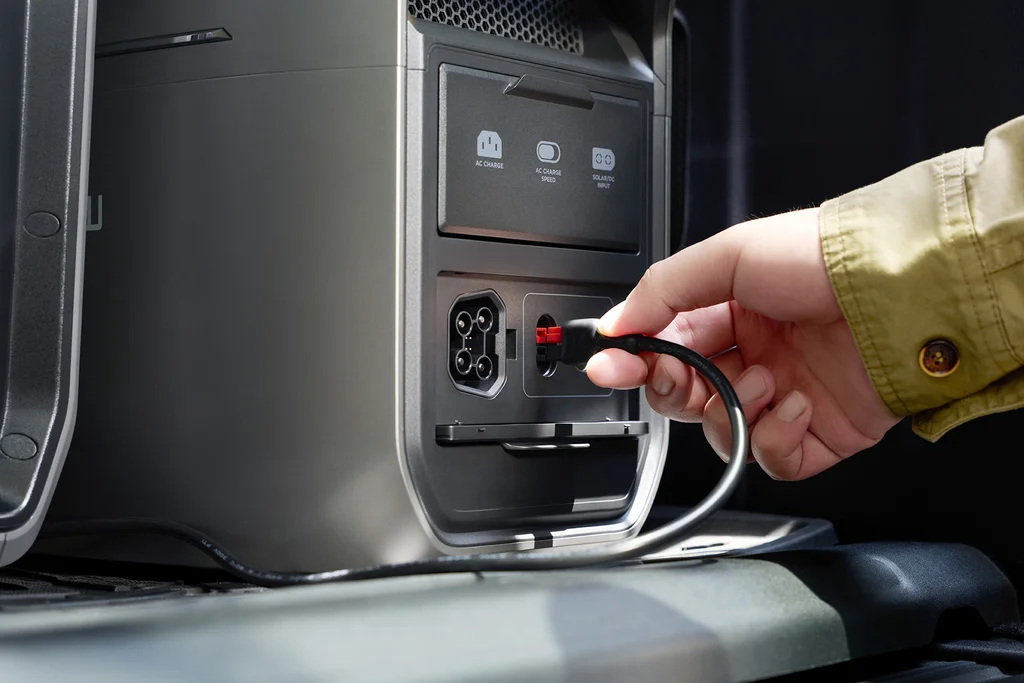
I plugged in my fridge and simulated an outage, and it immediately started running on the battery. Though I tested it only for a few hours, the company estimates that the battery can power a fridge for about a day. It’s also possible to use multiple high-power-draw appliances at once, like a microwave and a coffee maker, or even run a washing machine. Like the others, the app gives you the option of scheduling the battery to run at optimal times (or run off solar panels, which I don’t have) to lower your electric bill. It also tracks how much you’re saving over time.
Some customers are buying the batteries particularly because of the energy bill savings in places like Hawaii, where the peak rate for electricity is 65 cents per kilowatt-hour and drops to 22 cents, says Essenmacher. “If I was to use just this 2-kilowatt-hour unit, I could save $200 to $300 a year,” he says.
Should you buy a portable home battery?
My power didn’t go out while I was testing the batteries, but it’s gone out a few times this year. Since I work from home, it’s interrupted my work. Once, while I was traveling, I got an alert from my utility that the power had gone out, and because it wasn’t clear how long the outage lasted, I ended up throwing out some food when I got back. (In the past, I was living in Brooklyn and happened to be traveling when Hurricane Sandy hit; I couldn’t get a flight back, and when I finally returned the food in my fridge was spoiled.) I can see a clear case for a battery like this, and even more if someone has an extra need for electricity, such as keeping insulin or other essential medicines refrigerated.
Right now, energy bill savings don’t add up to enough to buy a battery for arbitrage alone. Still, they can help. Because every utility has a different system, you’ll need to look up your local options. My own utility offers a full time-of-use plan only to homes with extremely high electricity use; there’s a separate day-night plan, but the difference between rates isn’t large enough to be worth it. In many other places, the savings would be meaningful. Your utility may also give you access to other incentives.
The biggest shift is that a home battery no longer has to mean a permanent installation or a five-figure investment. They fit in a kitchen or office, ready for use whenever the power goes out, and you can take them with you when you move. That makes backup power a much more practical option for people who don’t want—or can’t have—a whole-home system.