
Ask the most bullish representatives of big AI companies, and they’ll tell you that robotic colleagues and house staff are just around the corner. A massive market for robotic aids, powered by AI “brains,” could contribute huge sums to the bottom line of tech firms. Elon Musk predicted earlier this year that they could produce $30 trillion in revenue for his companies alone.
Picture what those robots are, and your mind’s eye likely conjures an image of a humanoid robot: Two arms, two legs, a head, all in human-like proportions. That’s what the biggest players in the sector like Tesla, Figure and Unitree see, too: Distinctly human-shaped cutting-edge hardware.
Yet the fixation on making robots look human could, perhaps, lead the tech sector into trouble, reckons Jonathan Aitken, a robotics researcher at the University of Sheffield. “This makes them harder to design and build well, especially with the kind of robustness and efficiency required to perform tasks in the environment,” he says.
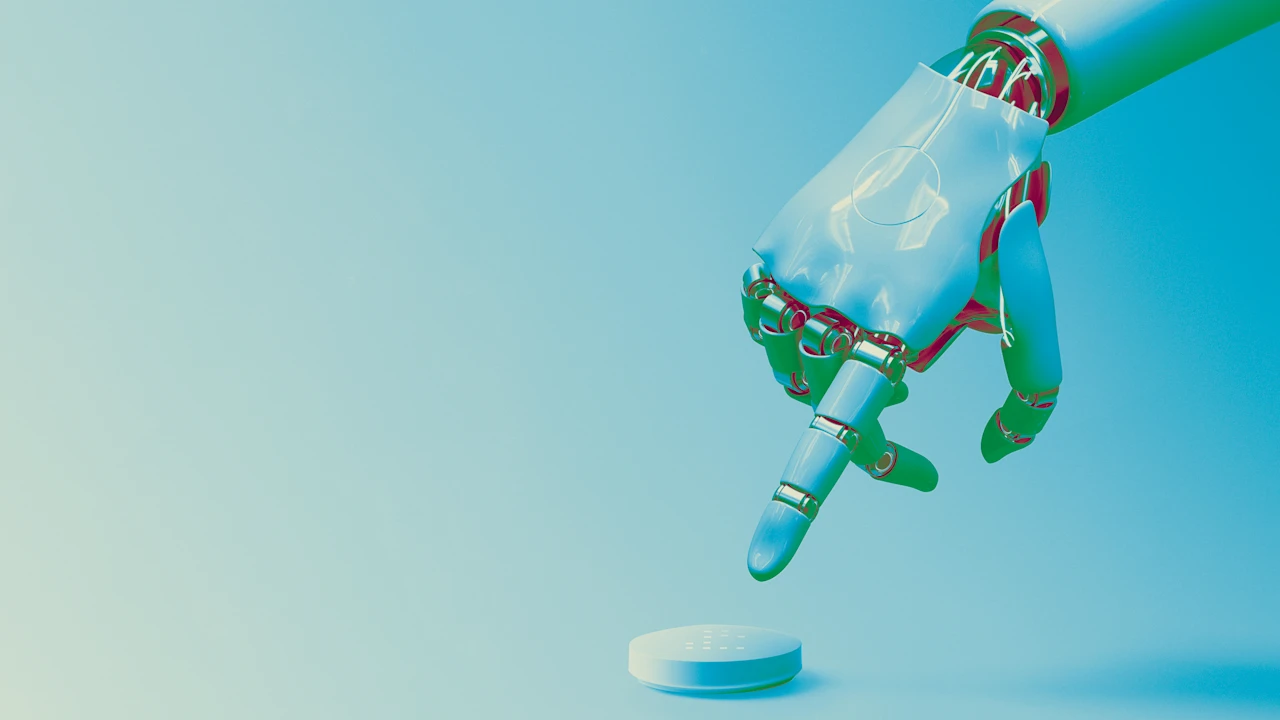
Aitken points out that the human hand has some 27 degrees of freedom, making it “a significantly complex system, which is both lightweight, yet powerful and with significant redundancy in movement.” Tesla’s Optimus robot doesn’t include all those degrees, paring it down instead to 22 different degrees of freedom. But it still relies onon a huge number of parts, working in tandem.
Tendons are tricky
It’s little surprise, then, that The Information reports Tesla, which aimed to produce “thousands” of the robots by this summer, quietly scrapped that goal when they realized that making hands that can grip, move, and manipulate objects at the level of dexterity required, was too tricky.
The hand-based holdup is just the start of Tesla’s travails with its Optimus robots, as Fast Company has previously reported. But it’s not unique to Musk’s company.
Smaller connections like human-sized digits on humanoid robots that come into frequent use can also wear and tear more easily than larger joints, powered by actuators, the robotic equivalent of muscle: pumps that turn power into movement, and connected by planetary roller screws, which have been described as the expensive secret behind humanoid robots.
Tendons are tricky, says Scott Walter, one of the world’s leading experts on robot design and the chief technical advisor for Visual Components, a manufacturing production design company. “They are likely having creep — elongation over time — and abrasion issues that hinder long term reliability,” he says. It’s not just the weaker elements of the robotic joints, like tendons, that would face abrasion issues, he says. The regular rubbing can damage contact surfaces, made from aluminum.
But even the actuators at a humanoid hand-sized scale can be tiny and finicky in terms of maintenance. Only a handful of manufacturers, many of them based in China, can produce actuators at the scale and standard needed for such frequent use.
Better than human
It all begs the question of why tech firms are building robots that look like humans—hands and all—in the first place. Aitken says there’s no good reason why a robot needs to resemble a human, adding that the better question is what a robot would look like if designed specifically for the tasks it was expected to carry out.
However, one way that humanoid robots may be an impovement on their more mundane-looking alternatives is in how they interact with the environment we’ve built up over centuries. “The easiest robot to adapt into the world are humanoid robots because we built the world for us,” Nvidia CEO Jensen Huang said last year. It’s not just in terms of what happens when robots get let loose in the world. It’s also how they are trained to interact with that environment. “We also have the most amount of data to train these robots than other types of robots because we have the same physique,” said Huang, whose company is developing the GR00T operating system for robots. “The humanoid form is ideal for general purpose robotics, especially as a drop-in replacement for human tasks,” Walter says. “But for special or narrow applications, different form factors make sense.”
Others agree that humanoids aren’t always up to the job. “The humanoid form factor is somewhat of a red herring,” says Aaron Dollar, professor of mechanical engineering and computer science at Yale University. “Yes, it makes for a more complex system that introduces a lot of additional challenges over simpler form-factors. But we haven’t figured out how to reliably do practical dexterous manipulation in simpler systems, either.” It’s unsurprising, then, that Tesla is struggling with Optimus.
Optics versus utility
Aitken suggests that the reason Musk has chosen a humanoid design has more to do with optics than utility. “Undoubtedly Optimus is driven by the sci-fi view of what a humanoid robot is, given the sleek lines and frame. But there’s no need for it to look in this way as it’s just an aesthetic—arguably though, people may find it more acceptable in this form as it fits the public perception of a ‘robot’.”
However, humanity has been more welcoming of change than we perhaps would think in the last century or more: We’ve hopped into planes and cars that would have looked out of place or unusual and gotten used to it, just as we have to mobile checkouts and other odd-looking tech that’s come our way. Non-humanoid robots could be just another example where we adapt.
It’s for that reason—the belief that humanoid robots will soon be encroaching into our lives, and interacting with people, and need to seem non-threatening. Aitken points out that from an object manipulation, payload carrying capacity, and stability perspective a quadruped robot with an arm attached to the top of it may well be a better option than a humanoid. “The question is whether this would seem more threatening,” he says. “I do think that people may well find the look of it a little more challenging.”