

Losing candidates have prioritized the big tent and embraced their former rivals. Why can’t the media and pundits get on board?
Wisconsin Democratic gubernatorial candidate Francesca Hong speaks at an election-night party in Madison, Wisconsin. Hong went on to lose the primary.
(Scott Olson / Getty Images)
Here’s the good news of this long, hard summer: In the real world of hard-fought Democratic primaries in 2026, all across the country candidates themselves are leading the way in promoting a big-tent anti-Trump party that embraces both the center and the left. There are many great examples of ambitious, popular, but ultimately losing candidates endorsing the winner in their primary race, someone who was 24 hours earlier their bitter rival. Oddly, these stories have gotten comparatively little attention.
Instead, the media has obsessed over centrist Democrats—who are not actual candidates—declaring war on the left. Third Way, a centrist group rooted in the political philosophy of the Bill Clinton administration and founded in 2005 as a neoliberal answer to GOP President George W. Bush, announced a $15 million campaign against the Democratic left after progressive Abdul el-Sayed won the Michigan Democratic Senate primary over centrist Representative Haley Stevens. Shortly after that, long-ago Clinton adviser and professional loudmouth centrist James Carville told Democratic Socialists of America members “don’t use our goddamn name,” as if he owns the rights to the Democratic brand. (He doesn’t.)
Fellow Clinton adviser and permanent pundit Paul Begala carried on the DSA bashing, blaming the group for electing Bush over Gore in 2000, in a podcast with Fox News’ house Democrat, Jessica Tarlov. That’s ridiculous: Founder Michael Harrington had died the year before, and DSA in 2000 was a shadow of what it had been, and what it would become—after Bernie Sanders, Alexandra Ocasio-Cortez and Zohran Mamdani. It had roughly 6,000 members at the time. The group didn’t endorse Ralph Nader against Gore, though a few prominent members did.
And just last week, Obama adviser David Axelrod took aim at arguably the most vulnerable Democratic senator up for reelection this year, Georgia’s Jon Ossoff, for stating that Donald Trump would rather “travel with Natalie” (Harp, one of his closest advisers) than do his job. Axelrod insisted that this crucial senator, the only incumbent running this year in a state Trump won in 2024, had made a “gratuitous and unnecessary” reference to Harp that “distracted and detracted from the power of the message.”
Um, David? Not that I think dominating our easily distracted media is the be all and end all of political strategy, but Ossoff owned the airwaves, and the pixels, in the week after he said that, and not because people agreed with you. (We did not.)
Sorry, I was promising good news, but I got distracted by all the bad. That happens these days. But let’s go on.
Current Issue
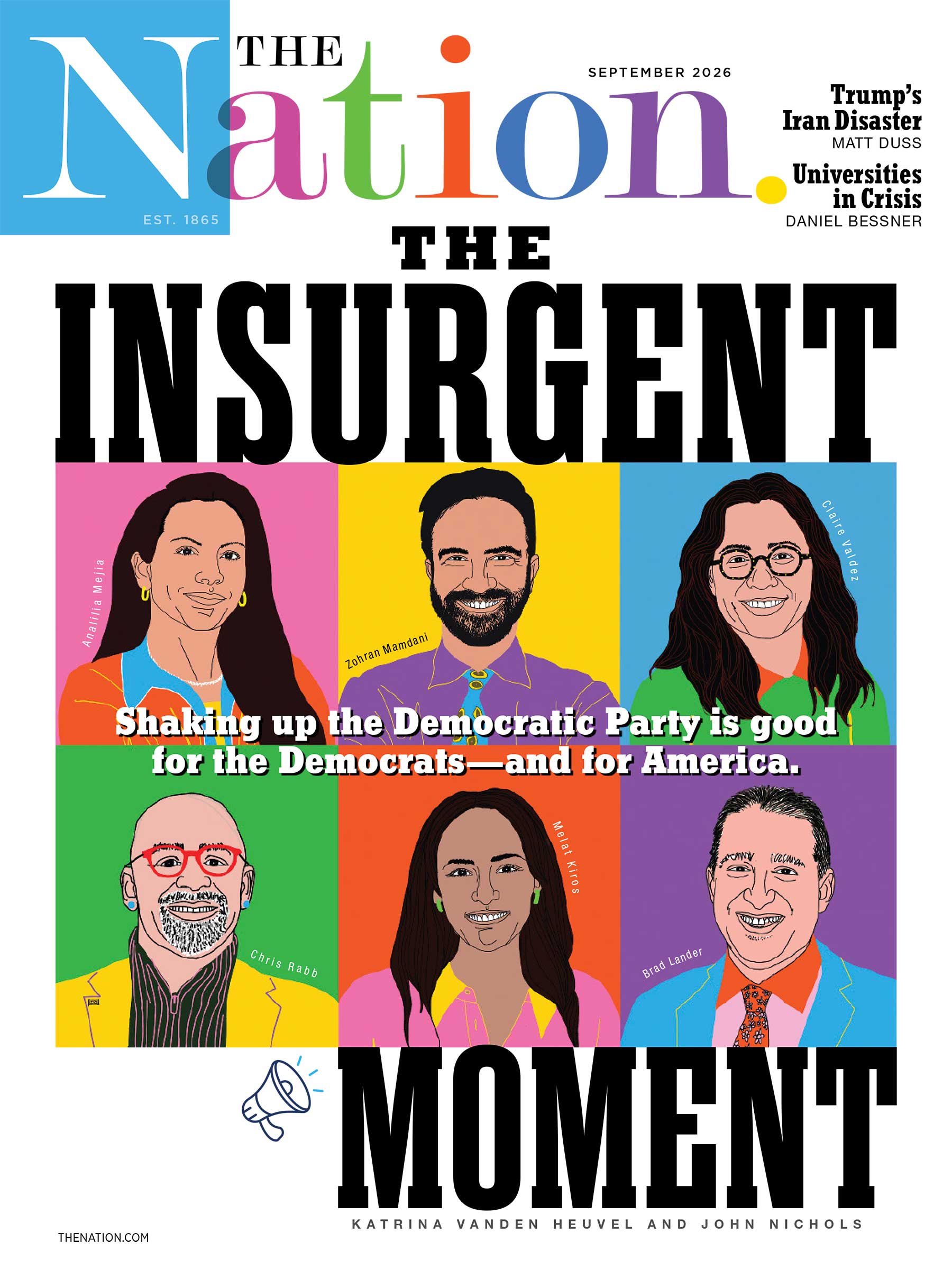
We’ll start with the August 4 Michigan race between el-Sayed and Stevens. El-Sayed is not a DSA member, and in fact calls himself a capitalist, but he has strongly opposed Israel’s war on Gaza and embraced many other priorities of the party’s left flank. El-Sayed had a big lead in polls for a while, but he won a narrow victory. Centrist Democrats and pundits at first plotzed. But Stevens pretty quickly endorsed el-Sayed, and she was followed by Michigan Governor Gretchen Whitmer, Senator minority leader Chuck Schumer, and 2024 Democratic presidential nominee Kamala Harris.
A week later, progressive Lieutenant Governor Peggy Flanagan beat center-liberal Representative Angie Craig to win the Democratic nomination for the Minnesota Senate seat from which progressive Tina Smith will soon retire. Even faster than Stevens, Craig called Flanagan and announced not just her concession but her strong support, and then went public with it. They’ve already campaigned together.
That same night, in Wisconsin, DSA member and state Representative Francesca Hong, who polls had shown was the likely winner up until Election Day, narrowly lost to liberal Milwaukee County Executive David Crowley in the Democratic gubernatorial primary. Like Craig, Hong immediately endorsed her rival, even while their respective supporters were still shooting verbal spitballs at one another on social media. (Hey, it’s politics. It happens.) By the next morning, Crowley and Hong were at a “unity breakfast” together, along with Senator Tammy Baldwin, Representative Mark Pocan, and other state leaders who had backed both candidates. Hong and Crowley quickly hit the campaign trail together, just like Craig and Flanagan.
And a week after that, Florida Democratic Senate candidate Alexander Vindman, for a while expected to win, lost to DSA-backed insurgent Representative Angie Nixon. Vindman not only quickly endorsed Nixon; he sent her money (the anti-Trump Resistance Democrat had raised big dollars for his losing quest).
You could say this trend started in New York, in June, after relative centrist Caitlin Conley won the Democratic primary in Hudson Valley’s NY-17, winning the right to face vulnerable GOP Representative Mike Lawler. Progressive Working Families Party endorsee Effie Phillips-Staley endorsed Conley—and so did the WFP.
You could maybe even argue it began in New York City last year, when progressive Brad Lander and DSA member Zohran Mamdani endorsed each other and urged their supporters to rank the other second (New York City has ranked-choice voting) if they wanted to rank them first. Lander backers mostly did so, and Mamdani ultimately won, to the continuing horror of centrists everywhere. A year later, Lander defeated liberal billionaire incumbent Representative Dan Goldman in New York’s 10th Congressional District, with the ardent backing of Mamdani.
Why does all of this cross-ideological-lines solidarity deserve praise (and electoral excitement)? Because it is virtually ignored by the mainstream media, which would much rather cover what they perceive as the centrist “war” against Democratic progressives, especially those in DSA. For my entire adulthood, the media story is always about “Dems in disarray,” even today, as Republicans lose parts of their base, and all of their soul, to Trump’s cruelty and ignorance. The New York Times can’t call the Democratic left anything but “divisive,” even though it’s beefing up Democratic vote totals, and winning elections, all across the country.
Popular
“swipe left below to view more authors”Swipe →
“This is one of those moments where the pendulum has shifted, and people are anti-incumbent and anti–status quo,” says Jasmine Gripper, head of New York’s Working Families Party. “And I think what Dems need to do is be unafraid of the swing. and lean into it, and the energy. Lean into: This is how we win.”
In Wisconsin, longtime organizer Davette Baker, who supported Francesca Hong, is now solidly for David Crowley. But on her Facebook page she publicly rebuked Wisconsin’s current Democratic governor, Tony Evers, for deriding Hong’s supporters. After Crowley won, reporters asked what he expected of Hong voters. “They have to play along,” Evers said.
He corrected himself: “Not play along—they have to be part of it.” But then he went on to say Crowley doesn’t support Hong’s policy priorities. Way to go, Governor, when Crowley beat Hong by only about 3,000 votes (and statewide voter turnout was higher than it’s been in years). The Milwaukee County Executive also supports many if not most of Hong’s policies.
I know David Crowley; Baker knows him better. He started his political life as an organizer, and she’s known him since those days. She believes he supports many of Hong’s policy priorities. “I’m very excited about David,” Baker told me on Wednesday. But not so much about Evers’s interventions in the race, which she hopes party leaders have stopped.
At an August 17 joint appearance in Madison, Hong told the ideologically diverse crowd just why she supports Crowley: “[Crowley’s] childhood on Milwaukee’s north side shaped his vision of how government can add or subtract. Support or obstruct. Grow a community or deplete it,” Hong said. “David has lived the struggles that far too many Wisconsinites can relate to [and] have lived themselves.” Her supporters continue to ask Crowley to endorse Hong’s proposal to add a new, higher state tax bracket, and so far he hasn’t. We’ll keep watching.
But this is how the system is supposed to work: People who are allies on the vast majority of issues marshal their supporters to push for their policies; they don’t sit out crucial races and denounce their victorious rivals as the enemy.
Carville, Begala, Axelrod—older white men who, to their credit, ran some important Democratic victories around the turn of the century— could stand to learn from a new generation of Democrats, progressives, socialists and centrists, who understand the stakes in these 2026 midterms and the importance of expanding the Democrats’ reach.
Asked on Meet the Press last Sunday whether democratic socialists have a role in his party, Maryland Senator Chris Van Hollen—himself a white man of 67—struck a different note. “Yes they do, as part of the debate. I think that those in the Democratic Party who are afraid of a healthy debate are missing the point, because Democratic voters do not want a return to the pre-Trump status quo.”
Like Jon Ossoff, Van Hollen understands that, even apart from ideology, Democrats want leaders who are fighters. Luckily they have quite a few running for election in November. Let’s hope the left-baiting critics learn a lesson from the united front these candidates are assembling.
More from The Nation
What are our country’s real values? When money matters more than people, what does that reveal about the values we call “American”?

It’s time to stop favoring straight white men in everything the party does.

Trump’s order limiting mail-in voting is patently unconstitutional—but that didn’t stop the court from giving it the green light.

More important than fixing production methods is fixing our ill-advised foreign policy.
A unique new messaging study underscores the supremacy of economic populism in rural America and beyond.