

I have known Nigel Farage for years, and whatever one thinks of Nigel politically, he understands something that the establishment in Westminster refuses to admit: Britain cannot continue spending money it does not have while taxing the productive economy to death. Reform UK has now put forward plans to reduce Britain’s welfare bill by £50 billion annually, and the reaction from the political establishment was entirely predictable. They immediately screamed about cruelty rather than addressing the arithmetic. Britain’s welfare bill was already £334 billion in 2025-26, more than half of which was the state pension, and Reform is arguing that the remaining system has expanded far beyond what the productive economy can sustainably finance.
Robert Jenrick has described the current system as “suicidal empathy” and a “strange perversion of compassion.” Those are strong words, but the point is being deliberately distorted. Nobody is arguing that someone who is genuinely disabled and incapable of working should be thrown into the street. A civilized society should absolutely provide assistance to people who genuinely cannot provide for themselves. The problem is that government expanded the definition of welfare from a safety net into a permanent economic structure, and politicians became terrified to distinguish between people who cannot work and people who simply do not work.
Reform intends to replace the existing disability-benefit structure with a narrower system focused primarily on severe and enduring conditions. The party claims approximately £20 billion could eventually be removed from disability-related spending, while another £21 billion could be saved by preventing almost all foreign nationals from accessing welfare. That second proposal would include many EU citizens with settled status and would likely require Britain to renegotiate elements of its post-Brexit arrangements with Brussels. Reform is therefore not proposing another cosmetic adjustment. It is challenging the entire philosophy behind Britain’s modern welfare state.
The foreign-national issue will naturally generate the greatest outrage, but the economic question is perfectly legitimate. Immigration was always sold to the British people as an economic benefit. Politicians said migrants would work, contribute taxes, fill labor shortages, and increase GDP. Fine. Then why should someone be able to arrive in Britain and become a permanent liability of British taxpayers? Immigration should increase the productive capacity of the nation accepting the immigrant. When government must subsidize housing, income, children and other living expenses indefinitely, the economic calculation changes regardless of how uncomfortable politicians find that discussion.
Farage has been moving Reform increasingly toward precisely this distinction between work and dependency. He has called Reform the “true party of the workers” and proposed eliminating income tax on overtime above a standard 40-hour week for people earning less than £75,000. There is at least a coherent economic philosophy behind putting those policies together: stop punishing the person who works additional hours while reducing the incentives and opportunities to live permanently from the state. Westminster has spent decades doing virtually the opposite, taxing productive activity more heavily every time it requires additional revenue while expanding the number of people dependent upon government.
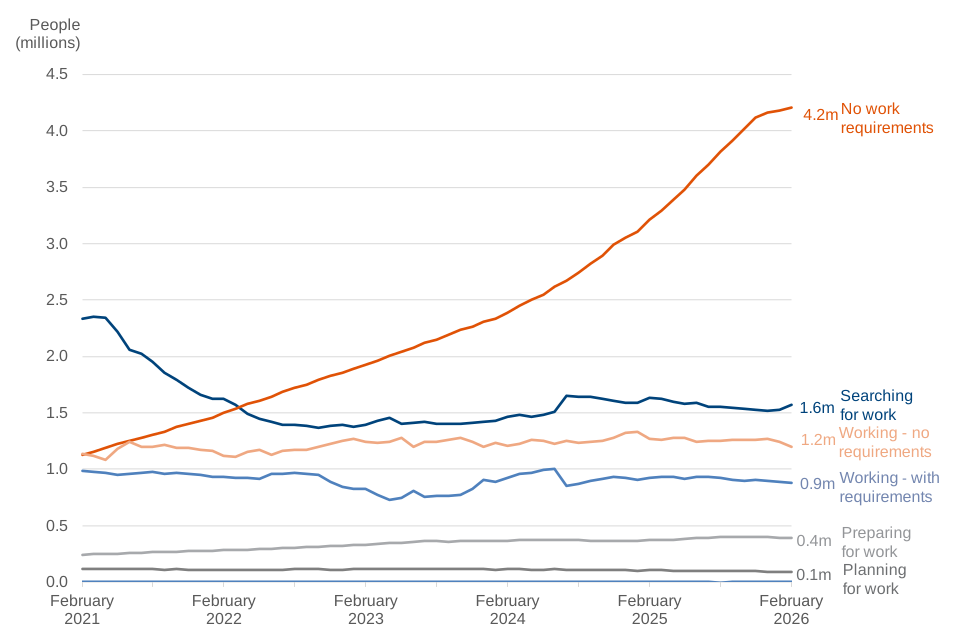
Reform is also proposing that able-bodied people who remain on benefits for extended periods perform 20 hours of community service each week or risk losing their payments. More than 330,000 Universal Credit recipients are reportedly classified as capable of working despite having remained unemployed for more than a year. Jenrick has suggested they could clean high streets, assist charities or work in libraries. The establishment portrays this as punishment, but why is expecting some contribution in exchange for taxpayer support considered immoral while forcing another person to surrender part of the income he earned is considered compassionate?
This is the fundamental problem with the modern welfare state. Government gradually separated benefits from obligations. The taxpayer retained an obligation to finance the system while the recipient acquired an expanding legal and political entitlement to receive from it. Every attempt to restore conditions is therefore portrayed as an attack on the poor, which makes meaningful reform politically dangerous until the fiscal situation becomes so severe that reform can no longer be avoided.
Britain is approaching that point because welfare does not exist in isolation. The government must simultaneously finance the NHS, pensions, defense, debt interest, local government, migrant accommodation, Net Zero programs and an enormous public bureaucracy while the private economy struggles beneath some of the highest tax burdens in generations. Welfare spending is projected to continue climbing, and Jenrick has warned that the bill could reach £407 billion by 2030. Britain cannot continue adding obligations to the balance sheet while assuming taxpayers and bond markets will finance them forever.
This is why the debate over Reform’s precise £50 billion estimate, while legitimate, misses the larger point. Their calculations should absolutely be challenged because eliminating one benefit can simply transfer costs elsewhere. Cutting disability payments may increase demands on councils or the NHS. Restricting benefits for EU nationals could trigger reciprocal consequences for British citizens living in Europe. Government accounting is never as simple as politicians pretend, and anyone promising that every pound of projected savings will appear exactly as forecast is selling a political projection rather than a certainty.
Nevertheless, attacking Reform’s calculations does not make Britain’s fiscal problem disappear. That is where Westminster has lost all credibility. The establishment responds to anyone proposing reductions by demanding an exact accounting of every future pound while rarely applying the same standard when government creates another spending program. Nobody knows precisely what Britain’s welfare system will cost five or ten years from now because caseloads, demographics, migration, inflation and economic growth will all change, but we certainly know the direction in which the burden has been moving.
I have discussed this with Nigel over the years in the broader context of what is happening to Europe. The political establishment confuses government spending with economic growth because GDP records government expenditure as economic activity regardless of whether that expenditure actually increases productive capacity. You can hire another bureaucrat, create another subsidy, and borrow another billion pounds, and GDP may rise on paper, but that does not mean the nation became wealthier. Someone eventually has to produce the goods and services that support the entire structure.
Britain once accumulated enormous wealth because it encouraged commerce, industry, innovation and international trade. Today politicians behave as though that wealth simply exists and their only responsibility is deciding how to distribute it. That is the same mistake governments have made repeatedly throughout time. They consume the productive base inherited from previous generations and then blame capitalism when there is no longer enough revenue to finance the promises they made.
This is why Farage and Reform are gaining political traction even when their individual proposals provoke outrage. They are speaking to people who increasingly believe they work not to improve their own standard of living but to maintain a government machine that demands more every year. The person who gets up at 6 a.m., pays income tax, National Insurance, council tax, VAT, energy levies and every other hidden charge eventually begins asking why government regards his income as an inexhaustible public resource.
That frustration will become far more politically important as Britain’s fiscal position deteriorates. Welfare reform is not fundamentally about whether Britain should help vulnerable people; of course it should. The question is whether government can distinguish compassion from dependency and whether politicians possess enough courage to admit that no entitlement can grow faster than the economy supporting it forever. Reform may not ultimately achieve £50 billion in savings, and parts of this proposal will undoubtedly need modification, but at least Farage is willing to put the solvency of the system on the table while Westminster’s traditional parties continue pretending that another tax increase will somehow solve a structural problem decades in the making.
There comes a point when government can no longer promise everything to everyone. Britain is getting very close to discovering that point, and the politicians attacking Farage today may eventually find themselves implementing the very reforms they now condemn because markets have a way of imposing discipline when politicians refuse to do so themselves.