
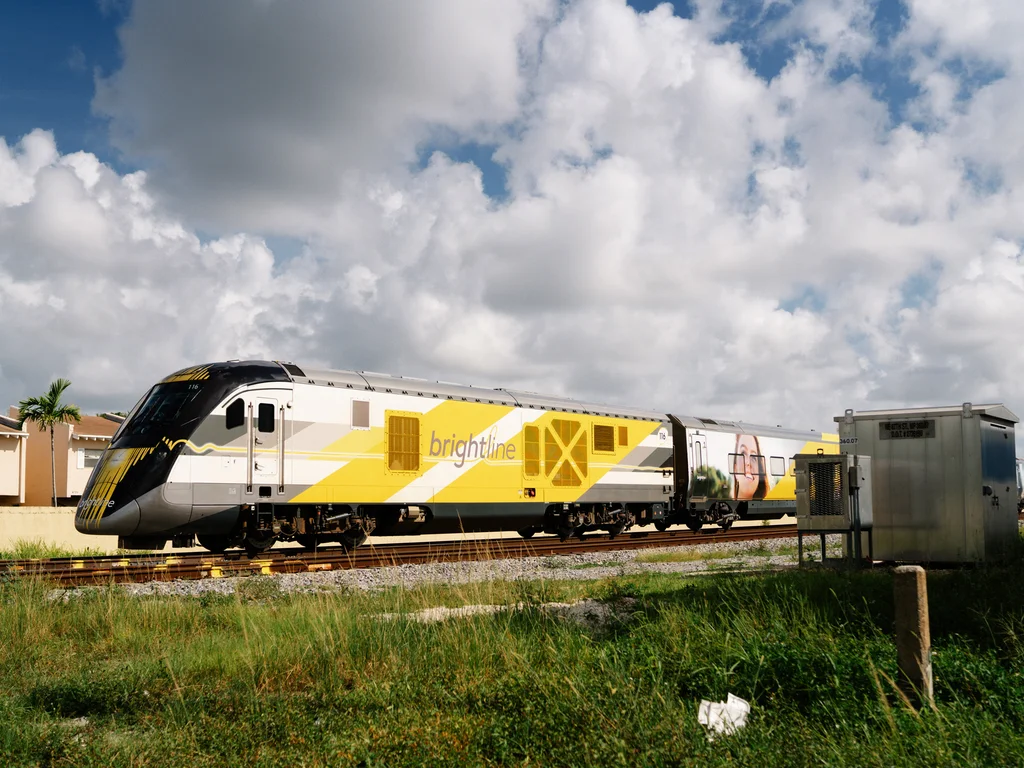
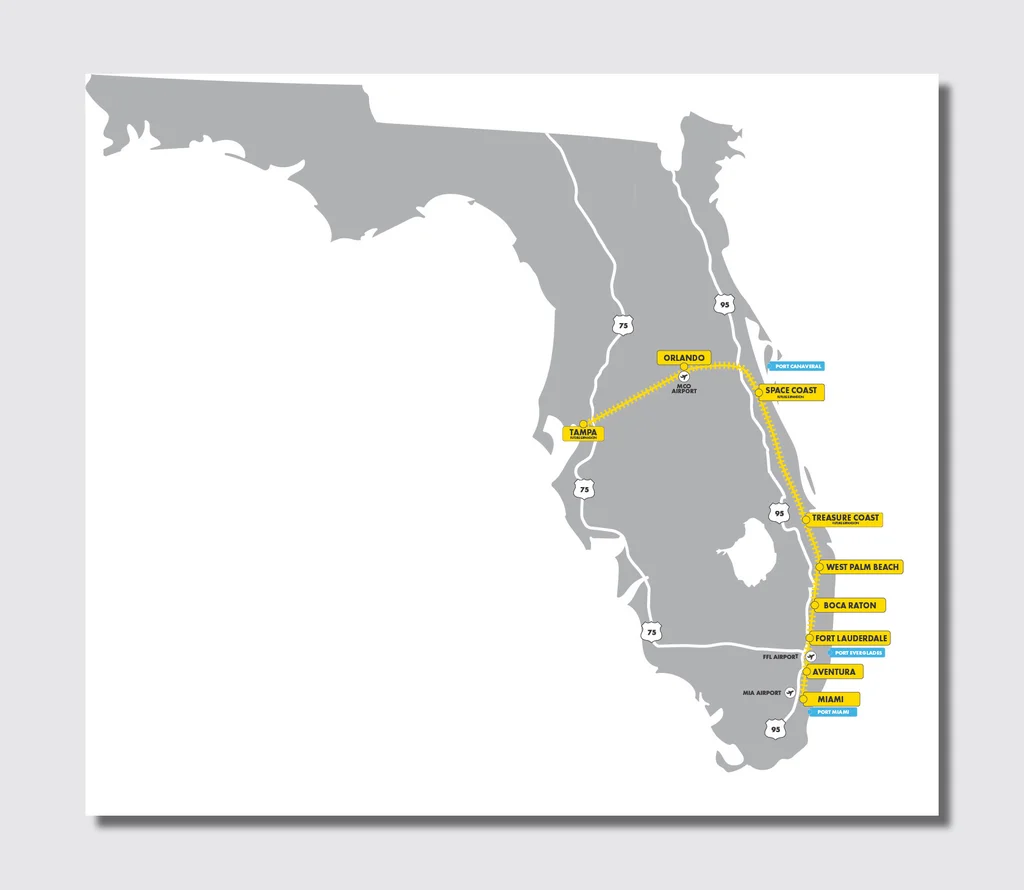
When Brightline first launched its train service in Florida five years ago, it was a turning point for passenger rail in the U.S. The sleek new trains were fast and equipped with features like free wi-fi; the spotless new train stations looked more like modern hotel lobbies than the aging depots used at many Amtrak stops. It was the first privately-owned intercity rail in the U.S. in decades, and boosters argued that it was proof that private companies could build rail faster and better than the government. The route covers more than 200 miles of track and reaches six cities, with the aim to expand.
But now, the startup is teetering on the edge of bankruptcy. It’s not that riders don’t like the trains; reviews are glowing, and ridership is up 20% over a year ago. Still, Brightline projected faster growth, and it’s saddled with billions in debt. As cash runs low, the company has deferred interest payments with lenders until June 15, and it’s racing to find new funding. The company raises questions about what it takes for passenger rail to succeed in the U.S.—and how much private rail, like other transportation, needs the government to survive.
The billionaire bet on passenger rail
Around 12 years ago, Brightline founder Wes Edens was inspired after reading a book about the oil tycoon Henry Flagler, who built a rail line in Florida in the late 1800s that helped boost the growth of cities in the state. Edens’ existing company, Fortress Investment Group, had invested in a freight railway that ran on Flagler’s old route. Edens, a billionaire who also co-owns the NBA’s Milwaukee Bucks, started thinking about the potential to bring passenger rail back. “I’m a big fan of private passenger rail in Europe,” he later told the Washington Post. “We thought, why not take a stab at it?”
Passenger rail companies struggled in the U.S. after the growth of air travel and interstate highways. By the 1970s, Congress created Amtrak to keep passenger rail going; Amtrak has struggled to expand. Still, Edens saw that trains were still successful in Europe, especially between cities that were too far apart to easily drive, but too close to make flying an obvious choice. He thought the same thing could be true in Florida, between cities like Miami and Orlando.

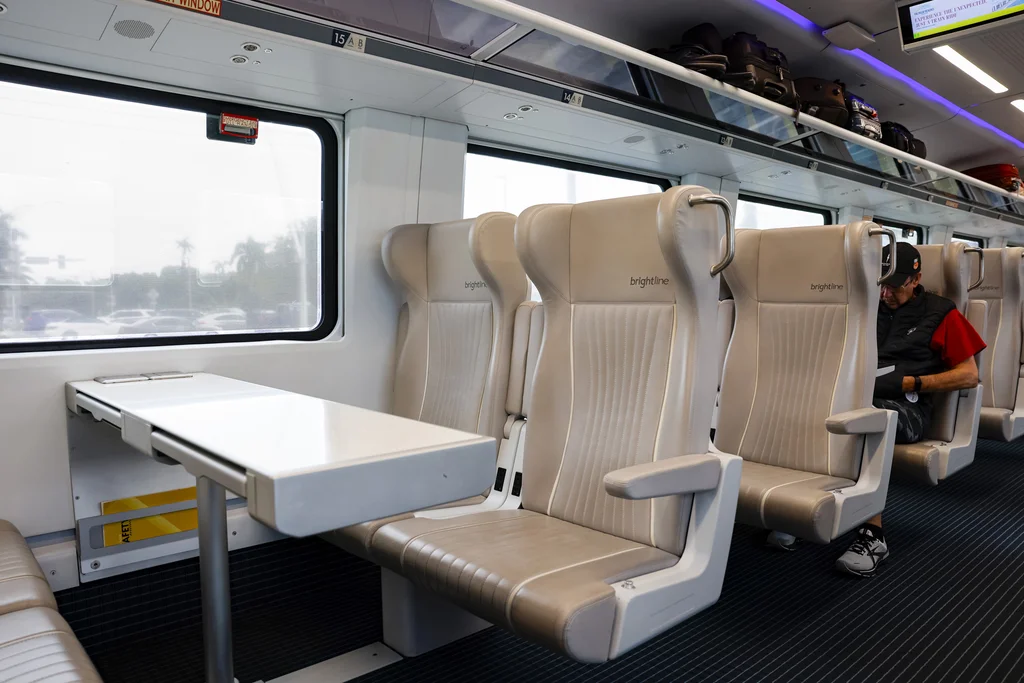
Brightline, as a subsidiary of Fortress, started upgrading the freight tracks and building new train stations in 2014. By 2018, it was running its first service from Miami to Fort Lauderdale. New stations opened in 2022, and an extension to Orlando started running in late 2023. The company focused on the customer experience: the trains were designed to be as comfortable and convenient as possible, and the stations were carefully branded, down to a custom citrus scent designed to waft through the lobbies. Arguably, it’s a nicer experience than flying. You don’t have to arrive hours early, the stations feel like premium airline lounges, and there’s more room on board. It’s also obviously more relaxing than sitting in gridlock on a Florida highway.
Not-quite-high-speed rail
The trains are faster than most trains in the U.S., though also not as fast as cutting-edge high-speed rail in other parts of the world. On one stretch of its route, Brightline’s trains can go as fast as 125 miles per hour. While there’s no official definition of “high-speed” rail, that speed is low in comparison to others. Most newly-built systems elsewhere can travel up to 200 miles an hour.
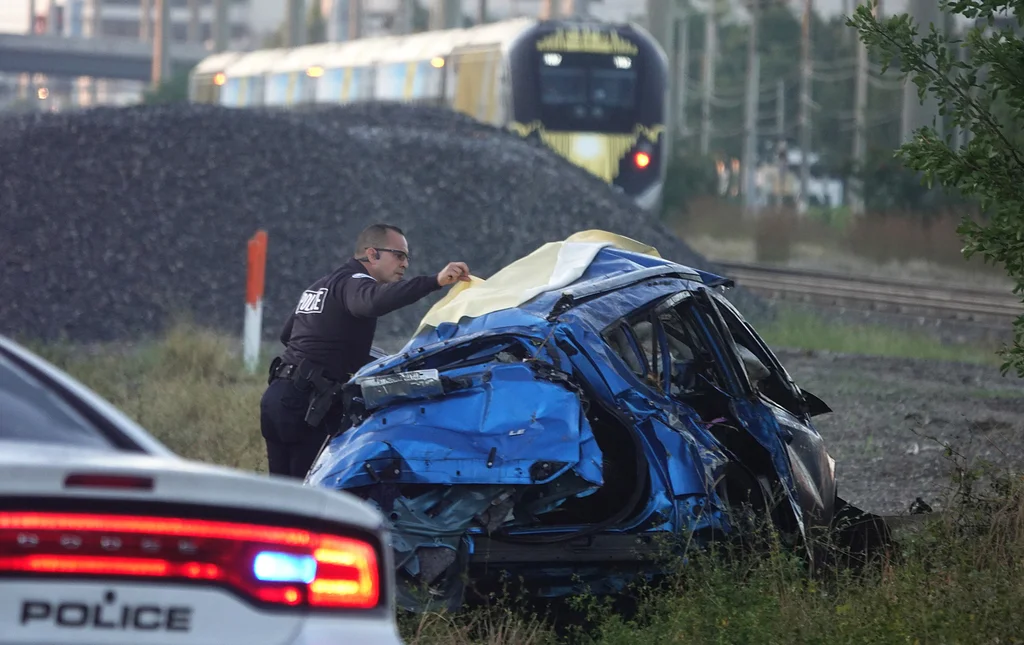
Making the train faster would have required new infrastructure like elevated tracks so trains could avoid intersections with cars and pedestrians. Brightline used existing tracks as much as possible, while minimizing new grade-separated crossings. The approach unfortunately also led to accidents: the train system is the deadliest in the country, with more than 180 people hit by Brightline’s trains since service began. The victims have mostly been pedestrians and cyclists who didn’t see or hear the trains coming, and were used to slower, infrequent freight trains on the tracks. Though Brightline hasn’t been found at fault when cars or pedestrians are struck—often, people have gone around a lowered gate or crossed the tracks on foot away from an intersection—the infrastructure wasn’t designed to prioritize safety. (That likely would have been different with a new government-funded rail line, which might have invested in more overpasses and underpasses.)
The trains are fast enough to be a little quicker than driving, and as fast as flying if you factor in the extra time you have to spend waiting at the airport. Still, unlike the fastest high-speed rail, the time savings aren’t enough on their own to convince riders.
“What the data tell us is that there’s almost a linear association between how long it takes between two cities and whether or not people take rail versus take a plane,” says Yonah Freemark, a research associate at the Urban Institute. Between Boston and Washington, for example, Amtrak takes about 6.5 hours, and has a travel mode share of around 5%. But the fastest route between New York City and DC takes a little less than three hours, and their travel mode share is about 80%.”
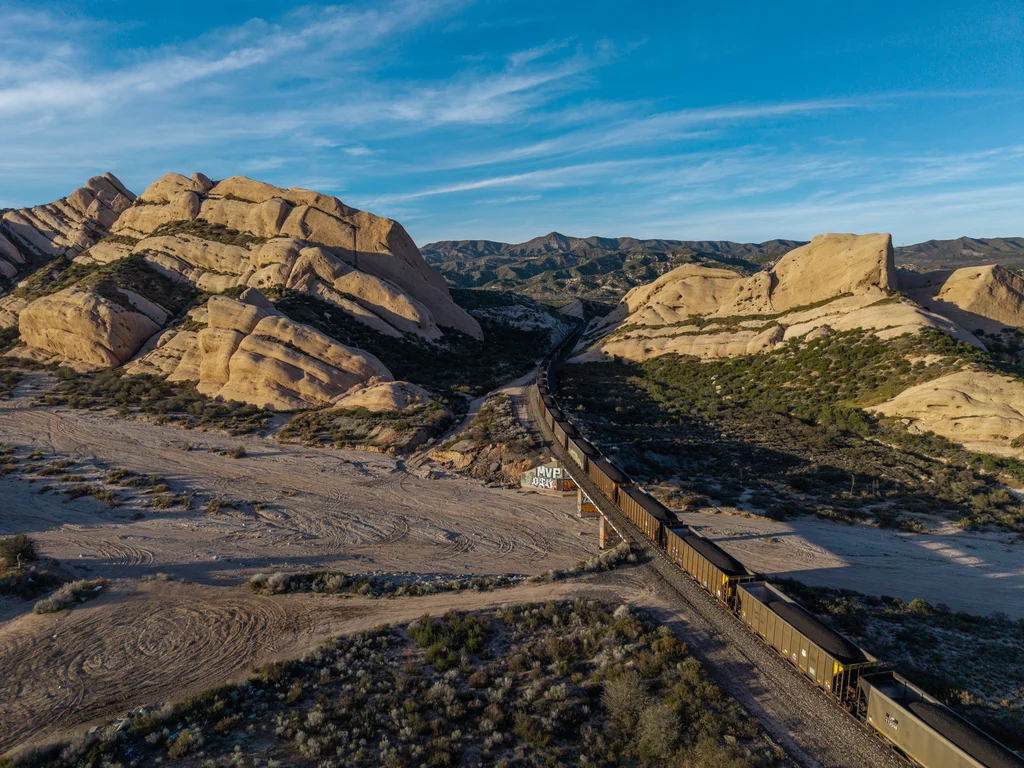
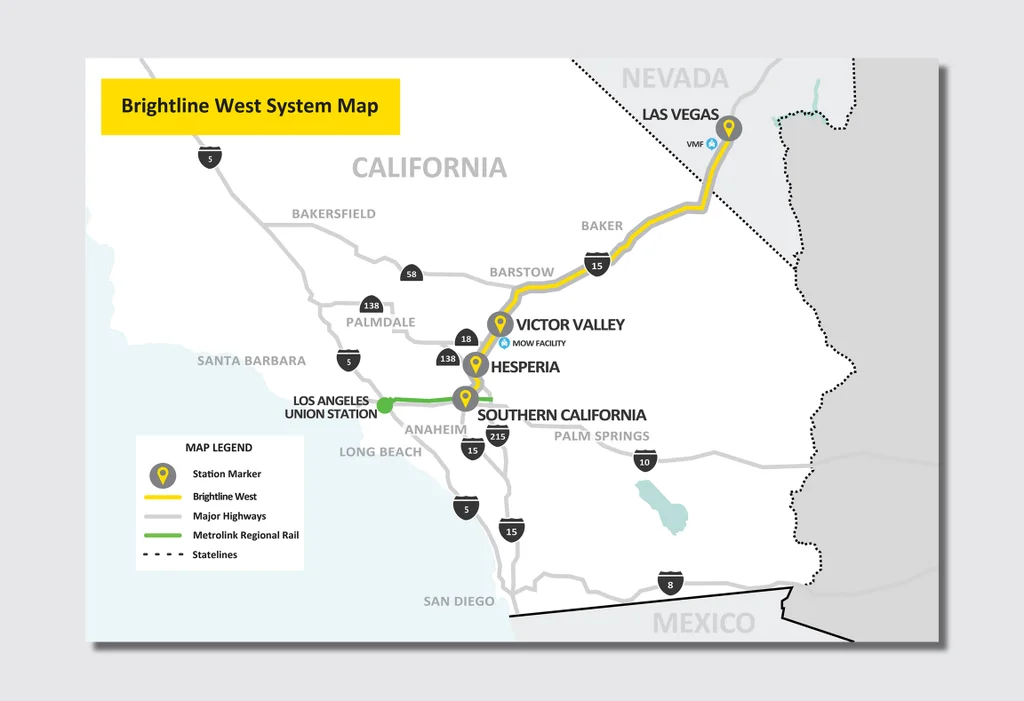
In California, Brightline West is planning a true high-speed rail project, with speeds up to 200 miles per hour, that will take around two hours from a station east of LA to Las Vegas (or with a connection to downtown LA, three hours). That’s fast enough to compete more easily with flying. For the Florida route, that’s not the case.
“Brightline’s ability to charge airline-style high fares has been limited and that’s kept revenues well below the targets,” says Joseph Schwieterman, transportation professor at DePaul University. “I think when the system was being built, there were apparently hopes that many passengers would pay $200-plus for fares. But it’s been far below that.”
The fares are dynamic and always changing. But when I tried searching for a last-minute roundtrip ticket from Orlando to Miami, Brightline’s fare was only $49, or $109 for a premium roundtrip ticket, less than a flight and less than the cost of gas for driving. (A roundtrip ticket from Amtrak, which doesn’t go directly between the cities, takes as long as 8 hours in one direction and starts at $70.) Without fare increases, it’s harder for the company to keep going.
Commuters are less willing to pay steep prices, says Schwieterman. “I think the pandemic changed how business travelers behave,” he says. “They’re no longer forking over big bucks for day trips for corporate meetings.”
There are also reasons why people might still choose to drive—especially the fact that Florida’s urban design makes it hard to get around without a car once someone gets to their destination. “The speed of service is quite attractive, but it’s not dramatically different from driving,” he says. “When you factor in the need for last-mile travel, many stick to cars.”
Growing ridership, weak finances
The company had a bumpy start, since it launched shortly before the pandemic and also briefly shut down during it. Initially, Brightline had projected that it would have 4 million riders by 2025. Instead, it hit nearly 1.9 million. Still, that number is significant. At the beginning of this year, ridership jumped up to more than 900,000 passengers for the first quarter alone. That’s nearly as many passengers as Amtrak’s Capital Corridor line, a popular commuter train to the Bay Area, had in all of 2025.
“I don’t think that Brightline has been a failure,” says Freemark. “They attract more riders than any line that Amtrak provides, except for the Northeast Corridor. That’s pretty impressive for the United States.”
It’s proof that there’s unmet appetite for better trains—even if they’re not the fastest in the world. “In theory, what Brightline seems to suggest is that you can actually attract a large number of passengers to a route of that distance with that travel speed,” Freemark says. “So in other words, not high speed rail, but still improvement to routes between relatively large cities in the United States. And my perspective is that that is a really positive outcome that I think should be emulated.”
There are other routes where it could be replicated between similarly-sized cities, he says, like Atlanta to Nashville, or Dallas to Houston. The government has been “exceedingly slow” to invest in new rail lines, Freemark says. Congress passed funding in 2021 for new rail lines throughout the country, but so far, none have been built. There could be a role for companies like Brightline. But it’s unlikely that companies can succeed with no help.
Brightline has celebrated the fact that it’s privately-funded, though most of the funding came from state-subsidized bond loans. (Brightline West has more direct government funding, including a $3 billion federal grant issued in 2023.) To launch the Florida lines, the company spent $5.5 billion. Most of that came from tax-exempt municipal bonds. If the company defaults on its debt payments, it would be one of the largest defaults in history in the municipal bond market.
It’s not clear if the company is close to breaking even on its operating expenses; Brightline did not respond to a request for an interview. In its latest monthly report, with April data, revenue was up 32% year-over-year. But auditors from Ernst & Young found that the company doesn’t have enough cash on hand to pay its debts over the next 12 months and there is “substantial doubt” about the company’s ability to keep going.
With such steep capital costs, it’s difficult for a company like this to be viable without more government support for construction. It’s worth noting that more money has been available in the past. In 2011, former Florida Governor Rick Scott turned down $2.4 billion in funding from the Obama Administration for a high-speed rail project between Tampa and Orlando, claiming that the rail line would be too expensive to run.
Air travel and highways are heavily subsidized by the government. Rail travel, with lower emissions, should arguably have much more support. If you’ve been to another country in Europe or Asia and wondered why the U.S. couldn’t have similar trains, the answer is almost certainly more government funding, even for trains that are privately run.
Brightline is still in talks to secure more financing. If the company goes into bankruptcy, it’s not clear what will happen next. But the company is still a clear signal that people want to ride trains. “Perhaps from a financial perspective, Brightline is not doing great, but from a demonstration perspective of what railway service can be like in the United States. I think it’s a very positive example,” Freemark says. “I hope the lesson learned isn’t just ‘Private companies can’t make it work, so therefore, give up.”