
When the collaborative design software company Figma launched its public beta in 2016, its browser-based web and interface design tools were a quick hit, putting the startup head to head with the dominant design software company of the day, Adobe. The premise and the interface were so simple, Figma soon became a go-to tool for designers.
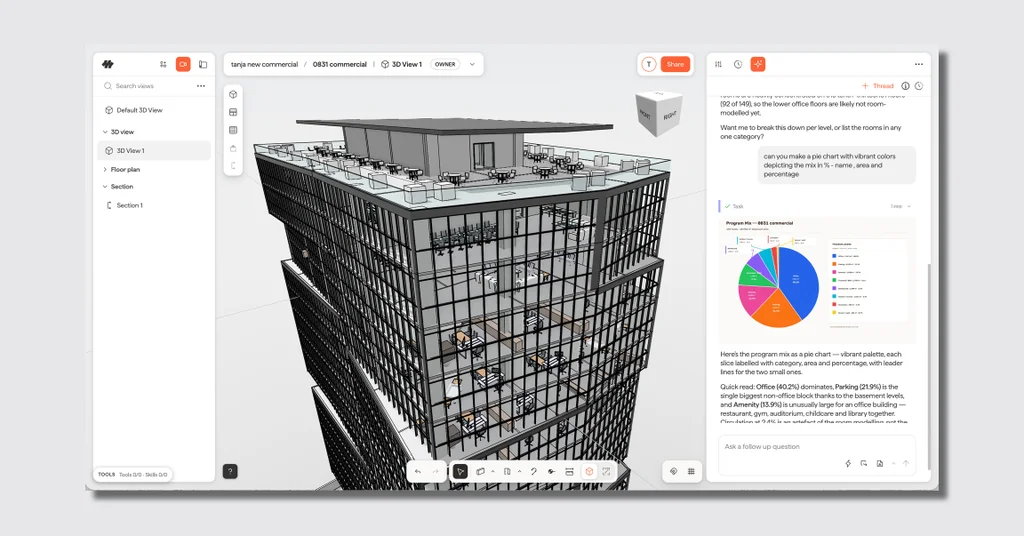
The building design software startup Motif wants to do the same thing for architectural models. Through its platform, architects and builders across a project team can design and visualize buildings, and then collaboratively review and augment their designs, all online.
Motif Design is a newly launched platform that is seeking to take on the established software tools of the architecture, engineering, and construction industries by making them more user-friendly and collaborative. The cofounder and CEO, Amar Hanspal, says the software that these industries rely on has for too long been overly complex and frustratingly difficult to use. Motif Design, he says, offers a new way, making it possible for even highly complex building models to be worked on simultaneously in real time by different teams.
“By making it browser based, we are making it very accessible. One of the challenges of the old stack has been that it’s very difficult to use, it’s inaccessible, stuff runs on only PCs,” he says.
Most modeling currently happens within the walled realm of software tools, where updates by one user have to be saved before others can make their own changes, individual files constantly being checked out and then remerged back in. Motif is taking the model-building tasks that are the core of architectural practice and allowing them to happen smoothly online, across the many teams that use them, running on a live database capable of recording every change to a model as it happens. “Just like Figma did with the design stack,” Hanspal says.
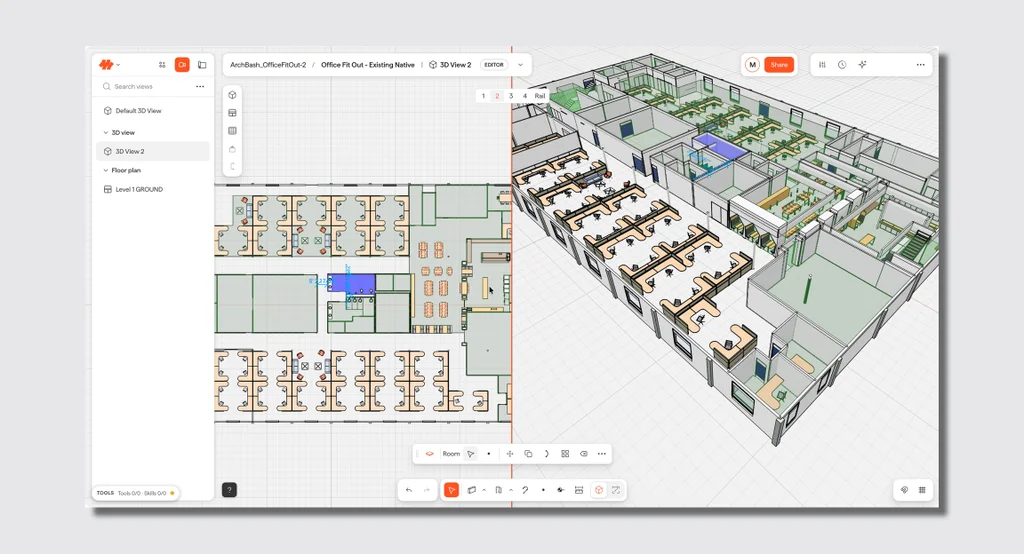
Motif Design complements Motif Review, a browser-based collaborative workspace launched in 2025, which designers can use to present, visualize, mark up, and gather feedback on models in real time. Motif Design now allows users to build those complex models from scratch, all within the shareable, accessible space of a web browser. “That is hard to do because buildings have an enormous amount of data and browsers have memory limitations,” Hanspal says. “Only recently could a browser run the math fast enough for someone to work in the model rather than just look at it.”
Hanspal understands the challenge of dealing with big architectural models. He’s a former co-CEO and chief product officer at Autodesk, the $7 billion company behind industry standard software like AutoCAD and Revit. Before leaving Autodesk in 2016, he spent two decades helping the architecture, engineering, and construction industries streamline their work with building information modeling (BIM), an approach that relies on massive 3D models of building projects that can be accessed by the many teams involved in turning the design to reality.
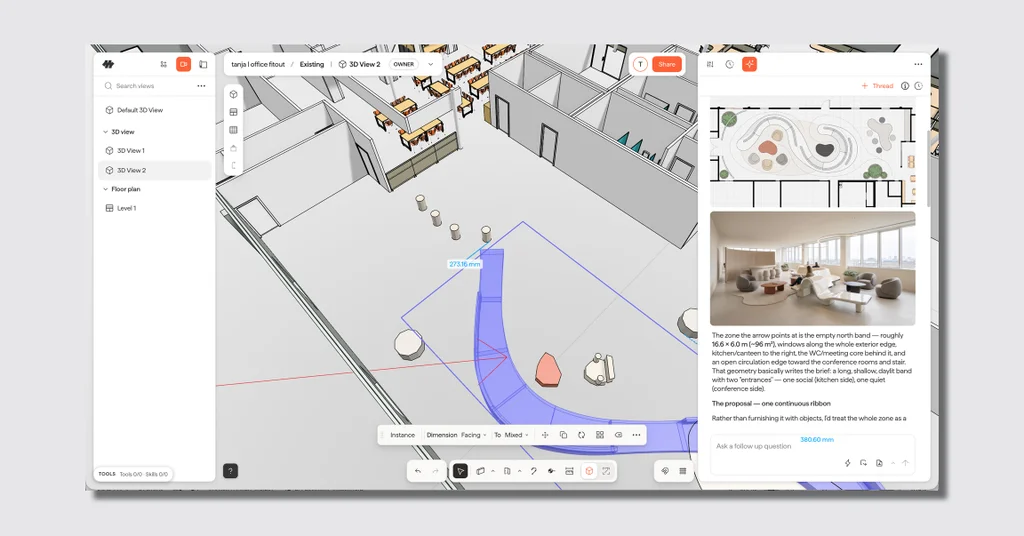
By the turn of the century, BIM had pushed the industries irreversibly past the days of hand drawings and paper documents. “It combined geometry with the database,” Hanspal says. “So not only did things look real, but . . . also, you could query the system and say, how many doors in the building, how many windows in the building, and you could derive all that knowledge. Now it’s been 27 years since we did that last innovation.”
The architecture and building industries are more than ready for something new, Hanspal argues. “Their practices evolved faster than their tools,” he says.
Motif isn’t the only company creating browser-based building modeling tools. Arcol and Snaptrude are two other startups with similar software, and more established products like SketchUp also offer browser-based modeling. But given Hanspal’s experience at Autodesk, Motif Design is built on a deep foundation of knowledge about the complexities and inefficiencies of advanced design software.
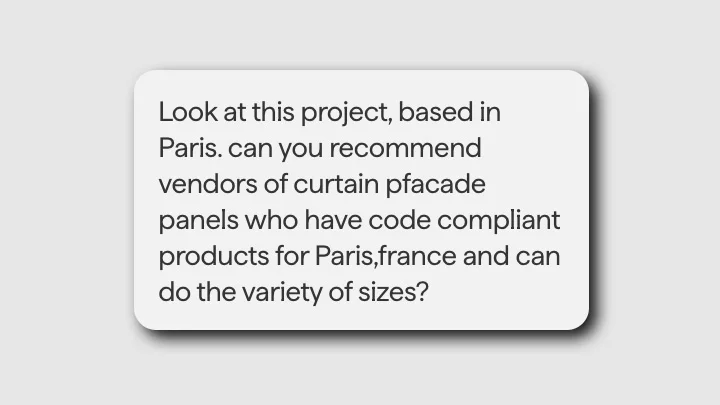
Artificial intelligence has opened up more opportunities for tools like Motif’s. Hanspal says a key part of Motif Design is its agent-native approach, baking in the ability to train and use AI agents to automate mundane design tasks with a high level of confidence. “In the practice of design, there’s a lot of boring stuff people have to do,” he says, from checking building codes to ensuring the square footage is correct to counting doors. “That’s the stuff that sucks the soul out of you.”
Hanspal says Motif is now being used by many of the “signature names” in architecture, including firms in the U.S., the U.K., and across the Nordics. For now, the platform is optimized for the most typical building types, from offices to retail to housing to schools. Hanspal argues designing large-scale projects isn’t the power of the platform. The point, he says, is to finally make it easier for building models to live, and evolve, online. “People could start with a blank screen and build the entire building in our product,” he says.