
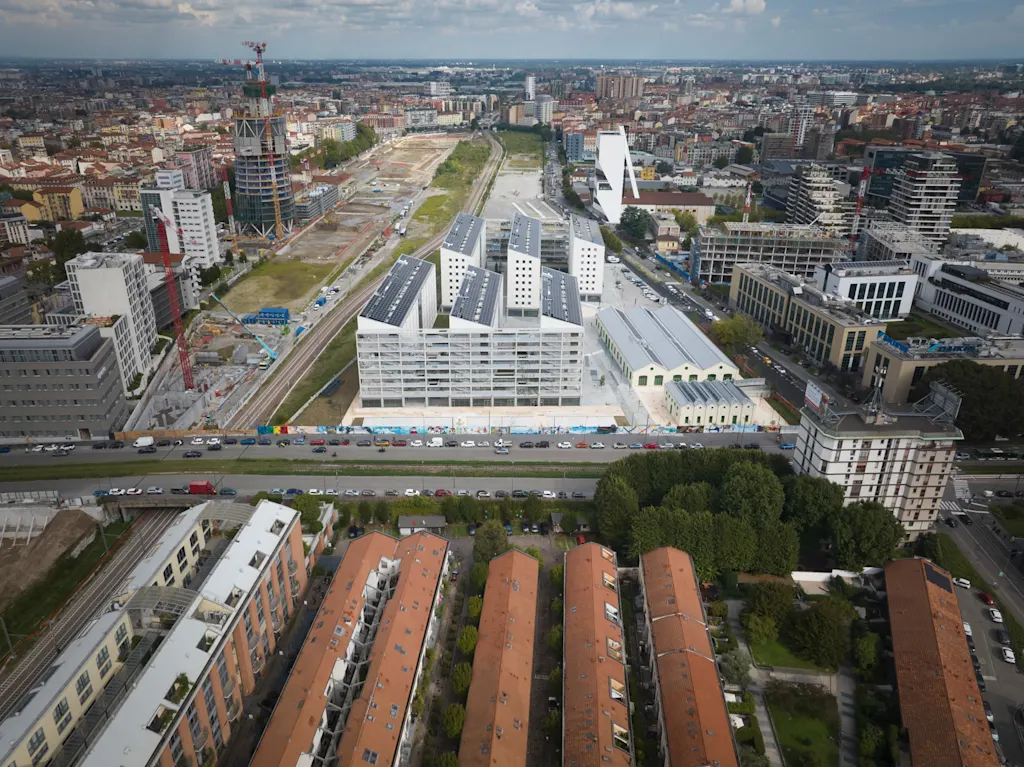
When athletes arrive in Milan for the 2026 Winter Olympics, they’ll find themselves living on top of what was once a bustling 19th-century rail yard. The newly revealed athletes village is located in the city’s historic Scalo di Porta Romana district—and when the Games are over, it’ll be converted into Italy’s largest-ever affordable student housing development.
The Olympic Village design was led by the global architecture firm Skidmore, Owings & Merrill (SOM). It includes six mass-timber residential buildings, two former train repair sheds that have been renovated into communal spaces, and 40,000 square meters of green space. After the Winter Olympics take place, the village will be transformed into 1,700 student apartments in time for the 2026-2027 school year.
The repurposing of the 2026 athletes village follows a long history of similar past efforts, including converting former athlete housing into resorts, luxury condos, and mixed-use developments—all of which have achieved varying degrees of success.
Inside the 2026 Athletes Village
Photos of Milan’s Scalo di Porta Romana district from the early-20th century paint a picture of an ultra-industrial zone populated by factories, smokestacks, and railway cars. Today Milan’s administrative body, the Comune di Milano, is in the midst of a multiyear project to convert the district into a sprawling neighborhood complete with green space and commercial and residential zones. Part of that plan includes first transforming the former rail yard into a global destination for the Olympics and, later, a student housing development.
“Porta Romana is a unique neighborhood,” says Colin Koop, design partner at SOM. “Originally situated outside the city walls, the neighborhood developed as a unique mix of industrial buildings, factories, and farms driven by its adjacency to the gate to Rome. Our project takes direct inspiration from these practical, utilitarian buildings in the siting and composition of our six, interconnected buildings.”
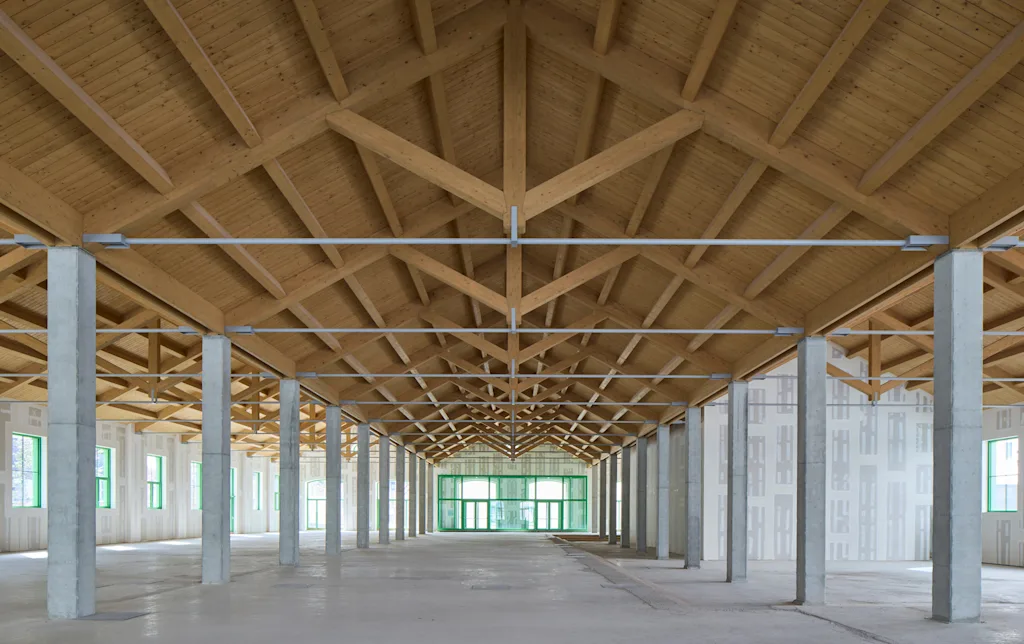
The site chosen for the athletes village, located on the southwest corner of the former rail yard, included two abandoned train repair sheds—which, according to Koop, were found “in various states of ruin.” To preserve the historic buildings, his team embarked on an extensive reinforcement of their existing structures. To do this, they had to entirely replace both roofs to meet seismic requirements, reconstruct several supporting walls, and rework crumbling facades with careful attention to the preservation of the buildings’ architectural character.
“The interiors are largely defined by the restored timber structure and largely left as an open hall, similar to their original spatial layout,” Koop says. During the Olympics, the two buildings will serve various uses for competing athletes, including a dining hall, information and logistics center, and communal lounge.
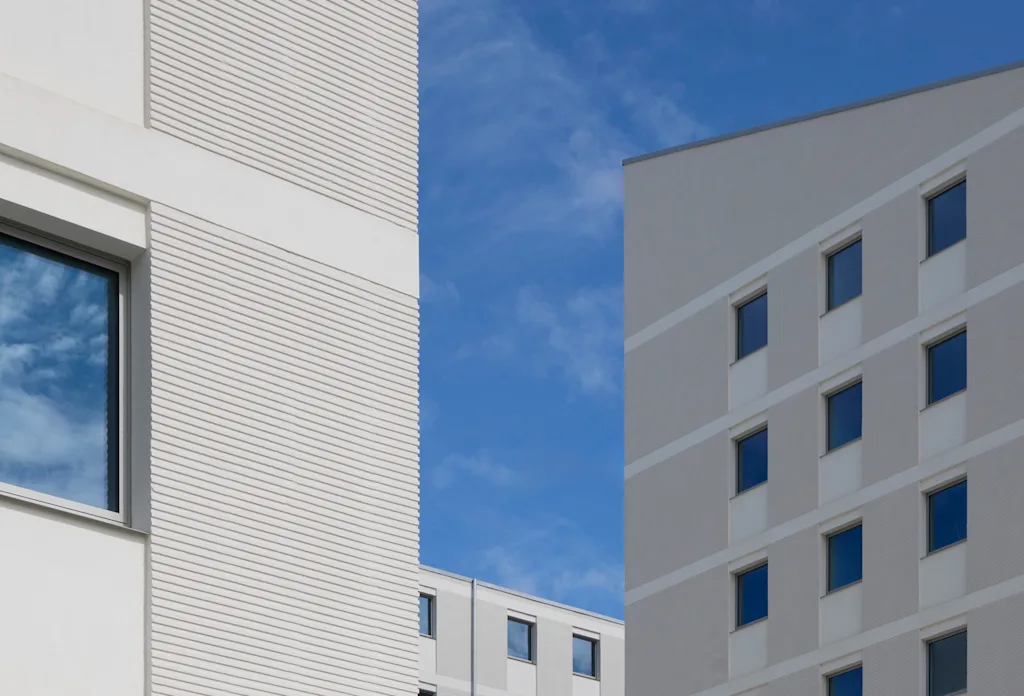
Beside the renovated buildings are six new apartment complexes, each composed primarily of single-occupancy rooms with their own bathrooms. Every floor includes amenities like communal kitchens, study rooms, and lounges, making them easily convertible into future student housing, Koop says. Fitness centers, screening rooms, and laundry facilities are incorporated on the ground floor.
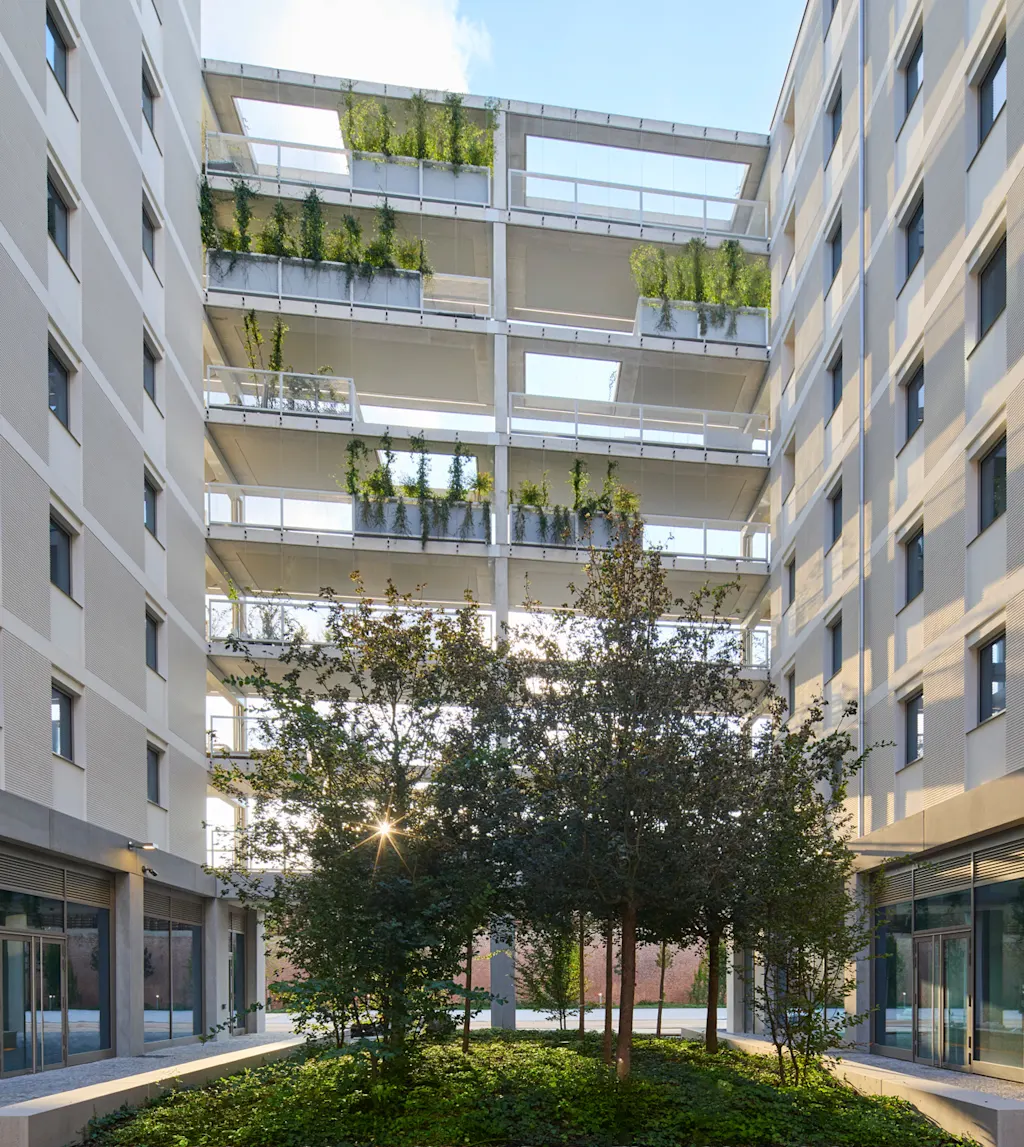
Where the buildings truly stand out from previous athlete housing, though, is in their pocket courtyards and climbing greenery. These green spaces are designed both to pay homage to Milan’s architecture and to incorporate natural daylight in every room.
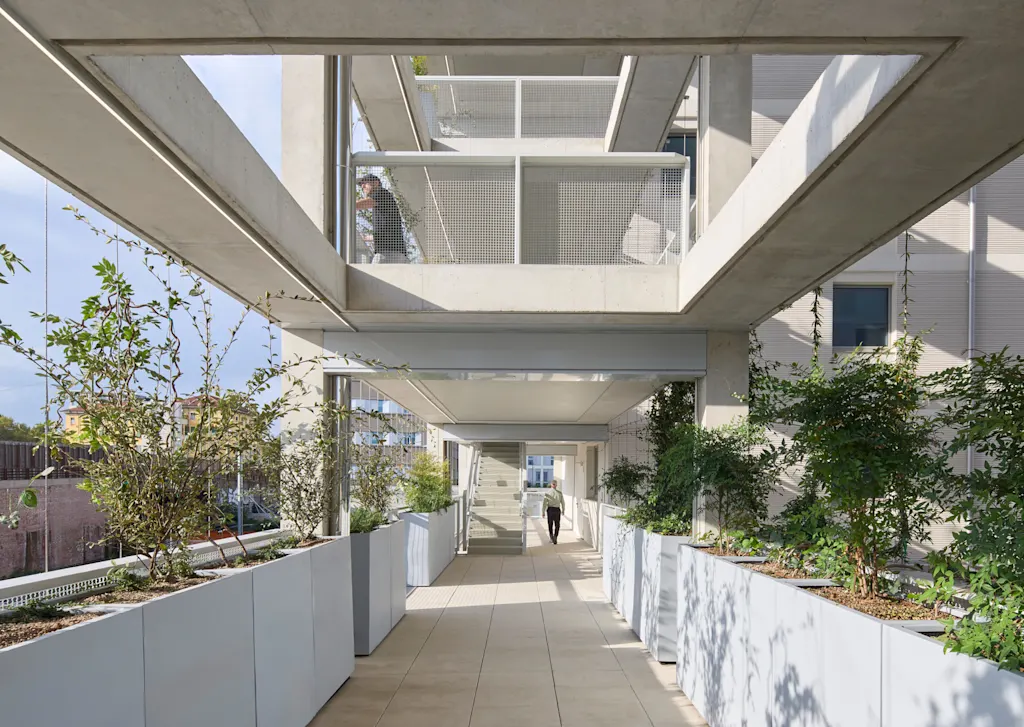
“Milan has a rich tradition of courtyard buildings with vertical gardens climbing up their facades,” Koop says. “We were inspired by these beautiful private terraces, which soften the city’s stone, brick, and plaster facades with rich palettes of plants and trees. We set out to extend this tradition through the creation of two grand facades of social terraces, which cover the eastern and western portions of the site.”
By the time students are ready to move in, Koop adds, the buildings’ incorporated irrigated planters and metal cables will have allowed plants to cover the facades entirely, “enveloping the student spaces in a canopy of green.”
The challenges of repurposing Olympic housing
This is far from the first time that an athletes village site has been repurposed after the Olympics. In fact, the practice has been around for decades.
After the 1996 Atlanta Games, athlete housing was converted into student dorms that were first used by Georgia State University and later by Georgia Tech. Following the nearly $12 billion 2012 Summer Olympics in London, housing in the city’s East Village neighborhood was turned into mixed-use residential and commercial space, with some of the former flats retailing for as much as $1 million back in 2021. After the 2008 Games in Beijing, the Olympic Village site became public parkland and memorial spaces. In Sydney, following the 2000 Summer Games, the village was transformed into a residential suburb.
These transformations have sometimes proved unsuccessful, or even damaging to local communities. The 2016 Olympic Village in Rio de Janeiro was the largest in the history of the Games at the time, but after the athlete housing was converted to luxury condos, the space reportedly fell vacant, coming to serve for some as a symbol of the Games’ wasteful excesses.
Back in 2024—when Paris was preparing to turn its athletes village into sustainable housing and office space—political scientist Jules Boykoff told Fast Company that attempts to reuse Olympic infrastructure often fail.
“Unfortunately, the Olympics have an ignominious tradition of creating ‘white elephants,’ or stadiums and other venues that remain underused and expensive to maintain in the wake of the Games,” he said. He added that organizers often make promises to build social housing that fall through, like in Vancouver in 2010 and London in 2012, when “both projects ended up being essentially nationalized, paid for by taxpayers, and then promises around social housing mostly evaporated in the face of market exigencies.”
In the case of the 2024 Olympic Village in Paris, established residents reported during construction that they were forced out of their homes to make way for the new housing. Currently, Paris is in the process of converting the Olympics infrastructure into a new district, though concerns around gentrification remain.
The Olympic Games are a limited-time event, notorious for passing through the host city in the blink of an eye. Whether the SOM team’s vision for the Milan site lasts long after 2026 remains to be seen.