
In Japan, there is a national public holiday called Keiro no Hi—Respect for our Elders Day—dedicated to honoring the wisdom of the generations that have come before us. In Hindu tradition, the third stage of life, Vanaprastha, frames later years as a period of spiritual depth and accumulated authority. It is hard to picture an analogue in a country that produced “OK, boomer.”
Here, the picture is grimmer. According to the World Health Organization, ageism in the form of negative age stereotypes costs the United States $63 billion a year in excess healthcare spending. An AARP study estimated that age discrimination in the workplace cost the U.S. economy $850 billion in lost productivity in 2018. Meanwhile, the global anti-aging industry — built on the premise that aging is a problem to be reversed — is forecast to grow from roughly $80 billion in 2025 to nearly $150 billion within a decade.
And yet something is shifting. Last month, The New York Times Magazine ran a cover story chronicling the unprecedented spike in older women walking fashion week: 50-year-old Stephanie Cavalli opening Chanel, 61-year-old Mariacarla Boscono walking for Tom Ford and Miu Miu, Gillian Anderson and Helen Mirren modeling for L’Oréal Paris.
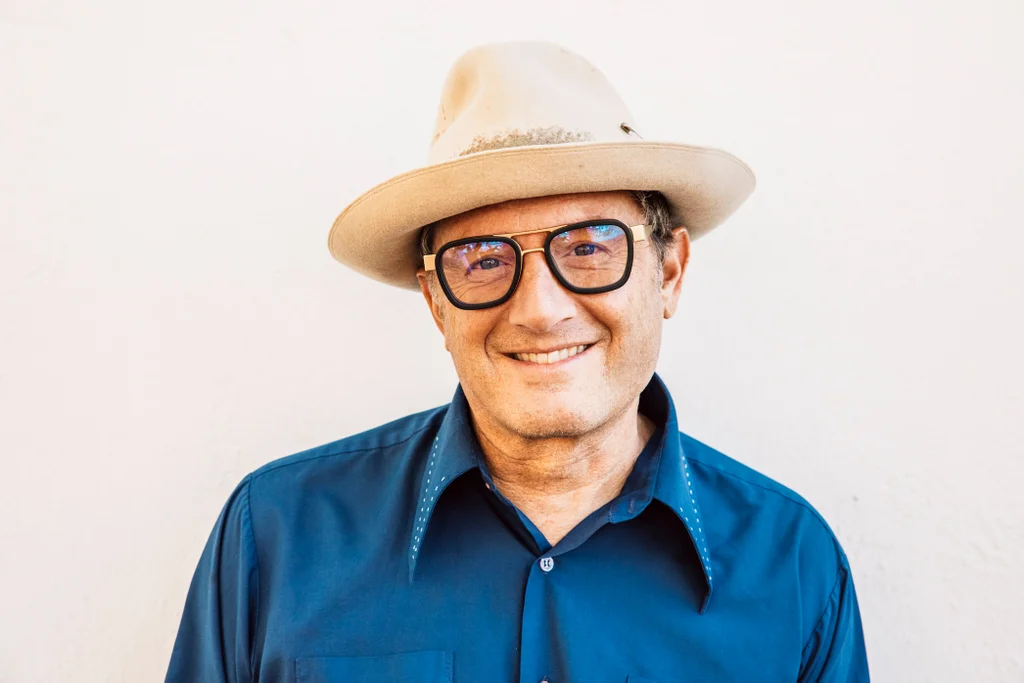
Tim Parr—the founder of an eyewear brand called Caddis that targets older customers—saw this moment coming a decade ago. Historically, Americans have tended to treat aging as an embarrassment. Parr believes his generation—Gen X—has no intention of following this playbook. They want to stay fashion-forward and keep pursuing their careers and passions.
Caddis is now launching its biggest argument that we’re thinking about aging wrong in a new campaign called “Yet.” It is meant to capture what Parr calls “the space between now and next.” “You haven’t gotten your doctorate. Yet,” he says. “You haven’t learned to surf in Costa Rica. Yet. It’s a very simple way of changing mindset.” It’s also a thesis statement for the entire company, which has spent eight years arguing—to investors, to retailers, to customers—that the way America talks about getting older is broken. And for the first time, the broader culture appears to be catching up.
Reading glasses as Trojan horse
In 2013, Parr launched a bluegrass band called One Grass Two Grass. A decade ago, when he was in his fifties, he was on tour with the band, going up and down the West Coast, when he realized he couldn’t read his setlist. He stopped in at an optometrist in Southern California and walked out frustrated with the selection of twee pink and green cat-eye frames. Reading glasses, it turned out, were the last unbranded territory in eyewear: a product that 90% of people over 40 eventually need, presented as a $20 drugstore embarrassment. “It was unsexy, dusted over, kicked to the curb,” Parr says. “So that was our in.”

But Caddis wasn’t really about reading glasses. Reading glasses were the Trojan horse. Parr’s clarity arrived in a VC meeting in San Francisco around 2015. The investor liked the positioning, but when she flipped over the sample box, she saw that the brand was targeting older consumers. “She said no one wants to believe they are the age that they are,” Parr recalls. “Everyone wants to believe they are fifteen years younger.”
He left the meeting and did the math. Did he want to be 32 again? Hard no. “By the time I hit the street I realized we’re actually not even in the eyewear business,” he says. “We’re in the age business. I love being David up to the Goliath. I need something to punch up at.”
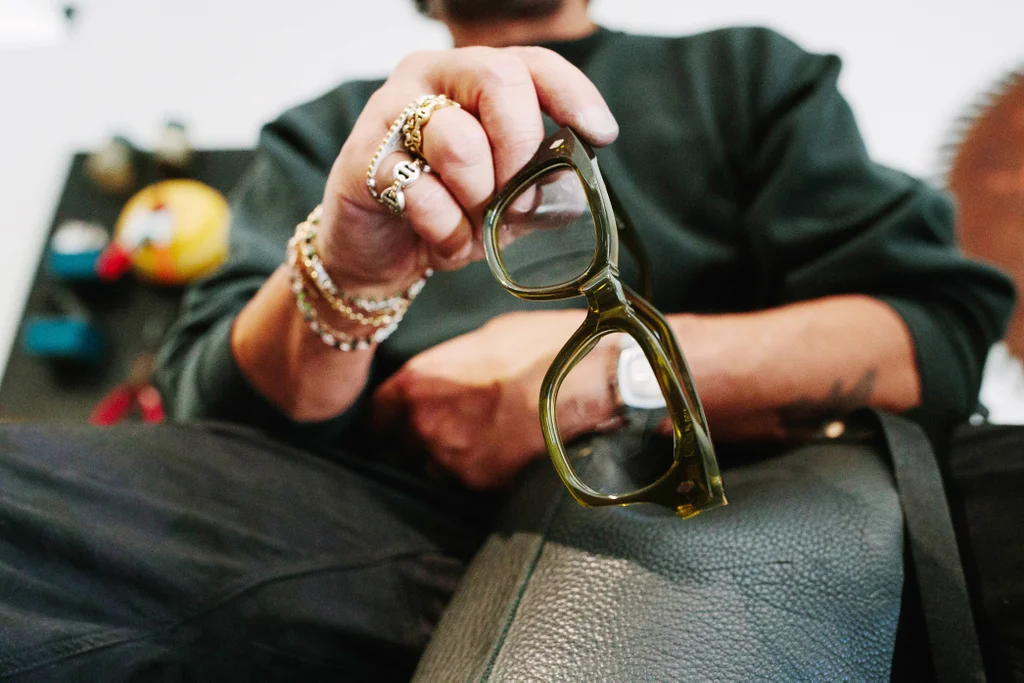
Caddis began shipping in 2018 with the tagline “Get Older. Own It. See Stuff.” Today, the brand has roughly 600 wholesale accounts and is sold in Nordstrom and Bloomingdale’s alongside its own retail stores. Frames retail around $110 — well below the optometrist’s premium tier, well above drugstore readers. The product, Parr insists, is just a way of telling a broader story.
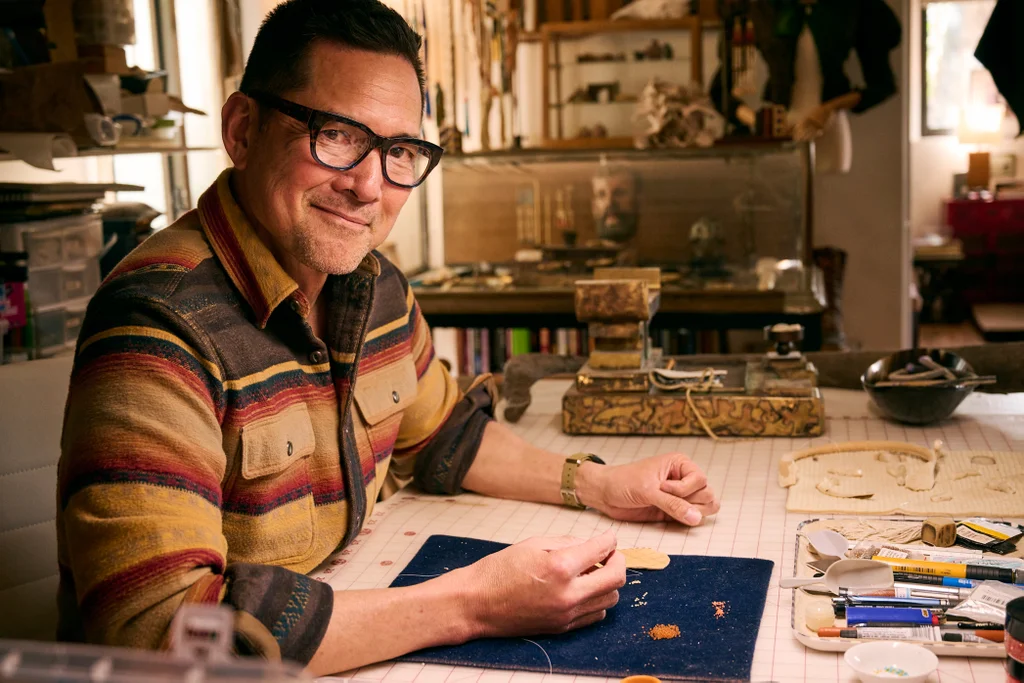
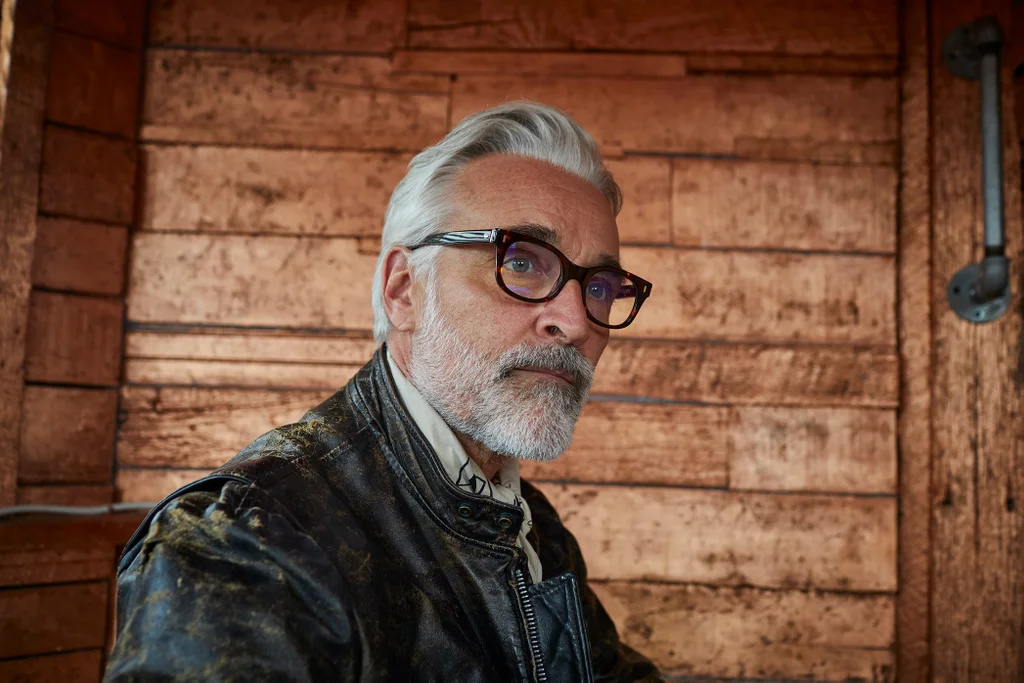
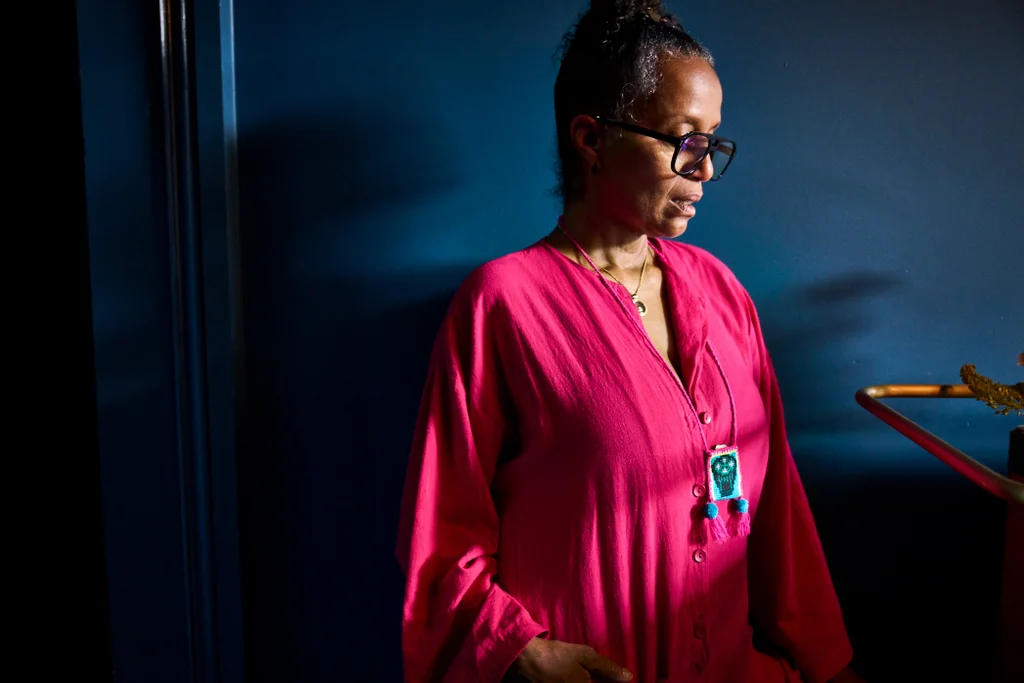
Caddis campaigns feature people in their 50s and 60s—not models, but real customers, artists, and musicians. Each quarter, the brand rolls out a single-word campaign. The last one, “Unfollow,” takes aim at social media and self-worth. The next, launching in June, is called “Yet.” “Society tells you you’re past great things once you enter your fifties,” he says. “The Yet campaign says you’re not.”
Music is the brand’s other connective thread. Parr came off the road from his bluegrass band to start Caddis, and 1% of gross revenue goes to a nonprofit he founded in 2021 called Music Farming, which funds music education programs across the country. Research has linked active music-making to protective effects against Alzheimer’s and dementia, and music therapy is now used clinically for epilepsy and neuroplasticity.
The Patagonia playbook
Parr picked up the model for his business from Yvon Chouinard. After he stopped touring with his band, he worked at Patagonia from 2019 to 2022, brought in to help run the surf brand Patagonia had recently acquired. He spent a lot of time with Chouinard, driving Highway 1, surfing, talking shop. What stuck with Parr was Chouinard’s approach to business. “He argued that the point of building a business is to make the world better,” he says. “It’s not hard. There’s a full spectrum of causes you can support. And it does nothing but increase your probability of survival.”

But a social mission isn’t enough. Parr has watched a lot of his millennial-era peers—the direct-to-consumer brands that promised to do well by doing good—implode in the last two years including Everlane, Allbirds, and Beautycounter. A big part of the problem is that they were overcapitalized, which forces a brand to prioritize growth over profitability. With Caddis, Parr is focused on growing at a sustainable pace, but staying ambitious about using the brand platform to reimagine what aging could look like. And he believes that society might just be catching up with his message.
Americans spent decades trying to look 32 forever. The next two might be spent figuring out what it actually means to be 52, 62, 72. Caddis is making the eyewear for it.