
A cozy, neutral sameness defines our era of interior design. Velvet sofas. Bouclé armchairs. All-white living rooms. Beds layered with fluffy faux-fur blankets. Calming sage green kitchen cabinets. You see it in furniture catalogs, social media feeds, perhaps even your own home. And we’ve got algorithms to thank.
A decade ago, social platforms shifted from chronological feeds to algorithmic ones, optimized to show users what they were most likely to engage with. As many cultural critics have pointed out, those systems reward what is broadly appealing and shareable. In interiors, that has meant rooms that are soothing and inoffensive—but largely devoid of personality.
“Algorithms are a mathematical equation based on the statistical middle,” says Christiane Robbins, a founding partner of architectural firm MAP Studio, who has studied algorithms’ influence on design. “Over time, the middle becomes what everybody thinks they want.”
Over time, algorithmic aesthetics begin to feel familiar, then comfortable, then indistinguishable from your own taste. “It’s subtle,” says Sara Sugarman, founder and CEO of Lulu and Georgia, a furniture brand that she launched in 2012, just before algorithms reshaped the internet. “Your personal style is influenced by these trends whether you realize it or not. You might decide you like a shade of gray without realizing it’s because you’ve seen it hundreds of times.”
But experts like Katherine Lambert, Robbins’ business partner, believe that change is coming. Consumers are getting tired of the visual sameness all around them. Home brands are realizing that they no longer have a distinct point of view that sets them apart from competitors. “We’re seeing a ‘design resistance’ emerging,” says Lambert. “Designers are rebelling against the algorithm.”
Sugarman considers herself a member of this resistance. At Lulu and Georgia, she’s pushing back against algorithm-inspired design across her business. Instead, she’s empowering designers who have a strong point of view to create idiosyncratic pieces that draw the customer in. The majority of the brand’s revenue comes from products that it designs and manufactures itself, allowing it to create an aesthetic that stands out from other brands.
This strategy has been good for Lulu and Georgia’s bottom line. The company, which is self-funded and profitable, has been growing at a rate of 30% year over year for the past few years. And customers tend to be loyal, with a repeat rate of more than 50%, which is roughly double the industry standard. Lulu and Georgia offers a glimpse into how the world of mass-market interior design might be changing, as consumers want to break free from AI-generated sameness.
The Democratization of Design
Sugarman grew up immersed in design. Her grandfather, Louis Sugarman, founded Decorative Carpets in West Hollywood in 1955, catering to elite interior designers. As a child, she spent time in the showroom watching designers create custom pieces for wealthy clients. It was a closed system, where professionals controlled access and defined taste.
That began to change in the 2000s, as the internet and social media gave a broader audience access to design inspiration. Mass retailers like Target, Ikea, and Wayfair made it possible to recreate high-end looks at lower prices. Sugarman didn’t see this shift as a threat. “It was incredible,” she says. “Design became more accessible, and it helped the industry overall.”
She launched Lulu and Georgia as a digitally native rug brand before expanding into furniture and decor. But as platforms like Instagram, Pinterest, and later TikTok came to dominate visual culture, Sugarman noticed customers arriving with increasingly fixed ideas of what they wanted—labels like “modern,” “coastal,” or “traditional” that all pointed toward the same neutral, minimalist end point.
For Robbins, this convergence makes sense. The rise of algorithmic feeds coincided with years of global upheaval—from the pandemic to political instability. “In uncertain times, people gravitate toward what feels familiar,” she says. “Sameness offers a subliminal sense of security.”
Algorithmic Design is Good for Business
For home brands, flattened taste is operationally convenient. When consumers want the same sofas, colors, and textures, demand becomes easier to forecast and inventory risk shrinks. Searches for white sofas and bouclé furniture have steadily increased over the past decade, making those products reliable bets.
“If your business depends on scale and predictability, algorithmic sameness is incredibly efficient,” Robbins says. “You can optimize your supply chain, minimize risk, and flood the zone with products.”
But Lambert is seeing signs of fatigue in her conversations with designers and clients. “People sense that something is off, even if they can’t articulate it yet,” she says. “Especially in [hotels and restaurants], everything looks interchangeable. There’s a global scroll now—where everything looks the same no matter where you are.”
In response, Sugarman has deliberately pushed back against algorithmic design. Lulu and Georgia does not use any trend-forecasting firms and resists letting past sales data dictate future products. This sets it apart from other furniture retailers. The forecasting agency WGSN has a robust interior design division which many manufacturers and brands (like LG and Knoll) use to decide what to make.
Target, for its part, has built its own generative AI-powered forecasting platform called Target Trend Brain. By contrast, Sugarman empowers designers with distinct points of view to create pieces that don’t yet exist in the market. Roughly 55% of the company’s revenue comes from products that it has designed and manufactured itself; the remaining 45% comes from products it has curated from other suppliers whose aesthetic fits in to Lulu and Georgia’s.
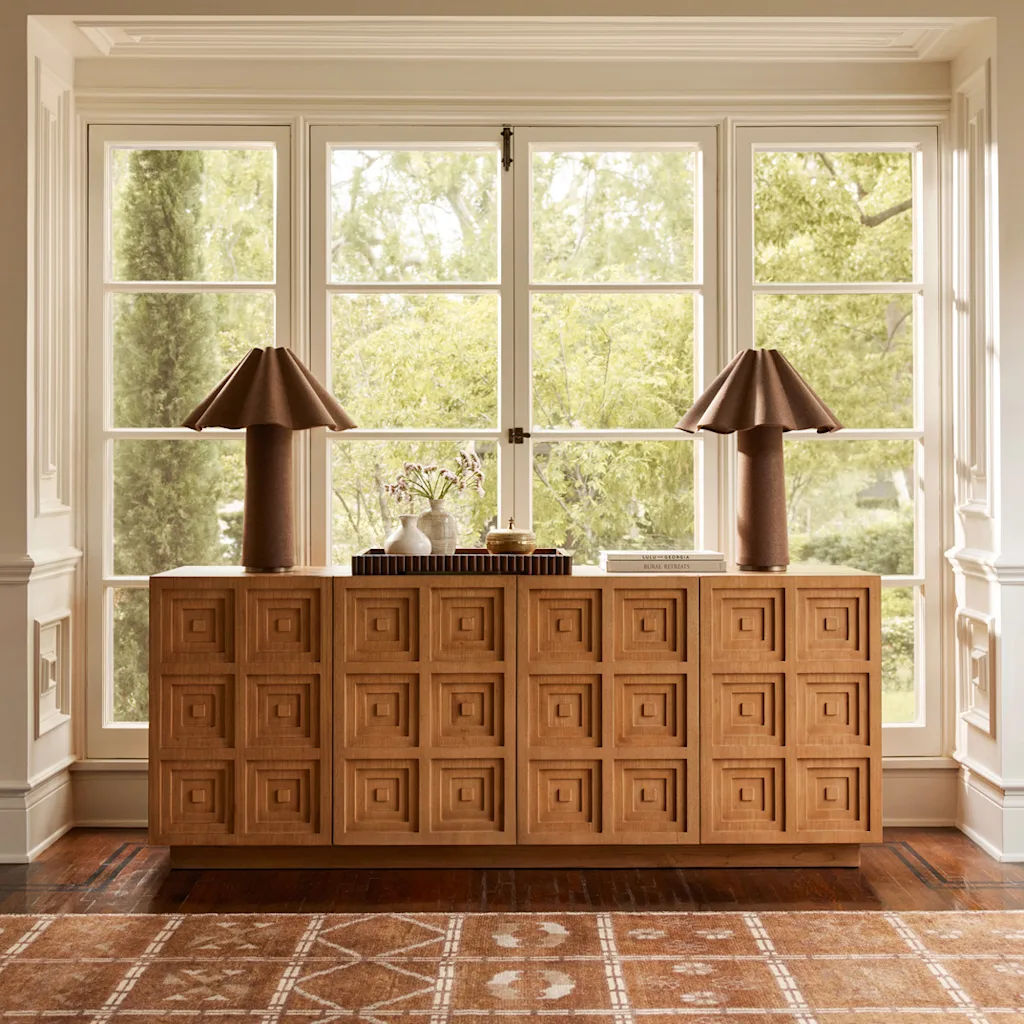
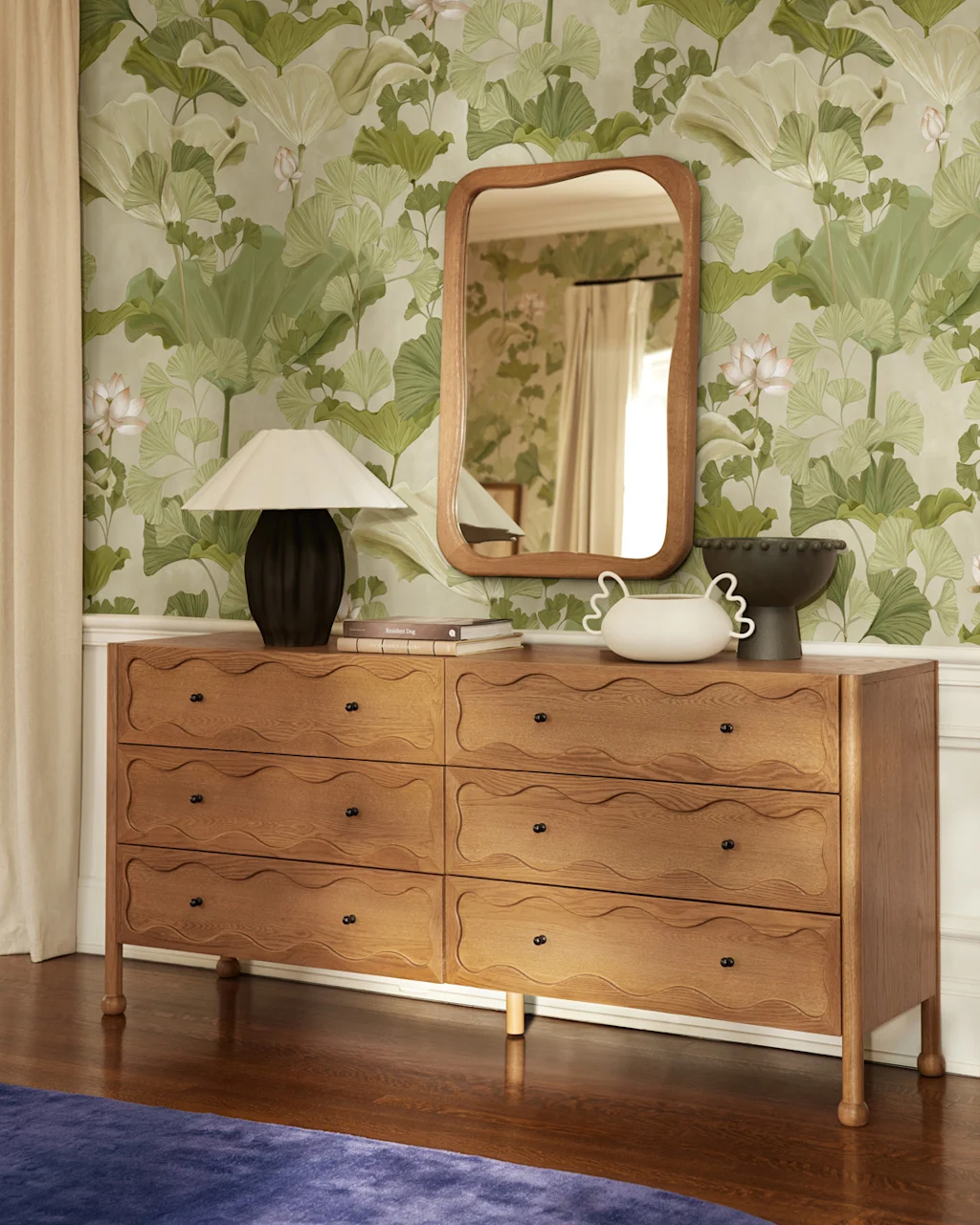
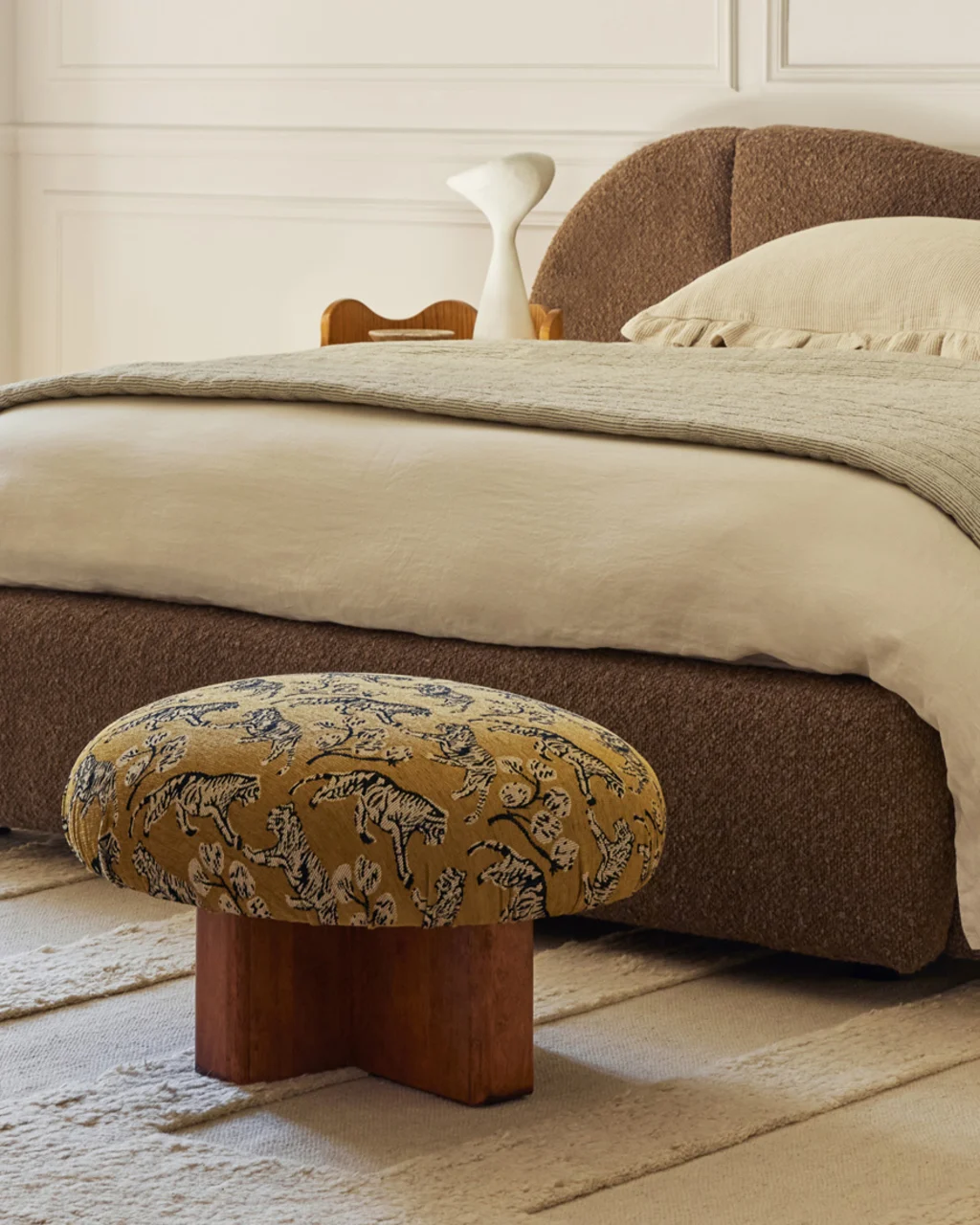
The strategy is bearing fruit. Many of the designer collaborations sell out within days. Some of Lulu & Georgia’s bestsellers over the last few years look very different from the soft neutral styles that dominates our feeds: A red marble dining table with rounded leg, a wooden dining table with perforated holes on the base, dining chairs with unusual shapes cut out on the back.
The brand collaborates with interdisciplinary designers including ceramicist Lalese Stamp, architect Ginny Macdonald, lighting designer Eny Lee Parker, textile designer Élan Byrd, and fashion designer Carly Cushnie, encouraging them to design what they genuinely want in their own homes—even if it means making a objects with no track record of selling. Products are often manufactured in small quantities to test demand.
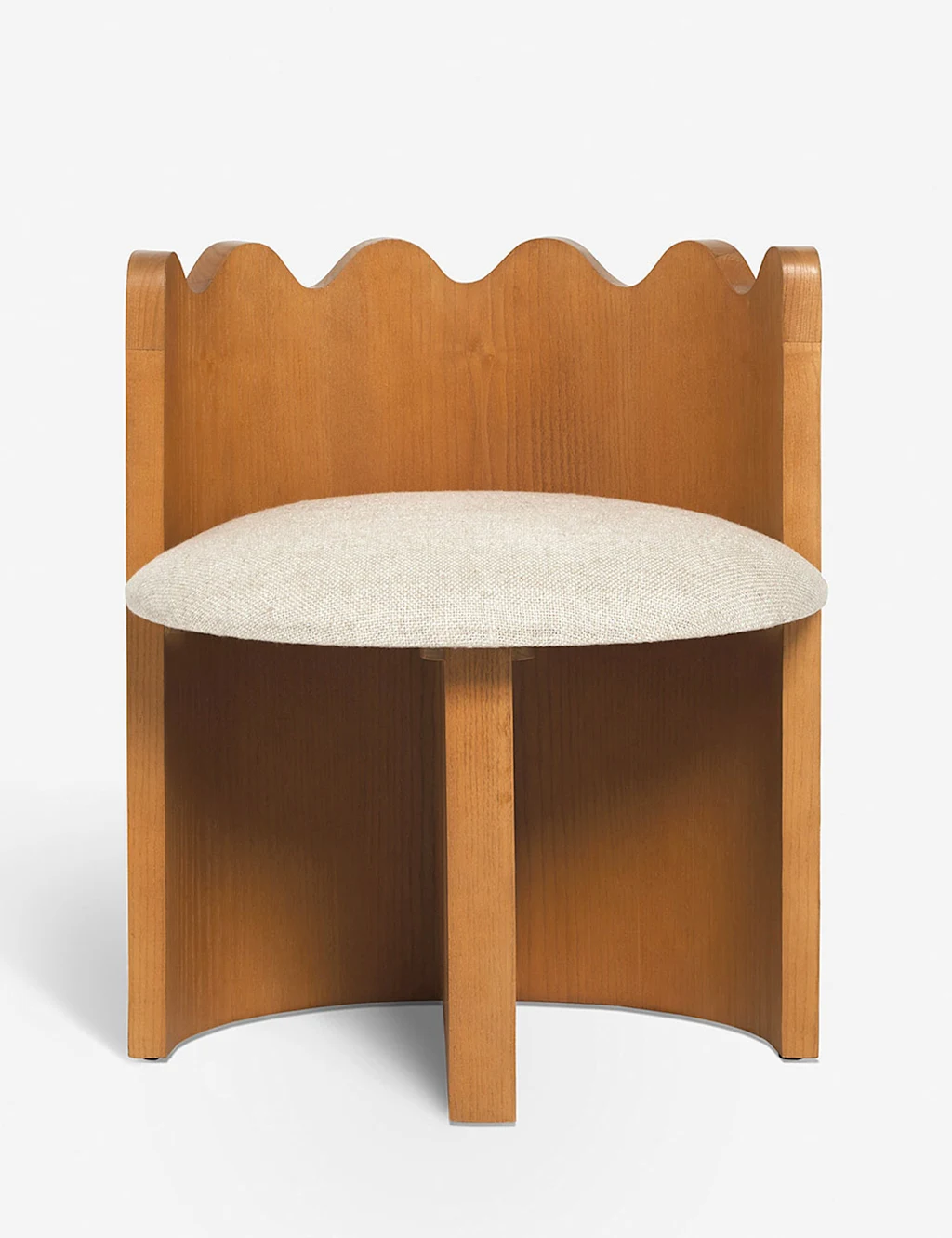
One example is a small wooden vanity chair designed by longtime collaborator Sarah Sherman Samuel. Sugarman initially doubted it would sell. “Most people don’t have vanities anymore,” she says. Still, they made a small run. The chair quickly sold out, with customers using it as a sculptural accent in living spaces.
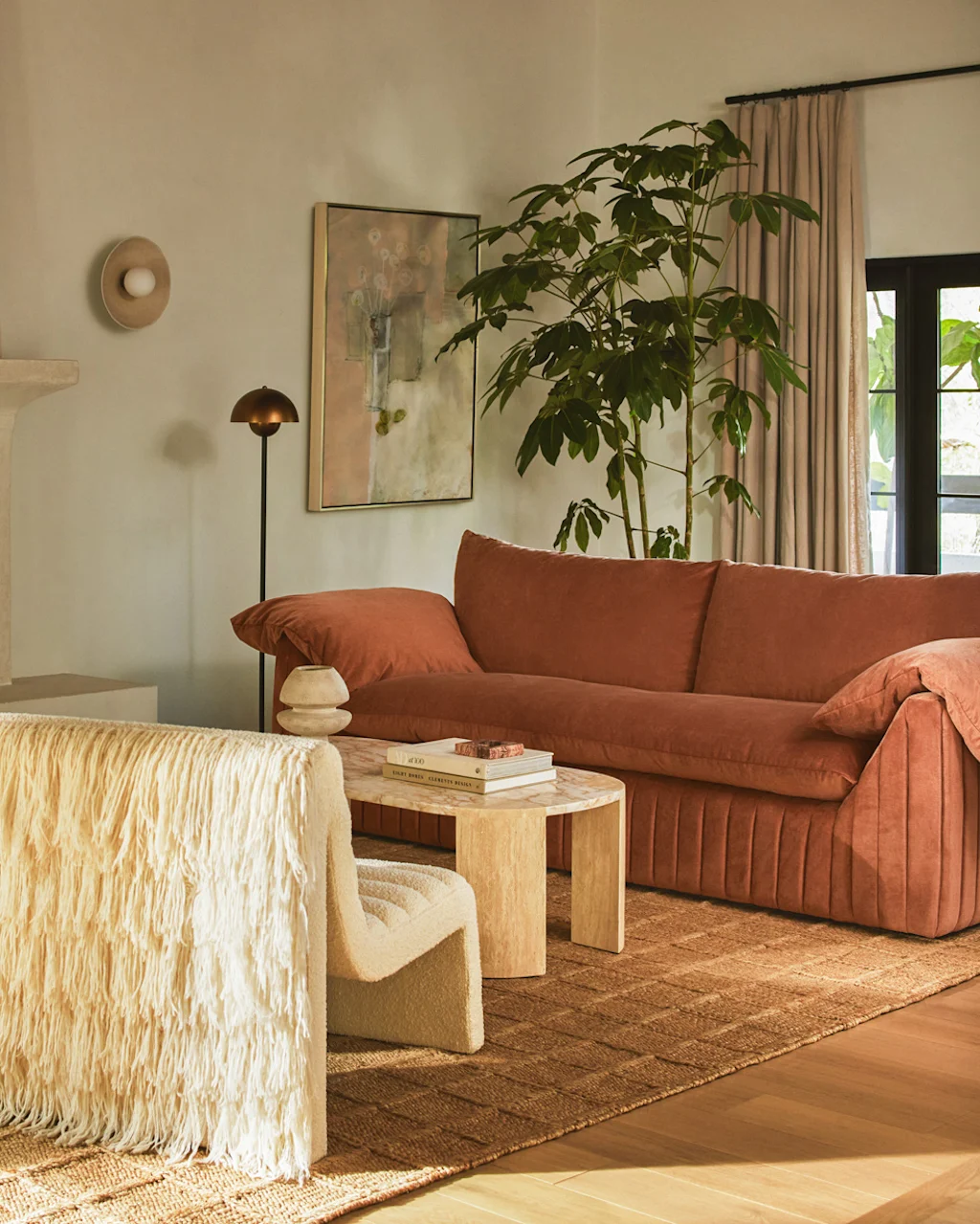
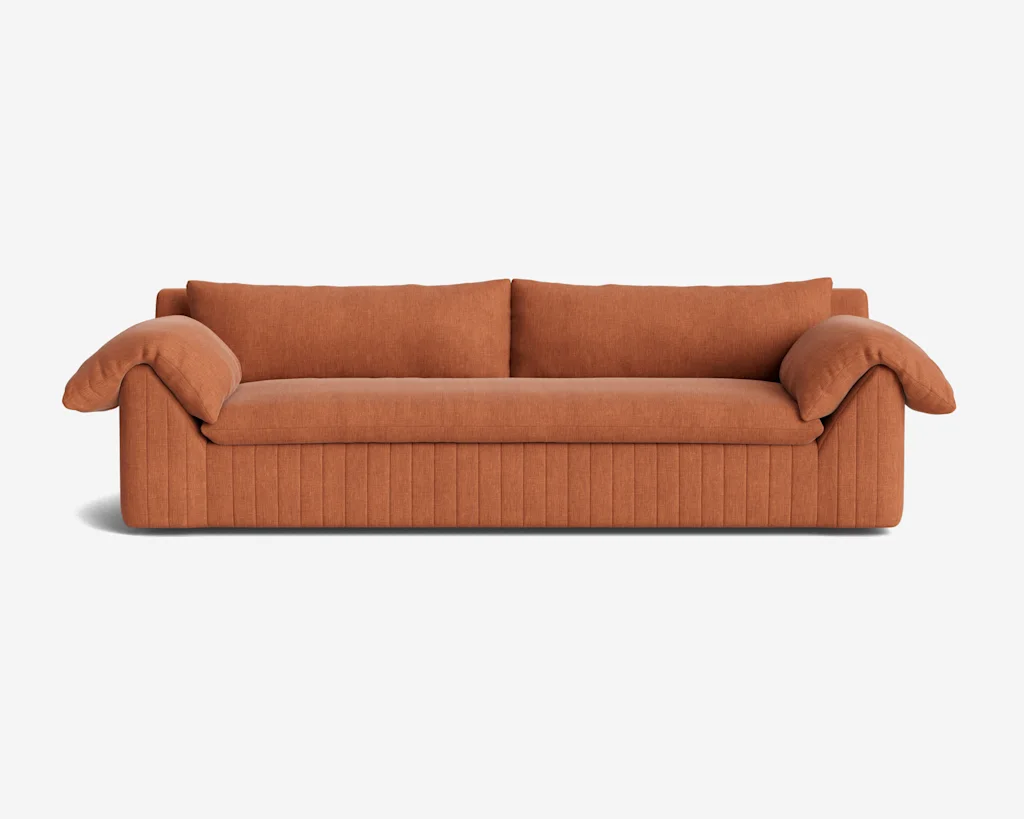
As with other furniture retailers, Lulu and Georgia also experiments with color through made-to-order pieces. A sofa designed by Macdonald is available in bold shades like mustard yellow and paprika red, produced only after a customer places an order. The approach allows the brand to test unconventional colors without overcommitting inventory. “Sometimes,” Sugarman says, “those experiments become massive hits.”
For Robbins and Lambert, this strategy works because it is rooted in specificity. “Specificity is the secret sauce that throws off the algorithm,” Lambert says. “The more cultural, historical, and contextual knowledge you bring in, the harder it is for systems to flatten taste.”
As algorithmic sameness reaches its limits, they believe consumers will increasingly seek out brands willing to take risks. “We’re seeing fatigue percolate,” Robbins says. “I think we’re approaching a cultural tipping point. Designers who resist the algorithm are going to win.”