
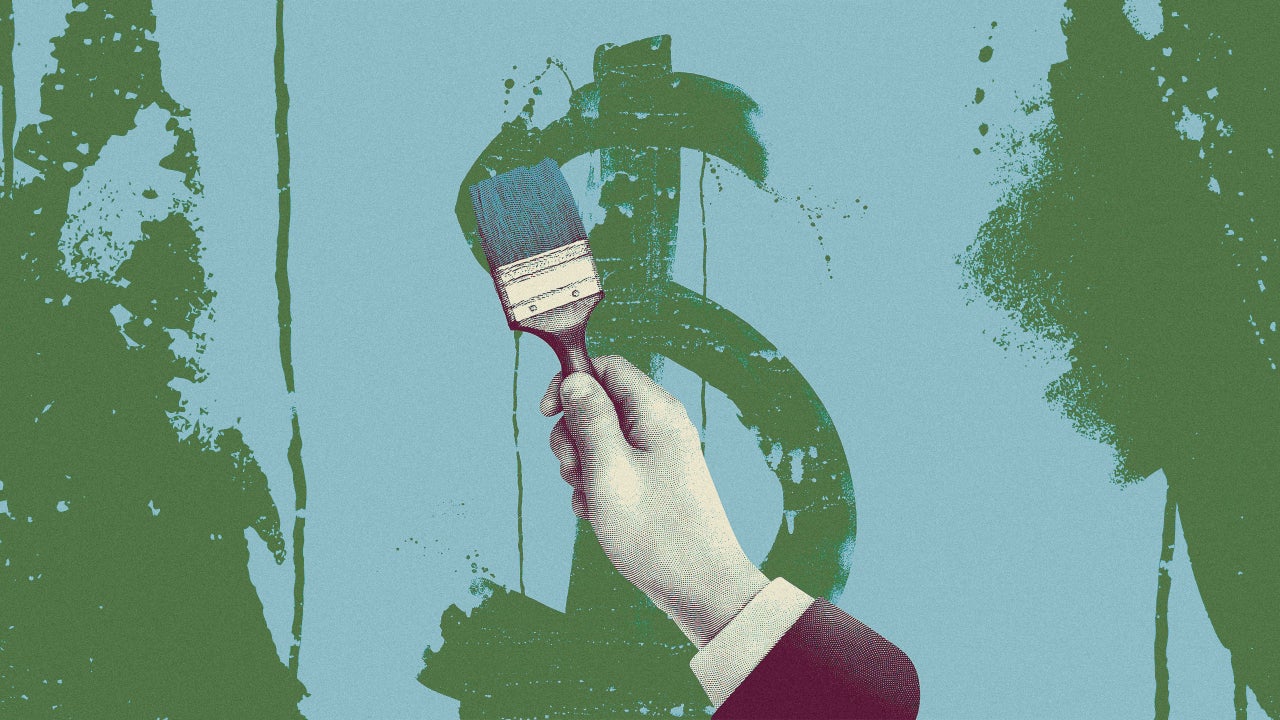
By now you’ve probably already noticed it in some of the brands you use daily—“hand-drawn” typography or hastily scanned textures layered over otherwise unremarkable photos. Maybe your cleaning product brands use visual references from a time when “things were easier,” like hand-painted signage and retro illustrations. Or they’re using imperfect blobby type that’s supposed to help designs feel “organic.” Ever notice that your favorite new bakery’s identity seems purposely a little ugly?
The use of this kind of “handmade” aesthetic has been debated in the design community for a long time. But, I’d argue that it’s only recently that the trend has drifted into something that feels . . . forced. Panera Bread’s recent incorporation of highly polished swash typography to no doubt recall the hand-painted signage of your favorite local grocer feels at odds with its reputation for mass-produced “quality ingredients.” St. Regis has recently announced a collection of ultra-high-luxury hospitality brands, many of which use hand-drawn elements perhaps at odds with its highly polished luxury properties. Most telling is Claude’s branding, incorporating hand-drawn illustrations and details that attempt to tell the world, “Hey, we’re the more human AI.”
Blame technology. Designers have a tendency to lead with their passions, and with AI feeling both threatening and exploitative to many in the community, there’s a natural impulse to push away from anything digital. But, as with the skeuomorphism of the aughts or the grunge-ification of the ’90s before it, our industry has pushed too far, sparking a trendy style that reflects designers’ uneasy relationship with technology more than it serves a real need.
Hand-drawn, hand-crafted elements have a place in design, to be sure—for the right brand or the right concept. And true craftsmanship is never out of style. But when this hand-rendered patina is used over and over again, it begins to fall flat, and offer neither enough resonance nor substance for a brand to truly stand out. This is creating a real problem for brands in the age of AI, looking to express that their values, offering, or services are more human-centered.
Old problems, new solutions
This isn’t the first time a trend like this has taken hold. Skeuomorphic design follows a similar mindset in design thinking—if we need to push a trajectory in a specific direction, go literal. And it worked pretty well in the early days of the iPhone and Blackberry to help bridge the gap between the traditional office environment of the desk and this new glass brick you tap. But it also went too far, and seeped into other applications where it really didn’t make any sense. Same with the “grunge” movement of design in the late 90s, with photocopied type samples and photoshop brushes that aimed to capture the energy and zeitgeist of the Zine movement—but under false pretenses.
This latest fake craft and hand-drawn era is more of the same. And it will take designers being especially mindful to avoid falling into traps. Here’s how:
- Root your ideas in the context
Whenever you’re running to social media and trying to imitate patina or “style,” that’s when the trouble starts. Instead, if you can root your ideas in the context of the project itself, that’s when it really sings. For example, one of my favorite branding projects of last year was for a bakery called Rose by Super Studio, which took the bread itself and “printed” with it, creating a hand-expressed marble texture that was literally the product. They used hand-drawn textures with real meaning, making the designs an expression of the quality of the bread. - Ask yourself what it means to be “human”
The rise of AI has challenged a lot of previous conventions about how we define “being human,” whether that’s making mistakes, being delightfully irrational, thinking nonlinearly, or using a variety of voices, tones, and outfits to define who we are in any given moment. If the end goal is to make an organization or message feel more human, then perhaps finding ways to make the identity system act human instead of just grabbing a pencil and making marks could lead to more authentically human expressions while simultaneously moving the art of design forward, too. - Collaborate with the machine . . . just like other designers
The biggest myth of working with AI agents is thinking they give you the right answer on the first prompt. That barely ever happens in practice. You need to go back and forth with it, iterating over content, code, and expressions, teaching it what you want and exploring mistakes and potential unexpected discoveries. The most meaningful work I’ve made with agents has been through dialogue with them, as if I’m directing them. The more specific you can be, and the more iterations you have, the more human and intentional the work becomes. - Embrace depth and variation in your brands
Human beings are messy, dynamic, and constantly changing. Strong brand identities are considered rigid, rigorous, and standardized. One way bring more humanity into these identity systems is to introduce variation—different logos, different voices and tones for different scenarios, or color palettes that shift based on mood, seasonality, experience. When the one-size-fits-all approach is feeling too stiff and cold, adding depth and variation to a brand can make it feel more like us. Yes, that adds complexity, but I’d argue the demands on a brand identity are more complex than they were during Paul Rand’s or Saul Bass’s era. And our audiences are dramatically more sophisticated at brand recognition than they were 50 years ago. Perhaps we need to rethink the shackles of the “brand police” as the only tool for enforcement, and begin to design flexibility into our design systems.
As with most trends, the fake “handmade” aesthetic has become about blending in rather than standing apart. And that’s not what design is being called to do. The task, especially in terms of brand, is to create distinction and separation in the marketplace. And AI isn’t the only force that’s leading to creative homogeneity. Sometimes, when we react reflexively without considering the consequences, we can do it to ourselves, too.