
Stress on college students can be palpable, and it hits them from every direction: academic challenges, social pressures, and financial burdens, all intermingled with their first taste of independence. It’s part of the reason why anxiety and depression are common among the 19 million students now enrolled in U.S. colleges and universities, and why incidents of suicide and suicidal ideation are rising.
In the 2024 National College Health Assessment Report, 30% of the 30,000 students surveyed said anxiety negatively affected their academic performance, with 20% at risk for symptoms that suggest severe psychological distress, such as feelings of sadness, nervousness, and hopelessness. No wonder the demand for mental health services has been increasing for about a decade.
Many schools have rightfully responded to this demand by offering students more counseling. That is important, of course, but there’s another approach that could help alleviate the need for counseling: creating a campus environment that promotes health. Simply put, add more green space.
We are scholars who study the impact that the natural environment has on students, particularly in the place where they spend much of their time—the college campus. Decades of research show that access to green spaces can lower stress and foster a stronger sense of belonging—benefits that are particularly critical for students navigating the pressures of higher education.
Making campuses green
In 2020, our research team at Texas A&M University launched a Green Campus Initiative to promote a healthier campus environment. Our goal was to find ways to design, plan, and manage such an environment by developing evidence-based strategies.
Our survey of more than 400 Texas A&M students showed that abundant greenery, nature views, and quality walking paths can help with mental health issues.
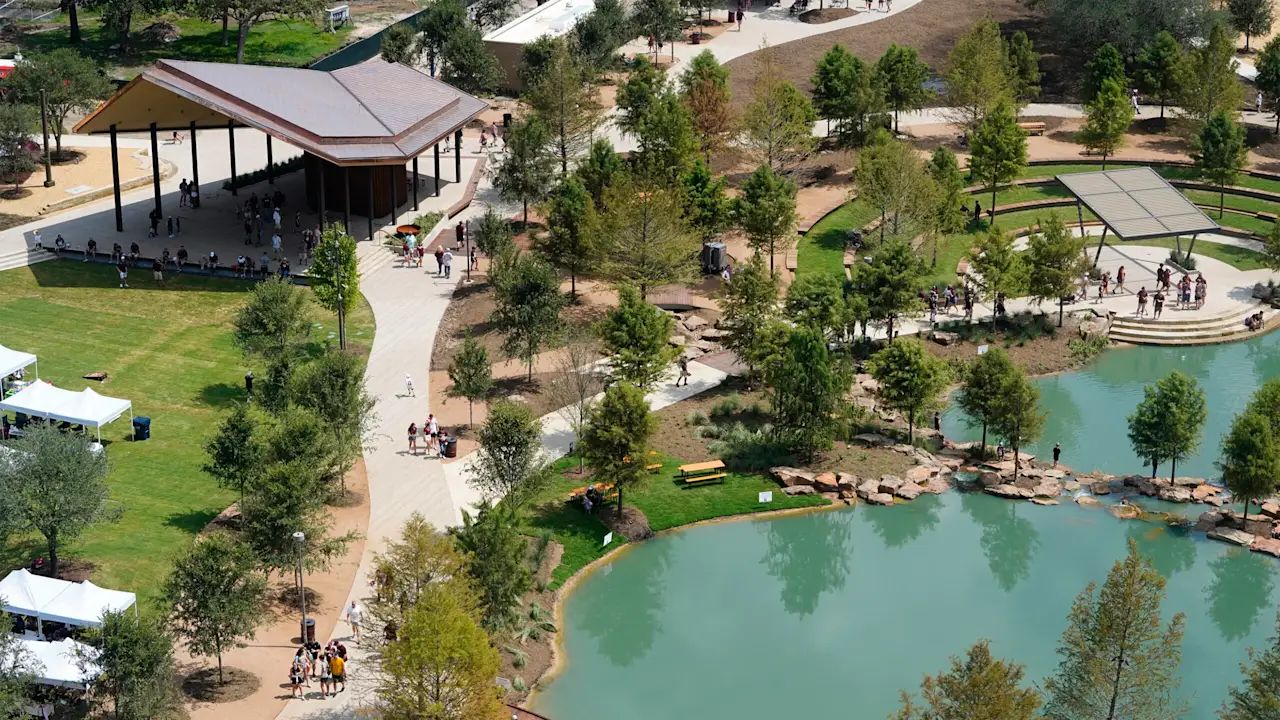
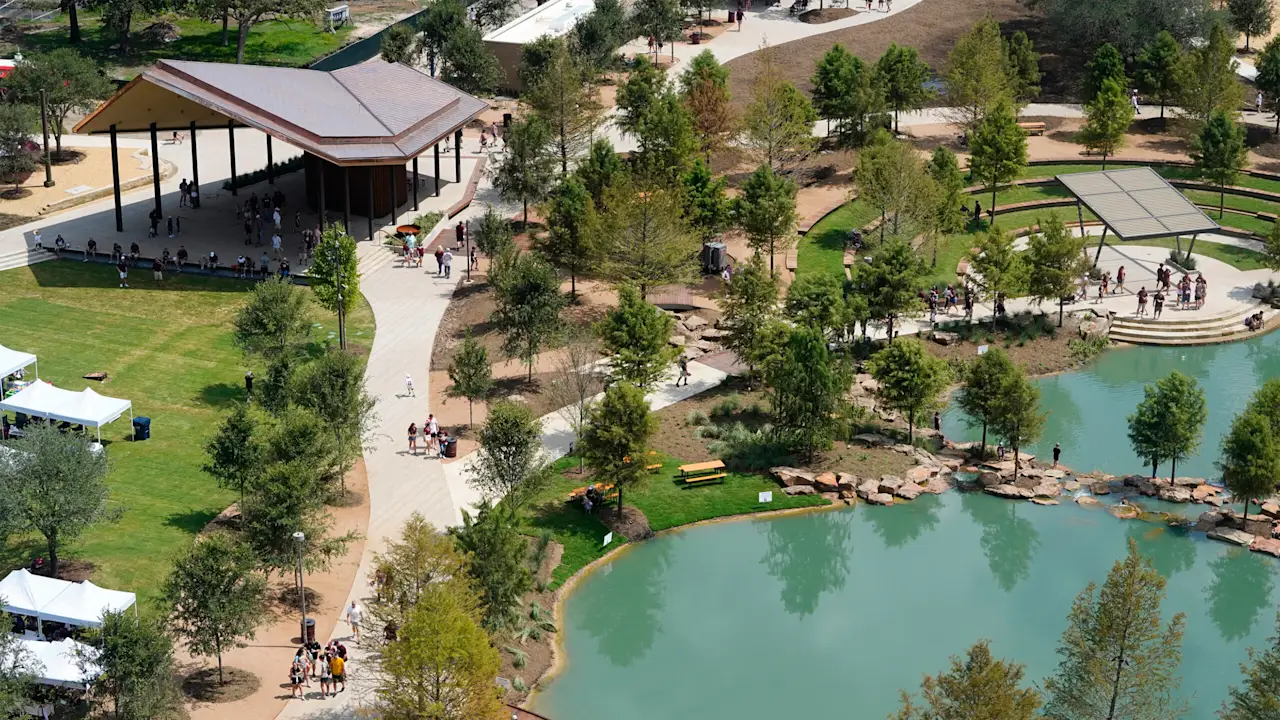
More than 80% of the students we surveyed said they already have their favorite outdoor places on campus. One of them is Aggie Park, 20 acres of green space with exercise trails, walking and bike paths, and rocking chairs by a lake. Many students noted that such green spaces are a break from daily routines, a positive distraction from negative thoughts and a place to exercise.
Our survey confirms other research that shows students who spend time outdoors—particularly in places with mature trees, open fields, parks, gardens, and water—report better moods and lower stress. More students are physically active when on a campus with good walkability and plenty of sidewalks, trails, and paths. Just the physical activity itself is linked to many mental health benefits, including reduced anxiety and depression.
Outdoor seating, whether rocking chairs or park benches, also has numerous benefits. More time spent talking to others is one of them, but what might be surprising is that enhanced reading performance is another. More trees and plants mean more shaded areas, particularly during hot summers, and that too encourages students to spend more time outside and be active.
Less anxiety, better academic performance
In short, the surrounding environment matters, but not just for college students or those living or working on a campus. Across different groups and settings, research shows that being near green spaces reduces stress, anxiety, and depression.
Even a garden or tree-lined street helps.
In Philadelphia, researchers transformed 110 vacant lot clusters into green spaces. That led to improvements in mental health for residents living nearby. Those using the green spaces reported lower levels of stress and anxiety, but just viewing nature from a window was helpful too.
Our colleagues discovered similar findings when conducting a randomized trial with high school students who took a test before and after break periods in classrooms with different window views: no window, a window facing a building or parking lot, or a window overlooking green landscapes. Students with views of greenery recovered faster from mental fatigue and performed significantly better on attention tasks.
It’s still unclear exactly why green spaces are good places to go when experiencing stress and anxiety; nevertheless, it is clear that spending time in nature is beneficial for mental well-being.
Small can be better
It’s critical to note that enhancing your surroundings isn’t just about green space. Other factors play a role. After analyzing data from 13 U.S. universities, our research shows that school size, locale, region, and religious affiliation all make a difference and are significant predictors of mental health.
Specifically, we found that students at schools with smaller populations, schools in smaller communities, schools in the southern U.S., or schools with religious affiliations generally had better mental health than students at other schools. Those students had less stress, anxiety, and depression, and a lower risk of suicide when compared with peers at larger universities with more than 5,000 students, schools in urban areas, institutions in the Midwest and West, or those without religious ties.
No one can change their genes or demographics, but an environment can always be modified—and for the better. For a relatively cheap investment, more green space at a school offers long-term benefits to generations of students. After all, a campus is more than just buildings. No doubt, the learning that takes place inside them educates the mind. But what’s on the outside, research shows, nurtures the soul.
Chanam Lee is a professor of landscape architecture and urban planning at Texas A&M University.
Li Deng is a Ph.D candidate in landscape architecture & urban planning at Texas A&M University.
Yizhen Ding is a Ph.D. candidate in landscape architecture & urban planning at Texas A&M University.
This article is republished from The Conversation under a Creative Commons license. Read the original article.