
Close Menu
    Facebook X (Twitter) Instagram
    TRENDING :
    • American Eagle is back with Syd and not sorry about it
    • Drowning Out the Noise | The Nation
    • Home prices are falling in these 89 housing markets—see what’s behind it
    • How to hide your sensitive info (for real) when using ChatGPT and other AI chatbots
    • The bigger point the DoorDash Grandma squabble missed
    • An Etsy-style retail chain abruptly closed all of its stores, leaving customers and vendors blindsided
    • Anthropic launches an AI design tool to take on all the other AI design tools
    • New data: Associate degrees, community college on the rise as students ditch traditional 4-year bachelor’s
    Populist Bulletin
    • Home
    • US Politics
    • World Politics
    • Economy
    • Business
    • Headline News
    Populist Bulletin
    Home»Business»A Roman board game has mystified researchers for years. AI discovered how to play
    Business 4 Mins Read

    A Roman board game has mystified researchers for years. AI discovered how to play

    Business 4 Mins Read
    Share Facebook Twitter Pinterest LinkedIn Tumblr Telegram Email Copy Link
    Follow Us
    Google News Flipboard
    Share
    Facebook Twitter LinkedIn Pinterest Email

    Somewhere around the turn of the 20th century, archaeologists in Heerlen, Netherlands, came across an odd-looking smooth white stone. They knew the territory was once the Roman settlement of Coriovallum, but had never seen anything like it and had no idea what it was for.

    For the better part of the next 100 years, it sat in a storage unit at the Thermenmuseum, a mystery taunting researchers. Then, six years ago, archaeologist Walter Crist spotted the stone while wandering the museum. Crist specializes in ancient board games and recognized it as one, though not one he had ever seen before. That sparked his curiosity. Now, with the help of artificial intelligence, he thinks he has figured it out—and even knows how to play.

    The stone isn’t much to look at. It’s an eight-inch piece of white Jurassic limestone. Lines etched into it form an oblong, diamond-like shape within a rectangle. But in a paper published Wednesday in the journal Antiquity, Crist and his team discuss what happened when they programmed two AI agents from the AI-driven play system Ludii to try to solve it.

    Playing Ludus Coriovalli

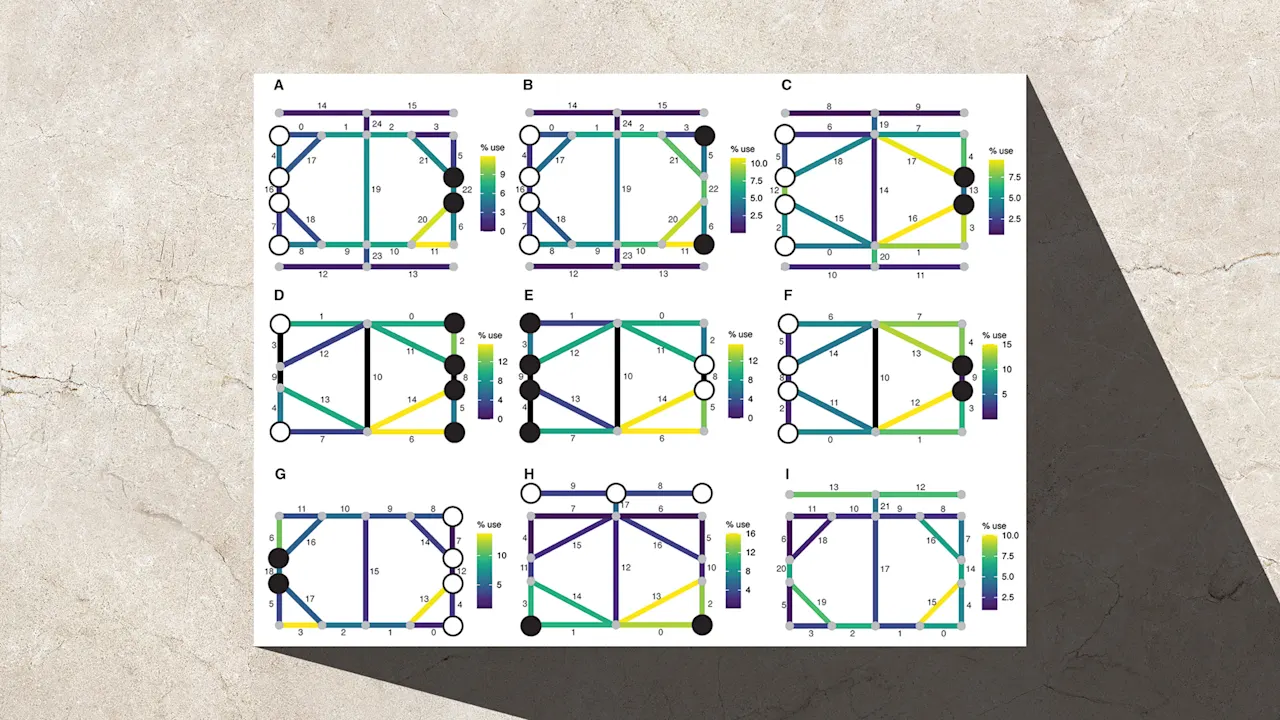
    The researchers had the AI play the game against itself thousands of times, testing more than 100 different sets of rules drawn from other known European games, both modern and ancient. They compared the AI’s moves with patterns of wear on the board, tracking which gameplay styles most closely matched the grooves on the stone.

    The board, it appeared, was used for a blocking game—a type of board game in which the goal is to prevent your opponent from moving. (Think of modern titles like Go or Blokus.) Blocking games were rare in ancient Europe and, before this, had only been dated to the Middle Ages. This discovery suggests they were played several centuries earlier.

    In the end, the AI and the team identified nine sets of rules consistent with the board’s wear. Crist and his team named the game Ludus Coriovalli, “the game from Coriovallum.”

    “By combining AI simulation with use-wear analysis to identify and model traces of game play, it is possible to not only identify potential game boards, but also to rebuild playable rulesets that may provide indications regarding the ways that people played games in the past,” the paper reads.

    So what were the rules? Here’s what researchers determined:

    • One player controls four “dogs.” The other controls two “hares.”
    • The dogs start on the four leftmost points; the hares start on the inner two points on the rightmost side.
    • Players alternate turns moving a piece to an adjacent empty spot on the board.
    • The dogs attempt to block the hares, while the hares try to remain unblocked for as long as possible. If the hares are blocked, players swap roles and play again.
    • The player who lasts the longest as the hares wins.

    Got it? Good. Because this isn’t just a theoretical reconstruction. It’s a game you can actually play online now. Crist and his team uploaded a simulation of Ludus Coriovalli to Ludii, and it’s available to anyone who wants to give it a try.

    So why study the games ancient civilizations played? Beyond simple curiosity, Crist notes, they offer a clearer picture of everyday life in the past—and a connection to history that isn’t just dry numbers or broken pot shards.

    “The ability to identify play and games in archaeology strengthens the understanding of our ludic heritage, and makes ancient life more accessible to people in the present, as the act of playing a board game is fundamentally the same today as it was in past millennia,” he writes in the paper. 


    Source link

    Share. Facebook Twitter Pinterest LinkedIn Tumblr Email

    Related Posts

    American Eagle is back with Syd and not sorry about it

    April 18, 2026

    Home prices are falling in these 89 housing markets—see what’s behind it

    April 18, 2026

    How to hide your sensitive info (for real) when using ChatGPT and other AI chatbots

    April 18, 2026
    Top News
    World Politics 2 Mins Read

    Journalist defends an illegal immigrant accused of child sexual assault

    World Politics 2 Mins Read

    David Pérez-Teofani, an undocumented Mexican immigrant, was arrested on August 20, 2025, close to the…

    Overcoming Work from Home Trust Issues for Better Remote Collaboration

    January 25, 2026

    Market Talk – October 20, 2025

    October 20, 2025

    Vice President JD Vance to Host ‘The Charlie Kirk Show’ from the White House on Monday | The Gateway Pundit

    September 15, 2025
    Top Trending
    Business 6 Mins Read

    American Eagle is back with Syd and not sorry about it

    Business 6 Mins Read

    “What brand am I wearing?” Sydney Sweeney says, looking into the camera…

    US Politics 13 Mins Read

    Drowning Out the Noise | The Nation

    US Politics 13 Mins Read

    The Weekend Read / April 18, 2026 How music became the cathartic…

    Business 6 Mins Read

    Home prices are falling in these 89 housing markets—see what’s behind it

    Business 6 Mins Read

    Want more housing market stories from Lance Lambert’s ResiClub in your inbox? Subscribe to the ResiClub newsletter.…

    Categories
    • Business
    • Economy
    • Headline News
    • Top News
    • US Politics
    • World Politics
    About us

    The Populist Bulletin was founded with a fervent commitment to inform, inspire, empower and spark meaningful conversations about the economy, business, politics, government accountability, globalization, and the preservation of American cultural heritage.

    We are devoted to delivering straightforward, unfiltered, compelling, relatable stories that resonate with the majority of the American public, while boldly challenging false mainstream narratives that seem to only serve entrenched elitists, and foreign interests.

    Top Picks

    American Eagle is back with Syd and not sorry about it

    April 18, 2026

    Drowning Out the Noise | The Nation

    April 18, 2026

    Home prices are falling in these 89 housing markets—see what’s behind it

    April 18, 2026
    Categories
    • Business
    • Economy
    • Headline News
    • Top News
    • US Politics
    • World Politics
    Copyright © 2025 Populist Bulletin. All Rights Reserved.

    Type above and press Enter to search. Press Esc to cancel.