
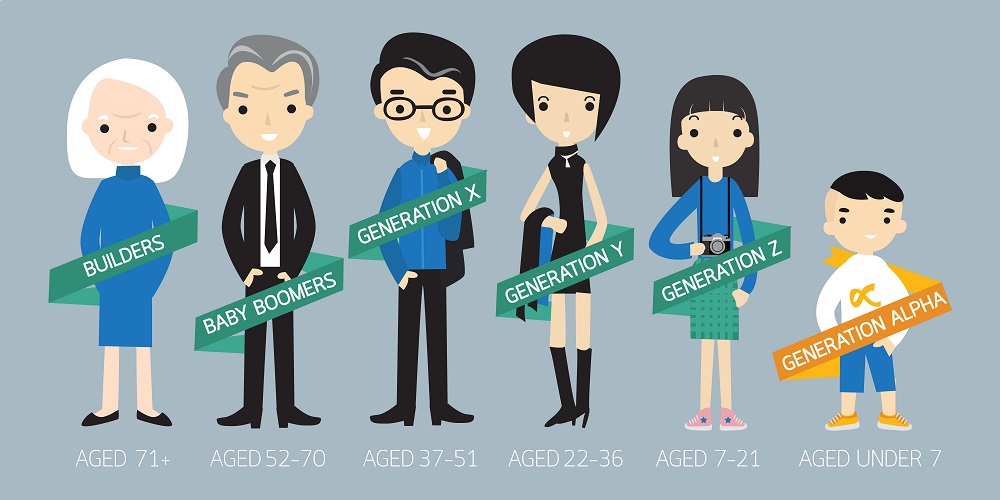
The Federal Reserve’s latest Survey of Consumer Finances reveals a disturbing collapse in the wealth of younger Americans. Households headed by someone under 35 saw their median net worth decline 23% between 2022 and 2025, falling from $42,720 to approximately $32,820 after adjusting for inflation. Meanwhile, households headed by someone 75 or older experienced a 37% increase in median wealth, reaching approximately $505,000. The government continues telling Americans that the economy is growing, but an entire generation is becoming poorer while those who accumulated assets decades ago are becoming wealthier. Young people are discovering that working hard, obtaining an education, and saving money no longer guarantee the economic opportunities their parents enjoyed.
Median household wealth across all age groups increased merely 2% to $215,900, while the wealthiest 10% of income earners saw their median net worth rise 31% to approximately $3.67 million. The bottom 20% of earners experienced a 6% decline in median wealth. The Federal Reserve also found that mean net worth among households under 35 declined 33%, with the unwinding of earlier business equity gains playing a major role. This is important because the decline cannot be attributed entirely to housing or consumer inflation. Young Americans are losing ground across several forms of wealth accumulation, while those who already own substantial assets continue benefiting from appreciation.
I have explained how governments have created two entirely different economies through decades of monetary manipulation. Those who own assets benefit when central banks expand the money supply and suppress interest rates. Real estate, equities, and other investments appreciate, often far beyond the increase in ordinary wages. Those who have not yet accumulated assets are forced to purchase them at increasingly inflated prices. The politicians call this economic growth. For someone who already owns three houses, rising property values are wonderful. For a 28-year-old attempting to purchase a first home, those same increases can destroy the possibility of homeownership.
Look at what happened during the pandemic. The Federal Reserve drove interest rates to historic lows, while Washington flooded the economy with trillions of dollars in spending. Mortgage rates fell below 3%, encouraging an enormous surge in housing demand. Existing homeowners refinanced their mortgages and locked in exceptionally cheap financing, while property values climbed. Young people who were not yet financially prepared to purchase a home missed that opportunity. When mortgage rates subsequently rose, they were confronted with elevated property prices and dramatically higher financing costs. The government created an extraordinary advantage for people who already owned property while making entry into the market increasingly difficult for everyone else.
Two real estate economies now operate simultaneously. One consists of homeowners with substantial equity, accumulated savings, and mortgages secured at exceptionally low interest rates. The other consists of younger buyers who must finance purchases at today’s borrowing costs while competing against buyers with existing wealth. A homeowner with a mortgage below 3% has little incentive to sell and surrender that financing advantage. This reduces the supply of existing homes available to prospective buyers, adding another obstacle for younger households. Those who can purchase property outright operate under entirely different financial conditions from families dependent on mortgage financing.
The Federal Reserve’s figures show how dramatically asset ownership influences household wealth. The average net worth of homeowners was approximately $1.81 million, compared with $153,500 for renters. These figures reflect differences in age, income, accumulated assets, and other characteristics, but they illustrate the enormous financial divide between those who own appreciating assets and those who do not. Renters pay for housing every month without accumulating home equity. Meanwhile, their landlords may benefit from property appreciation, principal repayment, and rental income. The longer a young household remains unable to enter the property market, the greater the potential gap between its wealth and that of established homeowners.
Then there is the issue of education. Young Americans were told that obtaining a college degree was the ticket to prosperity. Millions borrowed enormous sums to finance their education, only to discover that a diploma does not guarantee employment capable of supporting their debt obligations. Student loans reduce net worth before a young person has even begun accumulating meaningful assets. Add automobile financing, credit card balances, insurance, rent, and the rising cost of necessities, and the ability to save becomes severely restricted. The government encouraged an entire generation to borrow against future earnings while doing remarkably little to ensure that those earnings would justify the expense.
This is also connected to the collapse in birth rates throughout the Western world. How can governments expect young people to marry, purchase homes, and raise children when they cannot establish financial independence? A family requires stability and some confidence that tomorrow will be better than today. Younger generations are increasingly postponing major life decisions because the economic foundation necessary to support them has become so expensive. Governments respond with small tax credits and subsidies while refusing to address the structural conditions that have made family formation increasingly difficult.
The government is simultaneously accumulating debt at an extraordinary pace. Every additional dollar borrowed must ultimately be financed, and the interest expense becomes another burden on the economy. Younger generations will inherit these obligations along with the consequences of decades of fiscal mismanagement. They are expected to finance retirement programs, healthcare commitments, military expenditures, and government bureaucracies while struggling to accumulate enough wealth to support themselves. Politicians make promises to existing voters without adequately considering the financial obligations being transferred to future taxpayers.
There is an important distinction between wealth and income that Washington routinely ignores. A person may earn a respectable salary and still possess very little net worth. Income is what comes in. Wealth is what remains after liabilities are deducted from assets. A household earning $100,000 annually but carrying substantial student loans, automobile debt, and credit card balances may have less financial security than a retiree with modest annual income who owns a mortgage-free home and a substantial investment portfolio. The economy cannot be judged solely by employment statistics or wage growth when the cost of accumulating assets has risen so dramatically.
The Federal Reserve’s report should be a warning to Washington. The American Dream was never supposed to require wealthy parents. It was built upon the possibility that someone could work, save, invest, and improve their standard of living through productive effort. Governments have distorted that process through excessive borrowing, monetary manipulation, and policies that have inflated asset prices beyond the reach of many younger households. Washington can continue celebrating rising stock markets and national wealth figures, but those statistics mean very little to the generation being priced out of ownership.
A society cannot indefinitely prosper by making its younger generations poorer while expecting them to finance the obligations of everyone who came before them. The consequences will extend into housing, family formation, consumption, entrepreneurship, and ultimately government finances. The politicians may not understand the significance of these numbers, but the younger generation certainly does. They are living with the consequences every single day.