
It’s no secret that AI chatbots and agents are answering employee questions, writing code and emails, and taking on other tasks in office environments.
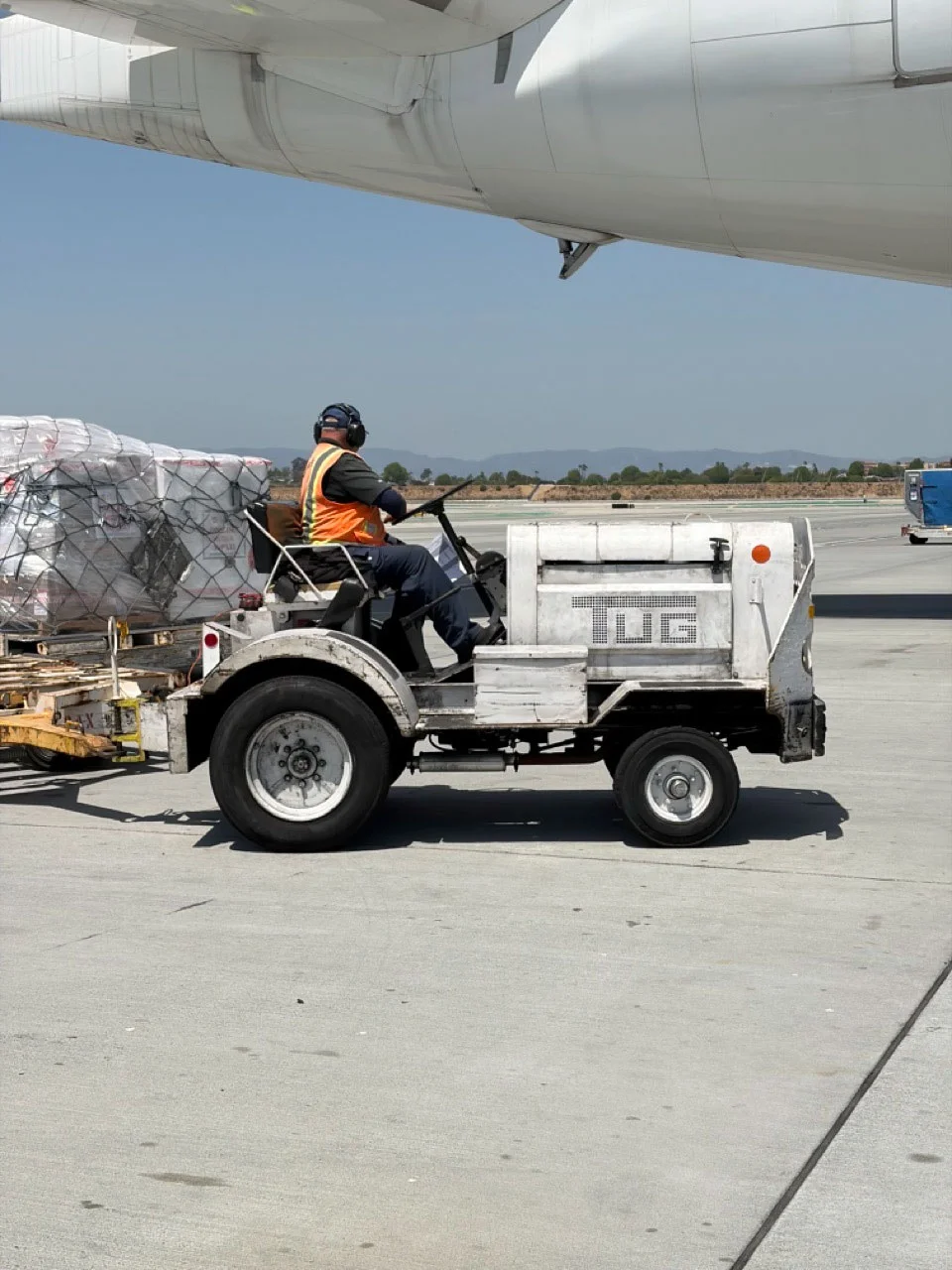
But AI tools that communicate by voice, rather than through keyboards and screens, are also quietly taking off in frontline environments—from factory floors to retail stores. In some cases, AI that can understand spoken language is making it practical for workers to digitally access and share information in settings where protective gloves, outdoor weather conditions, or the need to operate other equipment have made traditional desktop or touchscreen devices difficult to use.
“With the advent of AI, voice became possible as an interface,” says Peter Moeckel, founder and CEO of Frontier Audio. “And frontline workers—they’re using their hands, they’re using their eyes for the job. That’s why the touchscreen, the keyboard, or the mouse obviously doesn’t work.”
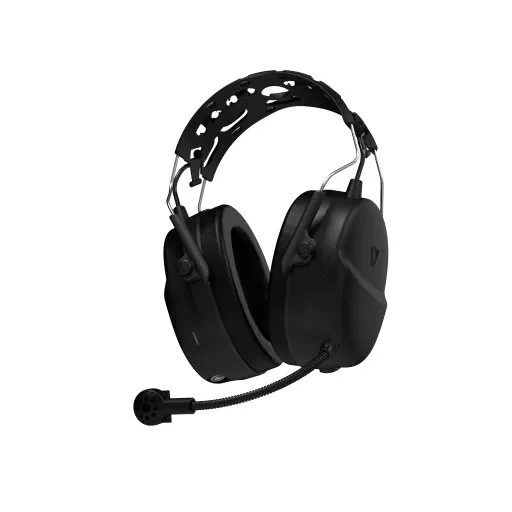
Frontier Audio, which has raised $4.5 million in pre-seed funding, offers audio hardware and software to connect workers in industries ranging from manufacturing to aviation, including through contracts with the U.S. Air Force. The company’s devices come in a variety of form factors, including over-the-ear headphones with noise cancellation and shoulder-mounted microphones, similar to the walkie-talkie-style equipment many workers already use to stay connected. The equipment lets users talk to colleagues or AI, helping with tasks like reporting maintenance issues before they cause production problems, locating equipment such as carts in sprawling facilities, and receiving important alerts without needing to stop and look at a screen.
“We cannot add extra work,” Moeckel says. “They already have an immense amount of work to do, and we need to get out of their way. And our platform, a big part of making it seamless and enabling easy adoption is it working just like a normal radio.”
Frontier Audio is far from the only company building voice-powered AI for the workplace, often combined with radio services. Motorola Solutions offers AI features integrated into its police radios. Samsara, which builds connectivity and analytics tools for a variety of frontline operations, announced last month that voice commands have become the primary interface for people interacting with AI agents on its platform. Its voice bots can communicate with utility crews working on power lines, truck drivers arriving at unfamiliar worksites, and other workers in situations where they can’t look at a screen.
MangoApps, which offers AI and intranet-style tools geared toward frontline workers, enables users to access information about scheduling, company policies, and other matters through either text-based chat or voice in their preferred language, typically from their existing phones. Andy Tolton, vice president of marketing at MangoApps, says many businesses realized during the COVID-19 pandemic that they had limited ways to stay in contact with employees outside of traditional office roles.
“For the vast majority of businesses, their intranet is really a desktop paradigm,” he says.
While workplace AI tools have often been built chiefly with office workers in mind, businesses are now realizing they can offer multilingual access to company data and processes to field employees who, in some cases, were still using clipboards and paper forms until recently. That’s thanks to improvements in audio processing that make speech recognition and freeform conversations less frustrating, even in noisy environments, alongside advances in the ability of AI models to deliver accurate information and take action on behalf of humans.
“The speech AI technology has improved vastly, [as has] the knowledge that AI can access and be trained on,” Tolton says. “That, plus its ability to act, has increased exponentially in the last two to three years.”
Still, as in office environments, rolling out workplace AI for frontline workers isn’t as simple as flipping a switch. Businesses need to ensure that the devices workers use to communicate with AI, whether smartphones or radio-style equipment, are practical for their work environments. And whether accessed by voice or text, AI systems typically need to be integrated with existing data sources and processes for collecting employee input, while also being reliable and secure.
“In order for AI to work, you need to share data not only internally, but also with vendors. And you might also have to utilize sensitive data from your customers,” says Dayan Rodriguez, corporate vice president of global manufacturing and mobility at Microsoft.
In March, Microsoft announced new tools to build and deploy voice-powered AI agents through its Azure cloud platform. The company also offers security safeguards, including for manufacturing-specific technology that can be integrated with artificial intelligence. Microsoft points to examples of voice interfaces used by customers like Gulf Air, the national carrier of Bahrain, and electronics retailer MediaMarktSaturn, which has deployed Azure-powered voice assistants that sales employees can use to look up information about products and inventory while helping customers.
At least as critical as the technology itself, though, is ensuring that employees actually embrace it and can use it to do their jobs better, Rodriguez says. That’s part of the reason to give workers access to voice interfaces or whatever other systems make it easiest to interact with workplace tools. But it’s also important to monitor how those tools are used to make sure the investment pays off.
“Change management is more critical, in my opinion, than anything else,” he says.