
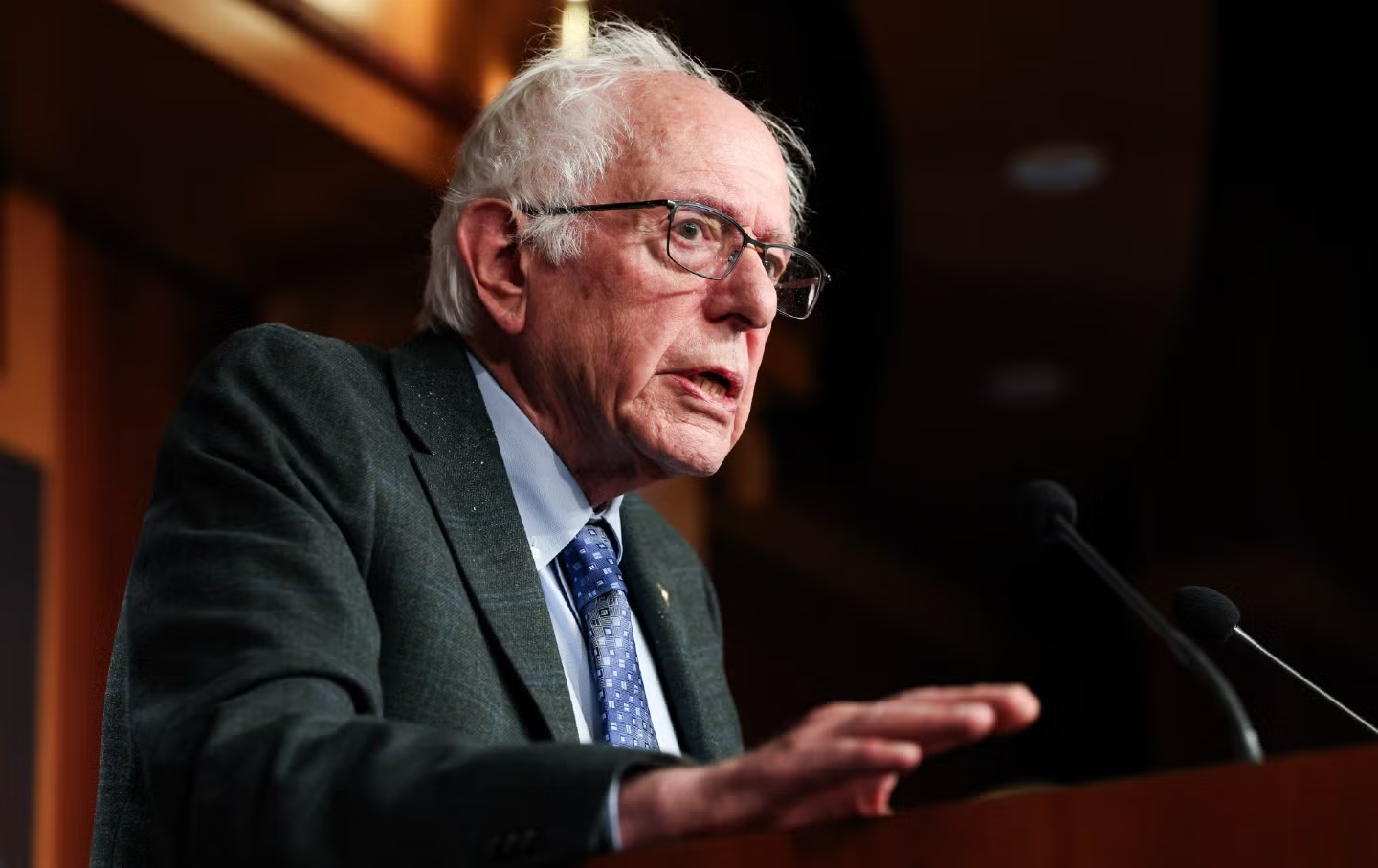
In an interview with The Nation, the progressive icon says that the Senate leader is “way out of touch with where the American people are at.”
In an interview with “The Nation,” the progressive icon says that the Senate leader is “way out of touch with where the American people are at.”
US Senator Bernie Sanders, who inspired and helped to elect many of the young insurgent candidates who surfed this month’s Democratic “blue wave,” announced Tuesday that he will not support New York Democrat Chuck Schumer’s bid to lead the party’s majority Senate caucus in the next term of Congress.
The move by Sanders, an independent who caucuses with the Democrats and who jump-started progressive politics with two bids for the party’s presidential nomination, highlighted the need to break with status-quo agendas after a national election result that was broadly read as a cry for change from the American people.
While Schumer, who has led Senate Democrats for a decade, retains significant support within the caucus, Sanders argued in an exclusive interview with The Nation that it is vital for the party to do more than simply oppose the administration of Republican President Donald Trump. He said that Democrats must offer a bold domestic and foreign policy vision that replaces Schumer’s cautious centrism with bolder progressive leadership from a senator such as Maryland’s Senator Chris Van Hollen, who says he has begun reaching out to fellow senators as part of a potential leadership challenge.
—John Nichols
The Nation: You’ve known Chuck Schumer for a very long time. Obviously, you don’t have a lot of personal antipathy toward him. What made you decide to announce that you would not vote to make him majority leader?
Current Issue

Bernie Sanders: Chuck and I grew up, literally, in the same [Brooklyn] neighborhood. I am older than Chuck, but we went to the same elementary school, the same high school. We were on the Banking Committee together when I was first elected to Congress. So I have known Chuck for a long time, and I like Chuck, personally. He’s a very nice guy.
But, I think, in this moment in American history, Chuck’s views are way out of touch with where the American people are at—and especially with where [the base of] the Democratic Party is. On issue after issue, I think he is just not in tune with where his constituents are at.
TN: What issues stand out in that regard?
BS: You can start off with US military aid to Israel. I think that’s a very emotional issue for people in the Democratic caucus. Many of us, including myself, think that [Israeli Prime Minister Benjamin] Netanyahu has committed genocide on the Palestinian people in Gaza, that Netanyahu is a war criminal, and that the United States should not provide another nickel of military aid to Israel, period.
And I think that basically on other issues Chuck is a guy who wants to tinker around the edges. Is Chuck prepared to fight for what the American people want, which is dealing with massive levels of income and wealth inequality by imposing a billionaire tax—a tax on a billionaire’s wealth so that we can adequately fund childcare, make public colleges and universities tuition-free, and build the millions of units of affordable housing that we need? Is that where Chuck is coming from? I don’t think so.
On AI, Chuck was the minority leader and did nothing significant to address what is the most transformational technology in the history of the world being pushed by a handful of multibillionaires. The American people are deeply concerned [about data centers and the rapid development of artificial intelligence]. The elections show that. Chuck was not there.
Those are just some of the issues that, I think, Chuck has not been leading on.
TN: The polls show that the Democratic Party is not all that popular. Donald Trump is very unpopular, but the Democratic Party is not all that highly rated.
BS: The Democratic Party, in some polling, is less popular than Trump, correct?
TN: That’s been the case. So, is it your view that it is important for the Democratic Party to show that it actually recognizes that there was a vote for change?
BS: Absolutely, John, and I think for two reasons.
Popular
“swipe left below to view more authors”Swipe →
Number one, so many of our people are hurting. Sixty percent of our people live paycheck to paycheck. You have millions of elderly people who don’t know how they’re going to retire with dignity. We have the highest rate of childhood poverty of any major country.
And, number two, I’ll tell you this: Trumpism is not just an American phenomenon. All over Europe, they are seeing the growth of right-wing parties, and the collapse of center-left parties. And I think working people throughout Europe, throughout the United States, are looking at their governments and asking: Do you know that we exist? Do you understand the pain that we are experiencing?
To my mind, it’s not only a question of whether Democrats have to address the enormous economic pain that working families are now experiencing—and their concerns, as they look to the future, that AI may take their jobs, that their kids are likely to have a lower standard of living than they do. It’s not only that we have to deal with those economic issues to help address the pain and anxiety that people are feeling. It’s that if we do not address that pain and anxiety, I worry about the future of democracy. I think people will say: Trump failed us. We gave Democrats an opportunity. Now, they failed us. What we really need is a strong man who will get things right. That’s the history of fascism around the world.
So I think it’s not only the need to address economic pain. Government has finally got to address the issues that working families experience. And if we fail again, and more and more people give up on government, I worry about the future of democracy.
TN: Do you have a candidate in the race for majority leader?
BS: Chris Van Hollen has indicated he’s interested.
TN: And you would support him?
BS: Yes.
More from The Nation
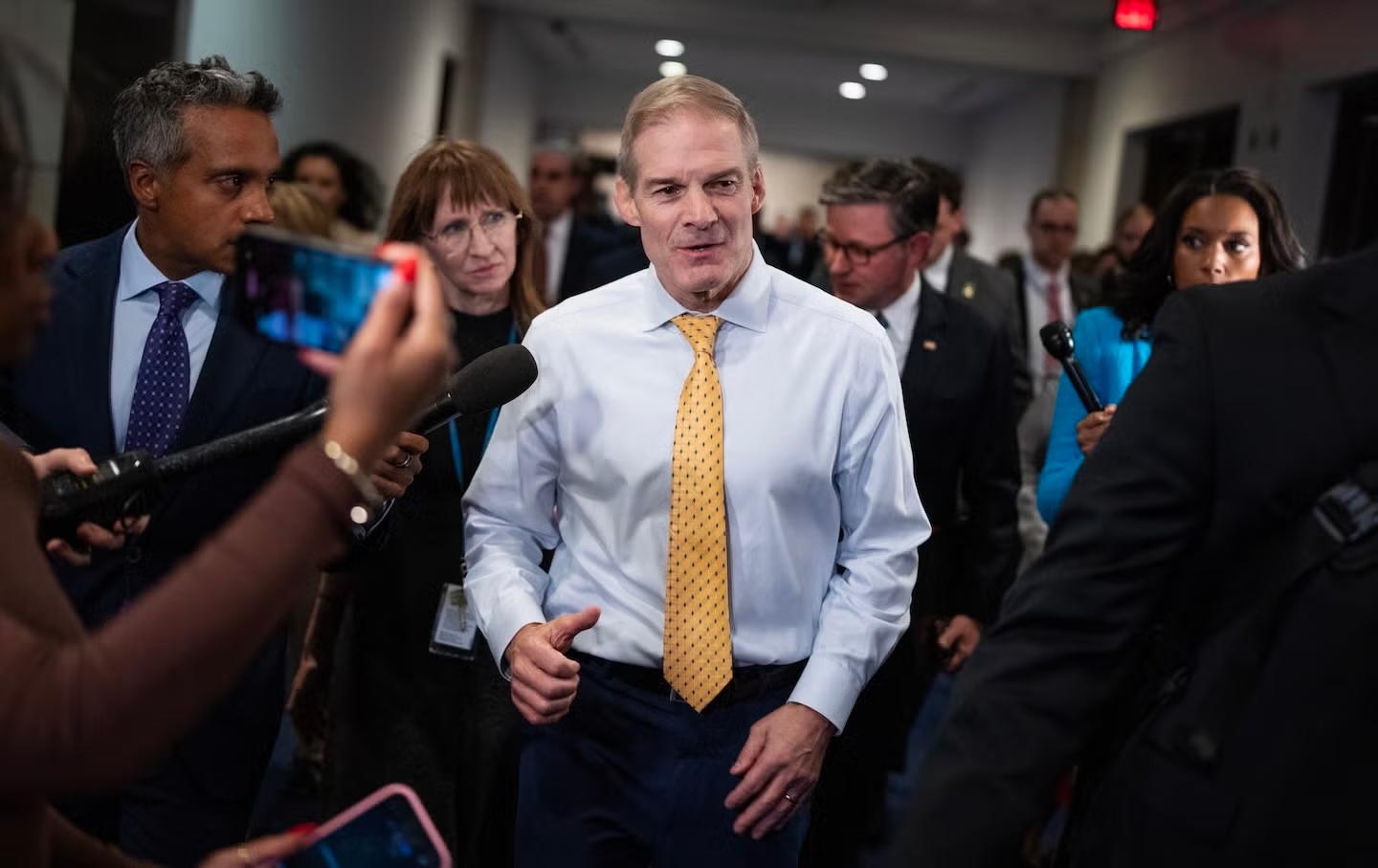
The Ohio representative was once too extreme for GOP leadership. Not anymore.
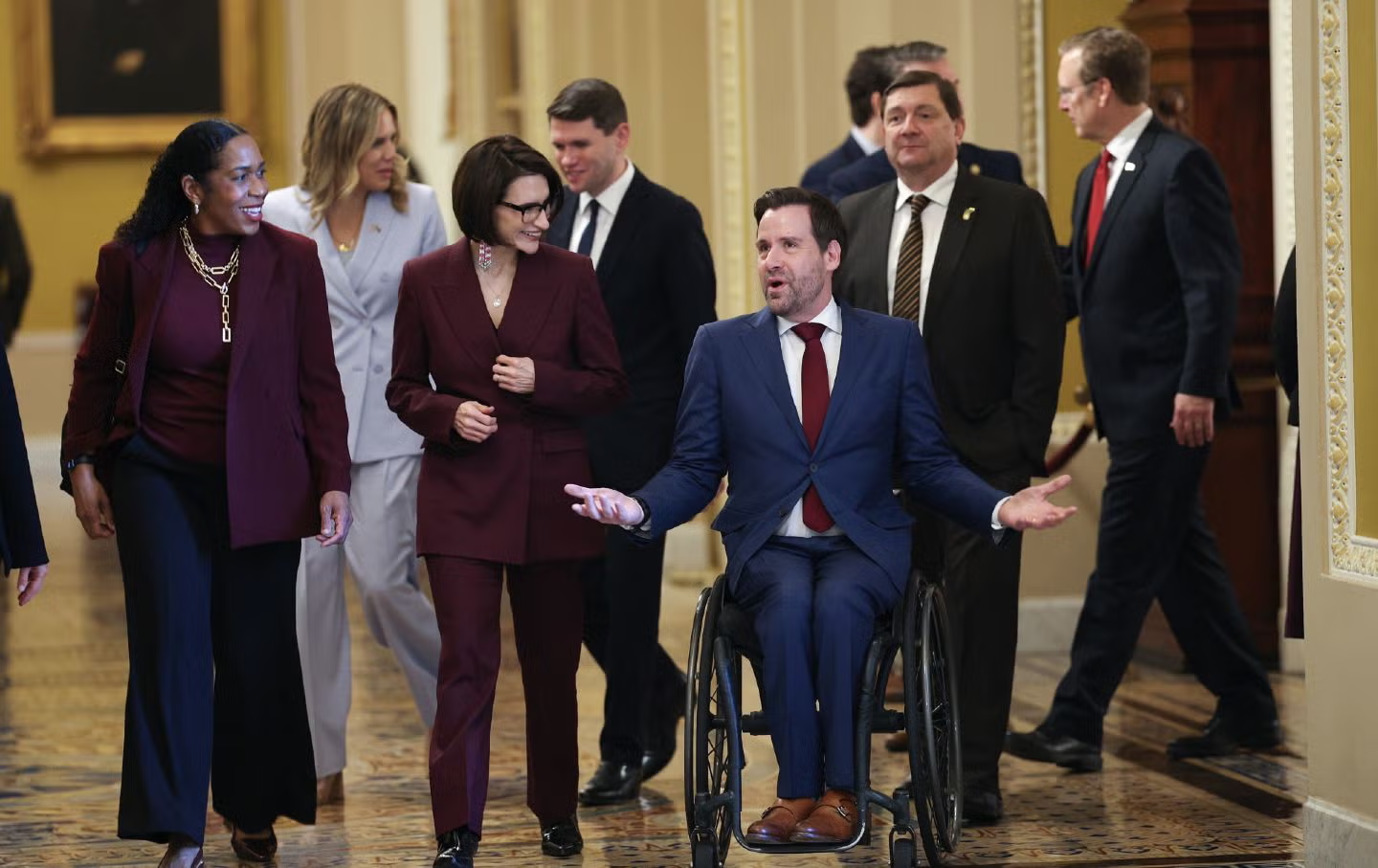
Third Way says moderates won Democrats their majorities. But 25 of the party’s 32 Senate candidates explicitly ran against the billionaire class.

To win in 2028, Democrats must commit to doing a full Supreme-Court Press—and breaking the power of the court for good.

Last week’s midterms were a powerful repudiation of MAGA, but the fight against oligarchy will be a longer struggle.