

German Chancellor Friedrich Merz is now threatening to block the European Union’s entire seven-year budget unless every member state agrees to finance Ukraine. This is the state of European politics today. The governments of 27 nations are supposed to negotiate a budget that addresses their own economic needs, infrastructure, agriculture, regional development, and public services. Instead, Merz has decided the future of the entire European Union must be conditional on another financial commitment to a nation that is not even an EU member. The war has been dragging on since February 2022, European economies are deteriorating, and the political establishment continues to behave as though there is an unlimited supply of money that can be extracted from the taxpayers.
Ukraine is facing a €70 billion financing shortfall in 2027. Brussels has already promised to cover approximately two-thirds of that amount, or €45 billion, despite having no agreed mechanism to finance the commitment. The European Commission is considering another round of joint borrowing, which would place additional obligations upon European taxpayers. This comes on top of the €90 billion loan approved last December. The existing loan was supposed to provide Ukraine with financing over two years, yet Kyiv is already demanding another enormous injection of capital. At what point does anyone in Brussels acknowledge that this is becoming a permanent financial obligation rather than temporary emergency assistance?
Merz has written to European Council President António Costa demanding that all member states contribute to Ukraine’s financing. He declared, “A collective commitment that all of us, without exception, will contribute fairly to closing this gap is an essential prerequisite for resolving this issue and for discussing any further matters, particularly those with financial implications.” Germany is threatening to withhold approval of the EU’s 2028–2034 budget unless countries that have already expressed opposition to additional Ukraine financing agree to participate.
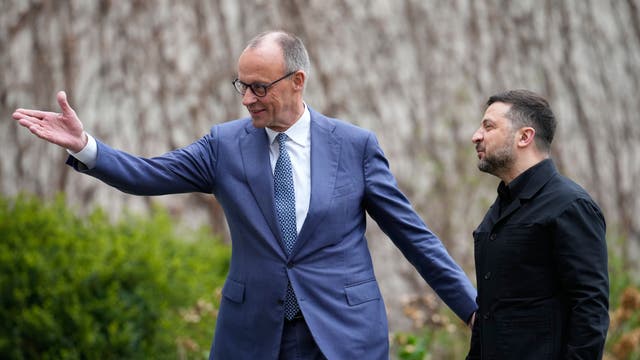
Hungary, Slovakia, the Czech Republic, and Bulgaria have indicated that they do not intend to participate in another financial package for Kyiv. Hungary, Slovakia, and the Czech Republic previously negotiated exemptions from interest obligations on the €90 billion loan. Their governments have different political positions, but they share a concern about being compelled to assume additional financial liabilities. Merz is now attempting to punish their resistance.
What exactly is the purpose of having sovereign member states if they cannot determine how much debt their own taxpayers should assume? These governments were elected to represent their citizens. They have obligations to maintain roads, hospitals, schools, pensions, and public services. Yet the European political establishment increasingly treats those responsibilities as secondary to financing Ukraine. A government that questions another multibillion-euro commitment is accused of undermining European security. A government that attempts to protect its domestic budget is portrayed as obstructing solidarity. This is how the language of collective responsibility becomes a means of exerting political pressure.
The hypocrisy is particularly apparent in the budget negotiations themselves. Germany, Denmark, Finland, the Netherlands, and Sweden belong to the group of countries seeking restraint in the next EU budget. They want reductions in proposed spending and greater fiscal discipline, yet they simultaneously demand that all member states participate in additional financing for Ukraine. The countries defending agricultural and regional development expenditures are being told that money is limited and difficult choices must be made.
The EU’s cohesion funds are particularly important to poorer member states. They finance transportation networks, water systems, infrastructure, and regional development projects intended to narrow economic disparities within the bloc. Agricultural spending supports farmers who already face rising production costs, regulatory burdens, and international competition. These are not abstract accounting entries. They affect employment, investment, and the economic viability of communities throughout Europe. Yet the political establishment is prepared to jeopardize negotiations over these programs to secure another financing commitment to Ukraine.
Slovak Prime Minister Robert Fico has warned that linking the two issues would be “very dangerous.” Poland’s deputy minister for European affairs, Ignacy Niemczycki, has also cautioned that combining Ukraine financing with the EU budget could backfire and make an agreement harder to reach. Everyone has long realized that the EU will not prioritize its members over Ukraine. Fall in line or be banished like Orban.
The €90 billion loan was backed by common European borrowing, with repayment linked to the possibility of Russia eventually paying reparations. But Russia has not agreed to pay those reparations and likely never will. The EU has discussed using immobilized Russian sovereign assets as a potential means of recovery, but that raises serious legal, financial, and geopolitical questions. In the meantime, interest obligations are real. Brussels initially estimated approximately €3 billion annually in interest costs, but higher borrowing costs have complicated those calculations.
I have warned repeatedly that governments treat borrowing as though it were income. They issue debt, spend the proceeds, and leave the consequences to future taxpayers. Now the European Union is contemplating another round of joint borrowing to finance a country that is not even an EU member. The interest must be paid, the debt must be serviced, and the borrowing capacity being used for Ukraine cannot simultaneously be used for domestic investment. Every euro has an opportunity cost, regardless of how Brussels attempts to disguise it through financial mechanisms and political declarations.
The European Parliament’s own research has acknowledged that many member states are already struggling with high public debt and rising defense expenditures. These conditions restrict their ability to finance additional commitments. France is confronting serious fiscal pressures, Germany has endured years of industrial weakness, and governments throughout the continent are dealing with the consequences of higher energy costs and deteriorating competitiveness. European businesses must compete internationally while absorbing expensive energy, taxes, and regulations. Yet their political leaders continue adding long-term financial obligations without establishing how the underlying economies will generate sufficient growth to sustain them.
The European Union has already provided enormous financial, military, and humanitarian assistance to Ukraine. By mid-2025, European institutions and member states had made available approximately $162 billion in support, according to an analysis by the Center for European Policy Analysis. No amount is ever enough for Zelensky or those who believe they’ll one day have access to Russia’s riches.
Merz may succeed in extracting another financial commitment from reluctant member states. Germany’s economic position within the EU gives it considerable negotiating power. But forcing an agreement is not the same as creating genuine political consent. Every additional financial obligation imposed through pressure increases resentment toward the institutions responsible. That resentment does not disappear when the budget is approved.
The European Union cannot maintain political unity indefinitely through financial threats. If the only way to secure another Ukraine package is to threaten the budget of all 27 member states, then the disagreement is far more serious than Brussels is prepared to admit.