

The entertainment company Live Nation has been promoting and running concerts in venues around the world for decades, bringing touring acts to whatever concert hall or amphitheater an artist could fill. Now, the company is focusing specifically on designing and building its own concert halls to fill holes in the market, making what the company calls a “meaningful, long term investment” in projects to rethink the experience of seeing live music.
Since its merger with Ticketmaster in 2010, a deal then estimated at $2.5 billion, the company has grown to become one of the biggest players in the global live entertainment market. Quietly, the company now known as Live Nation Entertainment has also been steadily developing a wide-ranging portfolio of concert venues. These include 713 Music Hall, opened in 2021 in Houston, a purpose-built 1,500-capacity venue in Hong Kong called Tides, and renovations like the 2024 revamp of Brooklyn’s Paramount Theater. The venues are styled to embrace their locales while using Live Nation’s experience serving audiences and artists to inform their design.
For a company that promotes concerts, sells their tickets, and now hosts the events in its own venues, it’s about as vertically integrated as live entertainment can get. And the upside is substantial. For venues it owns, the company can take a much larger share of ticket sales, which are on track for more than 10% growth year-over-year, according to the company. In the second quarter of 2026 alone, concerts brought in $6.4 billion in revenue from 49 million fans worldwide.
“As demand for live music continues to grow globally, venue infrastructure hasn’t always kept pace,” says Jordan Zachary, global president of venues at Live Nation. “We’re focused on expanding in key markets where artists want to play and fan demand is strong, but the right venues don’t yet exist.”
This effort is kicking into high gear. Live Nation has opened several new venues so far in 2026, including the Truth, a 4,400-capacity concert hall that opened in Nashville in October. Designed by Blueprint Studio, Live Nation’s in-house development and design operation, the Truth is sized to fill a missing middle in Nashville, which has no shortage of music venues, but few that float between the size of a theater and a major arena.
“You could go through almost any market in the country and even internationally, and there’s gaps in it,” says David Codiga, president of Blueprint Studio. “We’re not trying to solve every one of them. But that’s where it starts.”
Named for a famous quote from prolific Nashville country songwriter Harlan Howard (“All you need to write a country song is three chords and the truth”), the venue was designed to embrace Nashville’s songwriting legacy. Mietra Beyer, head of brand and experience development at Blueprint Studio, says the design of the Truth was intended to create a closeness between performers and audience members. Howard’s songwriting quote became the project’s conceptual framework.
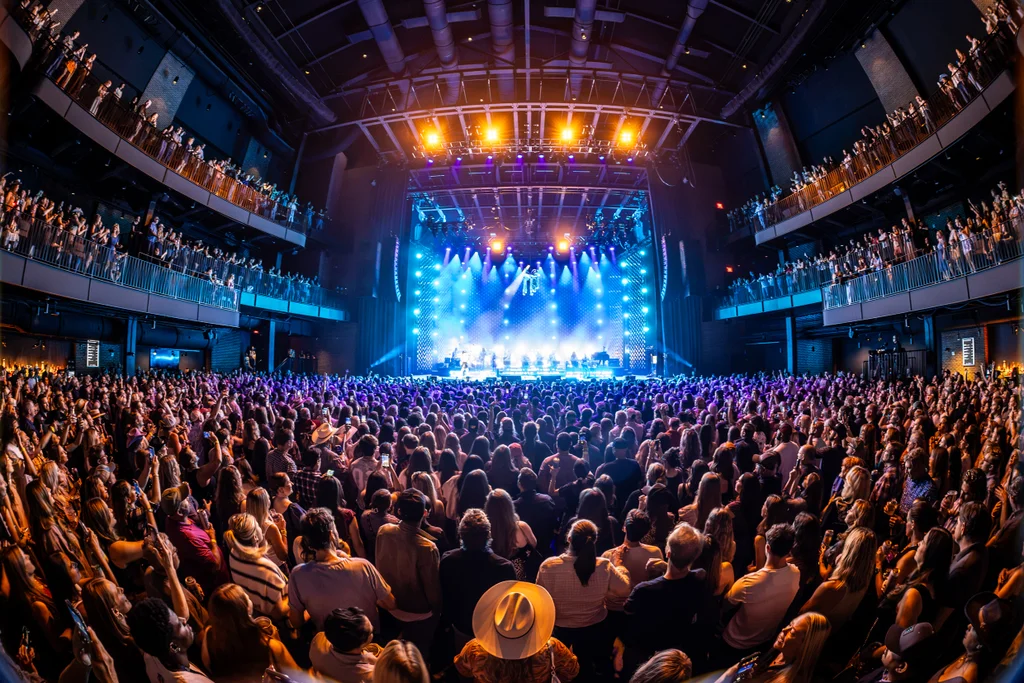
Good sightlines and good sound are table stakes for this kind of venue, Beyer says. The designers spent extra effort on other experiential elements of concertgoing, making sure the entire audience also felt as close to the performer as possible. Every seat in the building, including those on its second and third U-shaped balconies, is no more than 150 feet from the stage.
Most theaters enable sightlines in the back seats by ramping their balconies, which means those seats end up being farther from the stage. The compact arrangement of the Truth’s audience areas allowed those back seats to maintain views and proximity. “The different levels really stack almost directly on top of each other, which means when you go up, you don’t have to go out. So everything feels tighter on the stage,” Beyer says.
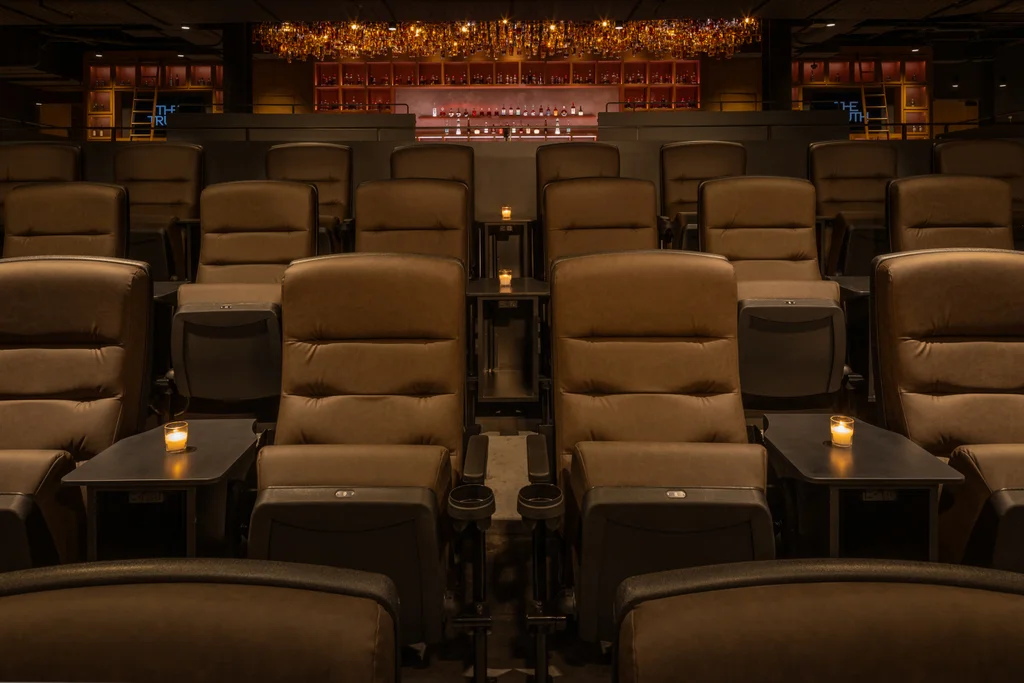
The venue’s material palette is a tight mix of brick, wood, steel, leather, and black denim, creating an understated atmosphere that Beyer hopes will recede and allow the music to be the focal point. But the space also has some special elements that jump out, including a dedicated space for a letterpress that can print set lists for every show, creating a bespoke merch option.
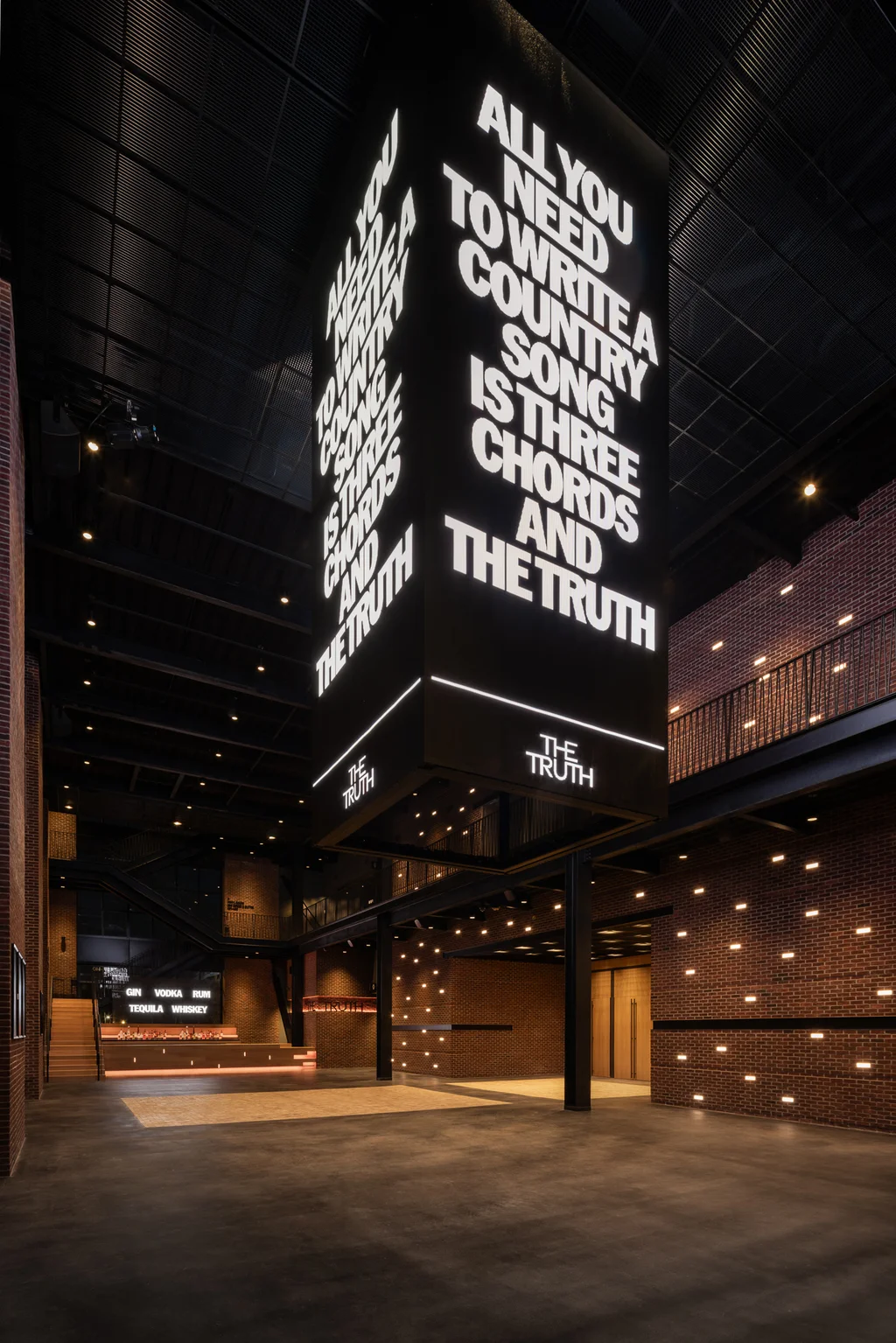
Another novelty is the digital chandelier in the main lobby, which displays lyrics from the artist performing on any given night. Rather than an anonymous corporate music hall or a detail-free black box theater, Beyer says the Truth and other Live Nation venues try to create spaces that “get to know the communities and the places, the neighborhoods, the cities that these venues are going into, and really ingratiate ourselves with those cultural truths and build something that can only exist in a specific place.”
What makes a local venue?
The Truth is one of many new locally-influenced venues Blueprint Studio has designed recently. Another 4,000-plus-capacity venue called the Wylie opened in Pittsburgh in September, and a 1,200-capacity venue called Satellite Music Hall opened in Memphis a few months before the Truth. The company has projects underway in cities big and small, including Richmond, Virginia, Birmingham, Alabama, Bentonville, Arkansas, Waukee, Iowa, and Shakopee, Minnesota.
Capacities range from several hundred to a few thousand. Larger venues are also in development in São Paulo, Brazil, and Lima, Peru. By the end of 2027, the company expects to open more than 25 venues with capacities of 3,000 or more. Live Nation declined to disclose how much it is investing in this venue development effort, but in its second quarter 2026 earnings statement the company estimated $800 million of total capital expenditures for venue expansion and enhancement projects.
Live Nation’s expanded involvement in running and developing venues has sparked controversy. In 2024, the U.S. Department of Justice launched an antitrust lawsuit against the company, arguing its merger with Ticketmaster had led to its becoming a monopoly over the live entertainment industry. The company later settled the case with the DOJ, but a coalition of 34 states continued pursuing the case.
Earlier this year, a federal jury found that Live Nation Entertainment had a harmful monopoly over big concert venues. Some communities have also fought against Live Nation, including the city of Portland, Maine, which enacted a 750-foot buffer zone between concert venues, potentially scuttling plans for a Live Nation venue near an existing concert hall.
The company says its venue development approach is intended to fill gaps in the market. “The goal is to create venues that are built for live music, reflect their communities, and give artists the best possible environment to connect with fans,” says Zachary, the company’s global president of venues.
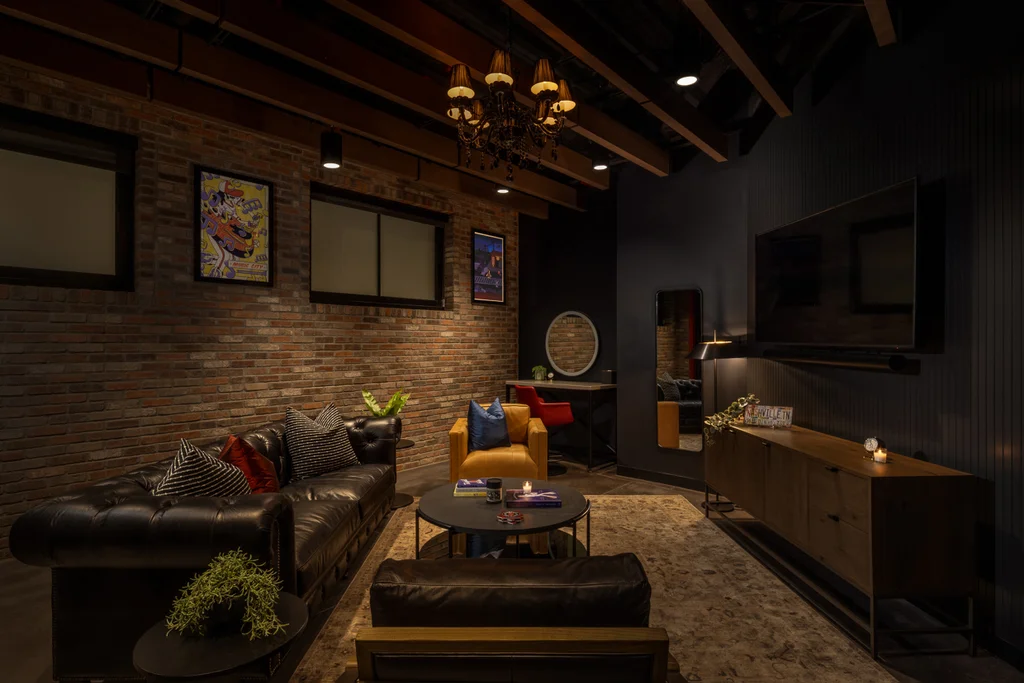
The company says its projects offer something new and different to the markets where they’re expanding. Many of the smaller venues, including the Truth, include premium spaces such as vinyl rooms, which are connected lounges that play up the local music scene and history, while offering audience members a backstage-like atmosphere. At the Truth, the vinyl room is an homage to Nashville’s United Record Pressing, one of the longest-running vinyl record manufacturers in the U.S.
For a company as big as Live Nation, it could be hard to see just how local a venue in its global portfolio can be. But the benefit of its size and its long experience in concert promotion and ticket sales means that the company can dial in on specific music markets, and put the effort into designing around them.
“We listen to our fans a lot. We listen to our artists a lot,” says Codiga. “We have so many people so connected to the process that we have a ton of information when we start the design of any venue.”