
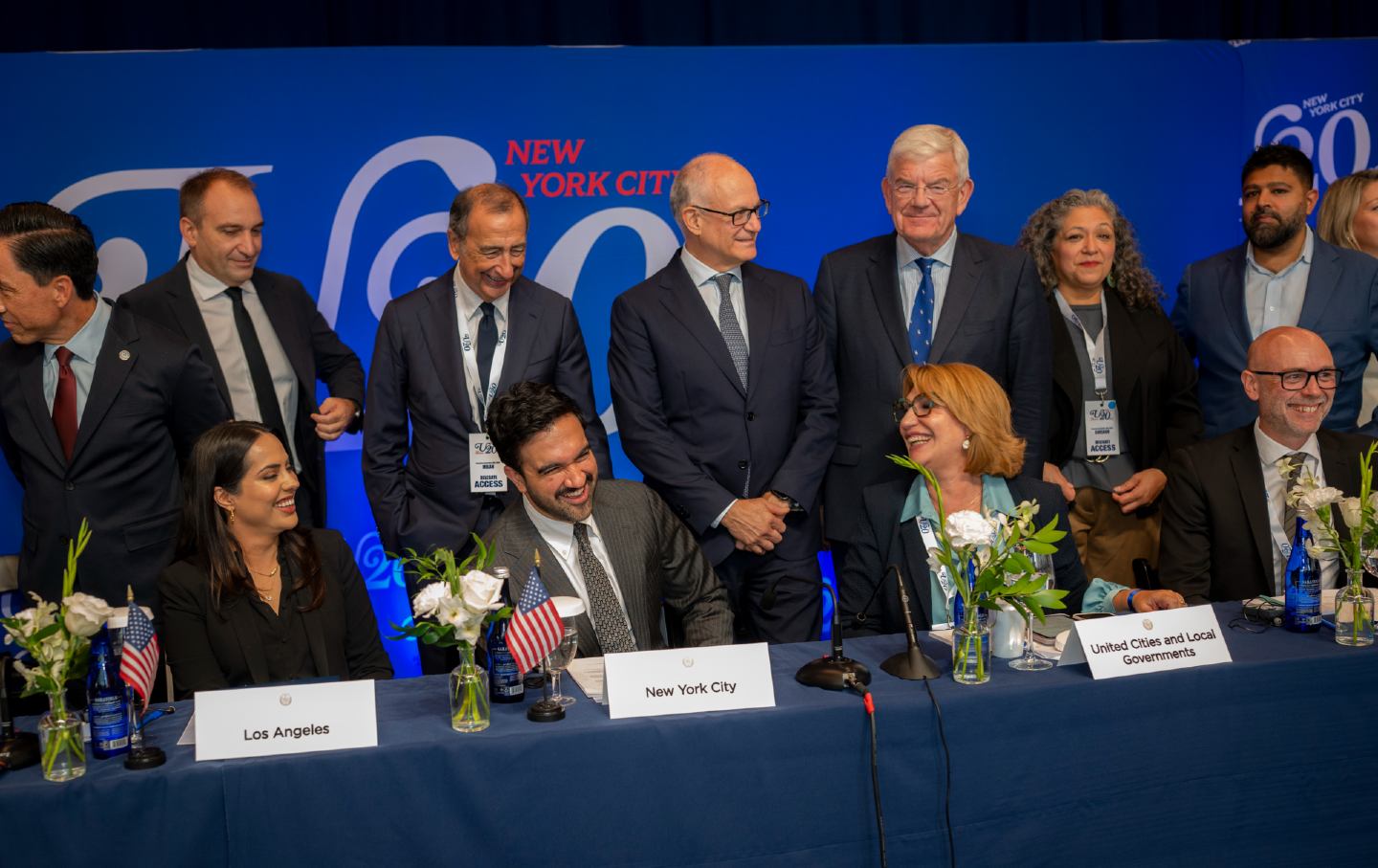
Mayors at the Urban 20 Summit worked across borders to confront the climate crisis at the local level.
Amid tumultuous global politics and pervasive climate catastrophe, mayors from around the world have a clear message: Cities are taking up the mantle of climate action and international cooperation, regardless of whether their national governments choose to do so.
From intensified rains and flash flooding in New York City to fatally hot temperatures in Paris, cities are often on the front lines of climate change. In recognition that metropolitan areas are both uniquely vulnerable to these impacts and crucial laboratories for innovative solutions, climate was a core theme at the 2026 Urban 20 Summit (U20) cohosted by Los Angeles and New York City from September 19 to 21.
The Summit, organized by C40 Cities and United Cities and Local Governments, brought together mayors and senior leaders from more than 30 cities to discuss the pressing and deeply interconnected challenges of climate change, migration, and housing. The Summit occurred on the heels of High-Level Week at the United Nations and Climate Week NYC, both of which will see national governments discuss the future of climate action in a world already surpassing the 1.5-degree warming limit enshrined in the Paris Agreement.
With the shadow of these upcoming national government dialogues looming, mayors and city leaders made clear that climate action remains a priority for local leaders, and that tackling the climate crisis cannot be done in isolation from other interconnected social issues or without international cooperation.
Their unity and commitment represented a sharp contrast to the nationalist, xenophobic, and anti-science rhetoric of a surging far-right politics. Under the right-wing Trump administration, the US has withdrawn for the second time from the leading global climate treaty, the Paris Agreement, and undertaken a seismic environmental deregulation. Climate skepticism has also become a staple of right-wing parties in the United Kingdom and Europe. Meanwhile, New Zealand recently passed a law shielding fossil fuel polluters and the government from climate liability.
Yet, in a powerful display of global solidarity, the Summit made clear that many cities are working to move in the opposite direction. “Climate change does not stop at our borders, which makes collaboration all the more important, and as the mayors…said, we are more powerful when we work together,” Louise Yeung, chief climate officer of New York City, told attendees.
Current Issue

In the spirit of collaboration, mayors shared their experiences of piloting programs to mitigate and adapt to wide-ranging climate impacts. These solutions ranged from helping communities establish decentralized, renewable energy systems in Amsterdam to electrifying buses in Jakarta to expanding tree canopy and public-private sector electric vehicle partnerships in Miami. “Cities learning from each other is going to be more important…[as] climate change is accelerating,” said Eileen Higgins, mayor of Miami.
While national governments have significant tools at their disposal to reduce emissions, “they don’t transform a street, renovate a building, or plant a tree,” said Emmanual Grégoire, mayor of Paris. “Cities are where climate policies become a tangible reality for residents. In cities, climate change ceases to be a global phenomenon and becomes a firsthand experience.”
As cities undertake these bold climate initiatives, the U20 Communique ratified at the Summit asks national government leaders to support them. It calls for the G20 to support cities with climate finance, include them in national road maps for climate resilience and just energy transitions, integrate climate action with housing and economic development, give cities access to critical environmental and public health data, and strengthen public trust in climate science and communication.
“More and more, [people] experience [government] through the heat wave that keeps them up at night and the storm that floods their street,” said New York City Mayor Zohran Mamdani. “That is why mayors from around the world came to New York to say that cities need the power and resources to protect and deliver for the people we serve.”
The Summit and the Communique also highlighted the importance of equity in the climate conversation. As Grégoire and Jan van Zanen, mayor of The Hague, noted, climate change impacts often reveal and exacerbate underlying inequalities in cities. A commitment to climate action means a commitment to climate justice, and addressing climate change as an integral part of migration and housing strategy. Mayor Yvonne Aki-Sawyerr of Freetown spoke of creating good green jobs for young people in the sanitation sector, while Mayor Roberto Gualtieri of Rome emphasized the importance of requirements for housing that included green design features.
The Summit further affirmed that many cities maintain their support for multilateral institutions, which have been central to global climate action, at a moment when these institutions, as New York City mayor’s chief of staff Elle Bisgaard-Church remarked, are “under duress.” The UN, for instance, faces a significant liquidity crisis, and the international rule of law is being tested by multiple wars in the Middle East and Europe. Several UN representatives spoke at the Summit about the importance of making space for cities at the organization and municipalities’ value in implementing climate policy and Sustainable Development Goals on the ground.
Simultaneously, mayors and city leaders made clear that their climate action would not only rely on traditional multilateral processes. “Climate action isn’t [just] something we’re going to talk about at COP,” said Aki-Sawyerr, referencing the upcoming annual UN Climate Change Conference, where key international climate negotiations take place. “It’s something we’re going to be doing everyday.”
Between the reemergence of right-wing red-baiting and Donald Trump’s use of the chilling National Security Presidential Memorandum–7 to criminalize left political organizing, we’re seeing McCarthyism reborn before our eyes.
This assault on democracy cannot be ignored or wished away. Resisting it requires bravery in the face of threats and repression, a steadfast commitment to the truth, and the unwavering belief that we can—and will—overcome this darkness.
We must have an independent media that sets the record straight, unearths corruption and abuses of power, and advances a politics of justice and dignity for all if we’re to win this fight.
That’s why I’m writing to you today. This September, The Nation needs to add 100 monthly donors to sustain our progressive journalism. Your contribution makes the next investigative report, the next truth-speaking column, and the next pathbreaking essay all possible.
I hope you’ll support our work with a recurring donation today. If you donate $10 or more a month, we’ll send you a brand new “Hands Off the Free Press!” sticker to recognise your commitment to our cause. Please, donate today.
Onward,
Katrina vanden Heuvel
Editor and Publisher, The Nation
More from The Nation
Amy Westervelt’s new book, Brought to You By, exposes the deep history of today’s “information pollution.”
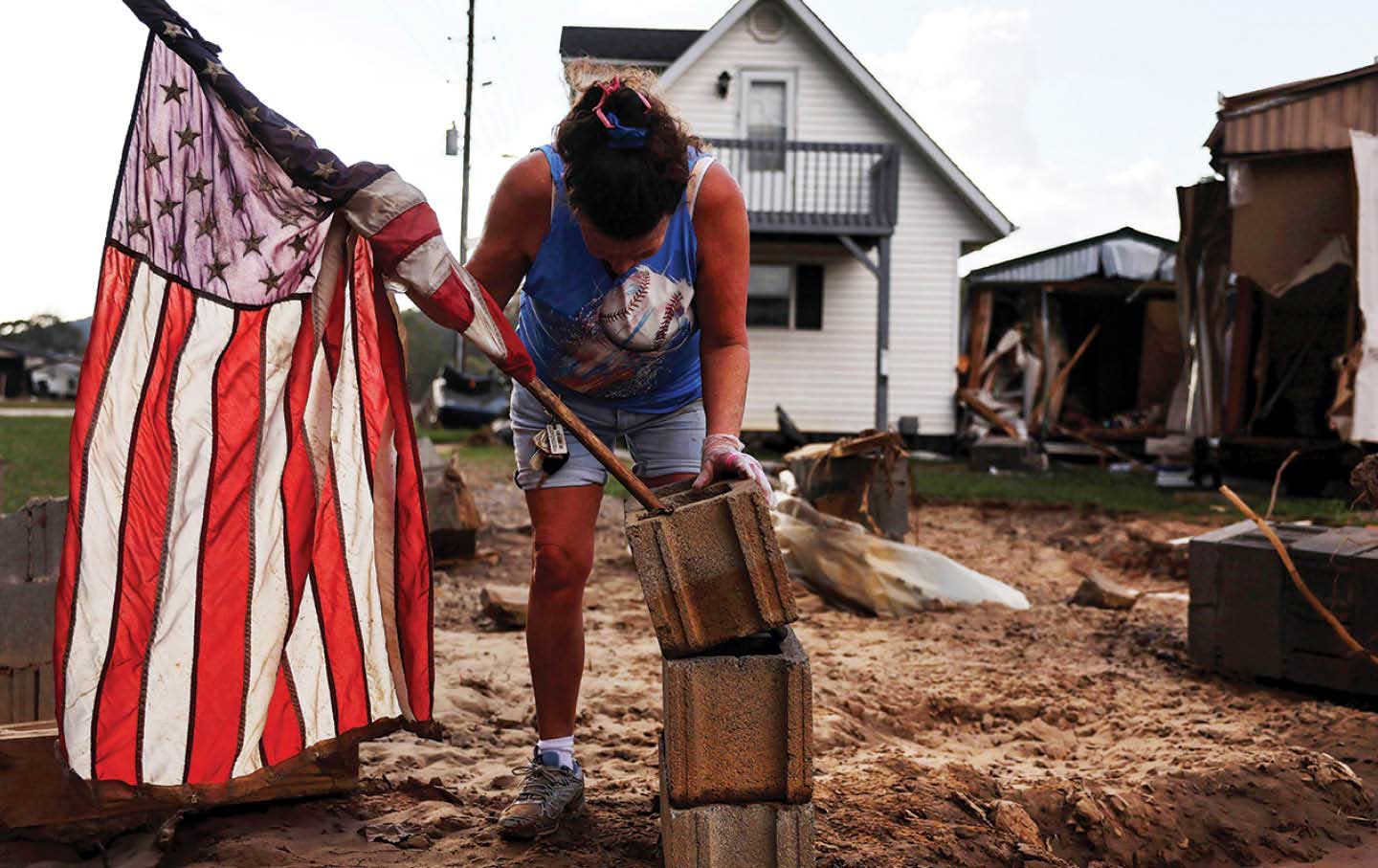
The state has become a testing ground under an eviscerated FEMA and a missing-in-action “recovery czar,” Michael Whatley, with big political ambitions.
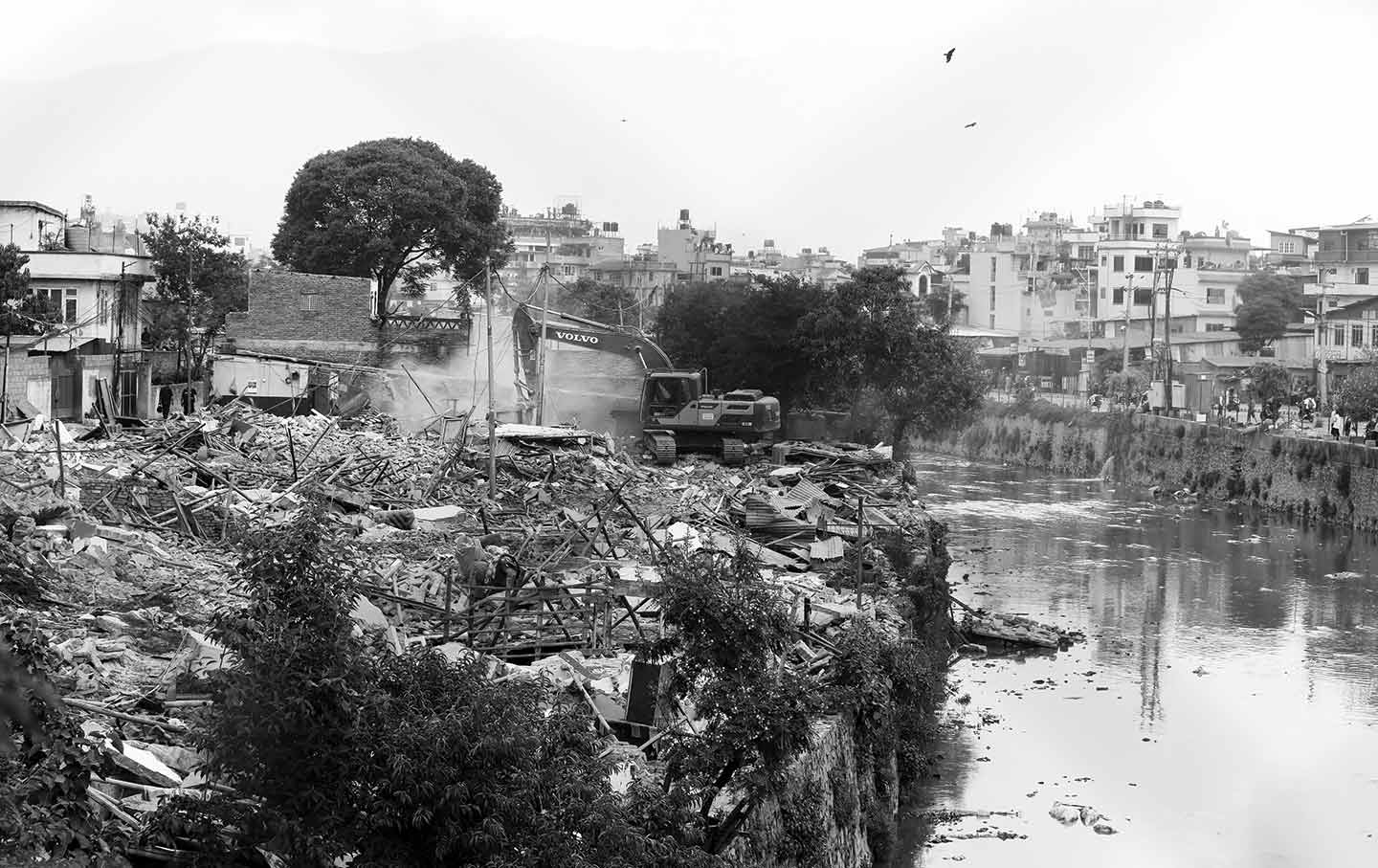
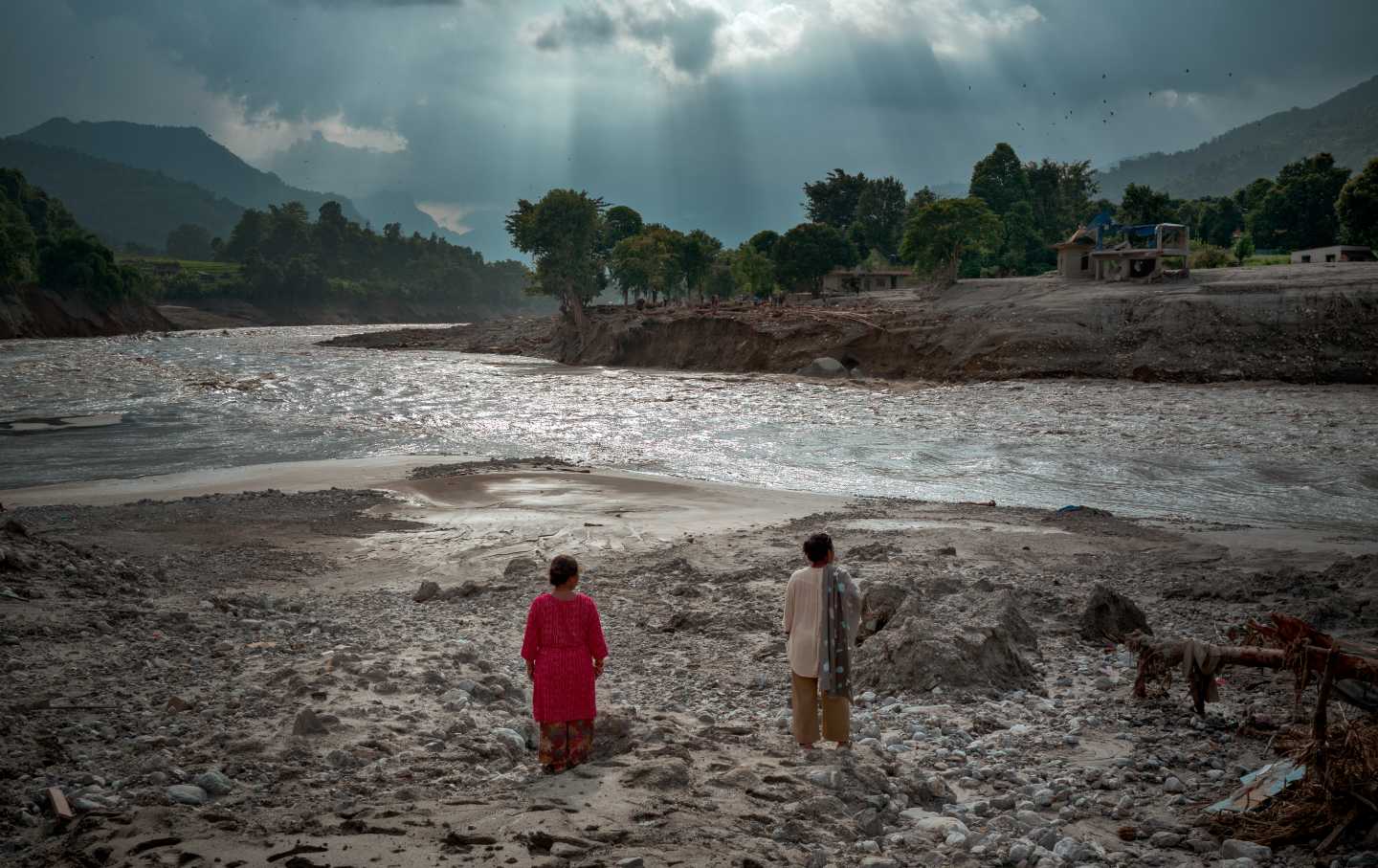
A year after its Gen Z uprising, Nepal faces a struggle not only for democracy and human rights but for climate survival.

Working in the wilderness could not satiate my intellectual impulses. But for the protagonist of Hothouse Bloom, the binary between mental and physical labor is what calls her.
Even CBS News and Bari Weiss, who fired the outlet’s entire climate unit, have used Nepal as a watchword for environmental disaster.
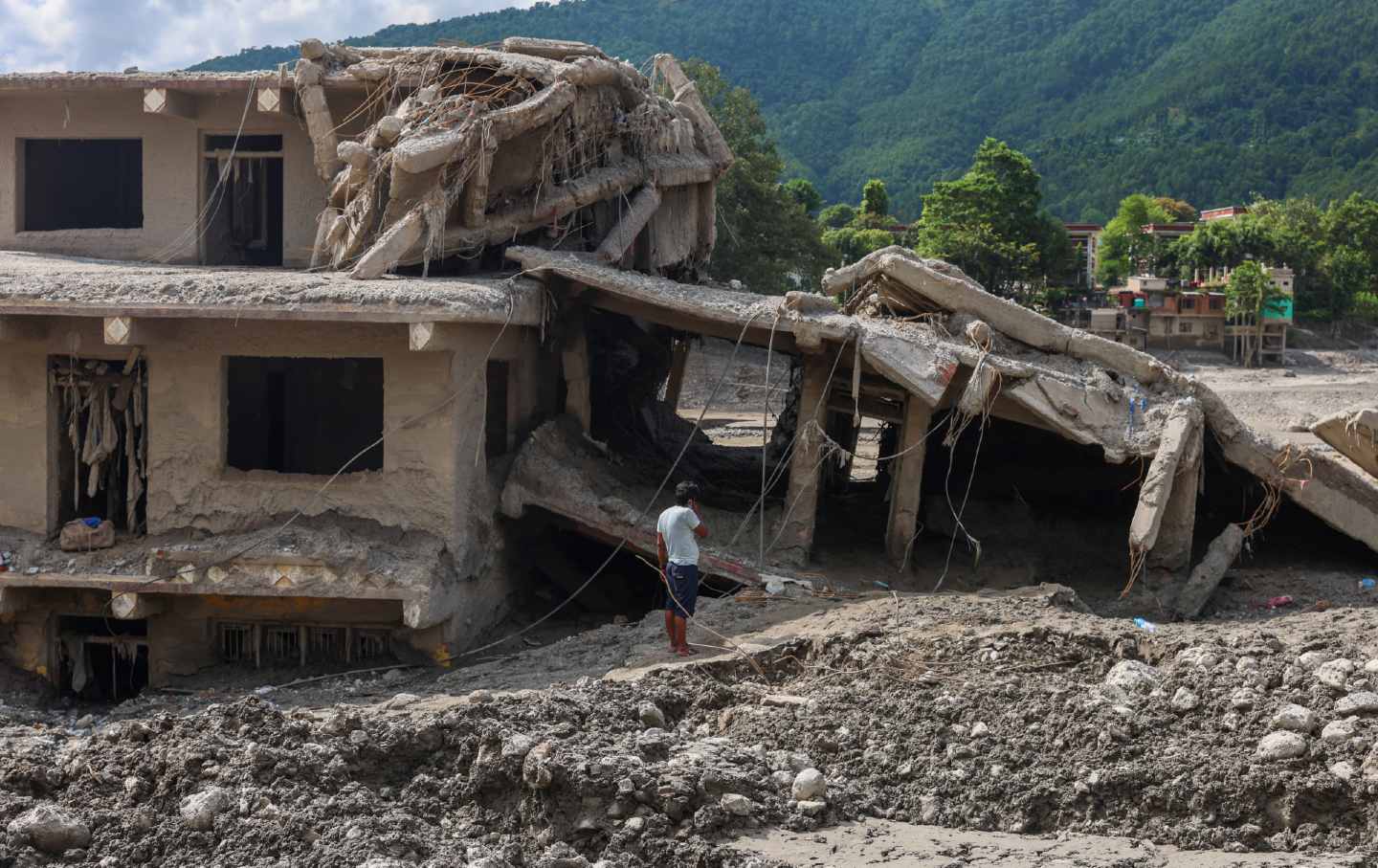
An interview with Nepali UN climate expert Manjeet Dhakal on what the massive Himalayan flood will cost Nepal.