
Key Takeaways
- Ian Rogers has spent his career at the intersection of tech and culture.
- He previously led Apple Music and is now driving security and AI strategy at $1.5 billion security startup Ledger.
- Ledger protects digital private property, like Bitcoin and other cryptocurrencies, using secure hardware chips similar to those in credit cards.
He helped build the soundtrack of the internet age, turned a scrappy MP3 player into a Yahoo acquisition, sold Beats to Apple and helped launch Apple Music.
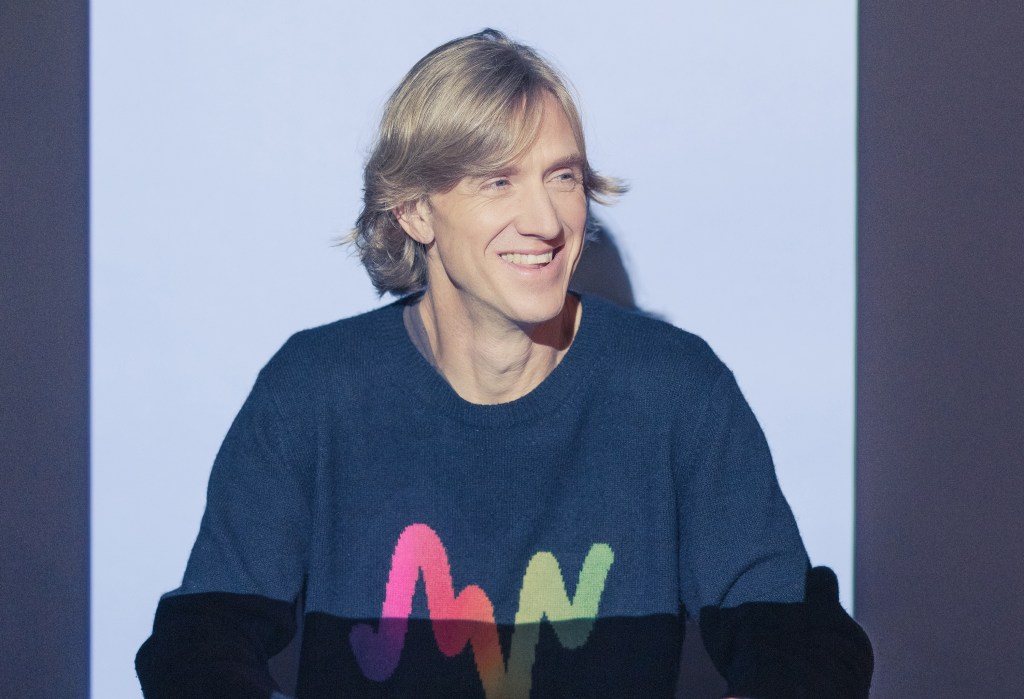
Now, Ian Rogers is betting that the next great consumer platform is not music, but security for your money and identity. He’s building the future from rural Italy as chief human agency officer at the $1.5 billion security startup Ledger.
From Indiana to Apple Music
Rogers grew up in Indiana and discovered computer science in the early 1990s, right as the web took off. “It was a great time to study computer science because when I started, it was sort of like rocket science to people, and then by the end, people were trying AOL,” he tells Entrepreneur. “I was there at the very beginning of the web and made some of the first websites.”
That curiosity quickly collided with music. He dropped out of grad school to go on tour with a band, which took him to California. There, he helped build a popular MP3 player that he sold to AOL in 1999, then another music application that Yahoo acquired. Rogers went on to run Yahoo Music from 2003 to 2008.
He then built Beats Music and sold it to Apple in 2014. He joined Apple as senior director of Apple Music, overseeing the launch of the music streaming service in 2015.
Rogers still feels a personal connection to that product. When he met his now-wife, she questioned his loyalty to Apple Music over Spotify. His answer about why he chose Apple Music was simple: “Because I built it.”
Rogers’ time at Apple continues to shape how he thinks about products.
From Apple, Rogers brought a simple, powerful lesson: People buy an ecosystem. “When you buy an iPhone, you’re not buying a piece of hardware,” he says. “You’re buying blue bubbles instead of green bubbles; you’re buying AirDrop; you’re buying FaceTime. That’s part of the experience of being an Apple user versus being an Android user.”
Apple’s genius was creating an integrated experience that “just works,” from the iPod in the early 2000s through to the modern iPhone, Rogers explains.
After Apple, Rogers moved to Paris to serve as the chief digital officer of LVMH, helping take a traditionally offline luxury group from 3% ecommerce in 2015 to 100% online during the pandemic.
Why Ledger exists
Nicolas Bacca, Eric Larcheveque and Joel Pobeda founded Ledger in 2014, and Rogers came on board in 2021 as its chief experience officer. Ledger was last valued at $1.5 billion in 2021.
The Paris-based company was founded on a simple premise: The same secure chip technology used in credit cards and passports could be used to protect digital assets. To that end, the startup makes physical hardware crypto wallets that store the digital passwords, known as private keys, needed to access and move cryptocurrency. The devices keep these sensitive keys completely offline, so hackers cannot access them.
The company’s latest piece of hardware, the $179 NanoGen 5, claims “to protect your assets and identity.” Ledger has sold more than eight million devices.
Today, Rogers’ title is chief human agency officer; he pushed for the change as Ledger doubled down on AI security. “AI security is a top three problem for humanity at the moment,” he says. “What I realized is that that’s not about AI; it’s actually about humans. The job here is keeping humans secure and in control.”
Advice for founders
Rogers says that if he were 25 years old today, he would learn to manage AI agents.
“We will all become the managers of AI agents,” he says. “The same way that we’re all kind of information peddlers today, we’re having an intelligence revolution that is actually computers taking actions on our behalf.”
In his view, humans will be “end to end” by starting processes and validating results, while agents handle the “middle to middle” work. “Therefore, the same way that we all have computers on our desks today, we will all be having agents on our desks tomorrow,” Rogers says. “And so, if I were 25 years old, I would be building skills at managing agents. Period.”
How do you actually do that? Rogers’ advice is to get your hands dirty with the tools, just as he did with web technologies in the 90s and 2000s.
For founders, his hard-won lesson is about market selection and pain points.
“I think the main thing I’ve gotten wrong in my career is sizing the market relative to my own personal interest,” he admits. “There’s a joke that every college student has a business idea that’s about either music or bars, because that’s what they know.”
What impresses him now are founders who dig deep into pressing, unsexy problems, like logistics and insurance, and uncover real pain. “You find the pain, and then you make a painkiller. You don’t make a painkiller and then go looking for pain,” he says.
Key Takeaways
- Ian Rogers has spent his career at the intersection of tech and culture.
- He previously led Apple Music and is now driving security and AI strategy at $1.5 billion security startup Ledger.
- Ledger protects digital private property, like Bitcoin and other cryptocurrencies, using secure hardware chips similar to those in credit cards.
He helped build the soundtrack of the internet age, turned a scrappy MP3 player into a Yahoo acquisition, sold Beats to Apple and helped launch Apple Music.
Now, Ian Rogers is betting that the next great consumer platform is not music, but security for your money and identity. He’s building the future from rural Italy as chief human agency officer at the $1.5 billion security startup Ledger.
From Indiana to Apple Music
Rogers grew up in Indiana and discovered computer science in the early 1990s, right as the web took off. “It was a great time to study computer science because when I started, it was sort of like rocket science to people, and then by the end, people were trying AOL,” he tells Entrepreneur. “I was there at the very beginning of the web and made some of the first websites.”