
At a time when the US president is actively interfering in elections, these groups, activists, and officials are protecting their local systems from federal sabotage.
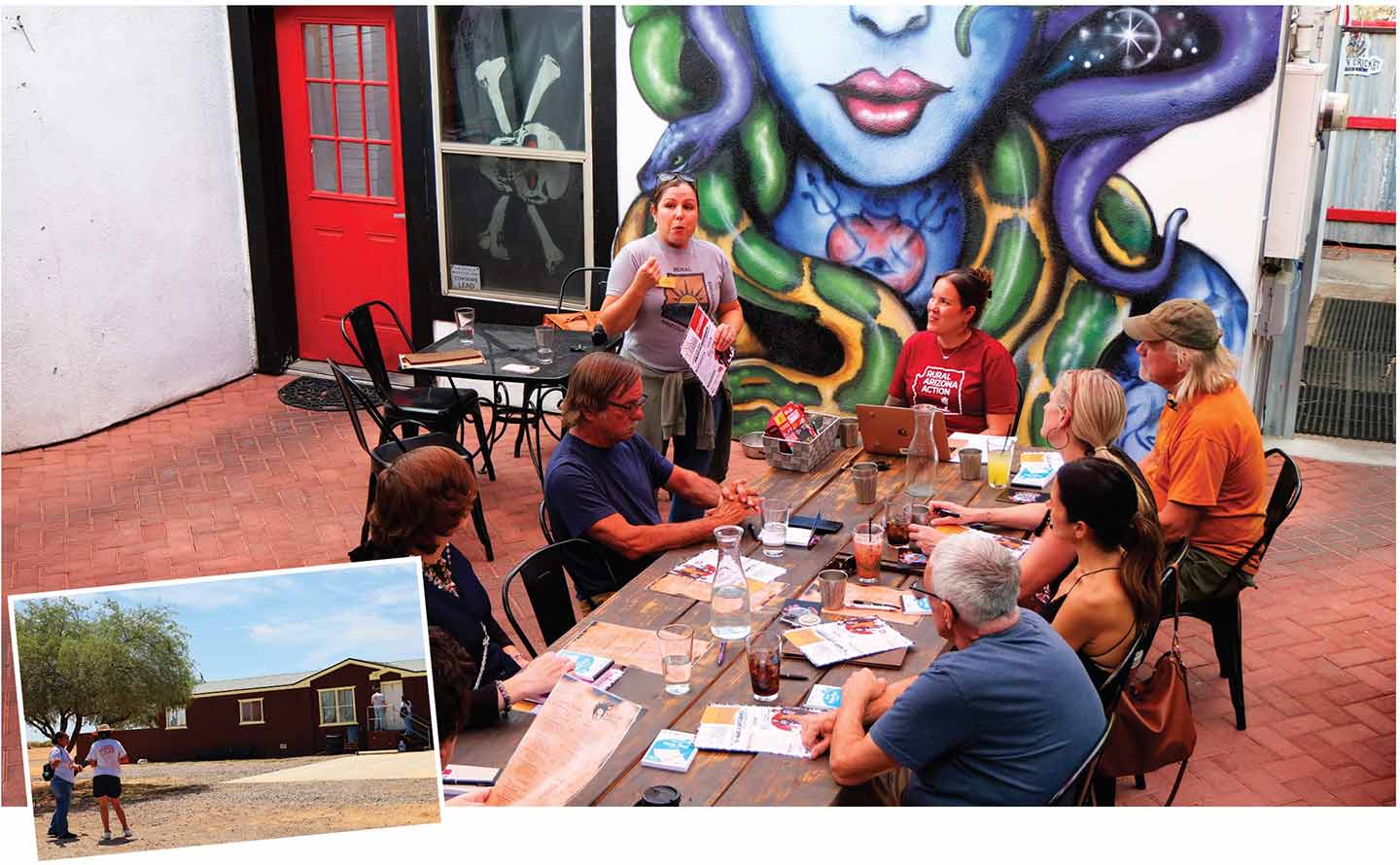
Coolidge, Arizona, is a speck of a town, a place of small wooden bungalows, a few diminutive mom-and-pop stores, and a large number of churches, the steeples of which compete in height with the nearby saguaro cacti. It emerges like a heat mirage out of the desert dust an hour’s fast drive southeast of Phoenix. Blink and it could disappear just as quickly.
From its small, single-story cinder-block offices in Coolidge, Rural Arizona Engagement, or RAZE, is coordinating a campaign to expand voter rights, to educate its mainly Latino target population (nearly one-third of the state’s population is Latino) on how and where and when to vote this fall, and what to do if federal agents attempt to intimidate them at polling places or if their mail-in ballots are not delivered by the US Postal Service. It is also lobbying for the creation of voting centers around the state, which can be utilized by residents from any part of the county they are in, and more drop boxes, which would increase access for voters in remote parts of the state, who often have to drive hours to cast a ballot.
RAZE believes that the expansion of voting centers is crucial for increasing turnout. After all, President Donald Trump continues to undermine the electoral process, from forcing out the members of the independent federal Election Assistance Commission (EAC) to pressuring lawmakers to pass the SAVE America Act, which the Brennan Center for Justice has said “would be the most restrictive voting bill ever passed by Congress,” while the US Supreme Court has already weakened the protections provided by the Voting Rights Act. RAZE and its allies scored a major success earlier this year when, after a long and often acrimonious political debate, Apache County agreed to open voting centers. “It was a huge win,” Kassandra Alvarez, RAZE’s communications director, tells me in the poster-bedecked conference room in the Coolidge offices. “It’s a huge example of how you can make change locally.”
Arizona activists are leading by example in other vital ways. Every day, even in the triple-digit heat that scorches the desert from May through October, idealistic young RAZE canvassers head into remote rural areas, urging residents to add their names to the state’s early-voting list so that they’ll automatically be sent a ballot in the mail. It isn’t easy work. During the 2024 election, canvassers reported having guns drawn and dogs unleashed on them. Some had their car tires slashed. Others had their locations publicized on social media. But the canvassers see their work as an integral part of a national struggle over voting rights, particularly with regard to ballot access and the integrity of the vote count, that is shaping up to be the crucial backstory of the 2026 midterms.
From Fulton County, Georgia, to Los Angeles, the assault on democracy has intensified in recent months. Election deniers are suing to gain access to local voter rolls, looking to purge them of people who they claim—without evidence—are not US citizens. And beyond interfering in the upcoming elections via his actions at the EAC and at the Capitol, where he has so far failed to persuade Congress to pass the SAVE America Act, Trump has signed a slew of executive orders in an effort to undermine the vote-by-mail systems that were used by at least 48 million voters in the 2024 elections—a disproportionate number of whom lean Democratic—and to mandate onerous voter-ID requirements. One such order, which is facing legal challenges, calls for the US Postal Service to run its own citizenship tests on prospective recipients and to refuse to deliver ballots to those it concludes are noncitizens. The Postal Service is reportedly drawing up plans to implement Trump’s order, floating the idea of not delivering ballots in states that refuse to hand over their voter rolls to the feds. It’s unclear whether the Postal Service will move ahead with those plans or whether a court will halt the order before the midterms.
“It’s a very dark time and moment for our country and our state,” says Sam Liebert, the Wisconsin state director of the voting-rights group All Voting Is Local, which has branches in eight battleground states, referring to the Trump administration’s pressure on Milwaukee and other Wisconsin cities regarding their voter rolls and vote-counting systems. “They will stop at nothing to meddle in elections.”
Current Issue
Come the midterms, Trump—whose approval ratings have been plummeting over his handling of the economy, immigration, and his war on Iran—may well try to seize control of the voting process by declaring a national emergency. But many of the most significant efforts to suppress the vote and manipulate election outcomes are more prosaic. They are already underway in counties around the United States, often pitting election deniers, who have captured more than 20 percent of recent statewide races for offices that oversee elections, and other Trumpist state legislators against groups like RAZE and the Democratic secretaries of state who have pledged to protect their electoral systems from federal efforts to sabotage them.
In Arizona and elsewhere, frontline defenders of democracy are using a combination of legal action, public education, and street protest to combat the election deniers’ growing array of tactics. In Democratic-controlled states, legislators are also passing laws that bolster protections against federal interference in elections. And 11 states, including, most recently, New Jersey, have passed versions of the now-neutered Voting Rights Act to stop racially based gerrymandering and to provide courts with the power to intervene in assaults on the voting process in their jurisdictions. But in states like Arizona, which has a GOP-controlled Legislature and a Democratic-controlled executive branch, these battles over access to the polls are sowing division between the different branches of government.
At every step of the way, Arizona’s GOP state legislators and conservative county elections recorders have attempted to block the efforts of the state’s emerging voting-rights coalitions, both within the Legislature and among grassroots organizations, to expand the number of people who vote. Taking cues from the Trump administration, conservative Arizona politicians have proposed a raft of laws—many of them based on draft legislation provided by think tanks like the American Legislative Exchange Council and Heritage Action, an advocacy organization for the Heritage Foundation—that would put up road blocks to mail-in voting, further tighten the state’s already stringent voter-ID laws, limit the number of voting centers and drop boxes for ballots, and set up surveillance cameras around the drop boxes. One particularly Trumpian legislator even proposed a bill that would have made ICE’s presence at voting sites not just legal but mandatory. In Maricopa County, the elections recorder, a MAGA figure named Justin Heap, has been ramping up challenges to voter registration and ballot signatures. “Every week there’s a new threat,” says Alex Gulotta, the Arizona state director of All Voting Is Local. “We’re doing the best we can to not get distracted.” (Heap’s office ignored interview requests from The Nation for this article.)
To date, most of these laws have not passed, and others have been vetoed by Democratic Governor Katie Hobbs. But in some counties, such as Apache County in the northeast or sprawling Yuma County in the southwest corner of the state, where many Indigenous people and immigrants without stable housing do not have mailboxes or permanent addresses (homes on tribal reservations typically do not have street addresses) where they can receive mail-in ballots, election-denying county recorders have, over the past couple of election cycles, dramatically increased the number of ballot signatures they challenge. They have also unilaterally set up surveillance systems around election sites, despite the objections of Arizona’s secretary of state, Adrian Fontes. RAZE and other advocates claim that in an era of indiscriminate ICE raids, these cameras are likely to intimidate eligible Latino voters and discourage them from voting.
“I think their intentions are bad,” says Edel Ochoa, a 19-year-old nursing student from the remote border community of San Luis. A soft-spoken and earnest young man with large glasses and a shock of curly hair, Ochoa is working as a political intern with RAZE this year and spoke to me at its Coolidge offices. “It’s a matter of fear,” he adds. “They’re trying to intimidate people.”
The organization’s chief of staff, Andrea Varela, wearing a maroon RAZE T-shirt emblazoned with a quote from Aristotle on the need for a strong middle class, concurs. “Our communities are being targeted,” she says. “And it’s not a coincidence. We see with everything going on at the national level that things become very difficult at the local level. It’s causing people of color and our communities to feel like they don’t have their voice.”
But a coalition of more than 20 voter-protection groups stands ready to intercede. The coalition is shoring up a people-powered monitoring system to ensure that neither the GOP nor federal agents intimidate people at polling stations statewide. The groups, ranging from the Lawyers’ Committee for Civil Rights Under Law and the American Civil Liberties Union to the Arizona Faith Network and the Arizona Native Vote Election Protection Project, are also ready to file legal challenges if election processes “are turned into political theater,” says Jenny Guzman of Common Cause Arizona. And they have gamed out how to quickly mobilize large numbers of people should the feds try to prevent vote counts from taking place in Phoenix and other large cities. “It’s an all-hands-on-deck situation,” Guzman says.
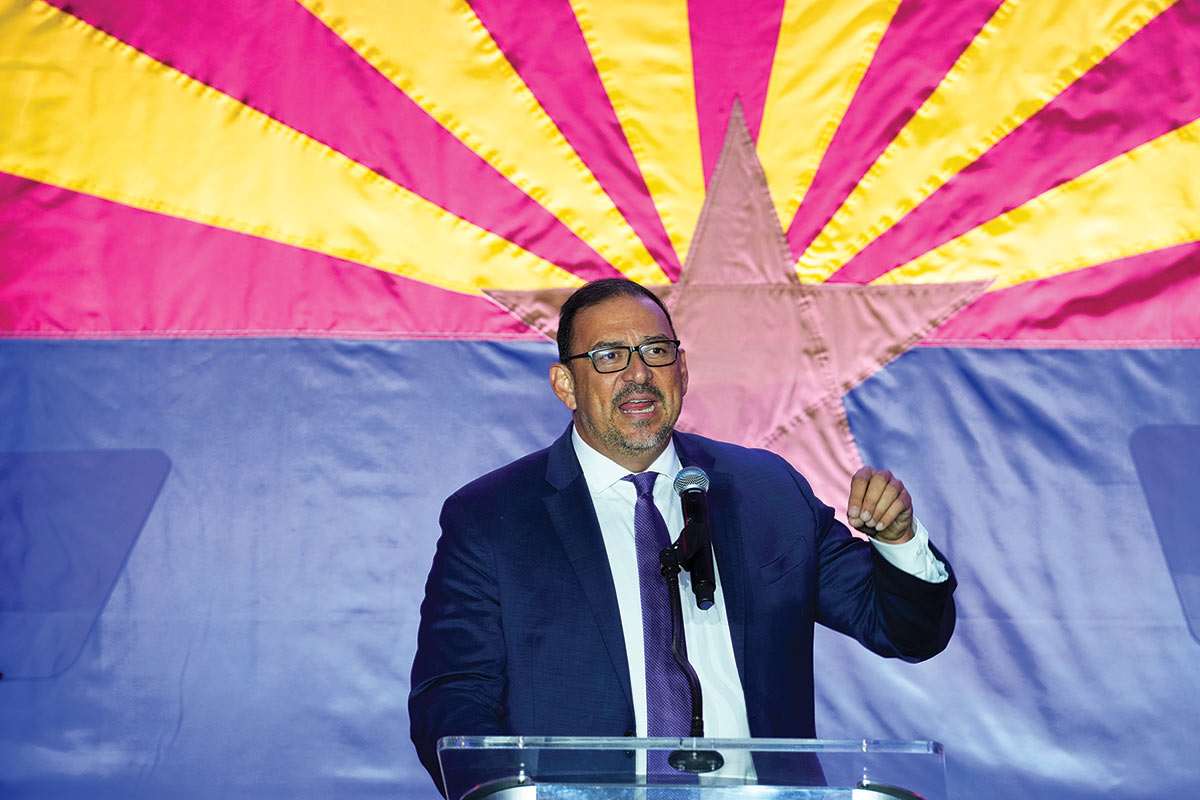
Sitting in his flag-and-balloon-festooned campaign headquarters in Phoenix, Secretary of State Fontes, wearing jeans and a deep-blue linen sports jacket, alternates between righteous anger at what the Trump administration is attempting to pull off and confidence that, when push comes to shove, the democratic system will hold.
“The fraudsters and the hucksters [are] trying to get the conversation turned away from the [pro-democracy] work that gets done,” he says. “They’re trying to make everybody scared, and they’re trying to make everybody intimidated…. You realize it is just noise and bluster. It has an anti-voter and anti-‘little-d’-democracy intent behind it.”
For months now, Fontes’s office has been deliberating about what will happen if the Trump administration sends ICE agents to polling places or uses other federal agents to disrupt the voting process. “We’ve got protocols for dispatching law enforcement,” he says. “Because ICE agents don’t have any legal authority to be at polling places whatsoever. We’ve got our courts that will be on a hair trigger, ready to issue orders as quickly as possible.”
That sense of urgency reverberates throughout the country. Poll after poll shows that the GOP is unpopular with voters, and dissatisfaction with the Trump administration is increasing among the all-important bloc of independent voters. Samantha Tarazi, the CEO of the election-protection organization Voting Rights Lab, whose team of policy experts has been tracking voting processes at the state level, is extremely concerned about the multitude of ways that Trump officials, unhappy with the election forecasts, might attempt to undermine the vote.
In her mind, Tarazi keeps coming back to what unfolded in Fulton County, Georgia, earlier this year, when the FBI, under the personal supervision of then–Director of National Intelligence Tulsi Gabbard, raided the election offices there in search of supposedly incriminating documents suggesting that the 2020 presidential vote had been manipulated. Agents walked out with hundreds of boxes containing ballots and other election-related materials; then, in the spring, the Justice Department demanded that Fulton County—which has a higher percentage of Black voters than most other parts of Georgia and a more Democratic political bent—turn over the names and addresses of every staffer, most of them volunteers, who worked in the 2020 election.
Tarazi has concluded that there is a three-part administration strategy in play: First, convince a critical number of Americans that the election system is broken; second, intervene in a way that triggers chaos over how individual states and counties administer elections; and third, use that chaos as a cover for the administration and its local allies to try to manipulate the election results, potentially even by declaring a national emergency and ordering federalized National Guard troops or ICE agents to seize voting machines and ballots. “They have an empowered network that knows the playbook and will apply it opportunistically,” she warns.
Astoundingly, in May, the administration attempted to create a nearly $1.8 billion fund to compensate participants in the January 6, 2021, insurrection against the peaceful transfer of power—a huge nod to the idea that Trumpian paramilitaries who come out to disrupt the electoral process in the future will be protected and rewarded. That same month, the Department of Justice scrubbed its websites of press releases related to Biden-era January 6 prosecutions. Election deniers and fabricators are now in positions where they will be able to challenge the election results and the integrity of the election process should the midterms not go MAGA’s way. And under Todd Blanche, Trump’s former lawyer and the acting attorney general, the DOJ shows every sign that it will be a willing participant in such conspiracies.
In early June, even while California’s primary votes were still being counted, Trump previewed this strategy when he repeatedly and baselessly declared Republican Steve Hilton, a former Fox News host, the winner of the gubernatorial primary. He fired off multiple social-media posts alleging, without any evidence, that California’s election administrators were “rigging” the results of that race and the Los Angeles mayoral race. Following his lead, the DOJ sent a federal attorney to LA to monitor the vote count, and the US attorney in the city announced investigations into potential vote fraud.
The strategy of disruption was also previewed in the FBI’s Atlanta raid. Dana Barrett, the Fulton County commissioner for District 3 and a former candidate to be Georgia’s secretary of state, has repeatedly argued that it was nothing more than a sloppily put-together fishing expedition aimed at normalizing, in the run-up to the midterms, the idea of federal agents seizing ballots. “If the FBI is able to come in with a criminal search warrant based on nothing and take ballots and break the chain of custody, then they can do it anywhere after the ’26 election if they feel they’re losing,” she says. “It’s critically important given the precedent this raid sets.”
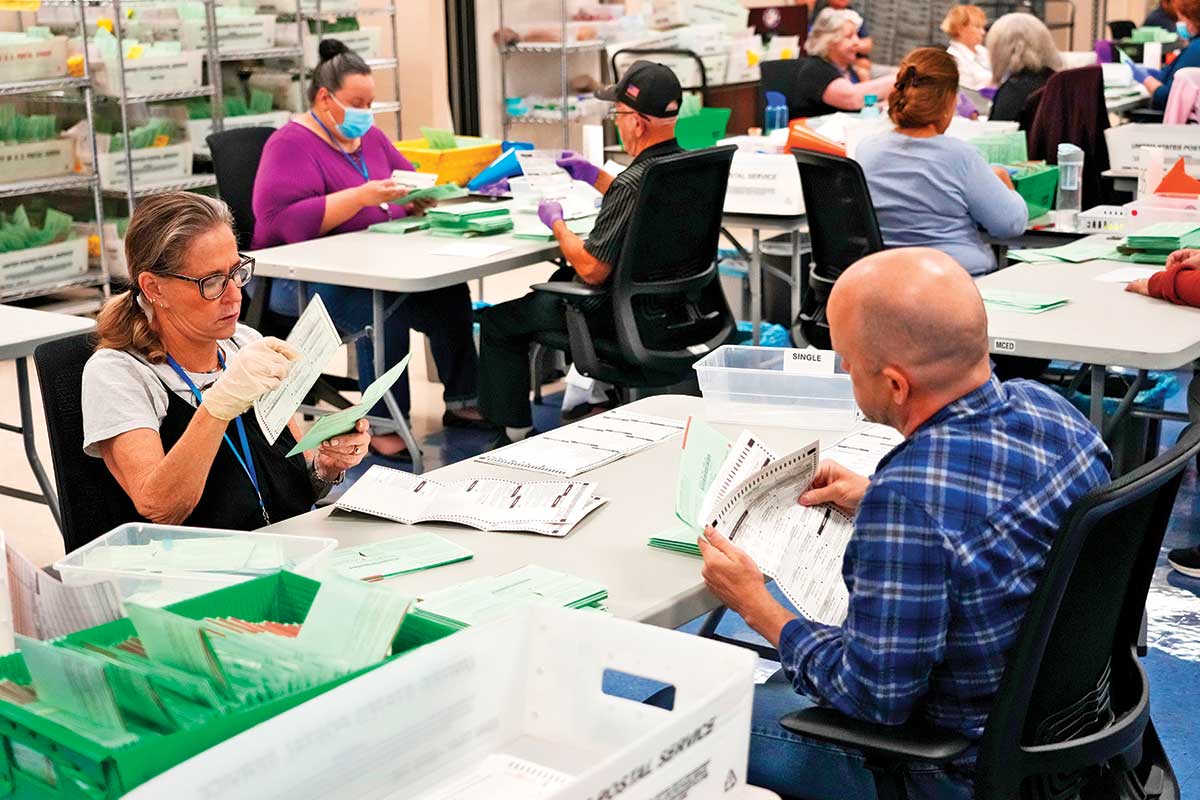
For months now, Trump has pressured Congress to pass the SAVE America Act, which mandates that the names on voter rolls match the names on voters’ birth certificates, among other things.
As many as 69 million women who took their husband’s last name at marriage could find their right to vote challenged by these astounding provisions. And even as the legislation flounders in the Senate, many GOP-controlled state Legislatures are locking into place similar provisions, especially around voter-ID requirements. At least 10 GOP-led states have also cooperated with the DOJ’s request to hand over sensitive voter-roll data. The administration will run this information against a federal citizenship database, even though there is no evidence that this will be—or even can be—an accurate process, thus creating a pretext for the Postal Service to refuse to deliver mail-in ballots to alleged noncitizens in these states.
Surrounded by family photos, a small potted plant on the window ledge, and a handful of books on the shelves in her Washington, DC, office, Hannah Fried, the CEO of All Voting Is Local, tells me that federal rule-makers aren’t even bothering to camouflage their intent. As she points out, then–Secretary of Homeland Security Kristi Noem bluntly stated that the SAVE America Act is all about “making sure the right people can vote.” Noem didn’t explicitly say who the “right people” were, but the implication was clear: This legislation is intended to skew the voter rolls against Democrats and in favor of GOP voters.
During past efforts at voter suppression, Fried says, legislation was generally aimed at preventing people from voting in the first place. Since 2020, it has also been aimed “at the back end, when ballots are being counted.” The after-the-fact seizure of the Fulton County ballots from 2020, as well as the recent seizure of ballots from the 2025 elections in Riverside County, California, ordered by local sheriff and erstwhile GOP gubernatorial hopeful Chad Bianco, are “trial runs to attempt to seize voting equipment or ballots from a live election,” Fried fears. “The president, his allies, starting with the 2020 elections, Project 2025, the executive orders—it’s not a trail of crumbs; it’s whole loaves of bread. This is a test for us, the American people. How are we going to respond?”
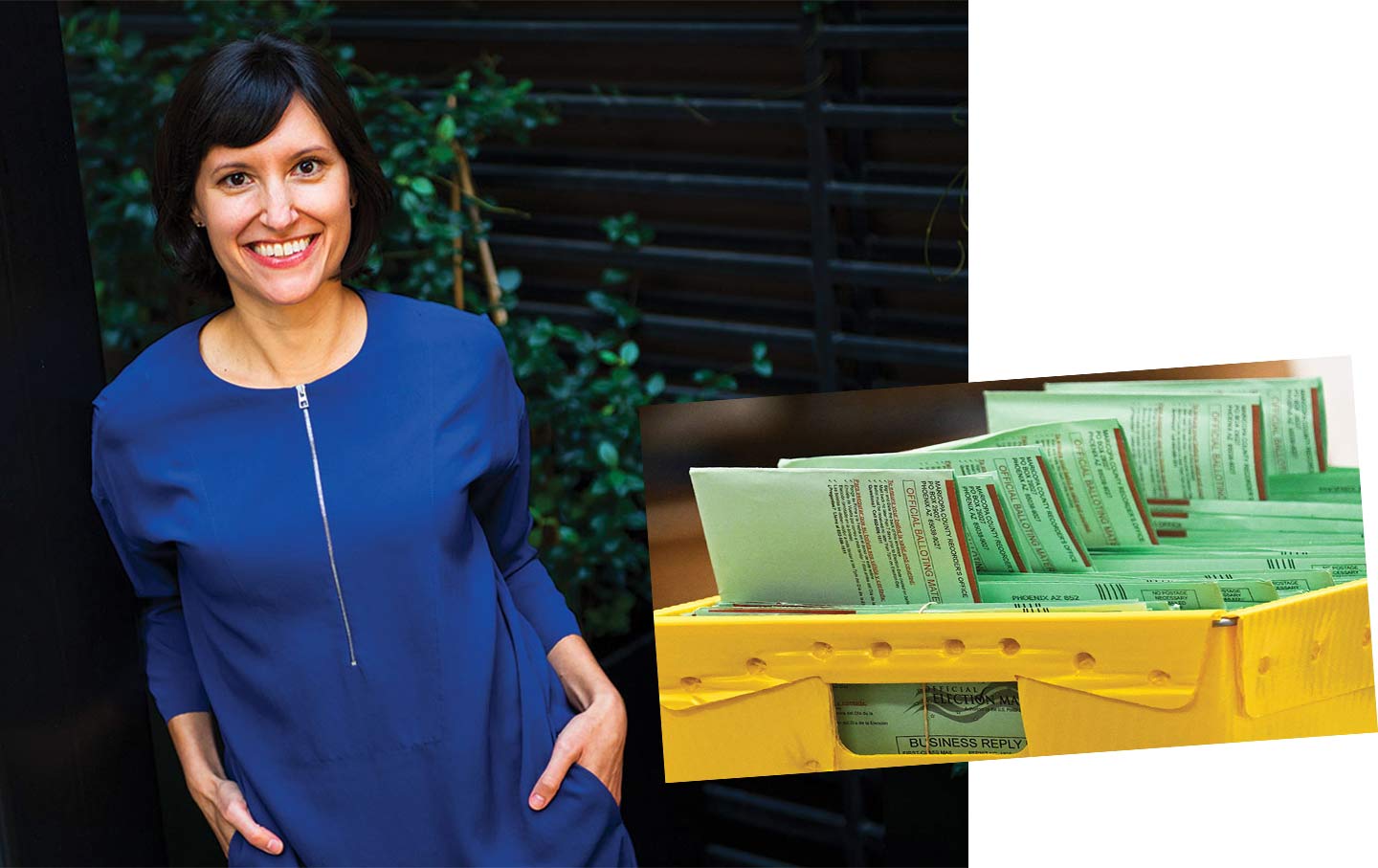
Voting-rights groups, election officials, attorneys, and grassroots activist organizations around the country are answering just that question. “People in this country have shown there are lines you cannot cross with them, and they are going to hold those lines,” Fried says in a moment of optimism.
“Overall, in my state, people would not take well to that kind of threat, seizing ballots,” says Kerry Durmick, the director of the Nevada chapter of All Voting Is Local. Nevada is one of the battleground states reportedly targeted by election deniers, who are looking to create a narrative that “the illegals” are voting in Las Vegas and in Reno. Durmick believes that if the feds came to the state to seize voting machines, huge numbers of Nevadans would hit the streets in protest. At the same time, she says, the secretary of state and other legal partners would immediately countersue.
In Colorado, Secretary of State Jena Griswold agrees. “The risk is a power grab,” she says. “We’re seeing that play out in real time.” Griswold’s office has hired an additional attorney to help with potential election litigation. State legislators have passed laws requiring that the chain of custody for ballots and for voting machines be maintained; this way, in the event that federal authorities attempt to seize ballots like they did in Georgia, the feds would at least have to ensure that there was transparency in how the ballots and the voting machines were handled. In other words, the FBI or any other agency simply couldn’t seize ballots and voting equipment and then return them days or weeks later after having perused them—and potentially interfered with them—in private. And the state’s governor is now empowered to declare an emergency in the face of federal interference to keep the elections on track.
“We’re going to require mail ballots be sent out sooner, open drop boxes sooner. We’re going to enable voting centers to stay open after 7 pm if there is, for example, a shortage of ballots,” Griswold says. “We are making clear that our election-interference statutes extend to outside of a drop box and voting center. We’re also making it clear in statute that a candidate seeking a third term of the presidency will never appear on the Colorado ballot,” she says, referring to Trump’s unconstitutional suggestion that he might run for a third term.
Ashiya Brown, the director of Michigan’s All Voting Is Local chapter, says, “We are dealing with an administration that does not believe in law and order. This administration does not honor checks and balances.” But, she says, the state’s governor, secretary of state, and attorney general are willing to go toe-to-toe with the feds to protect Michigan residents’ right to vote. And precisely because the feds have been telegraphing their intentions for months, voter-protection organizations have had plenty of time to prepare. “They aren’t really good at keeping their plans secret,” Brown says with a wry laugh. “Nobody is resting.”
Meanwhile, in Maricopa County, Arizona, home to the sprawling Phoenix metropolitan area, election deniers have sought one audit after another of the 2020 presidential election, despite an initial audit finding that Joe Biden did, indeed, win the state that year.
The GOP can’t win by the numbers, so it’s trying to prune the electorate, says Monica Sandschafer, the Arizona state director of the voting-rights group Mi Familia Vota. Sitting in her ninth-floor corner office, its huge glass windows overlooking sweltering downtown Phoenix, she explains the GOP’s voter-suppression strategies: “Black voters in the South, Latino voters here—disenfranchise people in order to maintain power. Obviously, it’s terrible at a federal level. But we are mobilized. We are organized, informed, and prepared for this fight.”
For Arizona Secretary of State Fontes, this is simply the new norm in Trump’s America. “This is the first time in the history of the republic that the president of the United States of America is actively moving the levers of power against the American public and their right to vote,” he says. “Trump is trying to pick his own voters. And that’s not how this country works—and everyone knows it.” At the very least, Trump’s efforts to interfere in the midterms are proof that he knows he has something to worry about if Democrats take control of Congress in November. “Donald Trump,” says Fontes, “is scared to death he’ll face accountability in Congress by demand of the American people.”
More from The Nation
Long before Francesca Hong’s current bid for governor, the party was revitalized when it nominated a Milwaukee “sewer socialist” for governor.

An unprecedented number of candidates in this year’s midterms are running outside of the two-party system. What’s more, a lot of them could win.
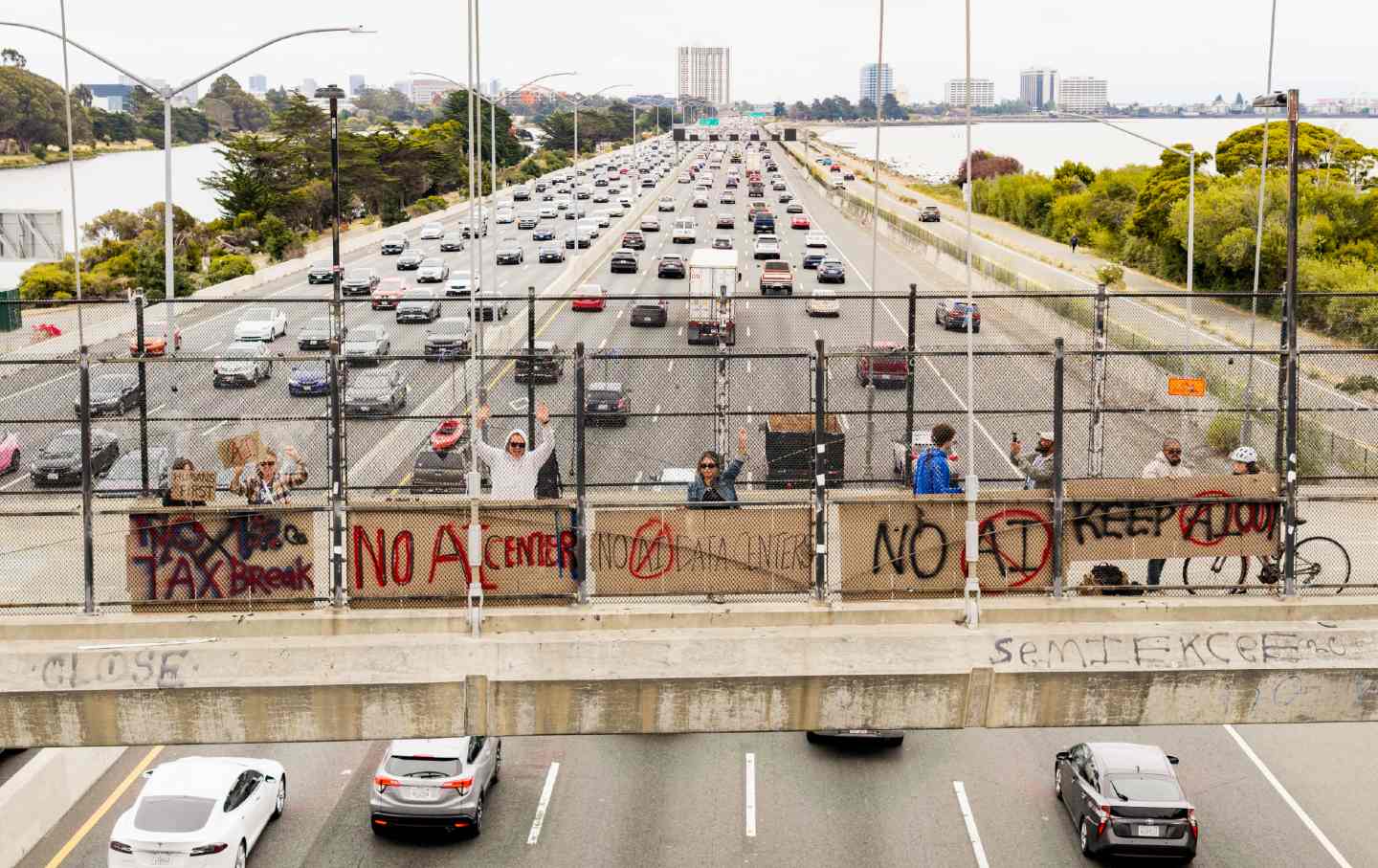
“The last thing we need is a loud, water thieving, light polluting, data center anywhere near our town (or any others for that matter).”
Militarists push for austerity to keep a disastrous war going.