
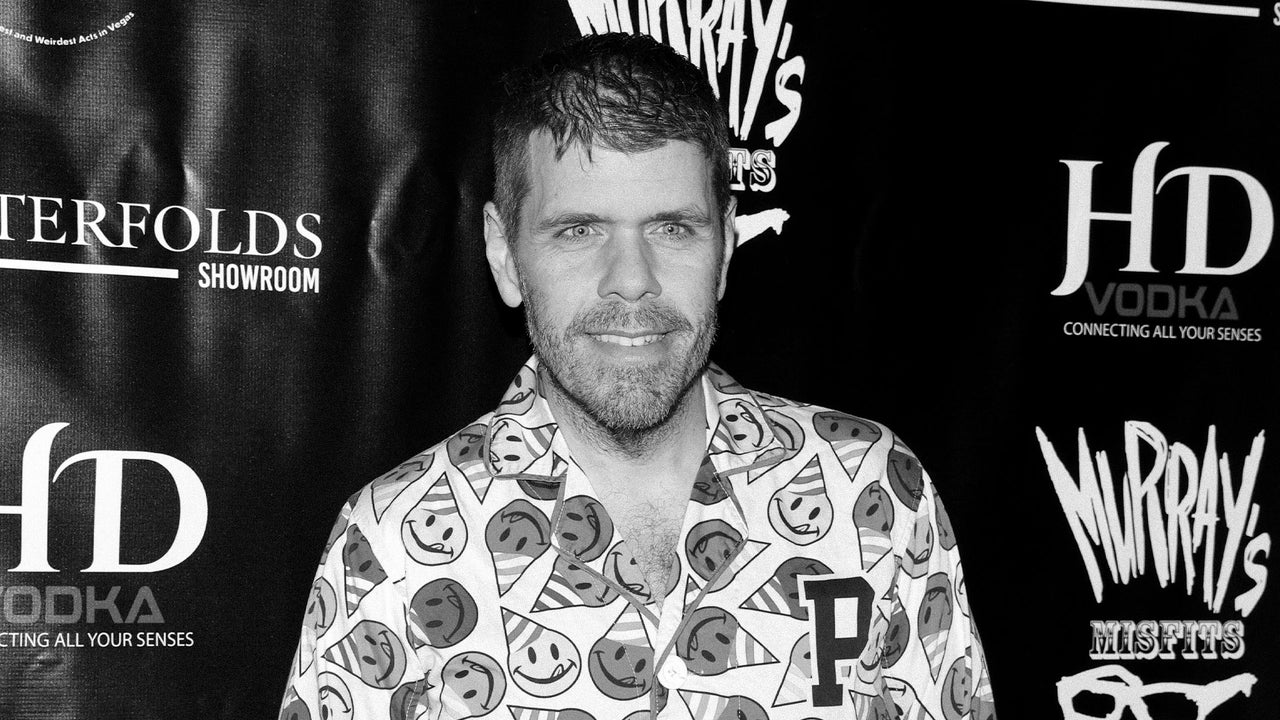
Major social media platforms are once again under fire for their flawed approach to content moderation after a disturbing livestream from Perez Hilton—in which the celebrity blogger appeared to be committing acts of self-harm—flooded into people’s news feeds.
The graphic video continued for several minutes before TikTok, where it originated, took it down. In the comments, many users pleaded for Hilton to stop, asked him to get help, and said they were contacting the police.
According to a TikTok U.S. spokesperson, the livestream was flagged by an automated moderation system routing, which then routed the incident to the U.S. moderation team for further review, yet a “moderator error” led to a delay in the removal.
TikTok also said it alerted law enforcement of the incident, and went on to close subsequent streams and ban the account.
The live video showed Hilton completely naked, repeatedly cutting himself with a knife until he was covered in blood. During the minutes the broadcast remained active, viewers were exposed to the violent content, triggering widespread concern across social media.
“TikTok should be fined [for] how many kids saw Perez Hilton doing that shit for 10 minutes,” a user said on X.
Another added: “tik tok it took yall far too fucking long to ban Perez Hilton off live.”
Despite being taken down, clips and screen recordings of the video spread to other social networks and circulated widely.
Hilton’s family later posted an update saying that he is receiving medical care.
“Part of a broader issue”
Such rapid proliferation of graphic content is not new. Last year, a viral video of Charlie Kirk’s assassination circled social media platforms for days, with many users coming across the graphic content unwittingly on their timelines.
Experts say the incidents are symptomatic of lax moderation on the part of tech giants.
“All of this is part of a broader issue of multibillion-dollar tech platforms cutting their investment in moderation and trust and safety teams over the years,” Katie Paul, director of the Tech Transparency Project (TTP), tells Fast Company. “Their products in turn have become bastions for some of the most grotesque content on the internet.”
It is worth noting, however, according to TTP, that Instagram accounts with the “Teen Account” setting turned on did not appear to be shown the graphic Hilton content. Last year, the same accounts were shown Kirk’s video.
While Hilton’s video is still online, it is harder to find by accident, coming up only when searching for a related term.
When searching for the phrase “Perez Hilton” on platforms including Threads, X, Instagram, and TikTok, initially blurred versions of the video appeared to come up instantly, with more graphic content often hidden behind content warnings. According to a review by Fast Company, graphic content was more likely to be found on Instagram.
Fast Company reached out to Meta (Instagram’s owner) and X for comment but did not receive a response at the time of publishing.
Users fill the void with content warnings
Those seeking out the video are being urged by other users on social media to stay away from the content, as it contains sensitive imagery that may be triggering to users.
“Dear friends. Please do not watch the Perez Hilton video. I’m begging you. Don’t do it to yourself. I would give anything to unsee it,” a user said on X.
Additionally, many who watched the video later shared regret about seeing it. “I wish I never looked up what was going on with Perez Hilton. My god. I’m not gonna sleep tonight,” one user wrote.
Exposure to graphic content has been linked to emotional distress and can even be traumatizing for sensitive viewers.
“We have found over the years . . . that repeated exposure to graphic images can have negative psychological and physical health consequences,” Roxane Cohen Silver, professor of psychology, medicine, and public health at the University of California, Irvine, told Fast Company last year.
The stress caused by consuming such content may lead to insomnia, nightmares, and acute stress that eventually manifests in physical ways.
But for many users, the fact that situations like this continue to happen is part of a bigger problem for the tech companies that operate social media platforms.
While various safeguards exist across all platforms—including explicit guidelines and AI moderator programs, as well as human moderators—companies like X and Meta have shifted in recent years to less strict moderation in the name of free expression, a stance that ends up being better for their business model, critics say.
“[Algorithms] are keyed to amplify increasingly extreme content to keep users on the platforms as long as possible and maximize the number of ads they may encounter,” TTP’s Paul says. “Until tech companies face accountability for failing to keep their platforms safe, we are likely to see more incidents like this spread online in the future.”