
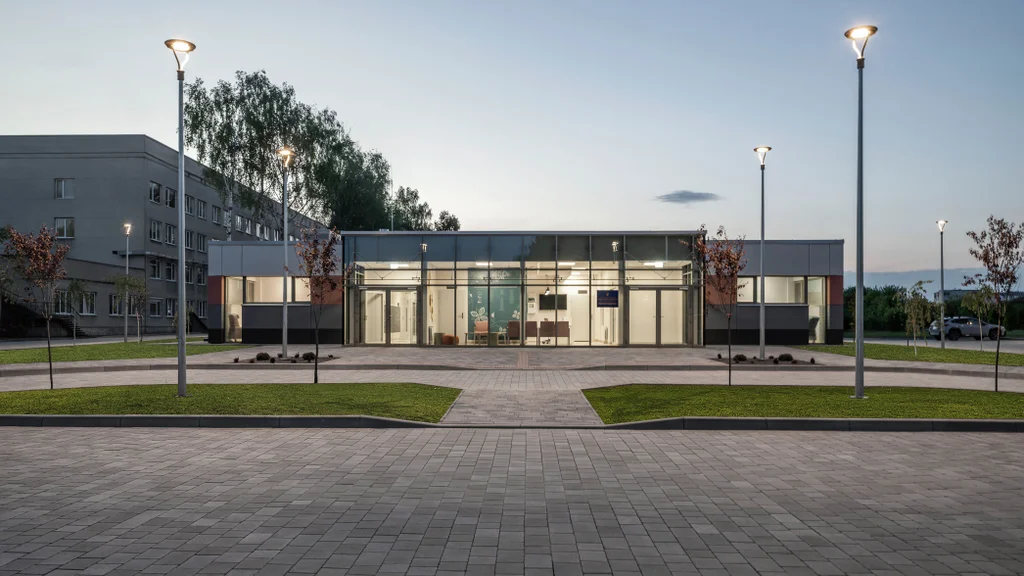
A pediatric hospital has just opened in Ukraine that could reinvent the country’s approach to providing healthcare.
With a design informed by the trauma of war and a construction method optimized for a pressing need, Project Horizon is a modular, 15-bed pediatric hospital wing. It is located in Brody, a city of 150,000 people 50 miles from the border with Poland. Brody is far from the war zone in eastern Ukraine, but is nonetheless touched by the conflict, with an influx of internal migrants coming to the relative peace of the west.
Part of Brody Central City Hospital, the prefabricated hospital wing fills a deep need. Hundreds of hospitals and healthcare facilities across Ukraine have been damaged or destroyed during the war with Russia, adding extra pressure on the health infrastructure that remains.
Health care for a war-torn country
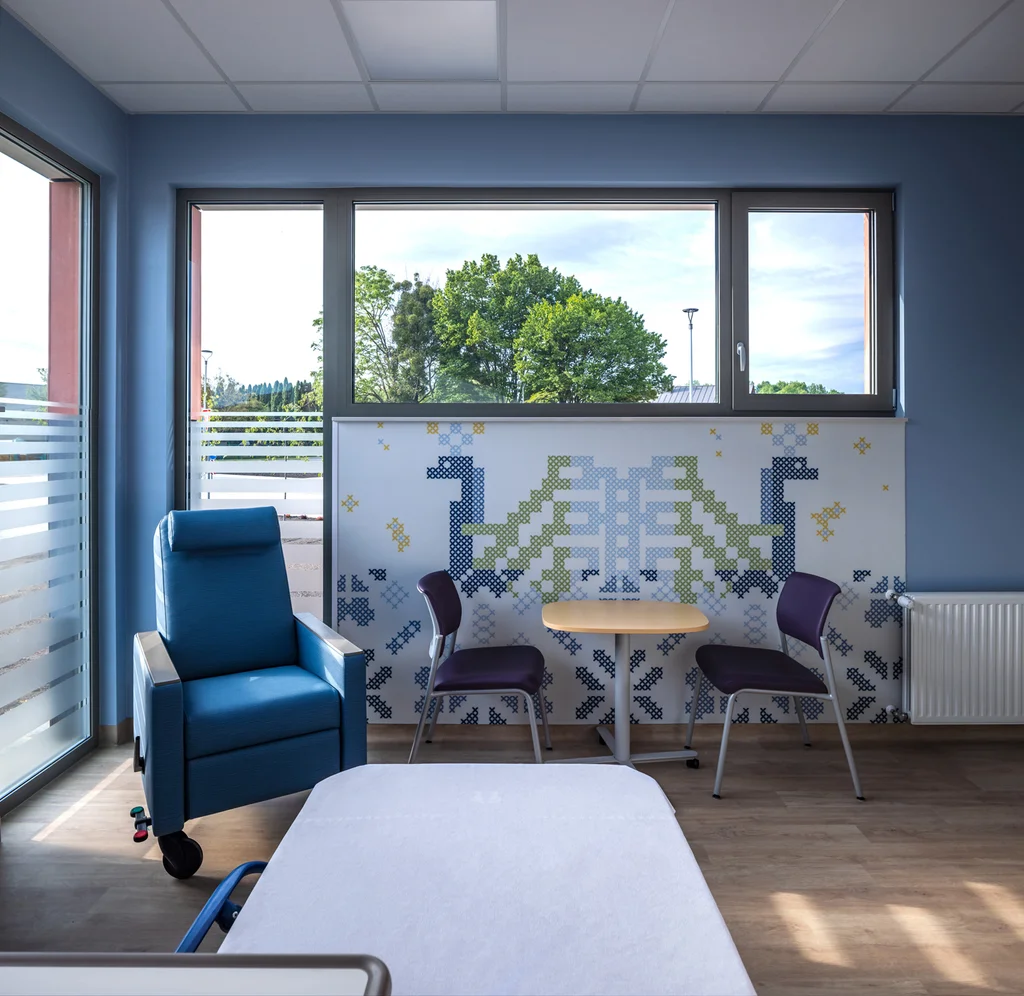
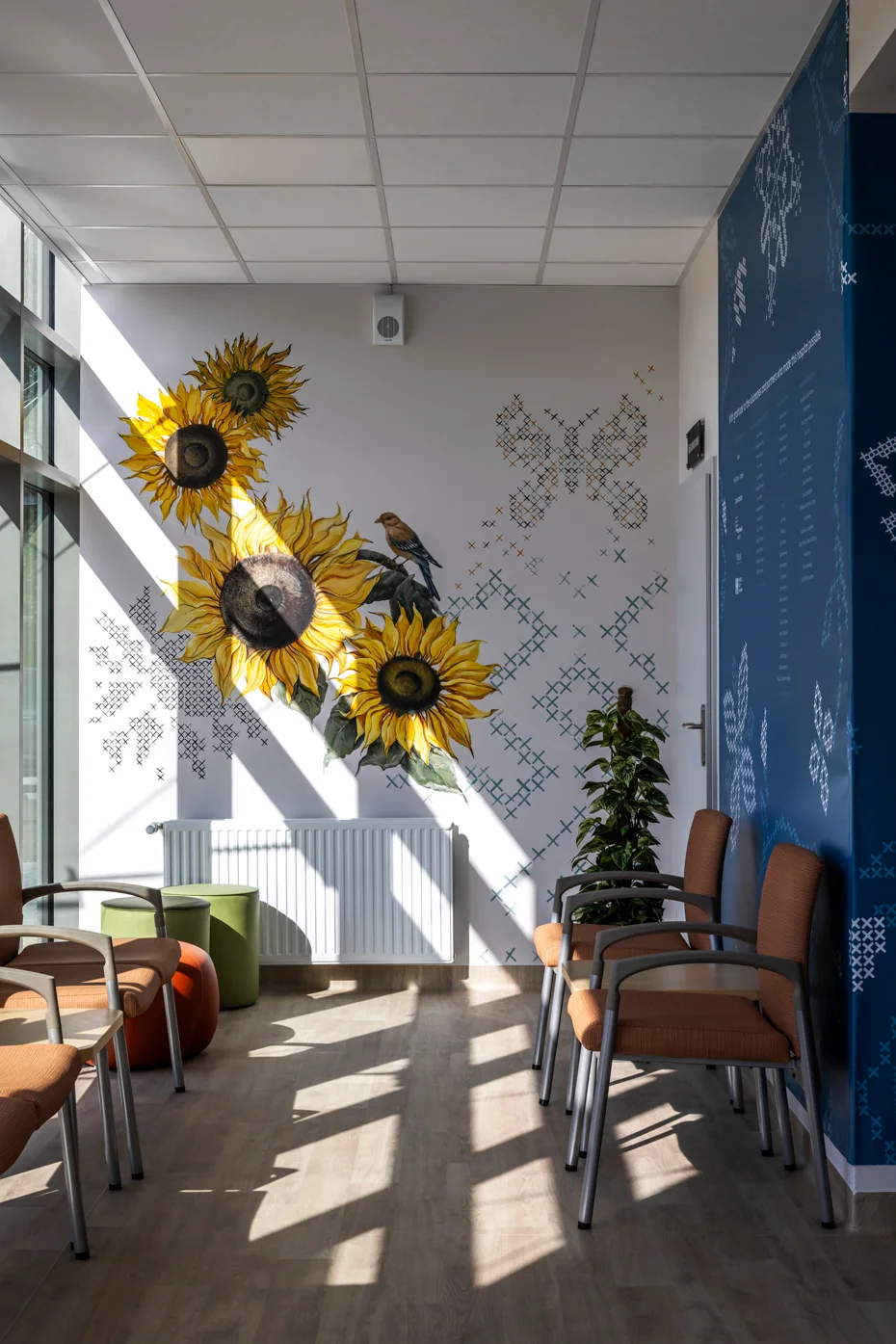
The wing received its first patients in late May. With private rooms, floor-to-ceiling windows, modern diagnostic equipment, and a color palette informed by studies on post-traumatic stress disorder, the facility is a light-filled space that softens the experience of going to the hospital for children and their families.
Sunflower Network, a U.S.-based nonprofit formed after the start of the war in 2022 to provide humanitarian aid to Ukrainians, instigated the project. At its inception, the nonprofit focused on raising money and sending medical supplies to healthcare workers on the front lines. But as the war dragged on and supply chains within the country adapted to the challenges of wartime, the organization identified a need for new infrastructure.
Aging Soviet-era hospitals made up the bulk of Ukraine’s healthcare system, and the facilities struggled to keep up with the strain caused by the war. “The human capital, the doctors and the nurses, are actually great, but the buildings are falling apart, and their equipment is substandard,” says Dean Ross, Sunflower Network’s executive director.
So the organization set out to build a new hospital. With support from the Clinton Global Initiative, Sunflower Network announced the project in 2023 and brought in high-profile collaborators to pull it off.
The hospital concept was developed in partnership with Ukraine’s Ministry of Health and New York-based Northwell Health, and was designed by Open Hand Studio, the public interest design arm of the global architecture firm CannonDesign; Pelli Clarke & Partners, another international architecture firm; and advisers from the real estate investment manager Hines. Sunflower Network raised more than $8 million to turn the concept into reality.
This budget proved enough for the modest size of the facility, but required creative planning to keep costs low.
Efficient and effective architecture
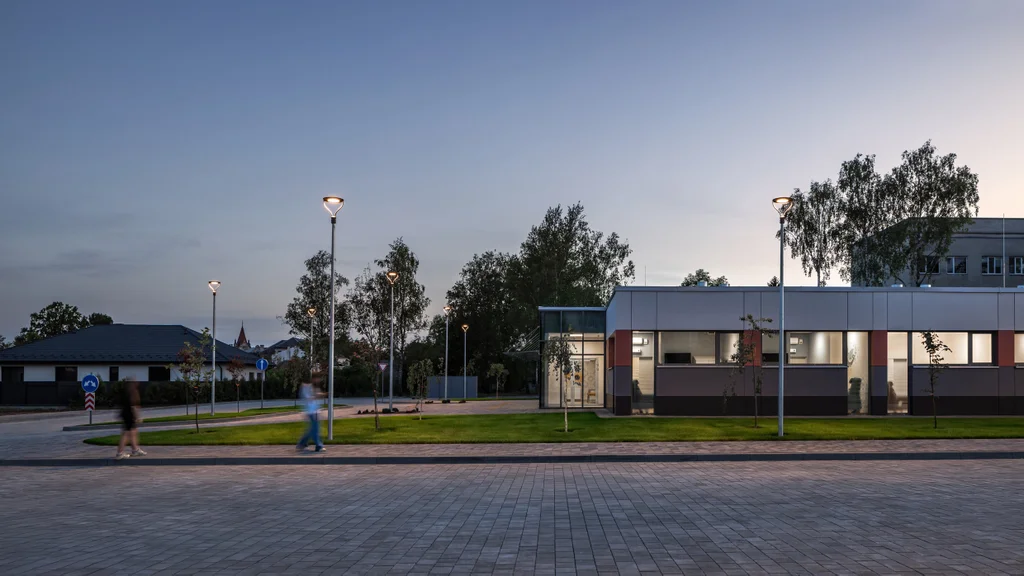
The design uses a modular approach, with the hospital wing built in an off-site facility and assembled on site. Construction took half the time of a conventionally built hospital.
“The approach we ended up fleshing out is not only going to deliver a facility that will exist in real life and save real children, but it laid a foundation for how rebuilding in a postcrisis context could be changed and done faster, cheaper, and more sustainably moving forward,” Ross says.
Off-site construction was the most important element of the project, for reasons beyond budget.
“We chose prefabricated modular technology because most of the able-bodied men were being conscripted to war, so there was a huge labor shortage, which would prevent us from being able to execute with confidence on time and on budget,” says Emma Bernstein, a Sunflower Network board member. “Being able to do this off site and in a controlled environment was something that we really felt like was going to increase our chances of success.”
The organization partnered with Climatic, a prefab manufacturer based in Poland, which was able to take on the project and truck the building’s modules to the site quickly.
Elisabeth Perreault, health practice leader at CannonDesign, says the company had just a 40-day timeline for turning the architects’ schematic designs into built modules, and then another 30 days for installation. “It’s incredibly rapid. So it’s very well suited to these types of projects and situations,” she says.
An environment of ‘normalcy’
Speed and cost were not the only concerns. Architectural experience was, too. This is a hospital for children growing up in a country deep in the throes of war, some of whom are enduring disease on top of the traumas of a war that has caused more than half a million casualties across Ukraine.
Mariko Masuoka, a partner at Pelli Clarke & Partners, says the hospital creates a welcoming environment, and also one of normalcy.
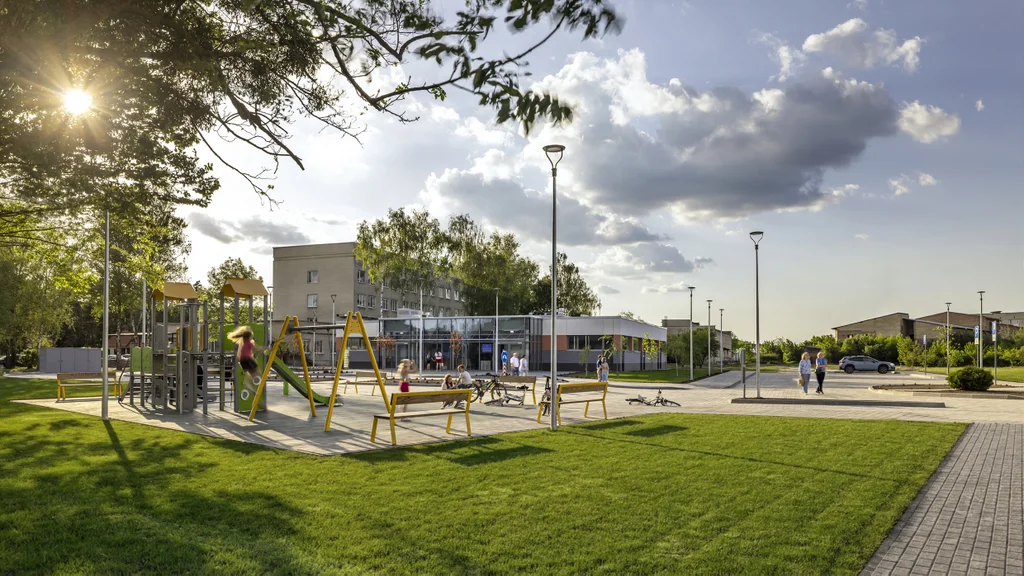
“It was important for us to have a lot of daylight in the facility with views outside,” she says. The exterior features soft colors and there’s a playground on site. Window treatments allow patients to see the trees outside while maintaining their privacy from passersby.
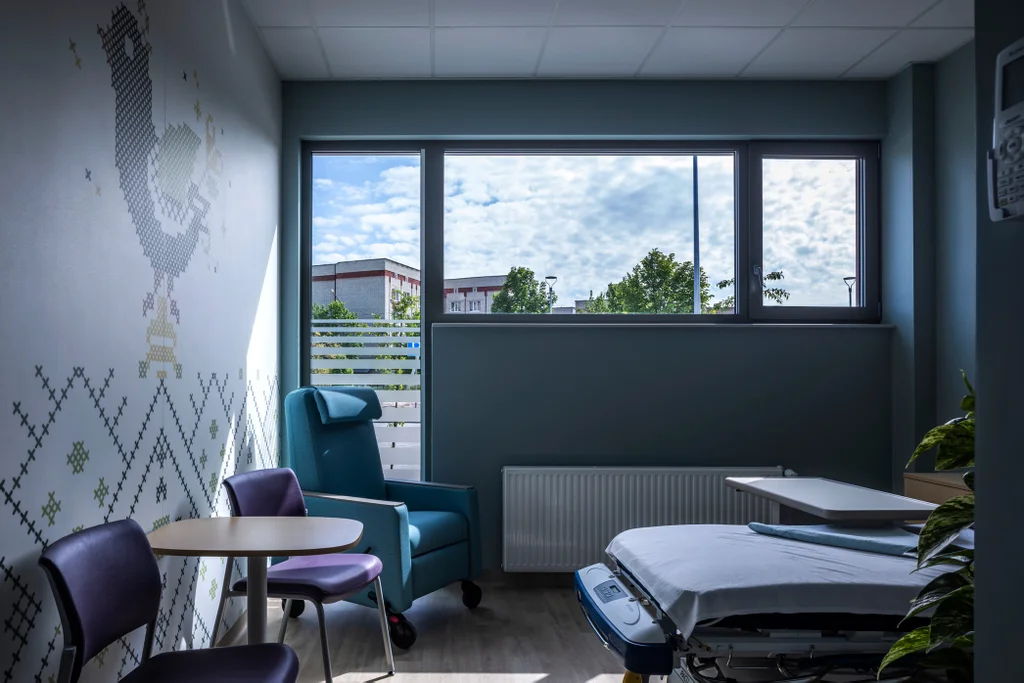
Perreault says the project used a trauma-informed design strategy that tried to account for the hospital’s unique clientele and their challenging conditions.
“We’re looking at the physical and emotional well-being of the providers, and the patients and their families,” she says. “What’s interesting here is with children, not only will they have post-traumatic stress disorder, they’ll also have separation anxiety. Having 100% private rooms not only is better from a health care perspective, but it also provides that private, secure space for families to be there in the room with the patients.”
A prototype for future hospitals
The hospital director, Tymus Myroslav Yaroslavovych, says the new hospital is a vast improvement from the previous facility, which was built 47 years ago. “I see it as a new approach to the treatment of children in Ukraine because the doctors are able to be next to the patients to provide them with all the needed help,” he says, speaking through a translator. “You feel the warmth inside. It will be for our children, and for our future.”
Sunflower Network’s Ross sees this as just the start of helping Ukraine rebuild the healthcare infrastructure it’s lost during the war. He says the modular design is intended to be replicated.
“Modular construction in a postconflict context has not been done, and that scalability is so attractive to all of us,” he says. “This model is more interesting than just the thousands of people that it can serve in a month. It’s the hundreds of thousands, or millions, across Ukraine and across the whole world.”