
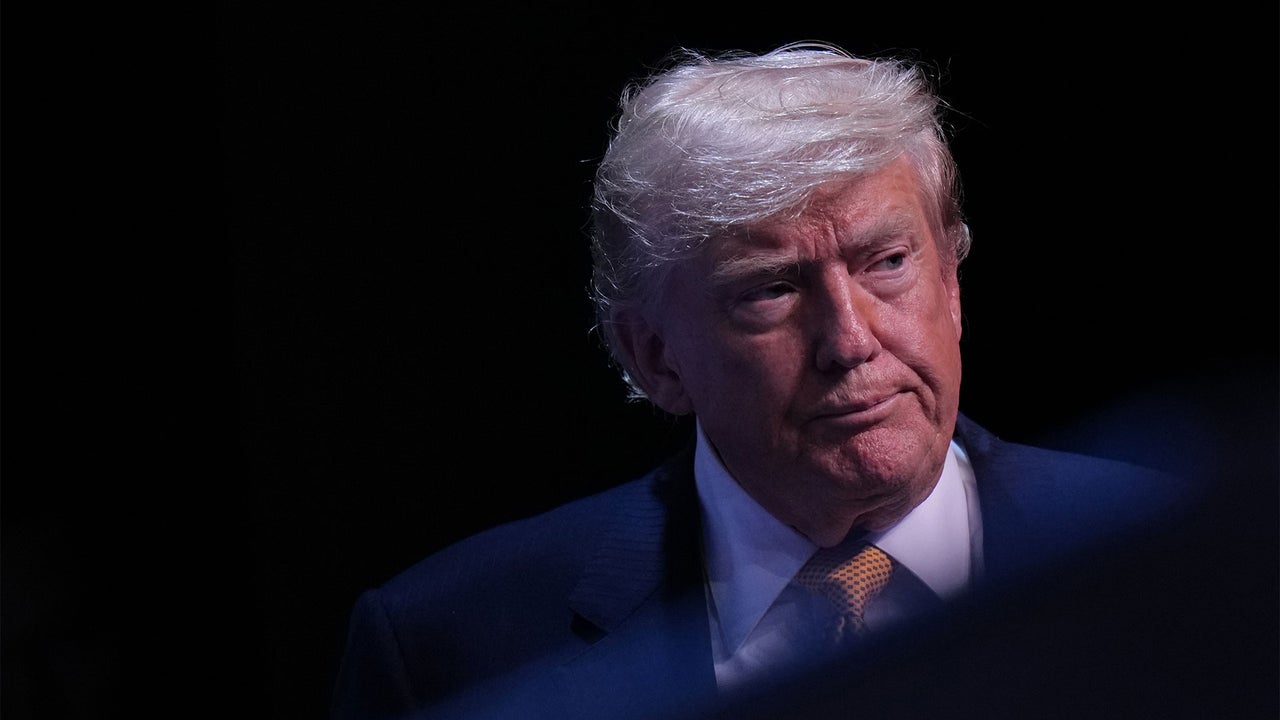
President Donald Trump says he believes the ceasefire with Iran is over. He says he’s not sure he wants a deal anymore and says the U.S. should “finish the job.” But he also insists that continued attacks do not mean a return to war or long-term action.
The confusion and uncertainty in Trump’s mixed messaging and his approval of back-to-back military strikes leave major questions about what comes next in the conflict, just weeks after difficult diplomacy to reach even an initial deal between the longtime adversaries.
The whipsawing rhetoric could be a strategy to increase the pressure on Tehran to stop attacking ships transporting oil and natural gas in the Strait of Hormuz and bend to U.S. demands on its nuclear program — something Trump has tried before.
Whether it is a negotiation tactic or a signal of an escalation in fighting, mediators are scrambling to save the interim deal and the actions risk further inflaming tensions — which could spell problems for Republicans in November’s midterm elections if gas prices stay high.
Trump warned Wednesday that a new round of U.S. attacks was coming, even as he attempted to shrug off suggestions of a return to full-scale war. Hours later, the military announced it was carrying out new attacks on Iran that were meant to “further degrade their ability to threaten freedom of navigation in the Strait of Hormuz.”
“Anything that happens is going to happen very fast,” Trump said earlier. “We’re not looking for a long time.”
Officials rush to save the ceasefire
A regional intelligence official involved in the mediation efforts said the conflict had reached a critical stage as mutual mistrust rises. But high-level communications are happening around the clock to salvage the ceasefire, said the official, who spoke on condition of anonymity to discuss the delicate behind-the-scenes negotiations.
The foreign ministers of Pakistan and Qatar, as well as Egypt’s intelligence chief, are leading the efforts, while Turkish President Recep Tayyip Erdogan — whose country hosted the NATO summit that wrapped Wednesday — and leaders from Saudi Arabia are also involved, the official said.
The U.S. is upset about ships being attacked in the Strait of Hormuz and accuses Iran of slow-playing discussions on curtailing its nuclear program, the official said. Nuclear talks were a major next step to try to turn the interim deal announced last month into a lasting end to the war.
Tehran, meanwhile, says Washington is the one violating the agreement regarding the strait and failing to ensure that a ceasefire in Lebanon, including an Israeli withdrawal, is being implemented, the official said.
Michael Eisenstadt, a former U.S. military analyst who now directs the Military and Security Studies Program at the Washington Institute for Near East Policy, said that “we’re still in negotiating mode, no matter what the president says.”
“This is part of negotiating, and declaring that the MOU is over is part of the negotiation as well,” Eisenstadt said, referring to the memorandum of understanding that the ceasefire was built on.
Trump, though, has been explicit in public comments, saying he’s lost interest in preserving the ceasefire: “I think it’s over.”
“We can play games, but I’m not sure I want to make a deal,” he said during the NATO summit in Ankara, Turkey, adding that the U.S. military might “just finish the job.”
Parliament speaker Mohammad Bagher Qalibaf, Iran’s lead negotiator, said the Trump administration had repeatedly violated the terms of the initial pact, forcing the country to respond appropriately.
“The era of bullying and extortion is over,” Qalibaf posted on X. “It leads nowhere. We don’t fold.”
Trump says ‘we’ll probably hit them hard again’
Pakistan, which helped broker the ceasefire, said renewed conflict is in “no one’s interest” and urged both sides to uphold their commitments.
“There is no alternative to continued engagement, dialogue and diplomacy to achieve shared goal of peace in the region,” its Foreign Ministry said in a statement.
Trump, nonetheless, dismissed Tehran’s leaders, calling them “scum” and “sick people.” Just last month, Trump said Iran’s leadership was “very rational” and “nice to deal with,” while also calling the country’s leaders “smart people.”
Speaking at an event in Milwaukee on Wednesday, Vice President JD Vance, who led U.S. efforts to reach the initial deal with Tehran, said Iran was “well behaved for about a week.” He added that lately the country had begun attacking the strait and said, “If they shoot at ships, we’re going to knock the hell out of them.”
Could this be another negotiating tactic?
Before the U.S. and Iran reached their first, two-week ceasefire in April, Trump intensified his threats, pledging that American forces would bomb Iranian bridges, roads and power plants. He even posted online, “A whole civilization will die tonight, never to be brought back again.”
He repeated dire threats before the tentative 60-day deal to end the war was reached last month.
Trump likes to seek ways to negotiate from a position of strength, and he could be looking for more leverage with new strikes. But being unequivocal about the end of the ceasefire also could free up Iran militarily — which could again roil oil prices and financial markets.
Ali Vaez, Iran director at the International Crisis Group, argued that escalating threats may be a riskier maneuver this time around, given the domestic and international stakes for the U.S.
“It certainly looks like an effort to turn up the military heat without yet closing the diplomatic door,” Vaez said. “But coercive bargaining is a dangerous game: At some point, a pressure campaign can acquire a momentum of its own and become the war it was ostensibly meant to avoid.”
He added, however, that Iran still has every reason to return to the table because it desperately needs the economic relief that was promised under the interim deal.
Trump also has sent mixed signals about the fallout.
He long insisted that rising gas prices for Americans didn’t factor into his calculations on Iran — only to say that part of the reason he agreed to the interim deal was to avoid an “economic catastrophe.” He has since touted the falling price of oil after the deal was reached.
Elections ahead could scramble Trump’s political calculus
The president again resumed his past threats to strike Iran’s civilian infrastructure, possibly including electric plants and desalinization plants, and to seize the oil-production hub of Kharg Island.
“We may take over Kharg Island,” he said. “There’s not a thing they could do about it.”
Still, the midterm elections — when Republicans hope to retain control of the House and Senate — are now less than four months away. Oil prices rising again amid greater uncertainty about the war means Americans will likely continue to see higher prices at the pump.
The president tried to play down such concerns, saying, “Any time we hit them, it goes up a little bit — $2.” In fact, U.S. oil futures jumped far higher and may keep climbing — even as Trump acknowledged, “As oil goes, so goes everything else.”
He argued that an increase in oil prices was worth it to bar Iran from obtaining a nuclear weapon. “It’s all right.”
Associated Press writer Munir Ahmed contributed to this report.
—Will Weissert, Farnoush Amiri and Samy Magdy Associated Press