
There’s an old joke I used to hear in Poland. A manager wants to hire a new employee and asks his assistant to collect résumés. A week later, she proudly carries a stack of résumés into his office and hands them to him. He takes half and throws them in the trash and says, “We don’t want people who are unlucky!”
In an oddly similar vein, Silicon Valley pundits are obsessed with the concept of “high agency,” popularized by Eric Weinstein, who described it this way: “When you’re told that something is impossible, is that the end of the conversation, or does that start a second dialogue in your mind about how to get around whoever just told you that you can’t do something?”
Elon Musk is the prototypical “high-agency” person and became the richest person in the world. But famous failures like Elizabeth Holmes and Sam Bankman-Fried fit the definition, too. Vladimir Putin displayed high agency when he invaded Ukraine. Feeling the power to make choices is not the same thing as making good ones and, eventually, it tends to lead to bad ones.
{“blockType”:”mv-promo-block”,”data”:{“imageDesktopUrl”:”https://images.fastcompany.com/image/upload/f_webp,q_auto,c_fit/wp-cms-2/2025/10/tcp-photo-syndey-16X9.jpg”,”imageMobileUrl”:”https://images.fastcompany.com/image/upload/f_webp,q_auto,c_fit/wp-cms-2/2025/10/tcp-photo-syndey-1×1-2.jpg”,”eyebrow”:””,”headline”:”Get more insights from Tomas Chamorro-Premuzic”,”dek”:”Dr. Tomas Chamorro-Premuzic is the Chief Science Officer at Russell Reynolds, a professor of organizational psychology at UCL and Columbia University, and the co-founder of DeeperSignals. He has authored 15 books and over 250 scientific articles on the psychology of talent, leadership, AI, and entrepreneurship. “,”subhed”:””,”description”:””,”ctaText”:”Learn More”,”ctaUrl”:”https://drtomas.com/intro/”,”theme”:{“bg”:”#2b2d30″,”text”:”#ffffff”,”eyebrow”:”#9aa2aa”,”subhed”:”#ffffff”,”buttonBg”:”#3b3f46″,”buttonHoverBg”:”#3b3f46″,”buttonText”:”#ffffff”},”imageDesktopId”:91424798,”imageMobileId”:91424800,”shareable”:false,”slug”:””,”wpCssClasses”:””}}
The rise and fall of logical positivism (over and over again)
In the early 20th century, much like today, science and technology emerged as a rising force in Western society. The new wonders of electricity, automobiles, and telecommunications were quickly shaping how people lived, worked, and thought. Inventors like Edison, Westinghouse, and Ford, as well as physicists like Einstein and Bohr, became world-famous celebrities. It seemed that there was nothing that scientific precision couldn’t achieve.
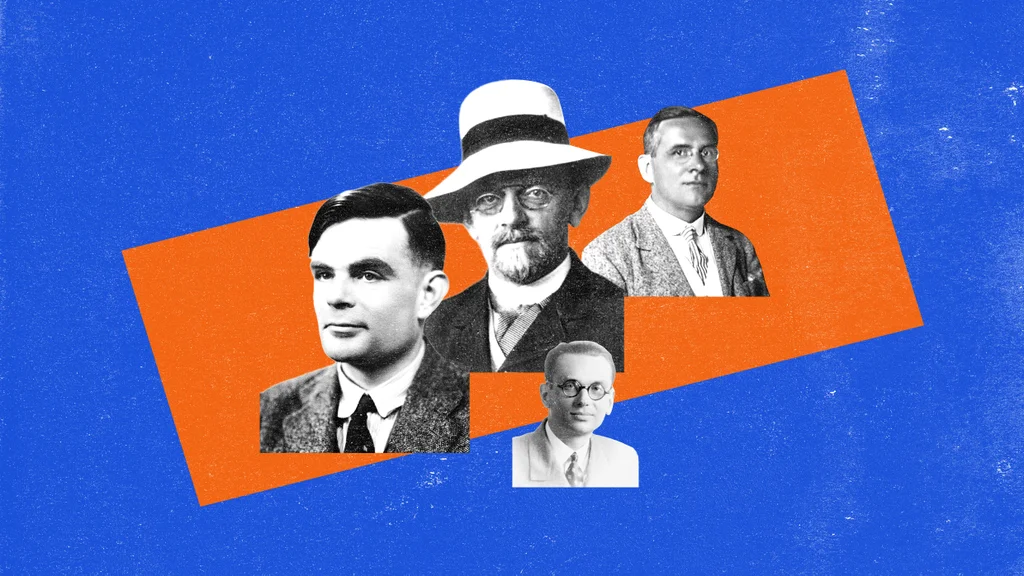
It was against this backdrop that Moritz Schlick formed the Vienna Circle, which became the center of the logical positivist movement during the 1920s and 1930s. At its core was Wittgenstein’s theory of atomic facts, the idea that the world could be reduced to a set of logical statements that could be verified as being true or false—no opinions or speculation allowed. Those statements, in turn, would be governed by formal rules of logic that would determine the validity of any argument.
Yet even as this logical movement was growing, the foundational crisis in logic continued. To solve the problem, David Hilbert, the greatest mathematician of the era, proposed a program to solve the crisis that rested on three pillars. First, mathematics needed to be shown to be complete in that it worked for all statements. Second, mathematics needed to be shown to be consistent—no contradictions or paradoxes allowed. Finally, all statements needed to be computable, meaning they yielded a clear answer.
Then things took a surprising turn. A young logician named Kurt Gödel would prove that every logical system is incomplete or inconsistent. Alan Turing showed that some problems are uncomputable. Together, these discoveries showed that logic has fundamental limits. Humans are destined to live in a messy universe.
The dream that the world could be reduced to a complete, objective system of logic turned out to be little more than an illusion—a childish fantasy that never quite fit reality.
The new postivists
The verdict was in. As Karl Popper argued, ideas could never be absolutely verifiable, but would stand until they could be falsified. We could, after thorough testing, increase our confidence, but never be completely sure. Ironically, the demise of logic led directly to the era of digital computing and a new, technological age. Just as we learned that systems would always be fallible, the machines we built became more powerful.
At the same time, human judgment was increasingly called into question. It was, after all, subjective judgments that led to the Great Depression of the 1930s and the enormous wars that followed it. As the baby boomers came of age in the 1960s, it seemed like everything was up for debate. All of the fuzziness and uncertainty of relying on human judgment increasingly seemed impractical.
Much like Wittgenstein and the Vienna Circle, others sought to reduce complex human systems to a single objective principle. The Austrian School in economics and the neorealists in foreign relations argued that self-interest—rather than judgment about values or human suffering—should drive decision-making. Yet mere theory wasn’t enough. These new positivists needed metrics.
Simon Kuznets developed GDP as a measure of economic output. Robert Bork’s concept of the consumer welfare standard made prices, rather than regulators’ judgments, the primary test of corporate power. Milton Friedman argued that maximizing shareholder value, rather than managerial discretion, should guide corporations.
Ironically, the promise that objective metrics would produce objectively better outcomes never materialized. In fact, since these ideas gained popularity in the 1970s, productivity growth has been mostly depressed while inequality has soared. Yet the worldview remains influential among those who have benefited most from it, particularly in finance and Silicon Valley.
What is the agency of coin-flipping monkeys?
Consider this thought experiment that Warren Buffett likes to use: Put a million monkeys in a coin-flipping contest. Each monkey starts with a dollar. In every round, the loser drops out, and the winner doubles their money. After 20 rounds, only two monkeys remain, each with $1,048,576. The vast majority of the other monkeys leave with little more than pocket change.
What should those lucky monkeys do next? If they are truly high-agency monkeys, surely they should flip again. After all, the evidence suggests they’re no ordinary monkeys. Yet chances are that on the next flip, one of those monkeys will no longer be exceptional, but just another ordinary monkey, subject to the same rules as anyone else.
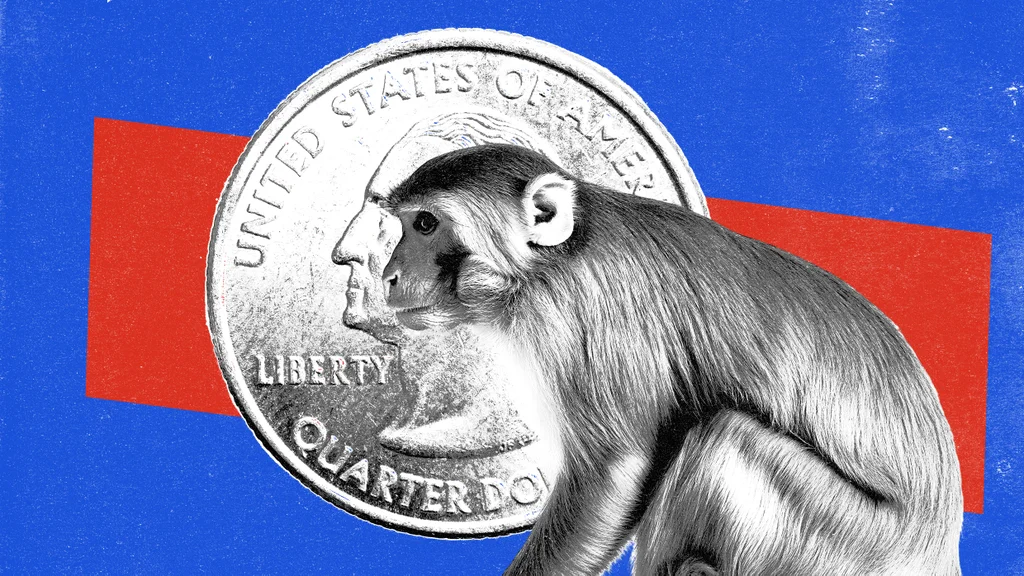
And how should we treat the monkey that remains? Would you ask it to advise your company? Put it on your charity board? Would you be interested in its views about how to run your government, educate your children, or make decisions about your healthcare? Would you try to replicate its coin-flipping success? (Maybe it’s all in the wrist.)
What if a coin flip was all that really separated Elon Musk and Sam Bankman-Fried? Then the optimal course for any high-agency monkey would be to use the winnings to rig the game in their favor. Leave things to chance, and they would inevitably suffer the same fate as Vladimir Putin, making bigger and bigger bets until the universe turns against them.
Bad ideas never die
Long before Silicon Valley began touting “high agency,” Dostoevsky explored the same idea. In Crime and Punishment, the protagonist Rodion Raskolnikov argued that extraordinary people, like Napoleon, are entitled to violate moral rules in pursuit of a greater purpose. It was his belief that he was one of the chosen that led him to commit cold-blooded murder.
Musk is the epitome of the high-agency ideal. He ignored the critics and overcame incredible odds to build great companies like Tesla and SpaceX, but those same impulses also led him to the DOGE cuts, which epidemiological models estimate to have caused hundreds of thousands of deaths and predict will result in millions more—while not cutting the deficit in any meaningful way.
If anything, the cult of high agency seems to be gaining strength. Recent books like Theo Baker’s How to Rule the World and Sarah Wynn-Williams’s Careless People portray many Silicon Valley denizens as so out of touch that it borders on solipsism, driven by greed and oblivious to the damage that they cause. Like Raskolnikov, they believe that any collateral harm is a small price to pay for their genius.
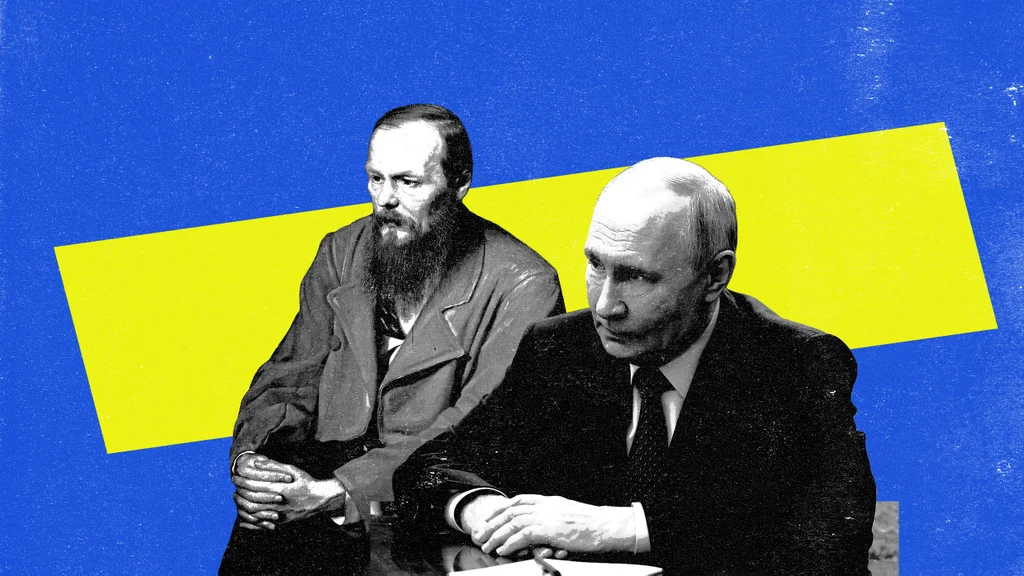
Yet Crime and Punishment is not a happy story and Raskolnikov, in the end, became a cautionary tale, repenting in search of redemption and spiritual rebirth. I don’t see that happening in the tech world any time soon, but there are signs of a comeuppance. According to the Pew Research Center, attitudes have hardened against AI, and Fortune reports that even the technologists themselves are having misgivings.
And, as Putin’s full-scale invasion of Ukraine suggests, people who consider themselves to be high agency tend to keep doubling down until the universe gets the best of them. As I have long maintained, Putin is not a rational actor. It takes a significant amount of self-delusion to think that you can easily conquer a country of nearly 50 million highly motivated and technologically sophisticated people.
Feeling empowered to make choices isn’t the same thing as acquiring the wisdom to make good ones. We shouldn’t confuse exceptional survivorship with exceptional achievement. In the end, the universe will win out.
{“blockType”:”mv-promo-block”,”data”:{“imageDesktopUrl”:”https://images.fastcompany.com/image/upload/f_webp,q_auto,c_fit/wp-cms-2/2025/10/tcp-photo-syndey-16X9.jpg”,”imageMobileUrl”:”https://images.fastcompany.com/image/upload/f_webp,q_auto,c_fit/wp-cms-2/2025/10/tcp-photo-syndey-1×1-2.jpg”,”eyebrow”:””,”headline”:”Get more insights from Tomas Chamorro-Premuzic”,”dek”:”Dr. Tomas Chamorro-Premuzic is the Chief Science Officer at Russell Reynolds, a professor of organizational psychology at UCL and Columbia University, and the co-founder of DeeperSignals. He has authored 15 books and over 250 scientific articles on the psychology of talent, leadership, AI, and entrepreneurship. “,”subhed”:””,”description”:””,”ctaText”:”Learn More”,”ctaUrl”:”https://drtomas.com/intro/”,”theme”:{“bg”:”#2b2d30″,”text”:”#ffffff”,”eyebrow”:”#9aa2aa”,”subhed”:”#ffffff”,”buttonBg”:”#3b3f46″,”buttonHoverBg”:”#3b3f46″,”buttonText”:”#ffffff”},”imageDesktopId”:91424798,”imageMobileId”:91424800,”shareable”:false,”slug”:””,”wpCssClasses”:””}}