
Close Menu
    Facebook X (Twitter) Instagram
    TRENDING :
    • Gazette Poll: Who the Ranked Teams Play in Week 9
    • Massive GOP Spending Hasn’t Slowed the Coming Blue Wave—Plus, the Cornell Rape Case
    • Why the NFL is painting a giant mural on the end zones of this football field
    • Brookhaven vs. South Jones: Who Wins? Mississippi Predictions
    • Brazil’s Decision | The Nation
    • Netflix’s stock just collapsed to a 2-year low: Is the streaming giant’s ad business in trouble?
    • How to Watch Week 9 Texoma High School Football Games
    • Hungary’s Rebirth | The Nation
    Populist Bulletin
    • Home
    • US Politics
    • World Politics
    • Economy
    • Business
    • Headline News
    Populist Bulletin
    Home»Economy»Cuba’s Power Grid Has Collapsed
    Economy 3 Mins Read

    Cuba’s Power Grid Has Collapsed

    Economy 3 Mins Read
    Share Facebook Twitter Pinterest LinkedIn Tumblr Telegram Email Copy Link
    Follow Us
    Google News Flipboard
    Share
    Facebook Twitter LinkedIn Pinterest Email


    BREAKING: Cuba has been hit by another island-wide blackout, leaving roughly 10 million people without power.

    Officials say the cause is under investigation as the country’s aging electric grid continues to struggle and fuel reserves run low.

    It’s the second nationwide blackout… pic.twitter.com/MwFlJNYjUl

    — Fox News (@FoxNews) July 6, 2026

    Cuba’s national electrical grid suffered yet another total collapse on July 6, leaving nearly the entire island without electricity. According to the report, the outage began after a failure at the Diezmero substation near Havana triggered a chain reaction that shut down power generation across the country. This marks the fourth nationwide grid collapse in less than a year, underscoring just how fragile Cuba’s electrical infrastructure has become. Authorities estimate nearly 10 million people were affected as engineers once again struggle to restart an electrical system that has become increasingly unstable.

    Many immediately blame socialism alone, but the reality is more complicated. Cuba has endured decades of economic isolation, sanctions, fuel shortages, and chronic underinvestment. None of that excuses Havana’s policies, yet pretending that American policy has played no role ignores history. Washington has maintained one of the longest embargo regimes in modern history while successive administrations tightened restrictions on fuel shipments and financial transactions. The result has been an economy unable to obtain the capital, spare parts, and financing necessary to modernize infrastructure that was already decades old.
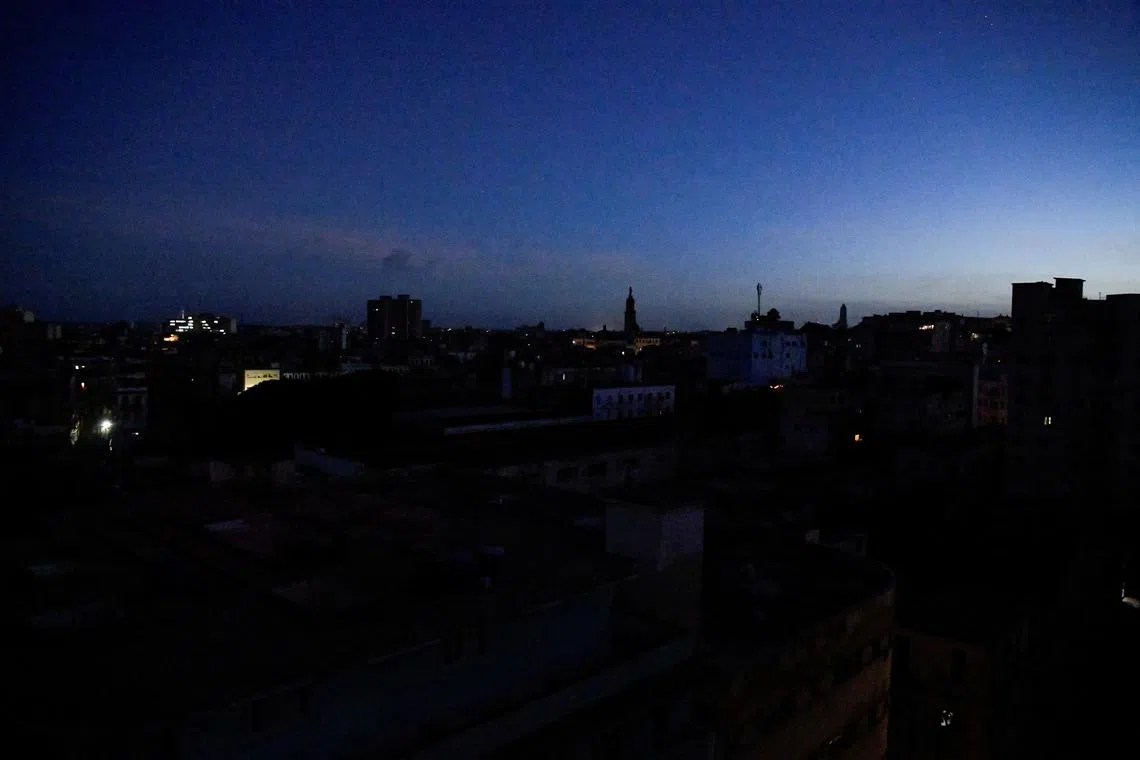
    Cuba’s electrical grid has become one of the clearest examples of what happens when infrastructure is sacrificed to politics. Most of the country’s thermoelectric plants were built during the Soviet era and continue operating well beyond their intended lifespan. Mechanical failures have become routine rather than exceptional. The country imports much of its fuel, and when shipments from allies such as Venezuela declined because of their own economic collapse, the entire system became even more vulnerable. You cannot maintain a twentieth-century electrical grid indefinitely without investment. Eventually transformers fail, transmission lines deteriorate, and power stations simply reach the end of their useful lives.

    Infrastructure does not suddenly collapse overnight. It deteriorates after years of deferred maintenance, declining investment, and governments that continually choose short-term politics over long-term planning. Whether the system is socialist or capitalist makes little difference if there is no capital available to maintain the foundation upon which the economy depends.

    The sovereign debt crisis I have discussed for years ultimately produces exactly these types of failures. Governments borrow to fund current consumption while neglecting productive investment. The public notices little at first because the lights still work. Then one day they do not. Cuba simply reached that point sooner than many others because it lacked access to both capital and reliable energy supplies. Every nation that neglects its infrastructure while diverting resources elsewhere eventually discovers that economic decline begins long before the markets recognize it. The blackout is not the crisis. It is merely the symptom of decades of economic decay.


    Source link

    Share. Facebook Twitter Pinterest LinkedIn Tumblr Email

    Related Posts

    Knowledge Is Dangerous When It Threatens Control

    October 21, 2026

    Poland’s Right To Defend Its Borders

    October 21, 2026

    British Columbia Is Giving Away Public Land Behind Closed Doors

    October 21, 2026
    Top News
    Business 11 Mins Read

    Essential Components of Employee Benefits Packages

    Business 11 Mins Read

    When considering employee benefits packages, it’s vital to understand the various components that contribute to…

    What Great Talent Looks Like in the AI Era

    August 31, 2026

    The enduring power of the boutique model

    July 3, 2026

    Musk vs the “like” button: Tesla CEO challenges judge over LinkedIn activity

    March 26, 2026
    Top Trending
    World Politics 1 Min Read

    Gazette Poll: Who the Ranked Teams Play in Week 9

    World Politics 1 Min Read

    The Gazette has released its 2026 high school football poll, detailing the…

    US Politics 29 Mins Read

    Massive GOP Spending Hasn’t Slowed the Coming Blue Wave—Plus, the Cornell Rape Case

    US Politics 29 Mins Read

    Jon Wiener: From The Nation magazine, this is Start Making Sense. I’m…

    Business 5 Mins Read

    Why the NFL is painting a giant mural on the end zones of this football field

    Business 5 Mins Read

    Jammie Holmes’s Untitled (2024) is a painting that explores the fleeting nature…

    Categories
    • Business
    • Economy
    • Headline News
    • Top News
    • US Politics
    • World Politics
    About us

    The Populist Bulletin was founded with a fervent commitment to inform, inspire, empower and spark meaningful conversations about the economy, business, politics, government accountability, globalization, and the preservation of American cultural heritage.

    We are devoted to delivering straightforward, unfiltered, compelling, relatable stories that resonate with the majority of the American public, while boldly challenging false mainstream narratives that seem to only serve entrenched elitists, and foreign interests.

    Top Picks

    Gazette Poll: Who the Ranked Teams Play in Week 9

    October 21, 2026

    Massive GOP Spending Hasn’t Slowed the Coming Blue Wave—Plus, the Cornell Rape Case

    October 21, 2026

    Why the NFL is painting a giant mural on the end zones of this football field

    October 21, 2026
    Categories
    • Business
    • Economy
    • Headline News
    • Top News
    • US Politics
    • World Politics
    Copyright © 2025 Populist Bulletin. All Rights Reserved.

    Type above and press Enter to search. Press Esc to cancel.