
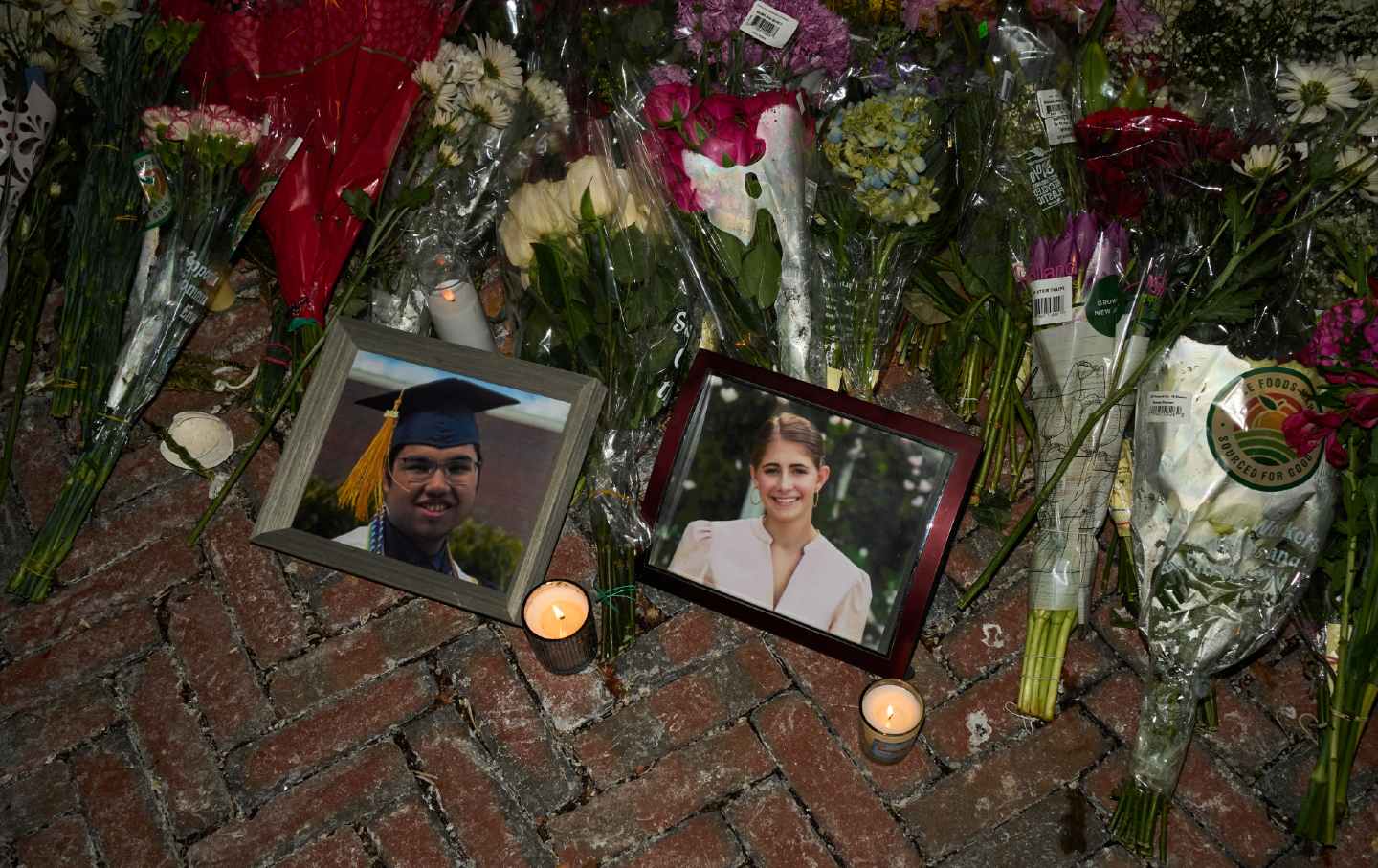
On a dark winter night this past December, a student laid a bouquet of flowers to rest against the Van Wickle Gates at Brown University. Snow quickly dusted the petals, and candlelight glinted against the stems’ plastic wrapping. It is one of many offerings placed at the gates that students ceremonially enter when they begin their time at Brown and exit when they graduate—a tradition that the two students killed in the campus shooting in December will not be able to complete.
The following morning, Matthew Guterl, Brown’s vice president for diversity and inclusion and the leader of the university’s healing efforts, visited the temporary memorial with a specific goal in mind. With his colleague, he began pulling frozen petals from bouquets in the hopes of giving them new life in the university archives. The university shared the project with the Brown community in a press release and on social media.
But the idea wasn’t Guterl’s—it had been inspired by a similar initiative at Michigan State University, following the mass shooting there in 2023.
He said the decision to undertake the memorialization project was rooted in healing strategies focused on public messages of resiliency used at Michigan State.
“What the Michigan State folks did, beyond preserving the flowers, was also to signpost for the community what they were doing,” Guterl said.
“You have to explain why what you’re doing is helpful in the language of resilience and recovery and repair,” Guterl added. “Part of what you’re trying to do is to create an active metaphor for the community.”
When an institution faces unspeakable tragedy, few others know exactly what the recovery process looks like. But the network of colleges and universities that do can provide each other with expertise, inspiration, and unparalleled support.
After the 2023 shooting at the University of Nevada, Las Vegas (UNLV), which left three faculty members dead, Jamie Davidson, the university’s associate vice president for student wellness, said he received an outpouring of support from colleagues across the country.
“It’s one of the things I like about higher education. We can be competitors on the football field or the basketball court, but we’re all in it together to support each other during these unfortunate times,” he said.
Responsible for assisting with student recovery, Davidson leaned on support from institutions that had already faced the impossible task of deciding how to move forward.
Davidson met with the student affairs team at Michigan State and sought help from Micky Sharma, the director of Counseling and Consultation Service at The Ohio State University. Sharma was at Ohio State when a student attacked a crowd of pedestrians in 2016. Before that, he was the director of the Counseling and Student Development Center at Northern Illinois University (NIU) in 2008, when a shooting left five students dead and 17 injured.
At Davidson’s request, Sharma traveled to UNLV to help train the school’s student affairs staff on how best to support the UNLV community. Davidson and his team directly implemented strategies used at Ohio State, including providing drop-in workshops for students, faculty, and staff to discuss self-care and recovery.
Andres Carrasco, who was a student working on an assignment on the floor of the building where the shooting at UNLV occurred, took advantage of the university’s counseling resources. His professor was one of the three faculty members who were killed in the attack, which Carrasco heard taking place down the hall from where he sat.
Although he at first tried to distance himself from the events of that day, a dean reached out to him and connected him with a therapist provided by UNLV, who helped him process what had occurred.
Carrasco said the school “took a very holistic approach” to its healing efforts, adding that students weren’t required to take final exams, could take classes pass/fail, and mid-year graduates could attend graduation the next semester instead.
Coming back to campus after the shooting was eerie, Carrasco said, but the level of care and support was apparent.
Sharma developed the expertise he used to advise on healing initiatives at UNLV through advice he had received from other institutions. When he was at NIU, the university leaned on guidance from administrators from Virginia Tech, where a gunman killed 32 students in 2007.
“There was no playbook before the tragedy at Tech, and they really helped guide us on how to move forward,” he said.
One of the strategies he learned from Tech and implemented at NIU was making counselors accessible as much as possible. At NIU, they put a counselor in every class for two days to provide “psychological first aid,” he said. Sharma did the same at Ohio State, placing counselors at the student union and the recreation center. Around 500 counselors come to campus from across the country to help—all on a volunteer basis, he said.
Pasha Sergeev was a graduate student at the time of the 2016 attack at Ohio State. After walking to class on a November morning, they were stabbed in an incident that would leave 11 injured.
In the hours following the attack, Sergeev received hundreds of calls and text messages, which were quickly becoming overwhelming. When Ohio State connected them with a counselor, one of the first things she helped them do was draft a text to send to their community. The next day, a therapist reached out and told them he would clear his schedule to help Sergeev manage their panic attacks and process the memories from that day. Through Sergeev’s student insurance, all their therapy and medical bills were covered.
“They were doing a good job and making me feel like they actually cared,” they said.
The reverberations of this accessible counseling and therapy strategy were also felt at Brown. In a state with fewer available licensed healthcare professionals than Illinois and Ohio, Brown worked with the university’s public health experts to create a lite version of what was done at NIU and later at Ohio State. They focused on determining what resources faculty members should share when students came back to class and staffing tables with counseling support in prominent locations across campus, Guterl said.
Sophie Sun, a first-year student at Brown at the time of the shooting, appreciated the support the university provided students returning to campus. “When classes resumed, every professor I had took a moment to acknowledge what happened, which meant a lot,” she said.
When the shooting occurred, Sun sheltered in place in a classroom for four hours. “The doors couldn’t lock, and the walls were glass, so we just sat in the dark, waiting for updates, desperately texting everyone we knew,” she said.
As the vice president of Brown’s first-year class, Sun helped bring students together after the tragedy. She helped organize a walk to a nearby park that Mukhammad Umurzokov, one of the victims killed in the shooting, frequented. Then, a bouquet-making event for students to lay flowers at the Van Wickle Gates. “The thread running through all of it was the same: bring people together, and remind them of the strength of community,” she said.
Popular
“swipe left below to view more authors”Swipe →
Cultivating community among peers after a tragedy is important, according to Alyssa Rheingold, the director of response, recovery, and resilience at the National Mass Violence Center (NMVC). And she would know—she’s taken her expertise in trauma response to more than 40 communities impacted by tragedy, including Florida State, Michigan State, and Brown.
Unfortunately, Rheingold’s expertise has been in high demand with the prevalence of shootings at schools and universities across the United States. According to Everytown for Gun Safety, there have been 55 incidents of gunfire on school grounds since the beginning of 2026 alone. Last year, 54 individuals died across 163 incidents of gun-related violence at schools and universities.
Having spent time with many of these affected communities, Rheingold knows what has worked on different campuses. Through her work, she has learned the importance of preserving temporary memorials, receiving input from victims, and holding resiliency activities that foster connection between peers.
“This is an organization that’s worked with every other major university that’s been through a mass shooting,” Guterl said, “and so they are themselves collectors of advice and distributors of advice.”
Rheingold came to Brown after the shooting to provide consultation and support for faculty, staff, and students. She also helped establish a resiliency center to provide a central hub for support, which has been done at schools such as Michigan State. The NMVC fosters connections between schools by hosting forums for the directors of these centers across the country to discuss what is and isn’t working. “One of our roles is to provide that connection of communities to other communities,” Rheingold said.
Other organizations that work to consult universities on how to heal have also arisen out of the wake of mass shooting incidents in recent years, some from the victims of these events themselves.
Six days after the shooting at Brown, Kristina Anderson Froling, who was injured in the shooting at Virginia Tech, hopped on the phone with Guterl. She did so on behalf of the Koshka Foundation for Safe Schools, which provides resources and training to communities after mass shootings. In April, she brought her support to campus, providing in-person consultation and giving a talk to members of the community.
But support doesn’t always look like an on-campus visit, Froling said. “Really, what it looks like is people texting one another, usually quite quickly after something happens.”
Froling described this group of schools that have experienced tragedy as the “club no one wants to be a part of.” She noted that she may not stay in touch with many of the people she has assisted with recovery efforts, but when the anniversary of the shooting in their community passes, she makes sure to send them a text. “It’s this kind of unspoken friendship of having been there,” she said.
“We’ve learned something from each of these folks that have really shaped our response,” Guterl said. “It has never felt lonely to move through this.”
Granted, recovery has its challenges.
While Sergeev appreciated Ohio State’s healing resources and initiatives, they felt that the university moved on too fast, returning to classes and finals quicker than they felt was necessary.
Sharma emphasized that at Ohio State, the healing process was about moving forward from tragedy rather than forgetting. It involved a plan for how to continue healing for weeks, months, and years after tragedy.
“There’s a strong desire to want to move on and get behind this and past it. And I get that, it’s not all bad,” Davidson said. “But we have to realize that everyone is in different places and the support needs to continue for an extended period of time.”
And tragic events can strain counseling centers faced with a huge influx of new patients. This has pushed schools to take new approaches to counseling. At Brown, this means offering a range of options from drop-in sessions to virtual therapy. Sharma did the same at Ohio State, acknowledging that not every student is seeking traditional, individual counseling.
Many administrators who have learned new ways to adapt to the challenges of tragedy are more than willing to share what they have learned to help whoever faces it next.
“I think people who choose to work in higher education do so because they have a giving nature and want to be supportive, and so it’s an opportunity to be supportive of colleagues at another institution,” Sharma said.
When Sharma was at NIU, individuals from Virginia Tech came to visit him and support the campus community. “Those gentlemen dropped everything, came to campus for a week, put their lives on hold,” he said. At the end of their visit, Sharma told them that he wasn’t sure how to properly thank them. In response, one of the Virginia Tech administrators said simply: “Pay it forward.”
From large state universities to small private state schools, a shooting can impact a wide variety of campuses—schools that, on paper, seem fundamentally different from one another.
“It seems to me the consequence of moving through the aftermath of the mass shooting is that there’s a lot less difference than you thought,” Guterl said. Every university is trying to help young people “get from one point in their life to the next,” he added. “It’s moving to be connected to so many people who are struggling in the wake of something so horrible to try to help students get back to that.”
At Brown’s Van Wickle Gates, Guterl recalled seeing messages reading “Spartan Strong” from Michigan State students and “UVA Strong” from University of Virginia community members mixed in with the bouquets of colorful flowers that persisted through the seasons. Miles away, they seem to say, a network of universities believes Brown, too, can heal.
More from The Nation
“We see America each time those young and old stand in the beating rain or the stifling heat to cast their ballots.”
In this week’s Elie v. US, our justice correspondent delves into 7 cases that got overlooked in the end-of-term frenzy.
The ruling is about whether trans people have the same rights as everybody else—and the court said they don’t.
As Trump went after higher education, Yale built a case for its conservative credentials. The Justice Department came knocking anyway.
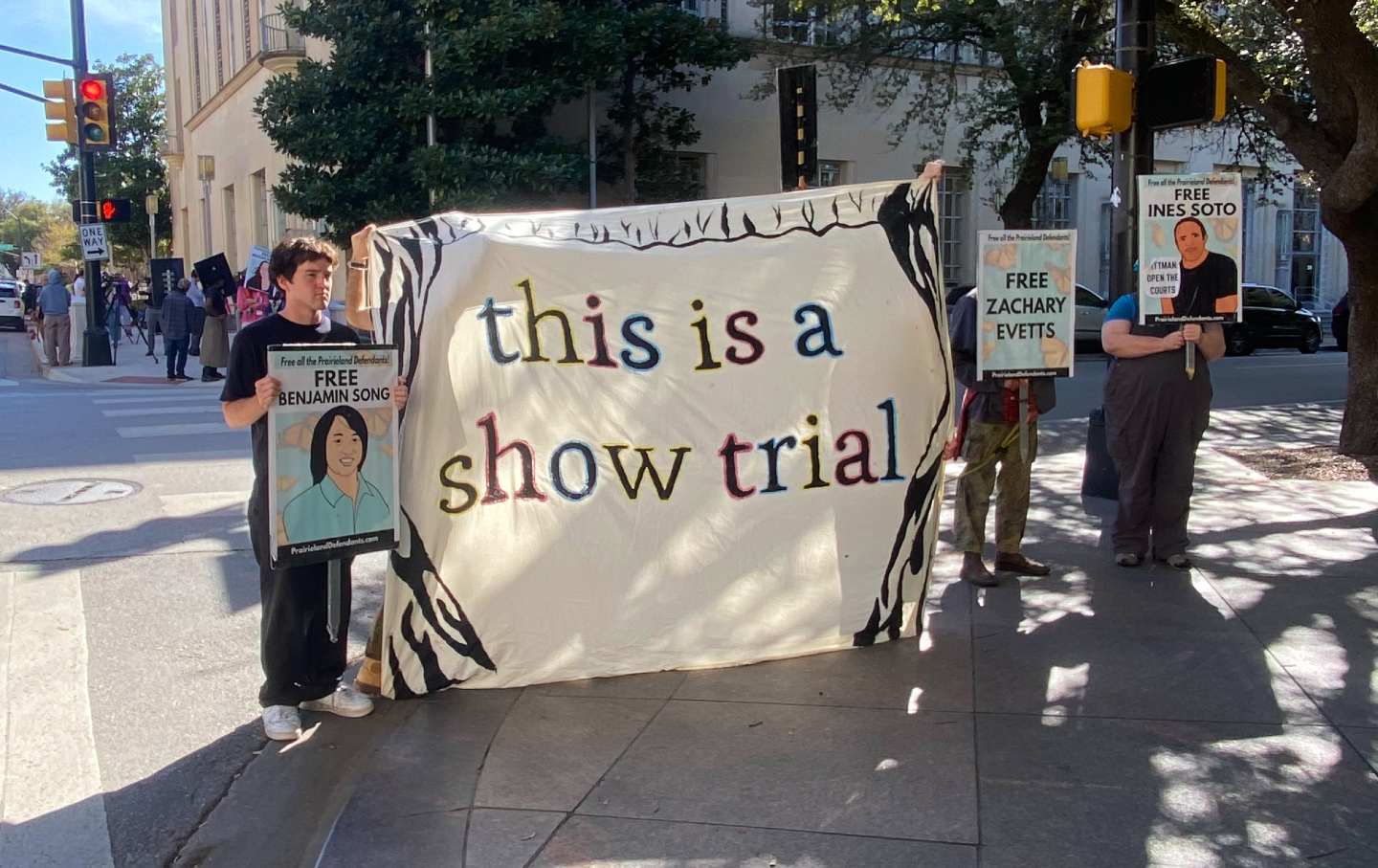
Under Trump, eight Prairieland defendants were sentenced to a combined four and a half centuries in prison.
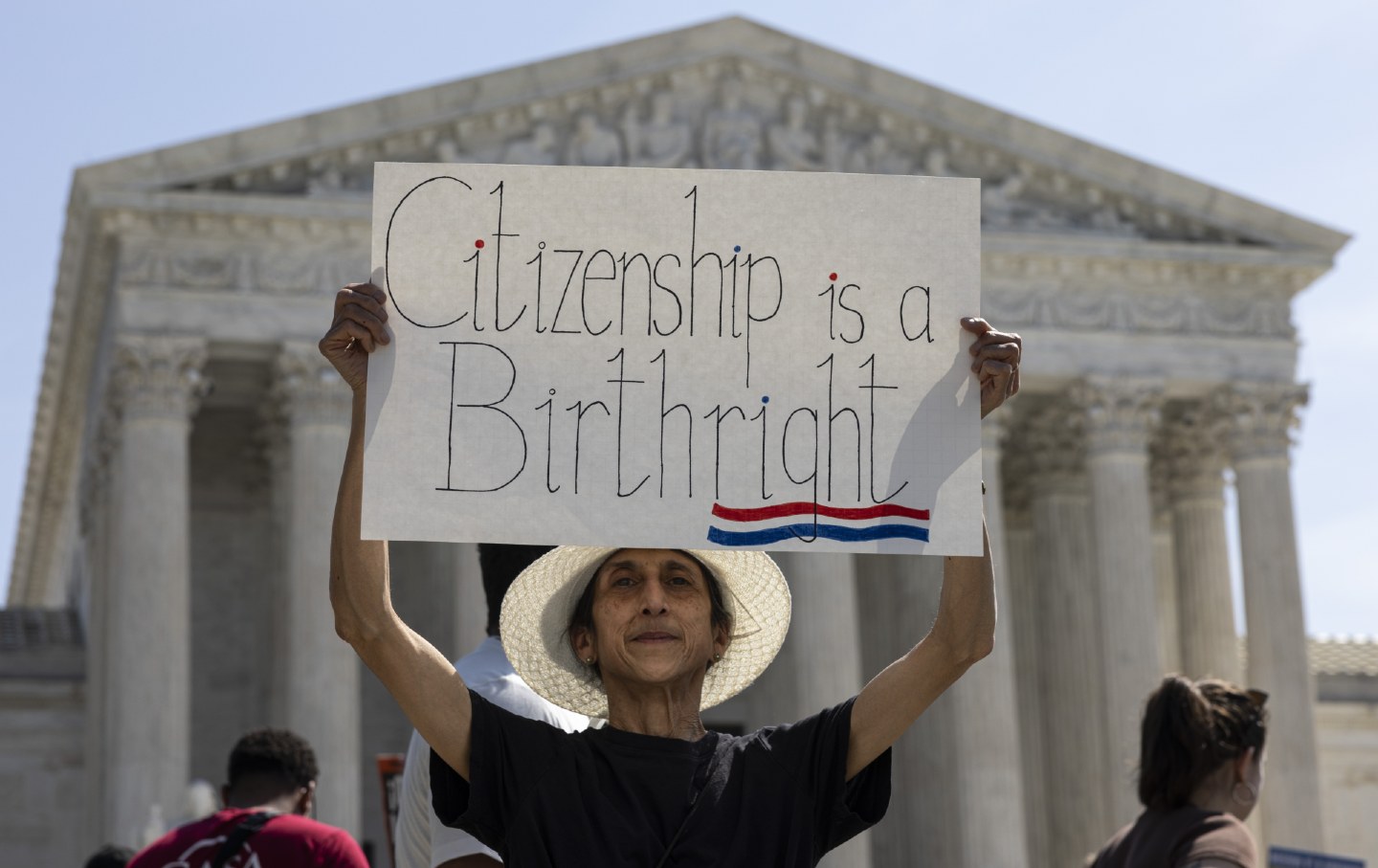
The Supreme Court’s decision upholding birthright citizenship is a victory that may contain the seeds of a future defeat.