
As Trump went after higher education, Yale built a case for its conservative credentials. The Justice Department came knocking anyway.
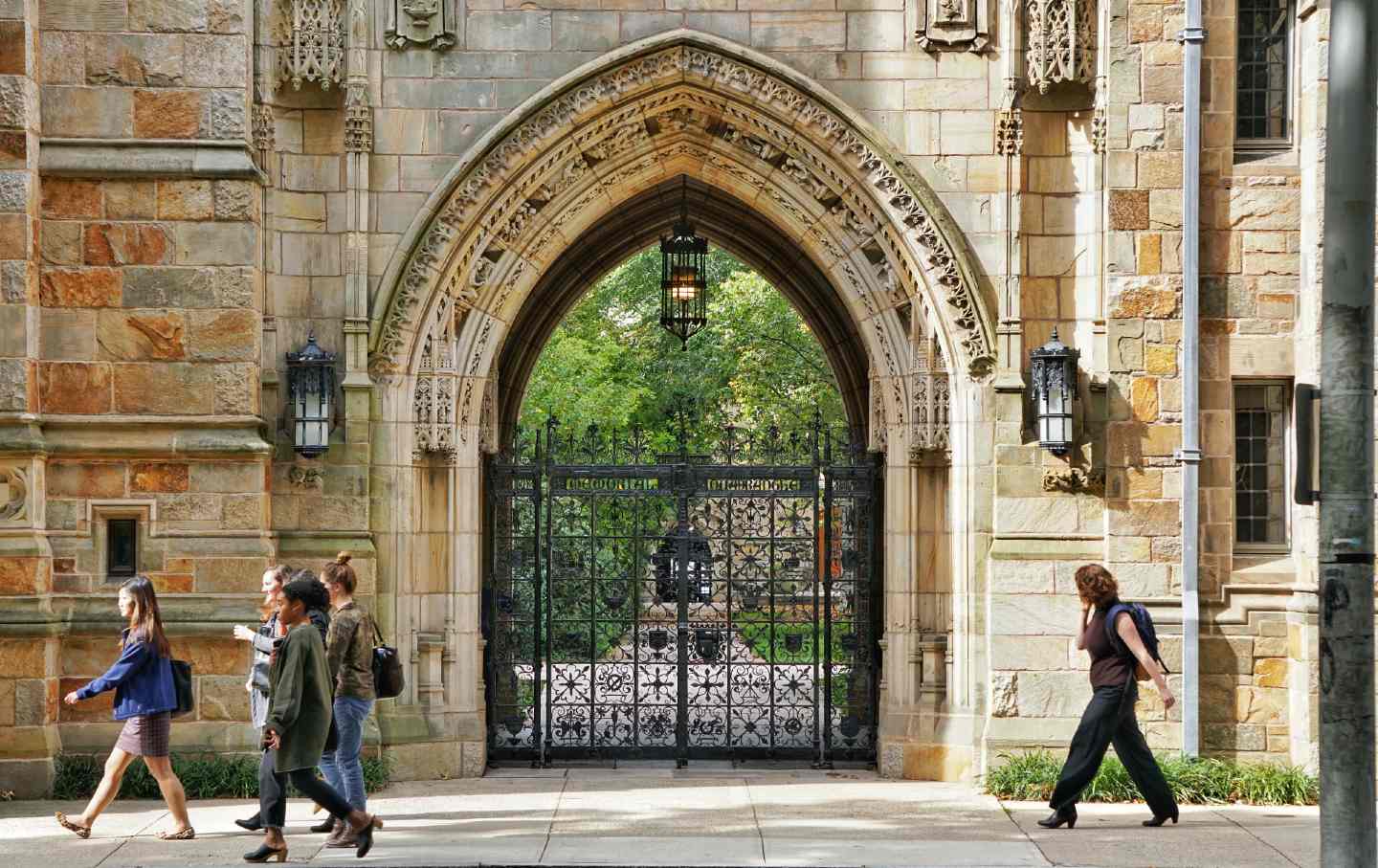
Students walk in front of a decorative stone archway at Yale University.
(Helioscribe / Shutterstock)
Last September, a ceremony like none before it was held at the center of Yale’s campus. The executive vice president of the United States Postal Service, the dean of Yale College, conservative columnist George Will, and the friends and family of William F. Buckley Jr., father of the modern conservative movement, gathered for an unveiling of a postage stamp commemorating the centennial of Buckley’s birth. In the light of a typical late afternoon, a staunchly liberal Ivy League university was celebrating its most famous conservative alumnus as 12 million copies of Buckley’s image began getting delivered into American mailboxes.
But there was nothing typical about the celebration. It was a deliberate effort by the university to signal conservative values that its community does not hold: five in six professors are registered Democrats and 0 percent of faculty political donations in 2025 went to conservative candidates. Meanwhile, the student body overwhelmingly identifies as liberal.
Yale’s administration, nonetheless, has spent the second Trump administration highlighting a heterogeneity of ideological beliefs among its faculty and students that, for the most part, is marginal.
In 2011, Lauren Noble graduated from Yale and believed that her university lacked space for conservative students like herself. Sometimes, opting for more discreet phrasing, she will tell you that the university lacked “intellectual diversity,” or the inclusion of conservatives.
That year, Noble founded the William F. Buckley Jr. Program at Yale, now the Buckley Institute, a nonprofit dedicated to fostering what its filings describe as open inquiry and conservative thought on campus. By 2024, the organization had grown to $3.77 million in annual revenue, with Noble drawing a salary as its executive director. The institute became the institutional embodiment of Yale’s argument that it was, in fact, a place where conservative ideas are debated.
It was a convenient argument to have on hand when Donald Trump—threatening retribution on elite higher education for, in his view, fostering cultures of wokeness and anti-semitism—returned to the White House.
Current Issue

For most of Trump’s second term, Yale was largely spared. While the administration froze hundreds of millions of dollars in research funding at Brown, Columbia, Cornell, and Penn, Yale watched from a distance. Harvard fought back and paid for it, and UCLA refused and faced litigation. Yale, somehow, remained sheltered from its fury, and nobody could fully explain why—though some faculty members assert that university president Maurie McInnis shied away from issuing public statements about Trump’s attack on higher education to avoid putting a “target” on Yale’s back.
McInnis, however, offered another theory. Speaking to the Yale Daily News last October, she openly wondered whether the university’s tradition of open debate had provided some measure of protection. “Whether it is that long tradition, the long tradition we have of encouraging open debate from something like Yale Political Union or the Buckley Institute, or whether it’s we’re at the end of the alphabet, I don’t have that answer,” she said.
Whatever the reason for Yale’s reprieve, the administration was not simply leaving the university alone—not for good, anyway. In March, last year, the Education Department named Yale among 60 colleges warned of potential enforcement actions over inadequate responses to antisemitism. A month later, an administration antisemitism task force said it had been “cautiously encouraged” by Yale’s response to a campus protest. It was a rare, backhanded compliment from a White House that had made punishing universities a keystone of a palace of retribution.
To keep Trump away, Yale was also spending money. And a lot of it.
The university’s lobbying expenditures, around $100,000 per quarter during previous administrations, climbed steadily as the Trump administration tightened its grip on elite higher education. Eventually, Yale’s quarterly spending on lobbying reached $370,000, the largest sum spent in the Ivy League.
McInnis, meanwhile, had an in-person conversation with Education Secretary Linda McMahon, though the nature of that conversation has not been made public. What is known is that in April, McMahon came to speak at Yale. The day before her arrival, a Yale task force of 10 professors published a report criticizing elite universities for eroding public trust in higher education, warning that admissions processes had become “subjective and hard to explain.”
The report had a lot of good, and there is no good reason to doubt the motivations of the tenured professors who wrote it. But the timing was notable, delighting Elise Stefanik, the right’s reigning darling of elite-higher-education-bashing, and others like her.
The Buckley Institute, the proof that conservatives were accepted by Yale’s admissions, and once there, were taken seriously, had by this point taken in more than $10 million in contributions since 2020. Noble’s organization was no longer a scrappy student extracurricular. The Buckley Institute had become what Yale cited whenever anyone in Washington asked whether the university had room for the right.
Yale cited it often. But that wasn’t enough.
In May, the Justice Department accused Yale’s medical school of illegally favoring Black and Hispanic applicants over white and Asian ones, concluding that the university had continued to consider race in admissions even after the Supreme Court’s 2023 ruling effectively banning the practice. The department said it had reviewed testing data showing that a Black applicant was far more likely to receive a medical school interview than a similarly qualified Asian candidate, and cited an internal presentation slide that it said suggested admissions personnel were receiving verbal instructions to factor in race during the presentation, instructions that were deliberately not put in writing. The six-page letter was a formal accusation, and it arrived despite everything Yale had done to avoid exactly this moment.
Popular
“swipe left below to view more authors”Swipe →
Then the investigation widened. In a New York Times exclusive published June 26 by Michael S. Schmidt, Alan Blinder, and Michael C. Bender, who have spent months covering the Trump administration’s campaign against elite universities, the Times reported that the Justice Department’s review had extended well beyond the medical school, encompassing undergraduate and law school admissions as well, an inquiry being conducted in secret and one that, according to three people briefed on the matter, had prompted Yale to pursue settlement talks with the government.
Yale had hired McGuireWoods, the same law firm the University of Virginia retained last year to negotiate a settlement with the Justice Department that carried no financial penalties, and had already offered the government a proposal. Yale’s quick moves to reach an agreement, the Times reported, suggested it had no interest in the kind of high-profile, drawn-out fight that Harvard had waged and, at least so far, lost.
Yale wanted a way out.
The university had spent the first two years of the Trump administration constructing a case for its own conservative credibility. But the Justice Department came for Yale anyway, confirming, perhaps redundantly, that the Trump administration had never had good-faith interests in the improvement of Yale, the Ivy League, or commemorative postage stamps of William F. Buckley Jr.
More from The Nation
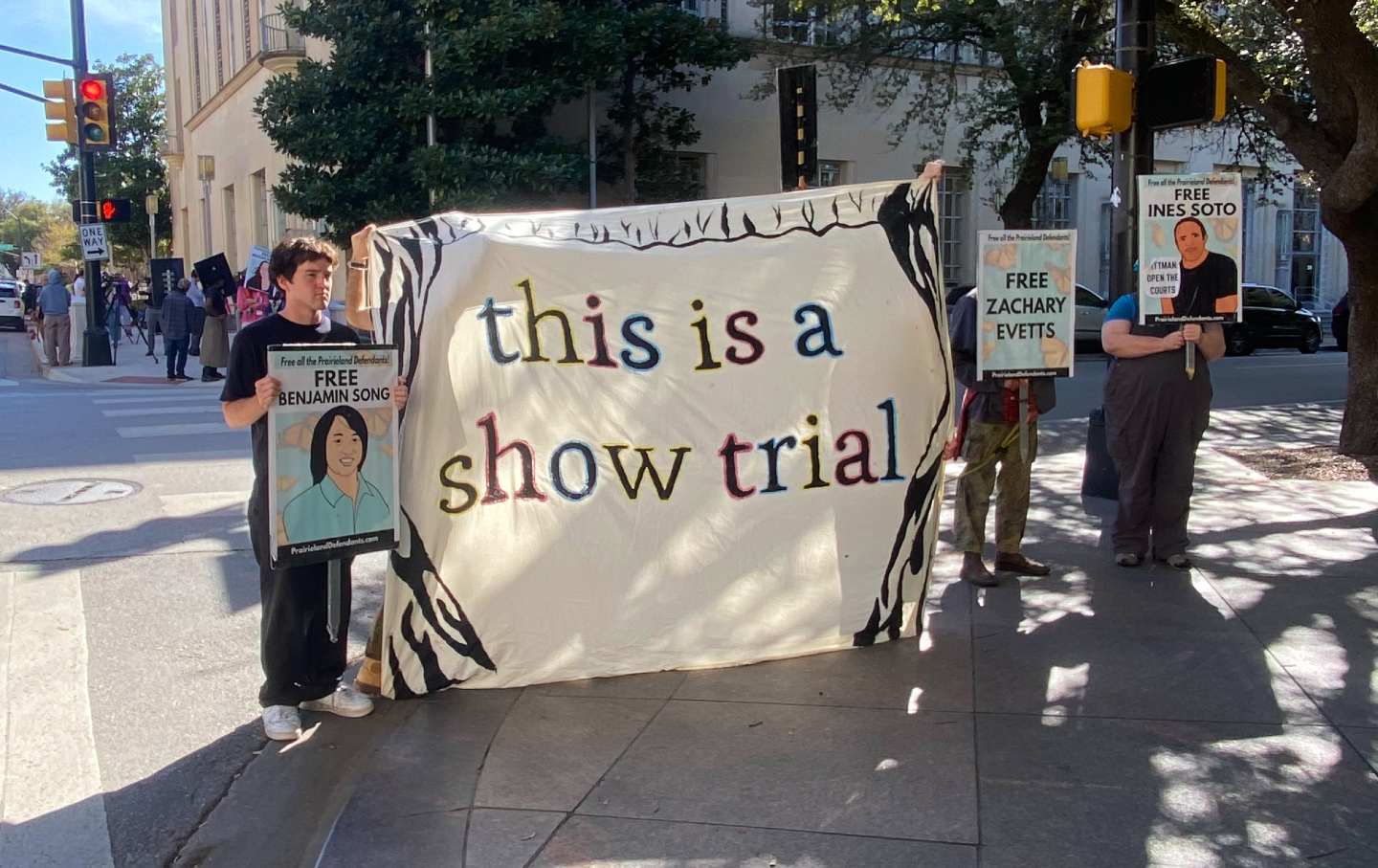
Under Trump, eight Prairieland defendants were sentenced to a combined four and a half centuries in prison.
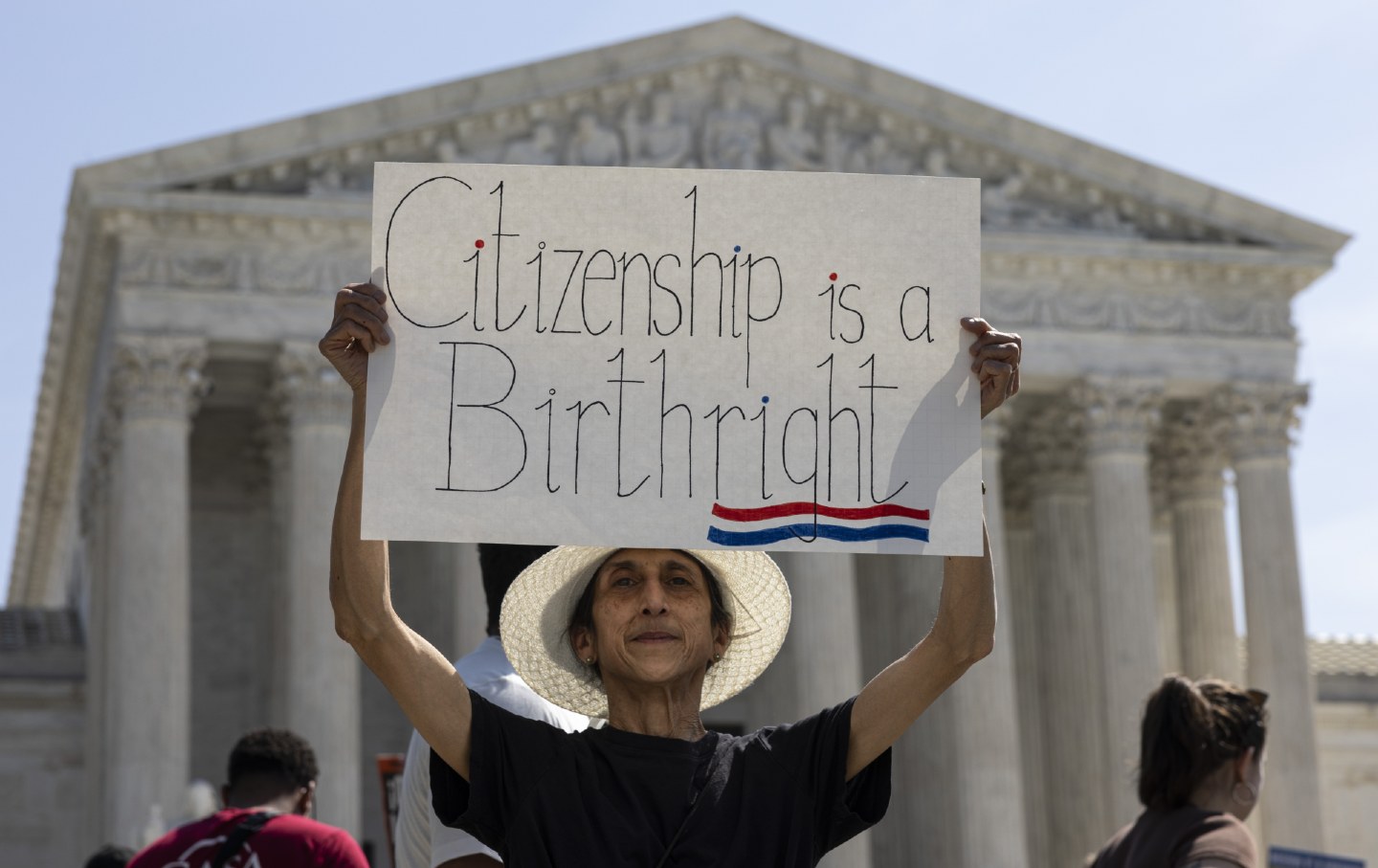
The Supreme Court’s decision upholding birthright citizenship is a victory that may contain the seeds of a future defeat.
Workers with college degrees are constantly being pitted against workers without one. But such a zero-sum debate obscures the need to protect everyone in every workplace.
The administration may be reluctant to further undermine abortion rights before November, but the abortion-rights movement must stay vigilant.
More than one founding father knew that to be truly free, women needed control over their reproduction.
The premises of the American democratic vision must be applied to the economy if we are to be free in all alreas of life.