
Believe it or not, laptops are suddenly interesting again.
Apple kicked things off in March with the MacBook Neo, a $599 laptop that felt like an aggressive attempt to do to the low end of the market what the MacBook Air did to the middle. Even with a $100 price hike this week due to the rising cost of components, it remains a cheap and cheerful MacBook that puts its Windows competition to shame on the merits.
When Computex Taipei happened earlier this month, it felt like the rest of the industry had awakened. Dell revived its XPS line as a MacBook Neo rival. Qualcomm announced its Snapdragon C chip, aimed at Windows laptops priced as low as $300. And Nvidia finally made its long-rumored move into PCs with RTX Spark, an ARM-based and inevitably AI-focused chip.
{“blockType”:”mv-promo-block”,”data”:{“imageDesktopUrl”:”https://images.fastcompany.com/image/upload/f_webp,q_auto,c_fit/wp-cms-2/2025/12/multicore.png”,”imageMobileUrl”:”https://images.fastcompany.com/image/upload/f_webp,q_auto,c_fit/wp-cms-2/2025/12/multicore-mobile.png”,”eyebrow”:””,”headline”:”u003Cstrongu003Eu003Cstrongu003ESubscribe to Multicoreu003C/strongu003Eu003C/strongu003E”,”dek”:”Multicore is about technology hardware and design. It’s written from Tokyo by Sam Byford. To learn more, visit u003Ca href=u0022https://www.multicore.blog/u0022u003Emulticore.blogu003C/au003E”,”subhed”:””,”description”:””,”ctaText”:”SIGN UP”,”ctaUrl”:”https://www.multicore.blog/”,”theme”:{“bg”:”#f5f5f5″,”text”:”#000000″,”eyebrow”:”#9aa2aa”,”subhed”:”#ffffff”,”buttonBg”:”#000000″,”buttonHoverBg”:”#3b3f46″,”buttonText”:”#ffffff”},”imageDesktopId”:91454027,”imageMobileId”:91454030,”shareable”:false,”slug”:””,”wpCssClasses”:””}}
Unsurprisingly for the hardware-heavy Computex show, U.S. players like Microsoft and Dell, along with Taiwan OEMs such as Asus and Acer, are banking on a future where they can compete on local performance, battery life, and tighter integration between software and silicon.
But just before Computex, Google announced its Googlebook initiative, which is set to launch later in the year.
A new class
Googlebook is pitched as a new class of laptops designed around Gemini, Android, and Chrome, essentially serving as a successor to the ChromeOS platform. The operating system, codenamed Aluminium OS—yes, with the British spelling—is built around Android 17 but integrates Gemini and Chrome technology to produce notebooks that ought to feel, well, even more Googley.
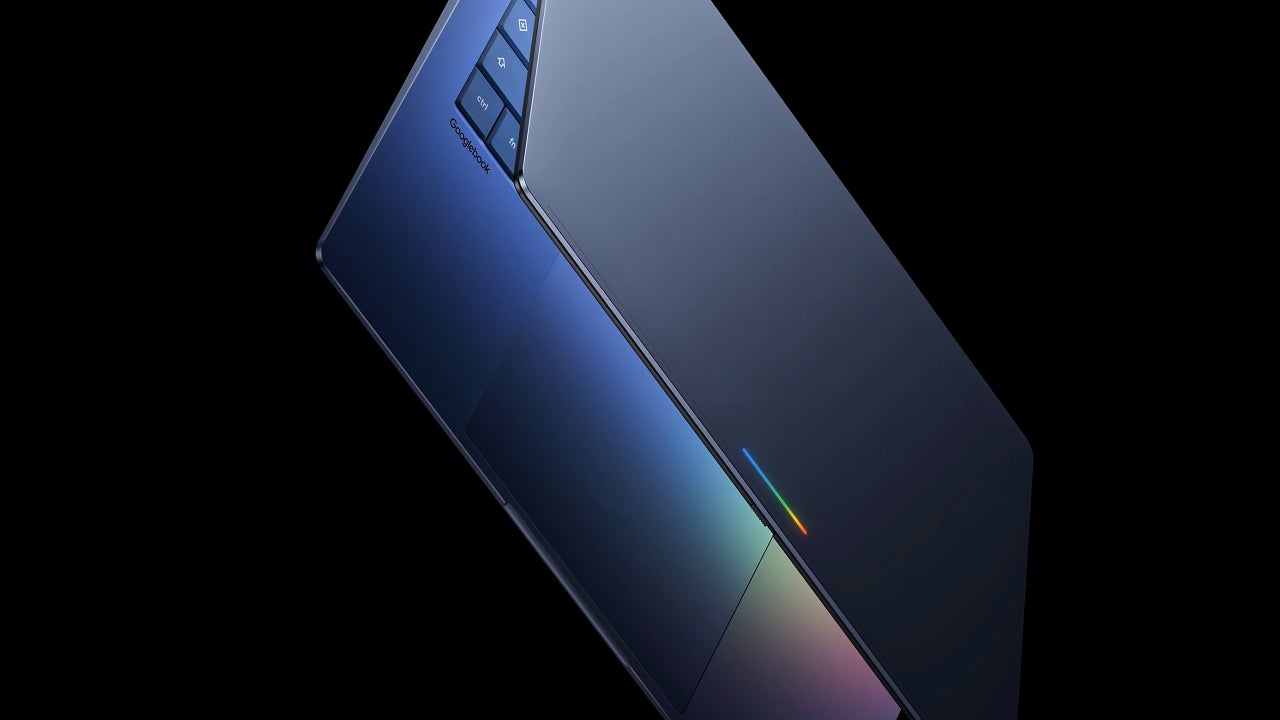
The first models are due this fall from Acer, Asus, Dell, HP, and Lenovo. Right now, there’s no information on chip platforms, pricing, or industrial design. But Google is pitching the Googlebook as a premium laptop category built around Gemini, Android phone integration, Google Play apps, Chrome, and a few new interface ideas. Google claims to have rethought the way the mouse cursor works, for one thing. Perhaps less substantially, Googlebooks will also be identifiable by a strip of glowing lights on the outside.
A needed reset
It does feel like Google’s laptop efforts could use a reset. On one hand, Chromebooks really did have a big impact on computing. They were cheap, secure, and easy to manage, proving to be a great fit for many schools and businesses that could get most things done in a browser.
On the other hand, Google’s history in the premium laptop segment is less convincing. The Chromebook Pixel from 2013 was a high-end, first-party take on the Chromebook that unsurprisingly failed to win mainstream appeal with a MacBook-grade price tag. Two years later, the Pixel C came at the idea from the opposite direction, attaching a keyboard to an Android tablet that was nowhere near ready for multitasking or productivity.
The 2017 Pixelbook was a spiritual successor to the Chromebook Pixel and remains a crowd favorite for its thin build, great keyboard and sleek 360-hinge design, but again Google didn’t stick with the idea. The following year saw the Pixel Slate, a strange attempt to squish Chrome OS into an Android tablet form factor with an awkward kickstand keyboard setup. Finally, in 2019 Google released the Pixelbook Go, a sleek but basic Chromebook that couldn’t justify its price point.
In other words, Google has thrown a lot of premium laptop-shaped ideas at the wall already.
Device partners
We don’t yet know much about what Google has planned for the Googlebook initiative in terms of hardware, but it does seem the company is backing away from its own designs. Instead, this time it’s focusing on partners who will build devices to a particular specification.
That doesn’t sound too different to the existing Chromebook Plus program, which Google launched a few years back as a way to stamp a mark of approval on laptops that met some minimum requirements. A 1080p display, 8GB of RAM, 128GB of storage—table stakes, really, even for Chromebooks. But it did seem to spur some activity in the higher end of the market that Google used to own; I know quite a few people who swear by Lenovo’s OLED-equipped Chromebook Plus 14 from last year.
With the Googlebook initiative, though, Google is going all in on Android as a credible laptop platform. Long pilloried in comparison with the iPad and its vibrant app ecosystem, in the past couple of years Android tablets really have gotten a lot better for productivity. There is no reason why Aluminium OS, with Android as a base, couldn’t make for a capable laptop operating system.
It should also bring advantages of its own. Google says Aluminium OS will offer direct access to files and apps from the user’s Android phone, improving the multidevice experience. Of course, Android is already largely predicated on Google cloud services, and this sort of thing worked fine on Chromebooks for anyone used to using Google Drive. But it’s easy to imagine how Google could lean into a sleeker device-to-device interface.
As for the cursor, Google is calling it Magic Pointer and uses it as a way to invoke Gemini-powered contextual actions when you wiggle it over on-screen objects. A date in an email, for example, could quickly be converted into a calendar event. Or you could select multiple images and get Gemini to combine them, like by overlaying a logo onto a background.
This may prove to be a gimmick, but it could be a smart way to let Gemini know what you’re thinking without interacting with the software directly through traditional commands like a right-click. If Gemini is able to infer the most useful potential actions from there—which it ought to be capable of on a device where most of the software comes from Google—it could serve as a useful new layer for software interaction.
If not, hey, then at least every Googlebook will also have a “glowbar,” a colorful light strip in Google primary shades that the company describes as “a statement that is both functional and beautiful.”
I’m not sure how functional that glowbar will turn out to be. But when it comes to the overall Googlebook initiative? Color me intrigued. It represents an opportunity to break with the past and build a capable new platform on top of Android.
As always, we’ll have to wait and see how actual hardware turns out, especially given the pricing constraints manufacturers are facing across the industry. I do, however, think this program will be worth keeping an eye out for later in the year.
{“blockType”:”mv-promo-block”,”data”:{“imageDesktopUrl”:”https://images.fastcompany.com/image/upload/f_webp,q_auto,c_fit/wp-cms-2/2025/12/multicore.png”,”imageMobileUrl”:”https://images.fastcompany.com/image/upload/f_webp,q_auto,c_fit/wp-cms-2/2025/12/multicore-mobile.png”,”eyebrow”:””,”headline”:”u003Cstrongu003Eu003Cstrongu003ESubscribe to Multicoreu003C/strongu003Eu003C/strongu003E”,”dek”:”Multicore is about technology hardware and design. It’s written from Tokyo by Sam Byford. To learn more, visit u003Ca href=u0022https://www.multicore.blog/u0022u003Emulticore.blogu003C/au003E”,”subhed”:””,”description”:””,”ctaText”:”SIGN UP”,”ctaUrl”:”https://www.multicore.blog/”,”theme”:{“bg”:”#f5f5f5″,”text”:”#000000″,”eyebrow”:”#9aa2aa”,”subhed”:”#ffffff”,”buttonBg”:”#000000″,”buttonHoverBg”:”#3b3f46″,”buttonText”:”#ffffff”},”imageDesktopId”:91454027,”imageMobileId”:91454030,”shareable”:false,”slug”:””,”wpCssClasses”:””}}