
Part of soccer’s beauty lies in its unpredictability.
Already in World Cup 2026, we have seen Morocco tie with five-time champion Brazil and Australia overturn the odds by beating Turkey. But few surprises will top a Cabo Verde team ranked 67th at the start of the tournament holding Spain—many pundits’ pick for the title—to a 0-0 draw.
But what goes into deciding whether a team wins, draws, or loses? Of course, the quality of the players and coaching staff matters. And recent advances in sports analytics, including real-time player geolocation metrics, have led to the adoption of data-driven in-game decisions. Top football teams increasingly rely on big data and predictive algorithms to gain an advantage.
But sports psychology plays a big role, too. And that is where I come in. I have a passion for sports in general and soccer in particular—it is the game I grew up playing in Germany.
Now, as a sport psychologist and director of the Global Sport Leadership Solutions Lab at Drexel University, I study how players and coaches can manage chaos on the pitch to strategically improve performance and win.
Below, I outline several modern psychological principles that are essential to all 48 teams battling it out in Mexico, Canada, and the U.S. during the 2026 FIFA World Cup.
5 steps for soccer success
Disruption – It is true across all sports, and certainly in modern soccer, that the winning team will benefit from disrupting its opponent. Disruptive tactics can include brute-force tactical fouls, high-speed counterattacks that catch the opposition off balance, deceptive set pieces that create organized chaos, high-pressure tactics that force opponents into errors, and getting under the skin of opposition players.
Disrupting the organization and rhythm of the opposing team is both a mindset and a tactic that can lead to goal-scoring opportunities. A team that can disrupt an opponent’s flow can often overturn a skill disadvantage or demoralize weaker teams.
Attentional fitness – Scoring goals in international soccer is difficult. A great striker is worth his or her weight in gold. They not only possess exceptional dribbling and spectacular one-on-one skills but also strong “attentional fitness,” which requires cognitive efficiency and a work ethic to get into positions to score.
Such players are celebrated for their “coolness” and on-the-ball craft, but it is their psychological intelligence that makes them special. One of the first skills to break under pressure is the ability to focus. The quintessential goal scorer does not freeze.
One could call it “nerves of steel,” but that is just a metaphor for managing multiple sources of attention simultaneously and efficiently. Strikers such as England’s Harry Kane, France’s Kylian Mbappé and Norway’s Erling Haaland maintain attentional control under pressure. They lock into the moment when it matters most and seamlessly shift between tasks.
Controlled mind-wandering – Mind-wandering is a spontaneous zoning out of your immediate surroundings. In sports, mind-wandering is often seen as negative because inattention at a crucial moment can lead to disaster. But it is difficult to maintain focus for 90-plus minutes during a soccer game. And new neuroimaging evidence suggests that in moments of mind-wandering, the brain is not at rest at all. Rather, it is just processing information differently.
As such, controlled mind-wandering, which involves active mental exploration, can be highly beneficial in performance sports—even if only for a few seconds. The best players seem to know when to focus and when to pull back. They sometimes look away from the ball and absorb a broader perspective of the game. Then, when a crucial game-scoring opportunity arises, they lock in their focus and are 100% present.
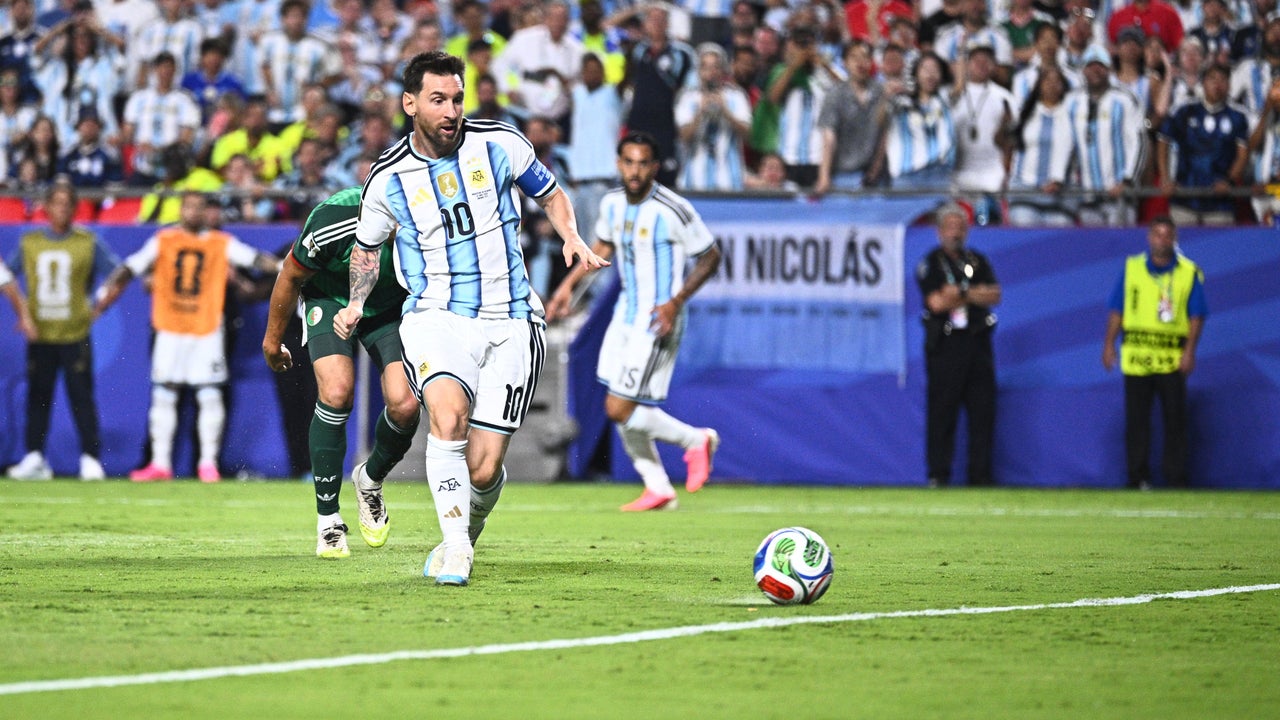
When researchers examined where Argentine great Lionel Messi looks, they found that his eyes are often off the ball. Common sense in soccer has been to keep your eyes on the ball, but new research suggests that the winner will also mind-wander and look away from the action. Messi’s brain can seemingly do things many of his opponents’ cannot; he appears to have world-class cognitive skills.
Resilience (for referees) – Soccer is one of the most difficult sports to officiate. Not only must referees be in excellent physical condition, they must also be able to manage the game emotionally. This has become increasingly difficult, with professional players routinely simulating injuries and an offside rule that is interpreted to within fractions of an inch.
And then there is one of the most difficult and controversial cognitive decisions in all of sports: the penalty kick, awarded for committing a foul in one’s own penalty box.
With the stakes so high and everyone watching, the modern World Cup referee must have exceptional multitasking, communication, and management skills. Referees are part of the fabric of the match whether they want to be or not. Everybody is judging them—even more so in 2026, since referees are wearing cameras on their temples, so the viewing public can see the game from their point of view. The psychological toolbox of the 2026 World Cup referee is complex, but it has to start with a good dose of psychological resiliency.
Tactical creativity – Tactical creativity in soccer is related to finding solutions on the pitch to complex individual or team situations. It almost always relies on divergent thinking and is often surprising and original. Research has shown that creativity is within everyone’s reach, including soccer players, especially if tactical creativity has been part of the training plan. As a result, the evolution of playing styles in elite soccer over the past few decades has shifted away from a structured, defense-heavy, possession-based system toward a modern, data-driven way to play based on pressing the opposing team high up the pitch. This requires players to take on multiple roles on the pitch. It requires a balance of both inspiration—or open-mindedness—and perspiration, or discipline.
Of course, to be creative one has to have the freedom to experiment; “play like children,” U.S. head coach Mauricio Pochettino suggested. Tactical creativity is a key driver of the cognitive skill set that allows players such as Croatia’s Luka Modrić and Belgium’s Kevin De Bruyne to see several moves ahead. These modern soccer stars not only play soccer on a different level, but they also think about soccer on a different level.
With the World Cup now underway, sports psychologists like myself—along with fans the globe over—can observe how athletes put some of these principles to work. And with any luck, the tournament will have “wow” moments of creativity that will be remembered for a lifetime.
Eric Zillmer is a professor of neuropsychology at Drexel University.
This article is republished from The Conversation under a Creative Commons license. Read the original article.