
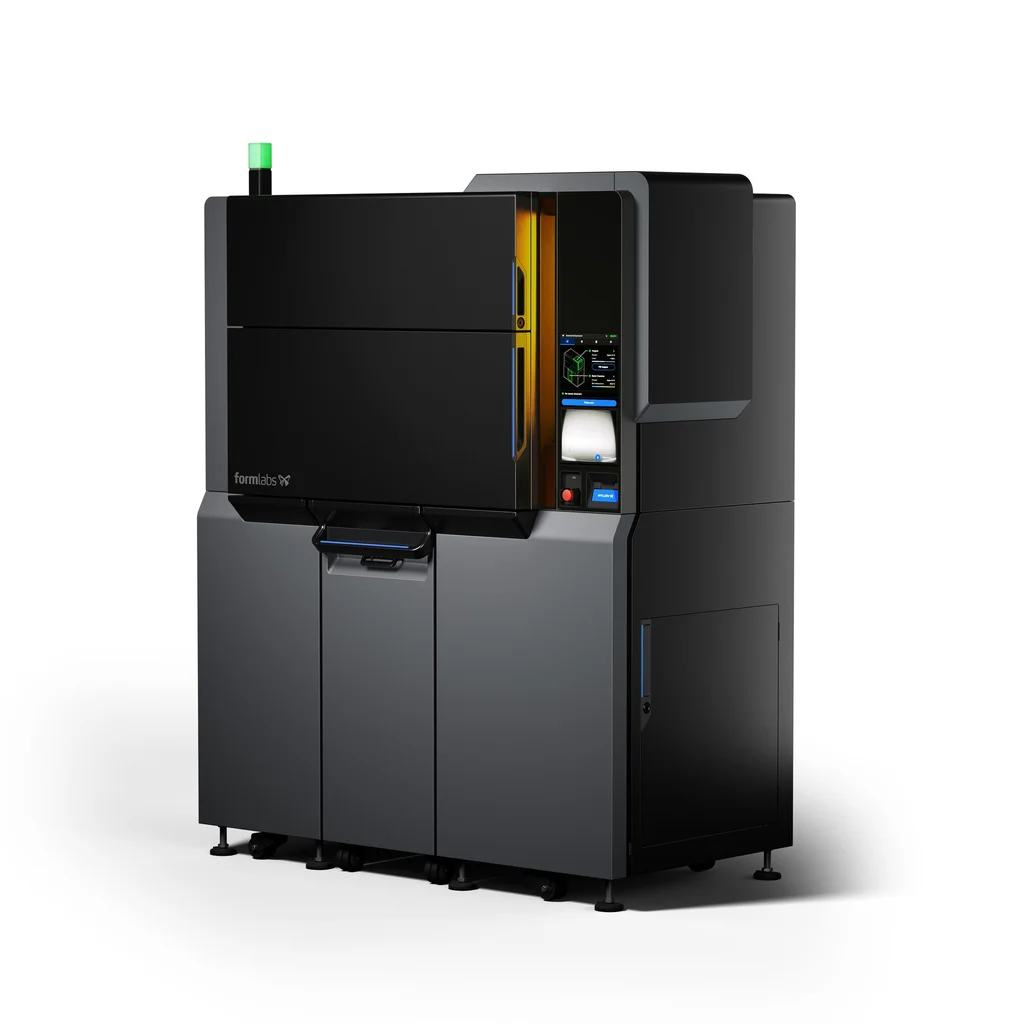
Formlabs wants to make industrial 3D printing feel less like industrial 3D printing.
The company has spent more than a decade building printers that make professional-grade prototyping cheaper and faster. With the Fuse X1, Formlabs is applying that playbook to larger industrial systems, where price, installation, and day-to-day operation have often kept the technology out of reach for smaller manufacturers and engineering teams.
The new machine is a selective laser sintering (SLS) printer built for manufacturers, engineering teams, product developers, and 3D printing service bureaus. The printer can turn out production-quality parts in less than 24 hours. (It starts at $84,999, is available for order today, and is expected to begin shipping in the fourth quarter of 2026.)
For CEO Max Lobovsky, that price gap is central to the point. Formlabs, founded in 2011 out of MIT, has long tried to make 3D printing less expensive and easier to use. “The goal has always been make it easier to go from an idea to a real thing,” he says.
The Fuse X1 is also a statement about where Formlabs thinks 3D printing is headed. The company helped popularize professional desktop 3D printing and has since expanded into automation, materials, dental applications, industrial prototyping, and production. (Fast Company named Formlabs one of its Most Innovative Companies in manufacturing in 2024.)
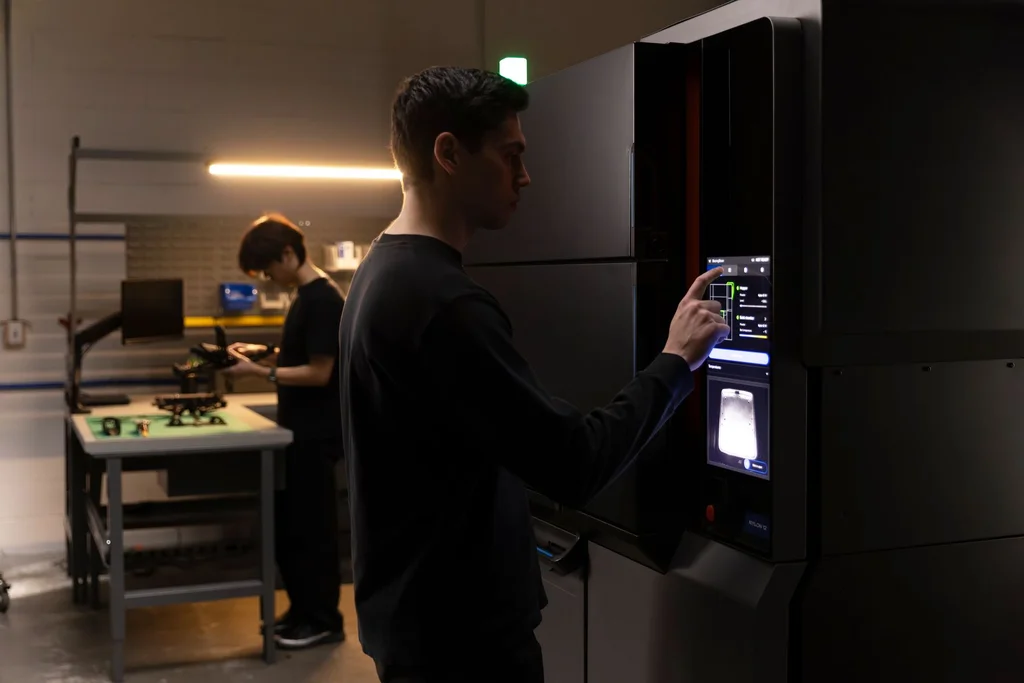
Now Formlabs is trying to push that same logic into a bigger, pricier, and more demanding part of manufacturing. The company says it has about 700 employees and more than $250 million in annual revenue, and has been profitable for more than two years. It has also raised significant venture backing, including a $150 million SoftBank-led Series E in 2021 that valued the company at $2 billion, with earlier investors including New Enterprise Associates, Foundry, and Autodesk.
Its customers have printed more than 500 million parts using Formlabs printers and materials. Earlier products, including the Form 4 and the Automation Ecosystem, were about making 3D printing faster, more reliable, and more repeatable. Fuse X1 takes that push into large-format SLS.
The new machine, a black cabinet that looks more like anonymous factory equipment than a futuristic robot, has been in development for about three years. More than 50 people worked on the project, which required roughly $50 million in R&D, according to Dávid Lakatos, the chief product officer. Building it, he says, was never simply a matter of designing hardware: “It’s kind of equal parts hardware, software, and materials,” he tells Fast Company.
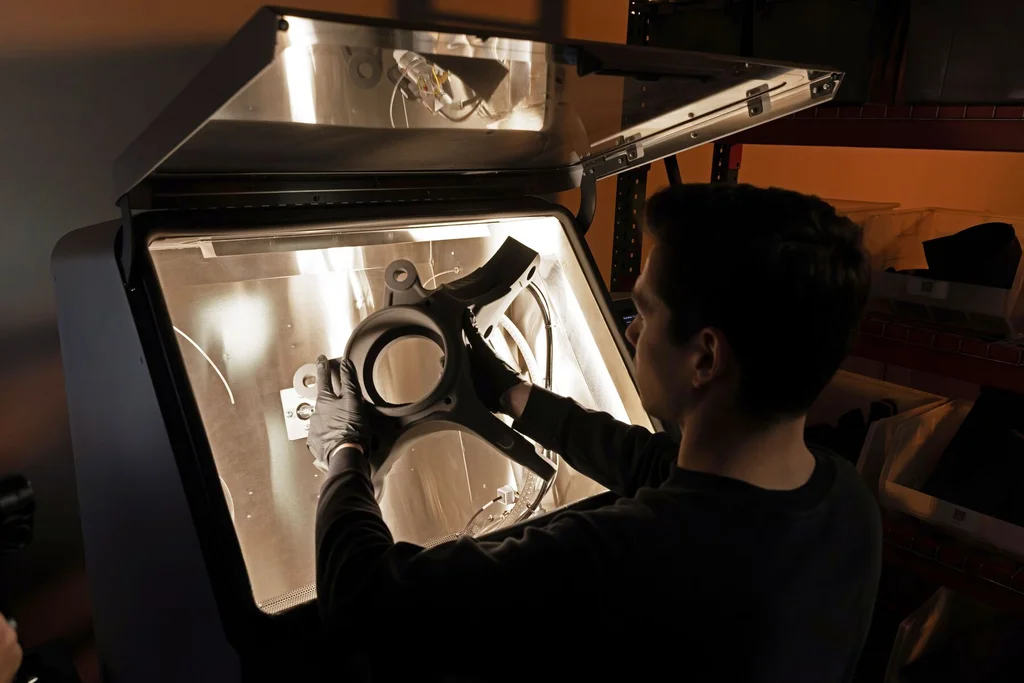
The hard part starts once the powder heats up. SLS uses a laser to heat powdered material until the particles fuse into durable solid parts. The method, known as sintering, can produce strong, complex objects, but it depends on precise heat control. If the temperature drifts, parts can fail or come out inconsistently. Fuse X1 uses 13 independent thermal zones and a system that Formlabs calls Adaptive Thermal Control to keep conditions stable across the build chamber. Formlabs says this lets users pack more parts into each print run.
The printer also has an AI-powered monitoring system called Print Intelligence, which uses computer vision and thermal imaging to inspect each layer during a print. When it detects a defect, it can remove the affected part from later layers, helping save the rest of the build rather than wasting the whole job.
The early use cases show the range Formlabs is chasing. Radio Flyer used Fuse X1 to speed up work on its Flyer Loop cargo e-bike, moving away from slower, multipart prototype processes. Tesla has used the printer at its Gigafactory Nevada for tooling, end-use parts, and production-line components, including small shims used in battery manufacturing. Autotiv Manufacturing, a New Hampshire service bureau, has used it as a lower-cost alternative to more expensive industrial machines.
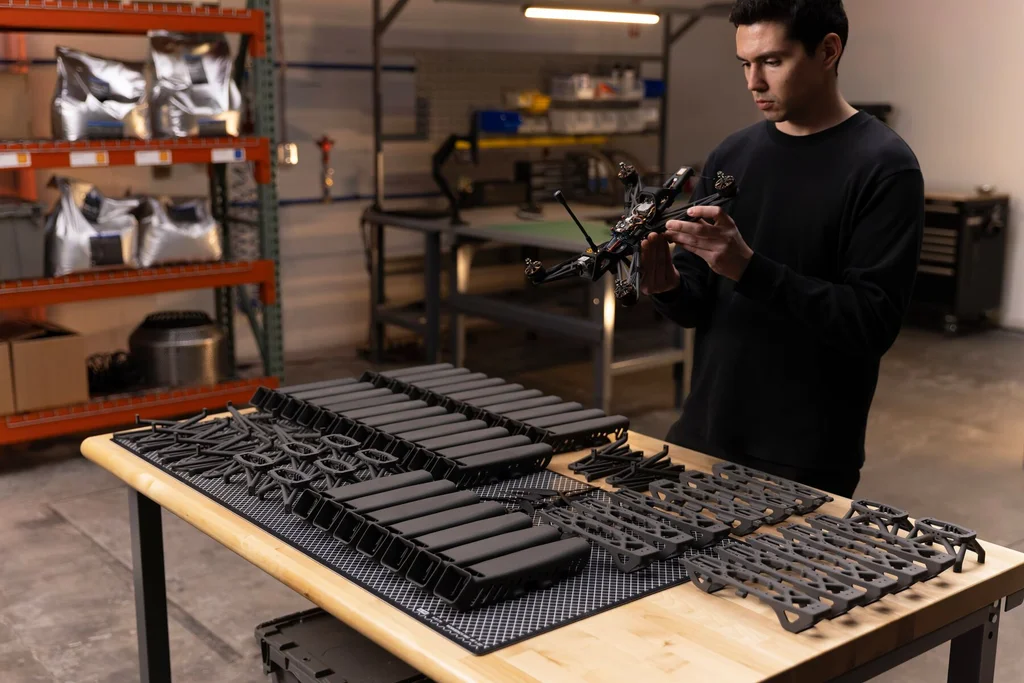
One of the more striking examples is in Ukraine. Lobovsky, whose parents are from Ukraine, visited the country in November and saw Formlabs printers being used by Skyfall, one of Ukraine’s largest drone manufacturers. Formlabs had not been targeting the country as a major market, he says, but demand has surged with the war. “Ukraine went from 0% of our global sales to 6%, which is quite unusually large for a country that’s like 0.2% of the global GDP,” Lobovsky says. “And that’s like 100% drone production.”
Formlabs is also trying to make that process easier for customers that do not want to buy a printer at all. Its Form Now service lets customers upload a file and order printed parts directly, with turnaround times as short as 48 hours in some markets. Lobovsky sees that as the end point of the company’s effort to make physical production faster and easier. “The final form of that is no printer at all,” he says.
Fuse X1 will test how far Formlabs can push that idea inside factories, service bureaus, and engineering labs. The pitch is simple: faster parts, lower costs, fewer installation headaches, and a shorter path from digital design to physical object.