
Close Menu
    Facebook X (Twitter) Instagram
    TRENDING :
    • 5 Fast Food Franchise Opportunities to Consider
    • The Entwined History of Capitalism and Race in the Americas and Beyond
    • How Kendra Scott used 3 simple elements to turn her jewelry startup into a $1 billion company
    • Employee Productivity Metrics: What Are They and Why Do They Matter?
    • ThredUp takes aim at Poshmark and eBay with new peer-to-peer listings
    • Bulgaria Finally Chooses Its Own Interests
    • The hidden cost of slow CEO succession—from a guy who became president in a weekend
    • Israel Spies On The US – What Else Is New?
    Populist Bulletin
    • Home
    • US Politics
    • World Politics
    • Economy
    • Business
    • Headline News
    Populist Bulletin
    Home»Business»Being a CEO is ‘not that complicated,’ says Google CEO Sundar Pichai
    Business 3 Mins Read

    Being a CEO is ‘not that complicated,’ says Google CEO Sundar Pichai

    Business 3 Mins Read
    Share Facebook Twitter Pinterest LinkedIn Tumblr Telegram Email Copy Link
    Follow Us
    Google News Flipboard
    Share
    Facebook Twitter LinkedIn Pinterest Email

    At Google, AI is reshaping employees’ titles and how they work. Last month, Google Cloud’s senior director and chief evangelist Richard Seroter told Fast Company that software engineers have turned into product engineers, or architects, as they move away from manual coding to directing teams of AI agents. It seems that AI has changed how Google’s CEO, Sundar Pichai, works too. 

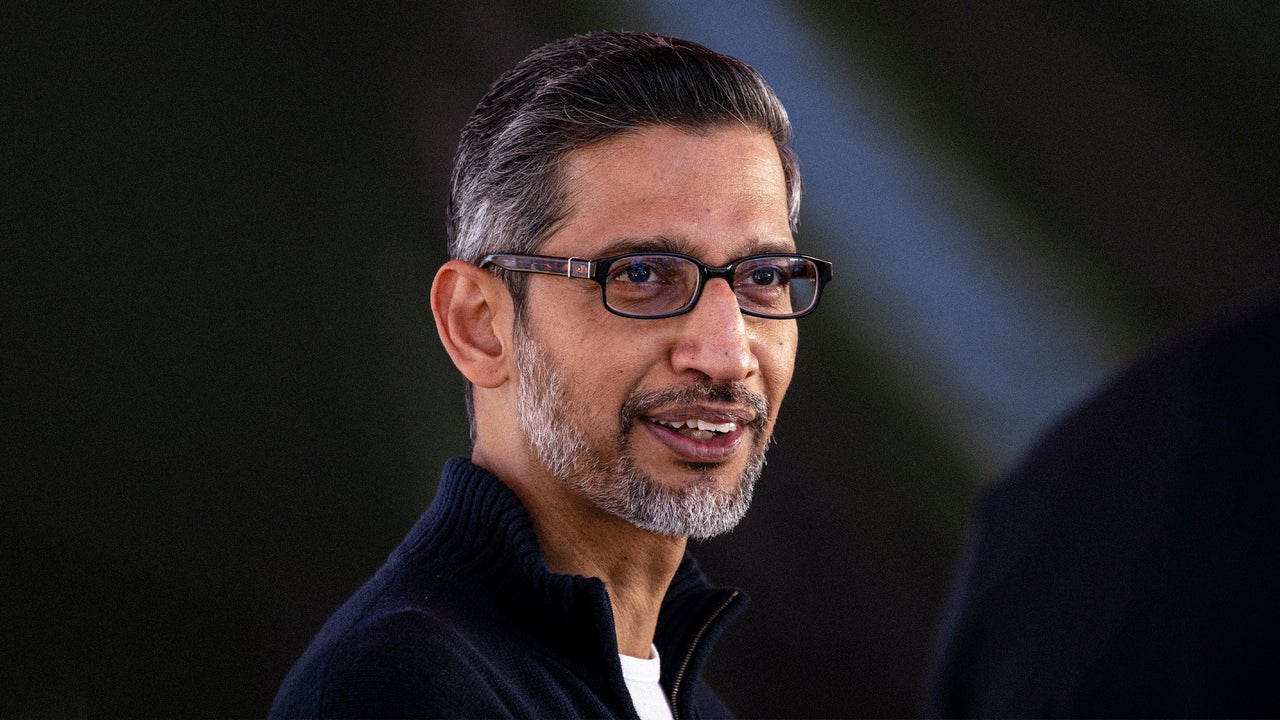
    “I just think the CEO job is not that complicated,” Pichai said when asked how close AI is to replacing him as a CEO during a recent interview with The Verge. “There are aspects of it where I think [AI] is going to be very, very helpful in terms of decision-making.”

    The CEO added that AI can “make more rational choices over time.” He also said that “there are very, very few decisions which are really consequential, and most decisions aren’t.” Instead, Pichai said, making decisions and keeping the company moving forward is most important.

    “Done correctly, these tools are going to allow us to operate at the next level in everything we are doing,” Pichai added. “It’s not like you won’t do what you were doing before. You will start from a higher foundation.”

    Pichai likened AI agents to the advent of other innovations in the workplace, like spreadsheets. “I have to think back to, ‘how did people do all this financial analysis before?’” he asked. “I’m sure it changed over a period of three to four years fundamentally, and we got used to it.”

    With AI, some companies are restructuring their organizations completely. 

    Block CEO Jack Dorsey said he wants 6,000 direct reports, effectively eliminating middle managers. Meta announced plans to create an AI engineering team with 50 engineers that reported to a single manager. Pichai didn’t confirm or deny that similar extreme restructuring would take place at Google. 

    “Leaders and people are incredibly important,” Pichai said. “And it depends. Some companies have a much narrower suite of products, and so different structures may work. When you’re running something at the scale of Google Cloud, it’s important that there is a CEO in charge.”

    Still, as Google uses AI “more effectively,” roles at the company have changed. Pichai said that developers at Google went from merely using AI tools to assisting AI agents with coding, while some engineers direct teams of AI agents. Last month, the CEO announced that 75% of the company’s code was AI-generated.

    During the interview, Pichai also chimed in on the current trend of commencement speakers being booed for drumming up AI. Eric Schmidt, the former CEO of Google, was booed at the University of Arizona during his commencement address when he spoke about the rise of AI.

    “AI is the most profound technology humanity’s going to deal with,” Pichai said in the interview. “It’s happening at a very fast pace. I don’t think humans have evolved to process this much change, and the rate of change particularly over the last few years is incredibly high.”

    While Pichai acknowledged people’s concerns about how AI is changing the job market and the economy, he added that AGI—or artificial general intelligence, a hypothetical AI that matches or exceeds human cognitive capabilities—is on the horizon, “coming sooner rather than later,” and that it is “important that we as a society understand it and are preparing as much as possible.”

    If that’s any indication of how Pichai will talk about AI during his commencement address at Stanford University in June, we’ll have to wait and see how his words go over with those grads.


    Source link

    Share. Facebook Twitter Pinterest LinkedIn Tumblr Email

    Related Posts

    5 Fast Food Franchise Opportunities to Consider

    June 10, 2026

    How Kendra Scott used 3 simple elements to turn her jewelry startup into a $1 billion company

    June 10, 2026

    Employee Productivity Metrics: What Are They and Why Do They Matter?

    June 10, 2026
    Top News
    Business 3 Mins Read

    U.S. population growth is slowing because of declining immigration. What does it mean for the workforce?

    Business 3 Mins Read

    The U.S.’s population growth is slowing as immigration has declined amid President Donald Trump’s deportation…

    Siemens had a wildly popular childcare center. Then it shut it down

    May 20, 2026

    Top 7 Farm Equipment Finance Companies to Consider

    February 1, 2026

    (VIDEO) Chuck Scumer Calls for “Forceful” Uprising in Response to Letitia James Indictment | The Gateway Pundit

    October 13, 2025
    Top Trending
    Business 7 Mins Read

    5 Fast Food Franchise Opportunities to Consider

    Business 7 Mins Read

    If you’re looking to invest in a fast food franchise, understanding your…

    US Politics 15 Mins Read

    The Entwined History of Capitalism and Race in the Americas and Beyond

    US Politics 15 Mins Read

    Books & the Arts / June 10, 2026 Better to start the…

    Business 4 Mins Read

    How Kendra Scott used 3 simple elements to turn her jewelry startup into a $1 billion company

    Business 4 Mins Read

    Building a retail brand from scratch is harder than it looks. However,…

    Categories
    • Business
    • Economy
    • Headline News
    • Top News
    • US Politics
    • World Politics
    About us

    The Populist Bulletin was founded with a fervent commitment to inform, inspire, empower and spark meaningful conversations about the economy, business, politics, government accountability, globalization, and the preservation of American cultural heritage.

    We are devoted to delivering straightforward, unfiltered, compelling, relatable stories that resonate with the majority of the American public, while boldly challenging false mainstream narratives that seem to only serve entrenched elitists, and foreign interests.

    Top Picks

    5 Fast Food Franchise Opportunities to Consider

    June 10, 2026

    The Entwined History of Capitalism and Race in the Americas and Beyond

    June 10, 2026

    How Kendra Scott used 3 simple elements to turn her jewelry startup into a $1 billion company

    June 10, 2026
    Categories
    • Business
    • Economy
    • Headline News
    • Top News
    • US Politics
    • World Politics
    Copyright © 2025 Populist Bulletin. All Rights Reserved.

    Type above and press Enter to search. Press Esc to cancel.