
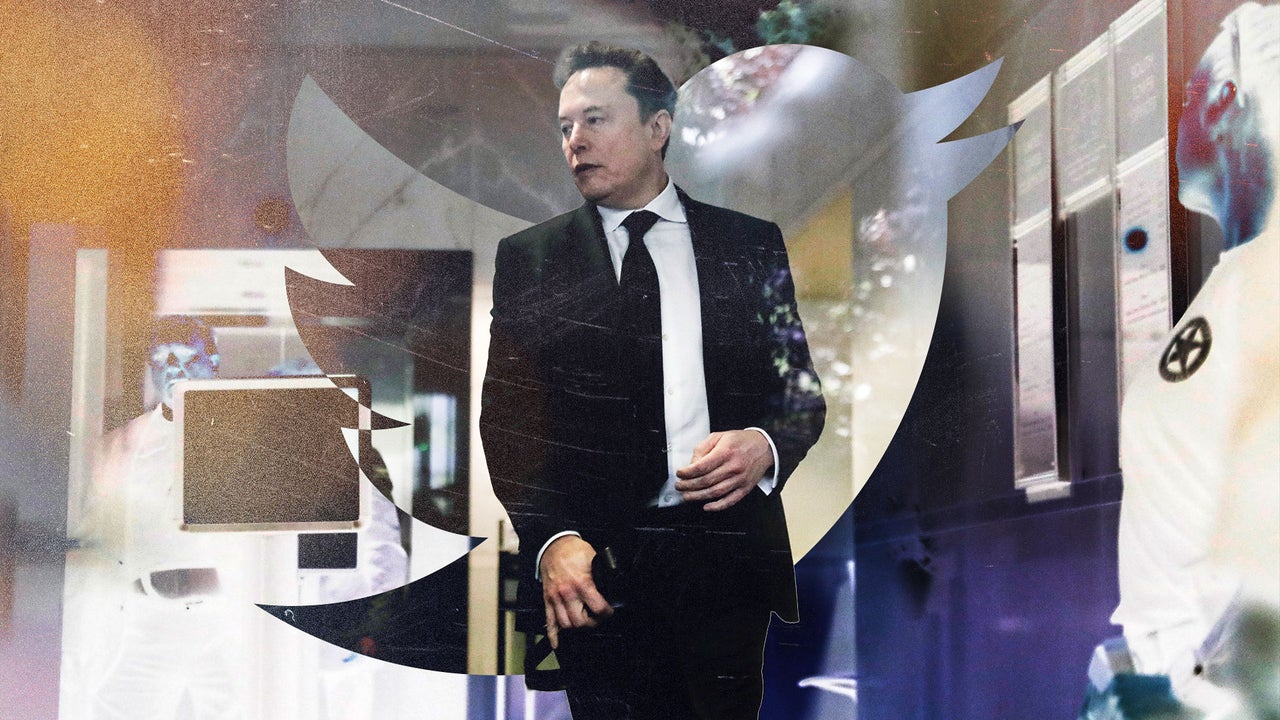
After months of anticipation, Elon Musk’s SpaceX finally made its S-1 financial filing and business prospectus public for all to see.
The document, filed with the Securities and Exchange Commission (SEC), makes an ambitious case to investors that Space Exploration Technologies Corp.—yes, that’s the official name—is poised to build a future for humanity that will include cities on the moon and other planets.
But perhaps unexpectedly, the prospectus also offers a fascinating autopsy of one of the internet’s most legendary brands.
Buried within the revenue and profit figures for SpaceX’s rocket and satellite businesses is a by-the-numbers look into the spectacular death of Twitter, the social network that Musk acquired for $44 billion in 2022.
Musk, of course, has since changed the name to X, and while media outlets for a time took to putting “formerly Twitter” in parentheses whenever they’d cite the social network’s posts in news copy, that practice seems to have fallen out of favor.
More recently, Musk folded X into xAI, his artificial intelligence startup, and even more recently, he merged xAI with SpaceX.
It’s within this context—xAI is part of a loss-making AI unit within SpaceX—that we can now see limited financial disclosures related to the former Twitter. Here are a few things we’ve learned:
Rebranding Twitter to X was costly
From a sheer brand perspective, the decision to change Twitter’s name to X was at once perplexing and vexing. Twitter’s blue bird logo, after all, was once so recognizable that it could be easily identified the world over.
By contrast, X is both unmemorable and unoriginal. Let’s leave aside for a second that it is already the name of a legendary 1980s punk band, it’s also a moniker that always requires additional context.
Twitter, meanwhile, already had the authority of existence at the time when Musk purchased it. It had brand value, and when it became X in 2023, that rebrand was costly.
While the SpaceX prospectus doesn’t get too specific, it does disclose that its year-over-year impairment declined by $3.71 billion, or a staggering 98.3%, the year after Twitter changed its name.
This enormous sum, SpaceX states, was “primarily related to the impairment of the Twitter brand following its rebranding to X.”
Humans post on X in service to Grok
SpaceX’s prospectus touts X as “a real-time information, entertainment, and free speech platform,” but its primary purpose seems to be as a training ground for the AI assistant Grok.
The prospectus sets up Grok as a frontier AI model that uniquely benefits from its integration with X, where humans have actual discussions about a diversity of topics in real time.
Anyone who is familiar with X as it exists now knows that nearly every notable thread will include users asking Grok to explain or add context to someone’s post. “Grok, what does this mean?” has even become a meme of sorts on other social networks.
While X users may feel like the chatbot is there to help them, it’s really the other way around. X now exists in service to Grok. As the prospectus puts it, being part of X “further enhances Grok’s truth-seeking objective.”
X’s true user metrics are obscured
The prospectus includes a few seemingly impressive user metrics for the social network: Across Grok and X, it reports 1.3 billion “supported accounts” were active within the last 12 months.
However, it later clarifies that a supported account doesn’t have to be human. “The total number of supported accounts may include fake, spam or bot accounts if they are active,” the filing says.
Similarly, SpaceX reports 350 million daily posts across X and Grok. But again, how much of this reflects human activity is unclear. The company discloses that daily posts “may include posts generated by AI or accounts managed by AI.”
Fast Company reached out to X for comment.
AI is a loss-making unit for now
SpaceX says in its prospectus that it plans to prioritize growth at its AI unit, which includes Grok and X.
For now, that part of its business losing enormous sums of money. The unit reported a $6.36 billion loss on $3.2 billion in revenue for 2025.
This is a contrast to SpaceX’s profitable Connectivity unit, which includes its Starlink satellite internet business. That unit reported income of $4.42 billion on revenue of $11.39 billion in 2025—representing revenue growth of almost 50%.