
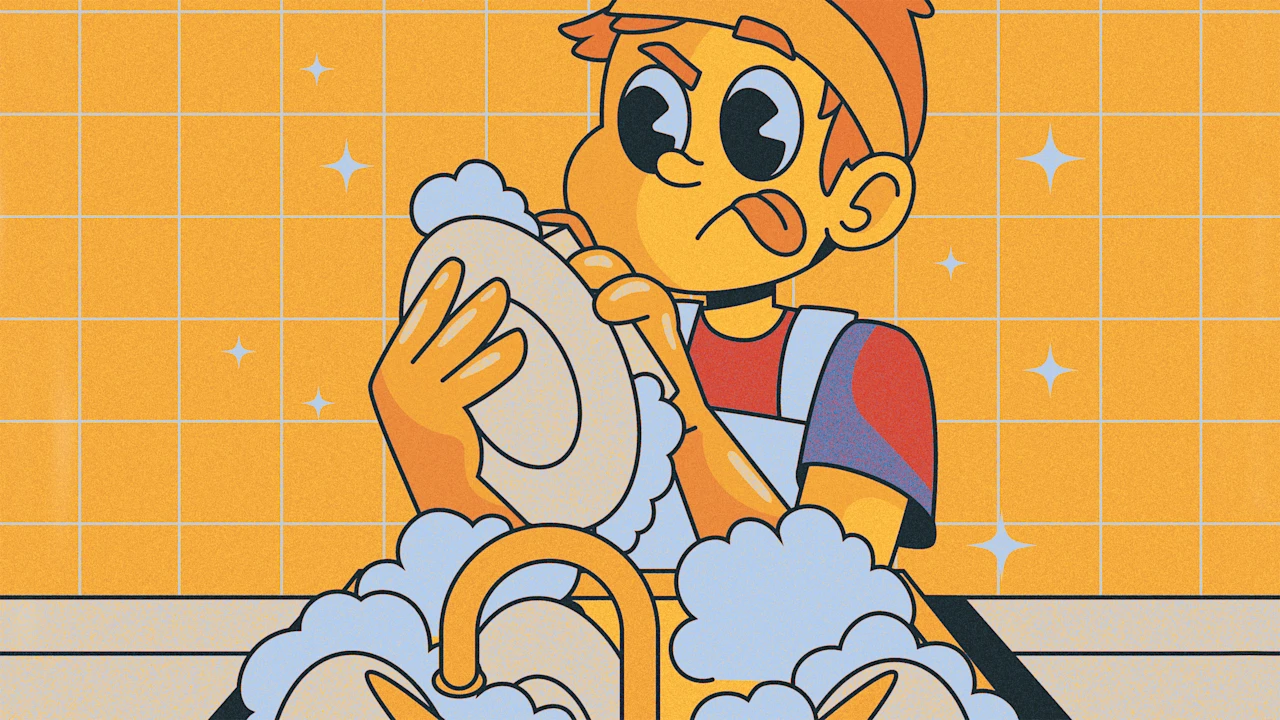
I’ve always loved the anthropology of everyday objects, the ways a mundane thing, when you look closely enough, turns out to be a repository of invisible intelligence. So when I was listening to a recent episode of The Wirecutter podcast and learned that plain dish soap mixed with water is often more effective than a cabinet full of specialized cleaners, I went down a rabbit hole that ended somewhere unexpected: a 1959 chemistry concept that reframes everything I believe about human collaboration.
The concept is called Sinner’s Circle, developed by German chemist Herbert Sinner. It holds that effective cleaning depends on four interdependent factors: chemistry, temperature, mechanics, and time. Adjust any one of them—increase the temperature, extend the time—and you can compensate for a deficit in another. They form a closed loop, a system in dynamic balance.
What struck me was this: The same four forces govern whether human collaboration cleans up or leaves a mess.
{“blockType”:”mv-promo-block”,”data”:{“imageDesktopUrl”:”https://images.fastcompany.com/image/upload/f_webp,q_auto,c_fit/wp-cms-2/2026/01/i-16×9-figure-thinking.jpg”,”imageMobileUrl”:”https://images.fastcompany.com/image/upload/f_webp,q_auto,c_fit/wp-cms-2/2026/01/i-16×9-figure-thinking_0b545c.jpg”,”eyebrow”:””,”headline”:”u003Cemu003EWonderRigor™️ Newsletteru003C/emu003E”,”dek”:”Want more insights, tools, and invitations from Dr. Natalie Nixon about applying creativity for meaningful business results and the future of work? Subscribe u003Ca href=u0022https://urldefense.proofpoint.com/v2/url?u=https-3A__figure-2D8-2Dthinking-2Dllc.kit.com_sign-2Dupu0026amp;d=DwMFaQu0026amp;c=euGZstcaTDllvimEN8b7jXrwqOf-v5A_CdpgnVfiiMMu0026amp;r=xHenyQfyc6YcuCNMBsOvfYGQILM1d1ruredVZikn4HEu0026amp;m=F383gnrChFhYKPhcpNHI1hY3o58IHIn_LkB5QJDrs3G5Wfft-DcucUO4UEmGO7GZu0026amp;s=JlJm7GyKCJvPW0jyrsfTFtinteKDitN13vfPZiuJnP8u0026amp;e=u0022 target=u0022_blanku0022 rel=u0022noreferrer noopeneru0022u003Ehereu003C/au003E for the free u003Cemu003EWonderRigor™u003C/emu003E newsletter at Figure8Thinking.com”,”subhed”:””,”description”:””,”ctaText”:”Learn More”,”ctaUrl”:”http://Figure8Thinking.com”,”theme”:{“bg”:”#3b3f46″,”text”:”#ffffff”,”eyebrow”:”#9aa2aa”,”subhed”:”#ffffff”,”buttonBg”:”#6e8ba6″,”buttonHoverBg”:”#3b3f46″,”buttonText”:”#ffffff”},”imageDesktopId”:91470060,”imageMobileId”:91470061,”shareable”:false,”slug”:””,”wpCssClasses”:””}}
Chemistry: Start with the right molecule
In cleaning, chemistry means choosing the right detergent for the job. The reason dish soap works so well is elegantly simple: a surfactant, the active molecule in soap, is two-sided. One end adheres to oils, the other to water. It acts as a bridge, allowing what was previously incompatible to combine and be rinsed away together.
In collaboration, the equivalent of chemistry is the catalyst you introduce at the start of the process. Specifically, it’s the quality of the question you ask. A mediocre question produces mediocre engagement. But a generative question, like a surfactant, has two sides: It adheres to what people already know and simultaneously pulls them toward what they don’t yet understand. It creates the conditions for ideas to combine in ways they couldn’t before.
Before your next team session, ask yourself: Is my opening question two-sided? Does it honor expertise while creating productive friction with the unknown?
Temperature: Turn up the stakes
Heat is a catalyst for molecular activity. The higher the temperature, the more agitated the molecules become, and the more effectively grime loosens from a surface. Heat doesn’t do the cleaning itself; it accelerates everything else.
The human equivalent of temperature is stakes. For example, when a team knows they’re the underdog competing for a major bid, when survival is on the line, or when the mission genuinely matters, then people stop holding back. High stakes function as activation energy, forcing full presence and dissolving the polite, self-protective behaviors that keep collaboration shallow.
Some of the most generative collaboration I’ve witnessed has happened precisely when teams felt the heat: a startup going up against an entrenched incumbent or a nonprofit competing for a grant that would determine whether they could keep their doors open. The urgency didn’t distract them, it focused them.
Mechanics: Embrace creative abrasion
Mechanical action in cleaning is the scrubbing—that physical agitation that dislodges what chemistry and heat have already loosened. Without it, you’re just soaking.
In collaboration, mechanics is friction, the productive disagreement that Jerry Hirshberg, during his tenure at Nissan Design, famously called “creative abrasion.” The instinct of many leaders is to smooth friction away, to keep the meeting comfortable and conflict-free. But that’s the equivalent of soaking a greasy pan and hoping for the best.
Real collaboration requires some scrubbing. It requires team members who are willing to push back, to surface the uncomfortable assumption, to say “I think we’re solving the wrong problem.” The goal isn’t conflict for its own sake, it’s the agitation that reveals what’s actually stuck.
Time: Resist the shortcut
This is the factor we most reliably underestimate. In cleaning, time is what allows the other three elements to do their work. Cut it short and you’re just pushing the dirt around.
Collaboration has a similar arc. Most people initially believe, with some justification, that they’re faster and more effective working alone. Early-stage collaboration often feels inefficient, even maddening. Ideas conflict, priorities diverge, and progress seems so slow.
But over time, diverse collaborative teams consistently outperform solo contributors on complex problems. They produce more creative solutions, catch more errors, and build the kind of shared understanding that makes execution faster. Time is what converts the friction and chemistry into genuine output. Leaders who call collaboration a failure after one difficult meeting are like cooks who pull the pan off the heat before the water has had a chance to work.
Close the loop
What makes Sinner’s Circle powerful in chemistry and in organizational life is the interdependence of the four elements. Raise the stakes (temperature) without introducing a generative question (chemistry) and you get panic, not innovation. Allow plenty of time without any productive friction (mechanics) and you get groupthink. Each element compensates for and activates the others.
The next time a collaboration feels stuck, don’t reach for a fancier process or another team-building exercise. Instead, run a diagnostic: Is the opening question generative enough? Are the stakes legible to everyone in the room? Are you allowing for enough productive friction? And have you given it enough time?
Sometimes the most sophisticated solution is also the most elemental. A surfactant and some warm water. A good question, real stakes, healthy friction, and patience. Herbert Sinner figured it out in 1959. We’re still learning to apply it.
{“blockType”:”mv-promo-block”,”data”:{“imageDesktopUrl”:”https://images.fastcompany.com/image/upload/f_webp,q_auto,c_fit/wp-cms-2/2026/01/i-16×9-figure-thinking.jpg”,”imageMobileUrl”:”https://images.fastcompany.com/image/upload/f_webp,q_auto,c_fit/wp-cms-2/2026/01/i-16×9-figure-thinking_0b545c.jpg”,”eyebrow”:””,”headline”:”u003Cemu003EWonderRigor™️ Newsletteru003C/emu003E”,”dek”:”Want more insights, tools, and invitations from Dr. Natalie Nixon about applying creativity for meaningful business results and the future of work? Subscribe u003Ca href=u0022https://urldefense.proofpoint.com/v2/url?u=https-3A__figure-2D8-2Dthinking-2Dllc.kit.com_sign-2Dupu0026amp;d=DwMFaQu0026amp;c=euGZstcaTDllvimEN8b7jXrwqOf-v5A_CdpgnVfiiMMu0026amp;r=xHenyQfyc6YcuCNMBsOvfYGQILM1d1ruredVZikn4HEu0026amp;m=F383gnrChFhYKPhcpNHI1hY3o58IHIn_LkB5QJDrs3G5Wfft-DcucUO4UEmGO7GZu0026amp;s=JlJm7GyKCJvPW0jyrsfTFtinteKDitN13vfPZiuJnP8u0026amp;e=u0022 target=u0022_blanku0022 rel=u0022noreferrer noopeneru0022u003Ehereu003C/au003E for the free u003Cemu003EWonderRigor™u003C/emu003E newsletter at Figure8Thinking.com”,”subhed”:””,”description”:””,”ctaText”:”Learn More”,”ctaUrl”:”http://Figure8Thinking.com”,”theme”:{“bg”:”#3b3f46″,”text”:”#ffffff”,”eyebrow”:”#9aa2aa”,”subhed”:”#ffffff”,”buttonBg”:”#6e8ba6″,”buttonHoverBg”:”#3b3f46″,”buttonText”:”#ffffff”},”imageDesktopId”:91470060,”imageMobileId”:91470061,”shareable”:false,”slug”:””,”wpCssClasses”:””}}